Last updated on July 30th, 2026 at 10:28 pm
I have milled cassava into flour on my own small operation in Ntigha for years. Ask ten different websites what this whole-root flour actually is, and you will get ten different half-answers, so here is the complete, accurate picture.
Search “cassava flour” today, and you will find conflicting claims about nutrition, keto compatibility, and how this gluten-free flour behaves compared to wheat.
Some of that confusion comes from vague marketing, and some from genuine differences between brands, production methods, and types.
This guide exists to sort through that noise with real sourcing behind every claim.
You will find production methods, nutrition data, storage guidance, brand comparisons, and how this manioc flour stacks up against wheat, almond, coconut, and other alternatives.
Each section stays brief and links to a dedicated guide for full depth. Start here, then follow the links that match what you actually need to know.
Table of Contents
What Cassava Flour Actually Is
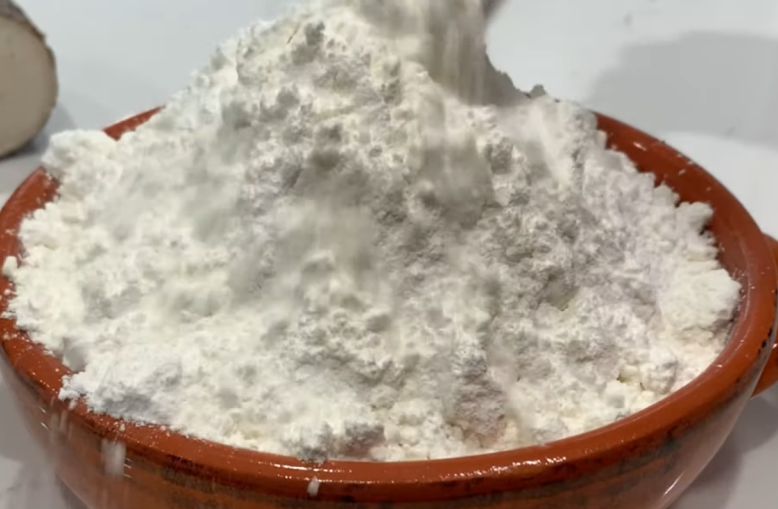
Cassava flour, also called manioc flour, is made by peeling, drying, and finely milling the whole fresh root.
This keeps the fiber, a small amount of protein, and natural resistant starch that get stripped out of pure starch products.
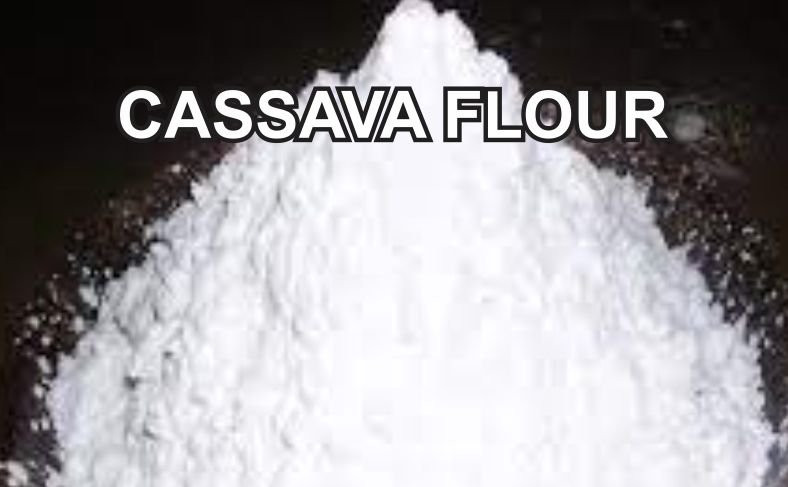
This is the key difference from tapioca starch, extracted starch only, with a gummy texture better suited to boba and pie fillings than one-to-one wheat replacement.
Cassava starch, used mainly as an industrial thickener, is the same product under a different name.
On my own farm, we mill the whole root specifically because of that fiber and resistant starch.
That is what makes the whole-root flour behave like a real baking ingredient rather than a neutral filler.
Types and Forms of Cassava Flour
Cassava flour comes in several forms, and each one suits a different use.

- Fermented varieties develop a tangy flavor through natural soaking and fermentation. The post on fermented cassava flour covers benefits and traditional uses in full.
- HQCF (High-Quality Cassava Flour) meets tighter industrial standards for moisture, texture, and consistency. Our HQCF production guide walks through the method step by step.
- Modified (Mocaf) is a specific industrial fermentation process distinct from home-style fermentation, covered in our post on modified cassava flour.
- Organic is grown without synthetic fertilizers or pesticides. See our organic guide for what that label actually guarantees.
- White and yellow (unpeeled) differ mainly in fiber and micronutrient content, with the yellow version retaining more of the root’s skin-adjacent nutrients.
Where Cassava Flour Comes From
Cassava was domesticated in the Amazon basin roughly 8,000 to 10,000 years ago, based on genetic research compiled by the CGIAR Crop Genebank.
Portuguese traders introduced the crop to West Africa in the 16th century, and it spread across the continent as a famine-resistant staple.
This dedicated post on the history of the mandioca plant covers this full timeline, including its spread to Asia.
The variety used for flour also matters: sweet and bitter cassava are processed differently, a distinction our guide on bitter vs sweet cassava explains in depth.
How Cassava Flour Is Made
Production runs through root selection, peeling, grating, fermentation, drying, and milling, with each stage affecting the final product’s safety and texture.

- Fermentation of cassava pulp reduced hydrogen cyanide content by roughly 52 to 57 percent across two cultivars, based on research published on PubMed.
- Drying, by sun or mechanical dryer, determines shelf life and consistency after that.
- Our post on how cassava flour is made breaks down all four production methods in full.
For depth on a specific method, see our guides to the traditional method, the fermentation method, and the industrial method.
Nutrition and Health Benefits
Per 100 grams, cassava flour carries roughly 360 calories and 87 grams of carbohydrates.
It also carries about 1 to 3 grams of protein and around 3 grams of fiber, based on USDA-sourced nutrition data.
It is naturally gluten-free, making it a genuine option for celiac disease and gluten sensitivity.
Its resistant starch content may also support gut health as a prebiotic, an area covered by resistant starch research published on PMC.
The post on health benefits covers the full nutrition profile and glycemic index research.
For specific dietary questions, see our guides on:
Culinary Uses
Cassava flour works in both baking and everyday cooking because it absorbs liquid evenly and blends smoothly into batters and doughs.
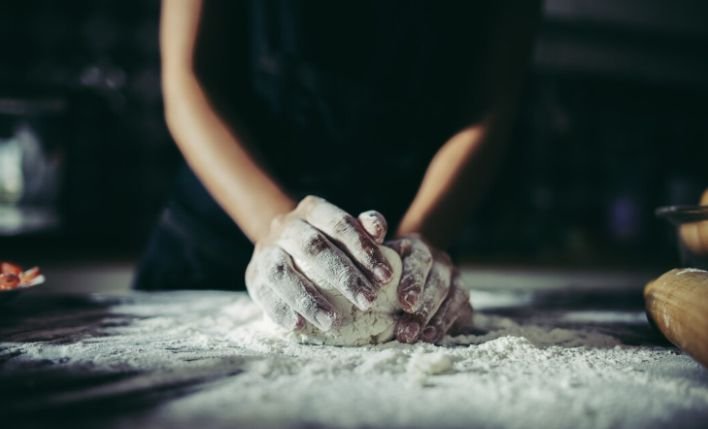
It supports breads, cakes, cookies, and pancakes in baking, and tortillas, dumplings, coatings, and thickened soups in cooking, covered further in our post on culinary applications.
If you want actual recipes rather than technique, our recipe hub has you covered.
Our dedicated post on cassava pasta covers one of the most popular applications in detail.
Storage and Buying
Store this whole-root flour in an airtight container in a cool, dry spot, and refrigerate it in humid climates to prevent clumping.
When buying, look for a 100 percent pure product with transparent labeling that clearly states its origin.
For the details behind each of these, see our guides on:
- The best brands in the USA, including our Bob’s Red Mill review, Otto’s Naturals review, and a direct comparison of the two
How It Compares to Other Flours
Cassava flour is naturally gluten-free with more fiber than most refined alternatives, but each comparison depends on your specific goal.
See the full comparison that matches what you are deciding between:
- Versus wheat flour, the most common substitution question
- Versus almond and versus coconut, for nut-free and low-absorption baking
- Versus tapioca flour, whole-root flour against pure starch
- Versus chickpea and versus arrowroot, for protein content and specialty baking
If you want every substitute in one place rather than a single comparison, our substitute guide rounds up all of them.
A Few Other Questions Worth Answering
Some questions do not fit neatly into the categories above but come up regularly enough to flag here.
If you have pets, our post on cassava flour and dogs provides direct guidance on safety and portion sizes.
Conclusion
Cassava flour earns its place in a gluten-free kitchen through genuine flexibility, not hype.
This whole-root flour contains fiber and resistant starch that tapioca starch lacks, behaves more like wheat than most alternatives, and has fed communities across three continents.
On my own milling operation in Ntigha, quality starts at root selection and never lets up through drying and packaging.
Whichever type or brand you choose, check the label for purity and verify how the manioc flour was processed.
Check the full guides linked throughout this page to go deeper on any question you have.
Frequently Asked Questions
Is cassava flour the same as tapioca flour?
No, cassava flour uses the whole root and keeps its fiber, while tapioca flour is pure extracted starch with a gummy texture and no fiber content.
Can cassava flour replace wheat flour in recipes?
Usually yes, but since it lacks gluten, some recipes need an added binder like eggs or xanthan gum to hold structure properly during baking.
Is cassava flour naturally gluten-free?
Yes, cassava flour is naturally gluten-free, making it a genuine option for people managing celiac disease or general gluten sensitivity in their diet.
How should I store cassava flour to keep it fresh?
Keep it in an airtight container in a cool, dry place, and refrigerate it in humid climates to prevent clumping and extend shelf life.

Chimeremeze Emeh is a tropical crop farmer and chemical engineer from Ntigha, Isiala Ngwa North LGA, Abia State, Eastern Nigeria, specializing in cassava and palm oil, with over 30 years of hands-on experience growing, harvesting, and processing cassava. He grows TMS series, TME 419, and local traditional varieties on his own farms and operates a small-scale cassava flour and starch production business through Cassava Pathway, which he founded as a CAMA-registered agribusiness in 2024. He is also the founder of Palm Oil Pathway, where he applies the same tropical farming expertise. His farms are located in Ntigha, Abia State.