Last updated on September 23rd, 2026 at 07:17 am
Cassava can fuel a car, cook a meal, and enrich a tired field, but not from the same root or process. Choosing the right cassava biofuel route depends on your waste, your capital, and your local market, not on hype.
This page is the hub for everything this site publishes on energy from cassava, from ethanol plants to backyard digesters.
I compare each route on feedstock, cost, scale, and maturity, then link to the detailed guides where each one gets full treatment.
I write as a chemical engineer who has grown and processed cassava in Ntigha, Abia State, for over 30 years.
That background explains why this page leans on process chemistry and on what actually happens in processing yards.
You will also get my honest view on which route suits a smallholder, a farmer cooperative, and a serious investor.
Table of Contents
What Counts as Cassava Biofuel
A biofuel is any fuel made from recent biological material, as opposed to fossil fuels formed over millions of years.
Cassava feeds several of them, because its roots are rich in starch and its processing leaves wet and dry waste.
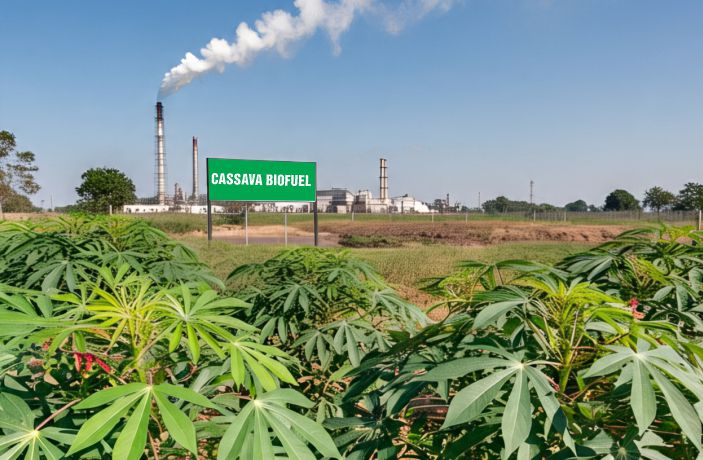
- Bioethanol is liquid alcohol fermented from sugars, and cassava supplies those sugars once its starch is broken down.
- Biogas is a methane-rich gas released when microbes digest wet organic waste without oxygen.
- Biodiesel is a diesel substitute made by reacting plant or microbial oils with alcohol in a process called transesterification.
- Biomass is the raw plant material itself, including stems, peels, and pulp, before any conversion happens.
- Biochar is a charcoal-like solid made by heating biomass with little oxygen, used mainly to improve soil.
- Bio-oil is a dark liquid produced alongside biochar during pyrolysis, and researchers are testing it as a fuel.
Definitions matter for policy, and a review in Energy Policy noted that Nigeria’s 2007 biofuel policy covered only ethanol and biodiesel, ignoring biogas and other biomass fuels.
In my view, that gap left out the route most suited to Nigerian processing yards.
For the botanical background behind these uses, start with our introduction to the cassava plant.
Four Energy Routes Compared Side by Side
The table below compares the four main energy routes on the points that decide if a project makes sense.
| Ethanol | Biogas | Biochar and bio-oil | Biodiesel | |
|---|---|---|---|---|
| Feedstock | Roots or dried chips | Peels, press water, pulp, stillage | Dried peels, stems, rhizomes | Oil from microalgae grown on cassava sugars |
| Process | Hydrolysis, fermentation, distillation | Anaerobic digestion | Pyrolysis (heating with little oxygen) | Fermentation, oil extraction, transesterification |
| Main output | Liquid fuel for gasoline blending | Gas for cooking, heat, and power | Soil amendment plus liquid and gas fuels | Diesel substitute |
| Realistic scale | Industrial | Household to factory | Village kiln to industrial | Laboratory and pilot |
| Capital needed | High | Low to high | Low to moderate | Very high |
| Maturity | Commercial in Asia | Commercial in Thai starch plants | Small commercial and research | Research stage |
Notice that only ethanol and the algae route compete directly with food, because biogas and pyrolysis run mainly on waste and residues.
Ethanol: The Liquid Fuel Route
Ethanol turns cassava starch into a gasoline blending component, and it is the route most people mean when they discuss energy from cassava.
Thailand shows the scale possible, with cassava supplying about 33 percent of the country’s ethanol output in 2023, according to Krungsri Research.
Yield chemistry, plant design, costs, and Nigeria’s stalled blending program are covered in our full ethanol production guide.
Biogas: Energy From Waste You Already Have
Biogas needs no extra roots at all, because it runs on the peels, press water, pulp, and stillage that processing already produces.
The feedstock is enormous, since ILRI estimates peeling in Nigeria generates up to 14 million metric tons of waste each year.
For most West African processors, biogas is the route I would test first, because the feedstock costs nothing.
Our biogas guide for cassava processors explains digester microbiology, which residues give the most methane, and how to start small.
Digestion does not fully clean the water, so pair it with the steps in our guide to treating cassava processing effluent.
Biochar and Bio-Oil: The Thermal Route
Pyrolysis heats dry biomass in a sealed chamber with little oxygen, splitting it into solid biochar, liquid bio-oil, and combustible gas.
A Nigerian study in Heliyon notes that raw biomass makes a poor direct fuel because of high moisture and low energy density.
Earlier work in Bioresource Technology also pyrolyzed cassava peel into bio-oil, framing it as a potential renewable liquid fuel.
Biochar itself is mainly a soil product, and an IntechOpen chapter describes it as a carbon-rich solid formed by heating waste with restricted oxygen.
Our dedicated biochar guide covers production and soil use in depth, so this page only places it within the wider energy picture.
Biodiesel: Still a Research Story
Cassava roots contain very little oil, so cassava cannot become biodiesel the way oil palm or soybeans can.
The route researchers have tested is indirect: cassava sugars feed oil-producing microalgae, and the algae oil becomes biodiesel.
In a study in the Journal of Applied Phycology, microalgae grown on cassava hydrolysate stored oil up to 53 percent of their dry mass.
That was a five-liter fermentation, so treat biodiesel as a research topic, not an investment case, for now.
As a palm oil farmer too, I would point anyone wanting biodiesel toward oil crops before cassava.
Which Route Fits You? My View From Southeastern Nigeria
Here is how I would match each route to the operations I see around Ntigha and across Abia State.
A Family Garri or Fufu Yard
Start with a drum digester fed with peels and cow dung, because the gas can replace some roasting firewood at almost no feedstock cost.
Separating press water and managing it properly comes first, since an unmanaged pit will cause trouble long before any gas appears.
A Cooperative or Flour and Starch Plant
Larger volumes justify a covered lagoon or enclosed digester, with the gas going to dryers that currently burn wood or diesel.
Dried peels and stems could also feed a small pyrolysis kiln, producing biochar for member farms.
Budget either option with the structure in our example business plan for a cassava enterprise.
An Investor With Serious Capital
Ethanol is the only route here with a large liquid-fuel market, but it needs contracted high-starch supply before any equipment is ordered.
Our roadmap for commercial cassava production shows how to build that supply base first.
High-starch varieties matter here more than anywhere, and our guide to choosing cassava varieties compares them by end use.
Food Versus Fuel: The Honest Debate
Cassava feeds millions of households across Africa, so turning roots into cassava biofuel raises a fair ethical question.
China has taken a clear position, banning food crops in new ethanol factories while encouraging cassava instead, according to a study in Water.
That logic does not transfer neatly to Nigeria, where cassava is a daily staple rather than a marginal crop.
My position is simple: waste-based routes like biogas and biochar carry no food trade-off, while root-based ethanol must prove it adds supply rather than taking it.
Raising farm yields is the fairest way to feed both markets, as our field guide to growing cassava explains.
Why Cassava Renewable Energy Has Struggled to Scale
Cassava renewable energy projects tend to stumble on the same few problems, and none of them is purely technical.
- Perishable feedstock: fresh roots spoil within days, so plants need close farms or a chip-drying system.
- Weak policy follow-through: the IEA records that Nigeria’s ethanol blending was suspended soon after launch, leaving no guaranteed market.
- Crop disease: mosaic disease and drought can cut feedstock supply sharply, as Thailand saw in 2023.
- Skills and maintenance: digesters and kilns fail without trained operators, and rural areas rarely have them nearby.
- Finance: banks rarely lend against unproven rural energy projects, so early projects need grants or cooperative capital.
A fuller breakdown of these barriers across the whole crop sits in our analysis of cassava value chain challenges and fixes.
Energy projects also carry land and water costs, covered in our look at cassava farming’s environmental footprint.
Where Energy Fits Among Cassava’s Other Uses
Energy is one outlet among many, and it competes with starch, flour, feed, and food for the same roots and residues.
Our catalog of 47 products made from cassava shows the full range, while our overview of cassava’s industrial benefits covers non-energy markets.
Pulp is a good example, since it can feed a digester, cattle, or a factory, as our look at the starch pulp trade shows.
To see where each residue arises, follow the stages in our cassava value chain explainer.
Conclusion
Cassava biofuel is not one product but a family of routes, each suited to a different feedstock, budget, and scale.
Ethanol offers the biggest market but demands capital and secure root supply, while biogas turns existing waste into heat.
Biochar adds soil value from dry residues, and biodiesel remains a laboratory story for now.
For most Nigerian processors, the first step is managing waste well, then capturing its energy.
FAQ
What are the main biofuels made from cassava?
The main ones are ethanol from roots, biogas from waste, and bio-oil from peels. Biodiesel made through oil-rich microalgae grown on cassava sugars remains at the research stage.
Is biochar a biofuel?
Not strictly, because biochar is mainly used to improve soil rather than burned for energy. It comes from the same pyrolysis process that produces bio-oil and fuel gas.
Which cassava energy route is cheapest to start?
Biogas from peels is usually cheapest, since the feedstock is free and drum digesters cost little. It suits small garri and fufu yards that already struggle with waste.
Does using cassava for fuel threaten food supply?
Root-based ethanol can compete with food where cassava is a staple, as in Nigeria. Waste-based routes like biogas and biochar avoid that conflict because they use only residues.

Chimeremeze Emeh is a tropical crop farmer and chemical engineer from Ntigha, Isiala Ngwa North LGA, Abia State, Eastern Nigeria, specializing in cassava and palm oil, with over 30 years of hands-on experience growing, harvesting, and processing cassava. He grows TMS series, TME 419, and local traditional varieties on his own farms and operates a small-scale cassava flour and starch production business through Cassava Pathway, which he founded as a CAMA-registered agribusiness in 2024. He is also the founder of Palm Oil Pathway, where he applies the same tropical farming expertise. His farms are located in Ntigha, Abia State.