Cassava Wastewater and Effluent Management

Every ton of cassava processed releases hundreds of liters of toxic, cyanide-laced wastewater into the environment. Without proper treatment, this effluent poisons waterways, kills aquatic life, and puts communities at risk. Here is what the cassava industry must do differently.

Cassava processing sustains millions across Africa, Asia, and Latin America, but it comes with a high environmental cost.

From root washing to starch extraction, each stage of production discharges large volumes of effluent loaded with organic matter, suspended solids, and cyanogenic compounds.

Left untreated, this wastewater degrades ecosystems, violates environmental regulations, and harms public health.

As cassava output grows globally, processors must adopt responsible, science-backed wastewater management practices that protect both the environment and long-term business viability, and that’s what we are going to talk about.

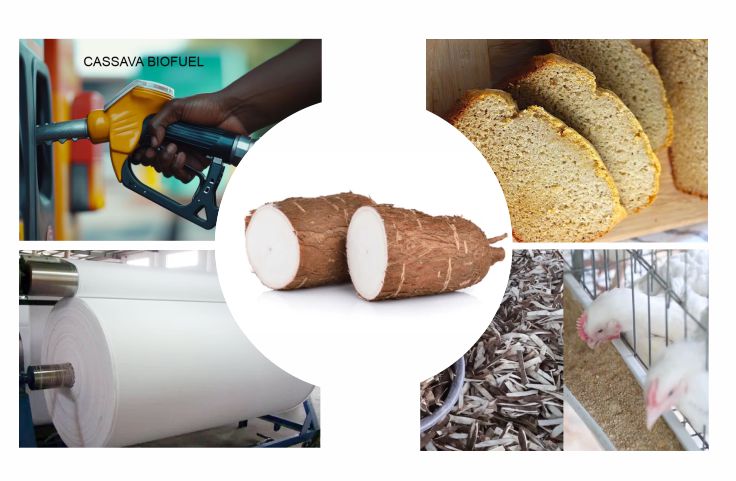
See cassava by-products and wastes.

What Is Cassava Wastewater?

Cassava wastewater is the liquid waste generated at various stages of cassava processing.

It differs from general effluent in that it contains cassava-specific contaminants, particularly high concentrations of starch residues and cyanogenic glycosides derived from the cassava root itself.

The term effluent typically describes treated or partially treated liquid discharge, while wastewater refers to the raw, unprocessed liquid waste before any treatment occurs.

In cassava processing, both terms are used interchangeably to describe the broad stream of contaminated water leaving production facilities.

Wastewater arises from multiple points across the processing chain, and its composition shifts depending on the specific cassava product being manufactured.

What makes it particularly challenging to manage is the combination of high organic load, toxic compounds, and the sheer volume generated per unit of raw cassava processed.

Sources of Wastewater in Cassava Processing

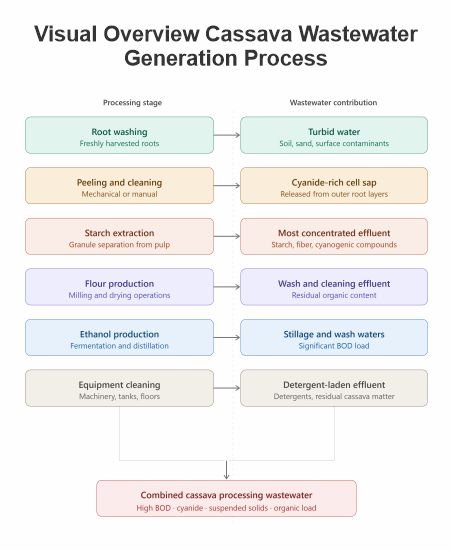
Wastewater enters the waste stream from nearly every major step in cassava production:

Root Washing Operations

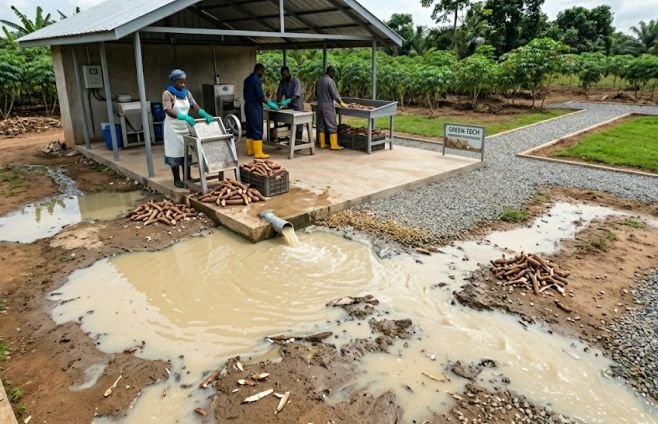
Freshly harvested cassava roots are thoroughly washed to remove adhering soil, sand, grit, and field debris accumulated during harvest.

This essential initial step generates large volumes of turbid, brown-colored water containing suspended soil particles, organic matter, and surface microbial contaminants that require proper treatment before disposal.

Peeling and Cleaning Processes

Mechanical or manual peeling strips the outer layers of the cassava root, releasing cell sap rich in cyanogenic glucosides, particularly linamarin.

This contributes a cyanide-rich, discolored liquid to the overall wastewater stream, significantly elevating its toxicity and chemical oxygen demand compared to wash water alone.

Starch Extraction Activities

Water used to separate and wash starch granules from disrupted cassava pulp forms the most concentrated and voluminous effluent generated throughout the entire process chain.

This fraction carries extremely high loads of dissolved starch, suspended fiber, and cyanogenic compounds, making it the primary environmental concern in cassava processing.

See how to make cassava starch.

Flour Production Facilities

Milling and drying operations within cassava flour production facilities generate periodic wash water and equipment cleaning effluent containing residual organic solids and fine flour particles.

Although less concentrated than starch extraction effluent, this wastewater still contributes meaningful biochemical oxygen demand and suspended solids that must be managed responsibly.

Read the full guide on how to make cassava flour.

Ethanol Production Plants

Fermentation and distillation processes in cassava-based ethanol production plants generate large quantities of stillage, spent wash, and cooling waters.

These streams carry a significant biochemical oxygen demand (BOD), residual sugars, acids, and microbial biomass, requiring dedicated treatment systems to prevent severe environmental impacts on receiving water bodies.

Read cassava-based ethanol production.

Equipment Cleaning and Plant Sanitation

Routine and scheduled cleaning of processing machinery, conveyors, holding tanks, and plant floors introduces surfactants, detergents, and residual cassava matter into the facility wastewater stream.

This diffuse source of contamination, while intermittent, adds to the cumulative pollutant load and can disrupt biological treatment processes if detergent concentrations become excessive.

Cassava Wastewater and effluent management

Composition of Cassava Processing Effluent

The chemical and physical profile of cassava effluent makes it one of the more complex agro-industrial wastewaters to treat.

Key components include:

  • Organic matter content: Dissolved and particulate organic compounds from starch, sugars, and proteins make up a large fraction of cassava effluent, driving high oxygen demand in receiving water bodies.
  • Suspended solids: Fiber fragments, starch granules, and soil particles remain suspended in the effluent, increasing turbidity and clogging drainage systems.
  • Starch residues: Unrecovered starch that passes through processing systems contributes significantly to the organic load of the wastewater.
  • Nutrients and minerals: Nitrogen, phosphorus, and trace minerals leached from cassava tissue are present in measurable concentrations and can drive algal growth in receiving waters.
  • Cyanogenic compounds: Linamarin and lotaustralin, the primary cyanogenic glycosides in cassava, break down to release hydrogen cyanide, posing toxicity risks to aquatic organisms and human health.
  • Biochemical Oxygen Demand (BOD): Cassava effluent typically exhibits extremely high BOD values, reflecting the large quantity of biodegradable organic matter present.
  • Chemical Oxygen Demand (COD): COD values in cassava processing wastewater are similarly elevated, indicating the total oxygen required to chemically oxidize all organic and inorganic compounds in the effluent.

Environmental Impacts of Untreated Cassava Wastewater

Discharging untreated cassava wastewater directly into the environment triggers a cascade of ecological consequences:

  • Water pollution: High concentrations of organic matter and toxic compounds contaminate rivers, streams, and groundwater, rendering them unsafe for human consumption, agriculture, and aquatic life.
  • Soil contamination: Land disposal of raw effluent introduces cyanide compounds and excessive organic matter into the soil, disrupting microbial communities and reducing agricultural productivity.
  • Oxygen depletion in aquatic systems: As microorganisms break down the organic matter in cassava effluent, they consume dissolved oxygen at rates that can produce hypoxic or anoxic conditions in water bodies.
  • Effects on fish and aquatic organisms: Oxygen depletion combined with cyanide toxicity can cause mass fish kills and disrupt entire aquatic food webs near discharge points.
  • Odor problems near processing facilities: Anaerobic decomposition of cassava effluent releases hydrogen sulfide and other malodorous gases, creating persistent community complaints and affecting quality of life near processing plants.
  • Risks to public health: Communities that rely on contaminated water sources for drinking, bathing, or irrigation face direct exposure to cyanide and pathogenic microorganisms present in untreated cassava wastewater.

Cyanide in Cassava Effluent: Understanding the Risks

Cyanide contamination is one of the defining hazards of cassava processing wastewater.

It enters the waste stream primarily through the breakdown of cyanogenic glycosides, chiefly linamarin, which is naturally present in all parts of the cassava plant but concentrated in the roots and peel.

When cassava tissue is crushed, cut, or washed during processing, plant enzymes called linamarase convert linamarin into acetone cyanohydrin, which then spontaneously breaks down to release free hydrogen cyanide.

This process accelerates under acidic conditions and at elevated temperatures.

Environmental concerns associated with cyanide discharge include direct toxicity to fish and invertebrates at relatively low concentrations, soil acidification, and interference with microbial nitrogen cycling.

The actual cyanide concentration in cassava effluent varies depending on:

  • The variety of cassava processed (bitter versus sweet varieties differ substantially)
  • Processing methods used (fermentation reduces cyanide; simple washing does not)
  • Temperature and pH of the effluent
  • Detention time before discharge

Proper detoxification before discharge is not optional. Both regulatory frameworks and ecological responsibility demand that cyanide levels be reduced to safe thresholds before effluent contacts natural water bodies or agricultural land.

Read more about Cyanide Poisoning and Safety Measures.

Wastewater Management Challenges in the Cassava Industry

Managing cassava wastewater is difficult across the board, but the barriers are especially steep in smallholder and rural processing contexts:

  • High organic load: The sheer concentration of biodegradable matter in cassava effluent demands robust treatment systems capable of handling extreme BOD and COD levels.
  • Seasonal processing fluctuations: Cassava harvests are often seasonal, meaning wastewater generation is irregular. Treatment infrastructure must be sized to handle peak loads while remaining cost-effective during low-output periods.
  • Limited treatment infrastructure: Many small and medium processors in developing countries operate without access to engineered treatment systems, relying instead on unlined settling ponds or direct land disposal.
  • Cost constraints for small processors: Capital investment in wastewater treatment systems can be prohibitive for small-scale processors with narrow profit margins and limited access to financing.
  • Regulatory compliance challenges: Enforcement of effluent standards is inconsistent in many cassava-producing regions, reducing the incentive for processors to invest in treatment unless external pressure is applied.
  • Wastewater disposal issues in rural areas: Remote processing facilities lack access to municipal wastewater infrastructure, leaving them to manage effluent in isolation, often without technical expertise.

Primary Treatment Methods for Cassava Wastewater

Primary treatment removes the bulk of suspended solids and large particles before more intensive biological or chemical processes are applied.

Common methods include:

  • Screening and filtration: Coarse screens or fine filters remove fiber fragments, starch granules, and other particulate matter from raw effluent as the first line of treatment.
  • Sedimentation tanks: Gravity-based settling tanks allow heavier particles to settle out of the effluent over time, producing a clarified liquid and a sludge layer for separate disposal or reuse.
  • Removal of suspended solids: Chemical coagulants such as alum or ferric chloride can be added to accelerate particle aggregation and improve solids removal efficiency.
  • Equalization systems: Buffer tanks or ponds even out fluctuations in flow rate and pollutant concentration, protecting downstream treatment processes from shock loads.

While primary treatment substantially reduces suspended solids and visible turbidity, it does not adequately address dissolved organic matter, cyanide compounds, or nutrient levels.

Secondary biological treatment is required to meet most discharge standards.

Biological Treatment of Cassava Effluent

Biological treatment harnesses microbial activity to break down organic compounds in cassava wastewater.

Two broad categories dominate: aerobic systems that use oxygen-breathing microorganisms and anaerobic systems that operate in the absence of oxygen.

Aerobic Treatment Systems

Aerobic biological treatment introduces oxygen into the wastewater to support the growth of aerobic bacteria that consume dissolved organic matter.

Activated sludge systems use mechanical aeration to maintain a dense microbial population in suspension.

Mixed liquor is aerated in tanks and then separated in clarifiers, with a portion of the settled biomass recycled to maintain microbial activity.

These systems achieve high BOD removal but consume significant energy.

Aerated lagoons are large, open ponds fitted with surface aerators or diffusers.

They are less capital-intensive than activated sludge systems and better suited to rural contexts, though they require more land and longer treatment times.

Benefits include effective BOD reduction, pathogen removal, and relatively straightforward operation.

Limitations include high energy costs, potential for odor generation if aeration fails, and reduced performance at low temperatures.

Anaerobic Treatment Systems

Anaerobic systems break down organic matter in the absence of oxygen, generating biogas as a valuable by-product.

Anaerobic digesters are enclosed reactors that maintain controlled conditions for methanogenic microorganisms.

They are highly effective for high-strength organic wastewater like cassava effluent, achieving substantial COD reductions while producing biogas rich in methane.

Anaerobic lagoons are simpler open-pond systems that rely on naturally occurring anaerobic bacteria.

While less efficient than enclosed digesters, they are far more affordable and easier to operate in low-resource settings.

Energy recovery potential is a key advantage of anaerobic systems.

The biogas produced can be captured and used for heat or power generation at the processing facility.

Anaerobic treatment also produces significantly less sludge than aerobic systems, reducing disposal costs.

Biogas Production from Cassava Wastewater

Cassava wastewater is a powerful feedstock for biogas production.

Through anaerobic digestion, the organic matter in cassava effluent breaks down into a methane-rich gas, typically 55 to 70 percent methane, that can be captured and used as a renewable energy source.

Thanks to its high organic content, cassava wastewater delivers strong methane yields, making it viable for industrial applications.

Processors benefit economically by replacing purchased fuel with on-site biogas while simultaneously treating wastewater.

Facilities in Thailand, Nigeria, and Brazil have already proven this model at commercial scale.

  • Boiler fuel for steam generation in starch drying
  • Electricity generation via gas engines or generators
  • Direct combustion for cooking or heating in rural processing cooperatives
  • Combined heat and power (CHP) configurations for maximum energy recovery

Learn more about biogas production from cassava wastewater.

Advanced Treatment Technologies

When primary and biological treatment alone cannot meet discharge standards, advanced technologies offer additional polishing:

Constructed Wetlands

Engineered wetland systems use plant roots and associated microorganisms to remove residual nutrients, suspended solids, and trace contaminants from partially treated effluent.

They are low-cost, low-energy options well suited to tropical cassava-producing regions.

Membrane Filtration Systems

Ultrafiltration and reverse osmosis membranes can remove dissolved solids, pathogens, and trace organic compounds from treated effluent, producing water of reuse quality.

Capital and operating costs are higher, but the water recovery potential is significant.

Chemical Treatment Methods

Chlorination, ozonation, or advanced oxidation processes can disinfect treated effluent and break down residual cyanide compounds before discharge.

Integrated Wastewater Treatment Approaches

Many modern facilities combine multiple treatment stages, tailoring the process train to their specific effluent characteristics and discharge requirements.

Emerging Treatment Technologies

Electrocoagulation, bioelectrochemical systems, and phytoremediation are being actively researched as low-cost alternatives for cyanide removal and organic matter reduction in cassava effluent.

Water Recycling and Reuse in Cassava Processing

Recycling treated wastewater within cassava processing facilities offers both environmental and economic advantages.

Key benefits include:

Reduced Freshwater Consumption

Reusing process water for root washing or equipment cleaning decreases the volume of freshwater drawn from wells or surface sources, reducing operational costs and groundwater stress.

Reuse Opportunities Within Processing Facilities

Treated effluent can be reapplied for non-contact uses such as equipment pre-rinse cycles, floor washing, cooling systems, and dust suppression in milling areas.

Improving Operational Sustainability

Closed-loop water management reduces a facility’s environmental footprint and demonstrates responsible stewardship to regulators, buyers, and communities.

Achieving safe water reuse requires treatment to appropriate quality standards.

Facilities that invest in membrane filtration or multi-stage biological treatment are best positioned to capture the full value of wastewater recycling programs.

Effluent Standards and Environmental Regulations

Regulatory frameworks for cassava wastewater discharge vary by country but share common objectives: protecting water quality, safeguarding public health, and holding polluters accountable.

Why discharge standards matter:

  • Unregulated effluent discharge causes cumulative, long-term environmental damage that is costly to reverse and often affects the poorest communities most severely. Standards create a minimum performance floor for all processors, regardless of size.
  • Common wastewater quality parameters regulated at discharge points include BOD, COD, total suspended solids (TSS), pH, cyanide concentration, nitrogen, phosphorus, and coliform bacteria counts. Compliance requirements for processing facilities typically mandate pre-treatment to meet these limits before effluent enters natural water bodies or municipal sewage systems.
  • Monitoring and reporting practices generally include periodic effluent sampling, third-party laboratory analysis, and submission of compliance records to environmental authorities. In some jurisdictions, online continuous monitoring systems are required at large facilities.

Sustainable Effluent Management Strategies

The most cost-effective approach to cassava wastewater management begins before the wastewater is ever generated:

  • Waste minimization at the source: Optimizing water use in washing and extraction processes reduces effluent volume and pollutant load from the outset, lowering treatment costs downstream.
  • Cleaner production techniques: Dry peeling, counter-current washing, and starch recovery improvements reduce wastewater generation and recover value that would otherwise enter the waste stream.
  • Integrated waste management systems: Treating wastewater, solid cassava waste, and biogas production as an interconnected system maximizes resource recovery and minimizes overall environmental impact.
  • Circular economy approaches: Treated effluent can be applied as liquid fertilizer, recovering the nutrient value of nitrogen and phosphorus for agricultural use, thereby closing material loops and reducing synthetic fertilizer dependence.
  • Combining wastewater treatment with by-product utilization: Cassava peel, fiber, and sludge generated during treatment can be processed into animal feed, compost, or biochar, turning waste streams into revenue-generating products.

Economic Benefits of Effective Wastewater Management

Investing in proper cassava wastewater treatment is not only an environmental obligation; it makes sound business sense:

  • Reduced environmental liabilities: Processors who treat their effluent avoid the regulatory fines, remediation costs, and reputational damage associated with pollution incidents.
  • Lower water consumption costs: Water recycling and reuse programs directly cut the cost of freshwater procurement and reduce fees associated with effluent disposal.
  • Revenue from biogas production: Biogas captured from anaerobic digesters displaces purchased fuel and, in some configurations, generates exportable electricity, creating a new revenue stream from what was previously a waste problem.
  • Improved regulatory compliance: Facilities that consistently meet effluent standards maintain their operating licenses, avoid enforcement actions, and are better positioned to expand production or attract export markets.
  • Sustainability credentials: Buyers, investors, and international certification bodies increasingly scrutinize the environmental performance of cassava supply chains, rewarding processors with demonstrated wastewater management practices.

The next generation of cassava wastewater management will be defined by smarter systems, greater resource recovery, and deeper integration with broader facility sustainability goals:

  • Smart monitoring technologies: Real-time sensors for BOD, COD, pH, cyanide, and flow rate are becoming more affordable, enabling processors to continuously track effluent quality and respond rapidly to deviations.
  • Energy-positive treatment systems: Advances in high-rate anaerobic reactors and biogas optimization are moving some facilities toward a state where wastewater treatment generates more energy than it consumes.
  • Resource recovery innovations: Research into recovering phosphorus, organic acids, and microbial protein from cassava effluent is expanding the potential value of what processors currently treat as waste.
  • Sustainable processing facility design: New cassava processing plants are increasingly designed with integrated water management from the outset, embedding treatment infrastructure into facility layout and process flow.
  • Research and development priorities: Priority areas include low-cost cyanide removal, decentralized treatment solutions for smallholder processors, and life cycle analysis tools that help processors quantify and communicate their environmental performance.

Conclusion

Cassava wastewater presents real and pressing challenges for processors, regulators, and the communities that share environments with processing facilities.

The combination of high organic load, cyanide toxicity, and large effluent volumes demands more than passive disposal.

Proven treatment technologies exist, from anaerobic digestion and constructed wetlands to membrane filtration, and they deliver both environmental protection and economic returns through biogas and water reuse.

As the global cassava industry scales to meet rising demand, the facilities that build proper wastewater management into their core operations will be the ones best positioned for long-term growth and regulatory resilience.

Frequently Asked Questions

Why does cassava processing generate so much wastewater?

Cassava processing uses large volumes of water for root washing, starch extraction, and equipment cleaning, producing hundreds of liters of effluent per ton of raw cassava processed.

Is cassava wastewater harmful to the environment?

Yes. Untreated cassava effluent contains cyanide, high organic loads, and suspended solids that deplete oxygen in waterways, kill aquatic life, and contaminate soil and groundwater.

Does cassava wastewater contain cyanide?

Yes. Cassava roots naturally contain cyanogenic glycosides that release hydrogen cyanide during processing, making effluent toxic if discharged without adequate treatment and detoxification.

How is cassava effluent treated before discharge?

Treatment typically combines screening, sedimentation, and biological processes such as anaerobic digestion or aerated lagoons, sometimes followed by constructed wetlands or chemical polishing before discharge.

Can cassava wastewater be used to produce biogas?

Yes. The high organic content of cassava effluent makes it an excellent substrate for anaerobic digestion, generating methane-rich biogas usable for heat, electricity, or combined power generation.