Last updated on July 1st, 2026 at 07:30 pm
Cut open a cassava root and you will find five distinct layers, not one solid mass. From the tough periderm skin to the fibrous central core, each part plays a specific role in how the plant stores energy safely underground.
Chimeremeze Emeh has peeled thousands of cassava roots on his farm in Ntigha, Abia State, over more than three decades of growing and processing the crop firsthand.
Most people know cassava root through garri, fufu, or flour, but few understand what lies beneath its rough skin.
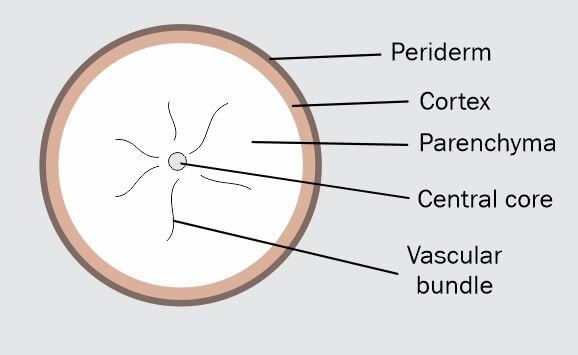
The root is not a uniform mass of starch. It is built from five distinct layers: the periderm, cortex, parenchyma, vascular bundles, and central core, each with its own structure and function.
Knowing this anatomy matters for farmers selecting varieties, processors deciding how deep to peel, and researchers studying starch development in the crop.
Table of Contents
What Is the Anatomy of the Cassava Root?
The anatomy of the cassava root is its layered internal structure from the outer skin to the central core.
The root is not a single mass of starch but a layered structure built for storage and protection.
A mature root typically measures between 15 and 100 centimeters long and weighs between half a kilogram and 2.5 kilograms, according to the FAO Cassava Post-Harvest Compendium.
Each layer, from the tough outer skin to the fibrous center, serves a distinct purpose while the root is attached to the plant.
Readers new to the crop can start with our overview of the cassava plant before working through the anatomy below.
The Five Structural Parts of the Cassava Root
1. Periderm: The Outer Skin
The periderm is the outermost layer of the cassava root, a rough and brown skin that shields the inner tissue from pests, cuts, and drying out.
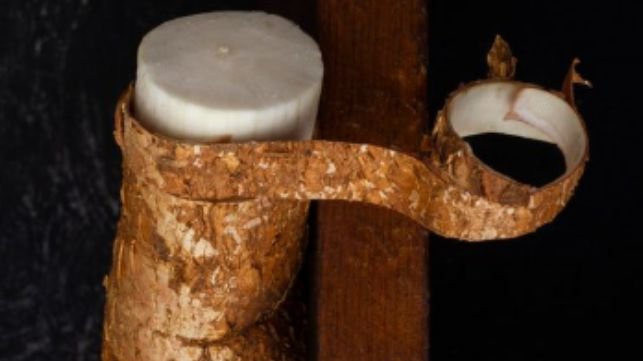
This layer also concentrates cyanogenic glycosides at higher levels than the flesh underneath, which is why processors remove it completely before cooking or milling, per the pharmacological review in PMC.
For step-by-step guidance on removing this layer safely, see our guide to peeling cassava root the right way.
2. Cortex: The Protective Layer
Beneath the periderm sits the cortex, a second protective layer that can appear cream, brown, or reddish depending on the variety.
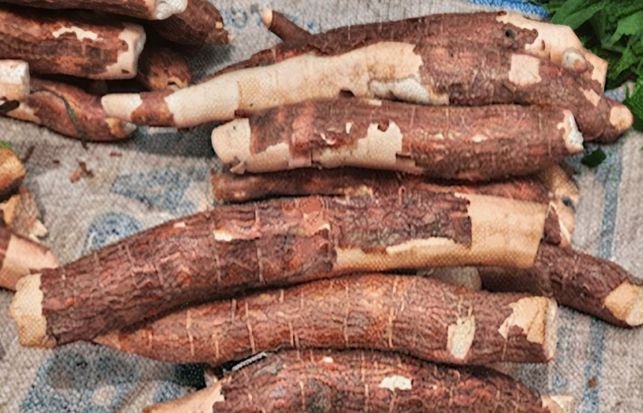
Commercial processors usually strip the cortex away together with the periderm since it is fibrous and not eaten.
Root and cortex color can signal the variety planted, a detail covered in our guide to cassava varieties.
3. Parenchyma: The Starchy Flesh
The parenchyma is the largest part of the root, the white or yellowish flesh that holds nearly all of its starch.
According to the FAO Post-Harvest Compendium, this storage tissue forms a central pith packed with starch granules and threaded with xylem vessels.
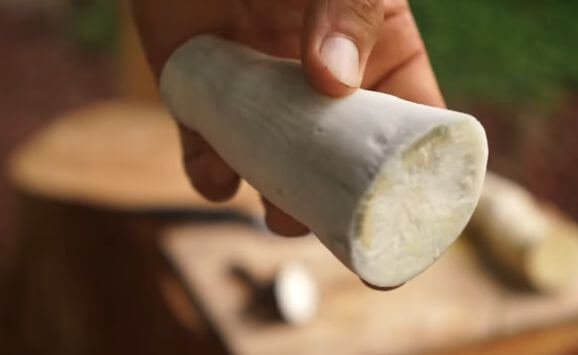
Cassava roots average 20 to 31 percent carbohydrate and 60 to 65 percent moisture, according to an FAO overview of cassava in Sub-Saharan Africa.
This is the tissue that becomes flour, starch, garri, and fufu once processed, as detailed in our post on starch from the cassava root.
4. Vascular Bundles: The Transport Tissue
Scattered through the parenchyma are vascular bundles, the xylem and phloem tissues that once carried water and nutrients while the root was attached to the plant.
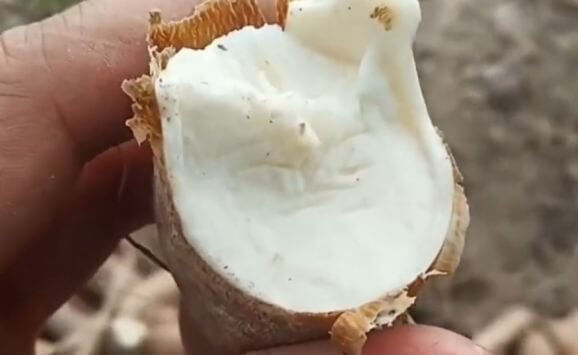
Xylem moves water and minerals upward from the soil, while phloem carries sugars produced by photosynthesis down into the storage root.
These bundles can appear as fine pale lines running through the cut flesh of the root.
The same vascular system connects to the stem cuttings used for planting, as covered in our guide to cassava stem anatomy and care.
5. Central Core: The Fibrous Center
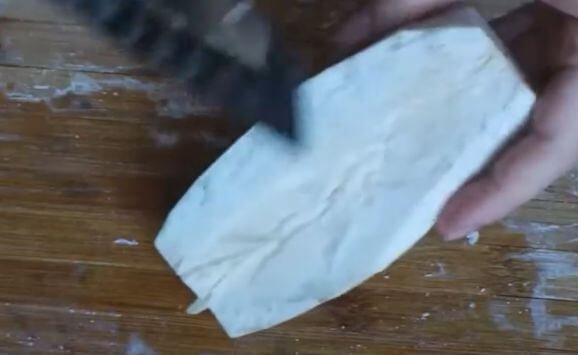
At the center of some roots lies a denser, more fibrous core that runs from the stem end toward the tail.
This core is not present in every root, but when it is, the tissue tends to be tougher and less desirable for eating.
The central pith and cambium layer surrounding it are responsible for the root’s continued expansion during growth, per the FAO compendium cited earlier.
Storage Root vs Fibrous Root
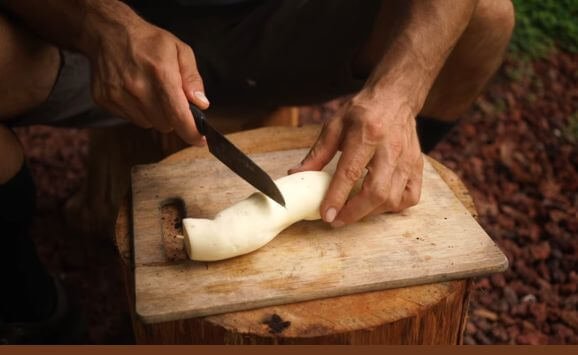
Cassava plants grow two kinds of roots at once, fibrous roots that absorb water and nutrients, and storage roots that swell with starch and become the harvested tuber.
Only the storage root develops the five-layer structure described above, while fibrous roots stay thin and woody, according to a review of cassava storage root anatomy published on IntechOpen.
A single cassava plant can produce up to 14 storage roots, each starting from a different point on the stem cutting or seedling.
Farmers use this bulking pattern to judge timing, a topic covered in our guide on how to harvest cassava roots.
Composition of the Cassava Root by Layer
Composition shifts across the root’s layers, with starch concentrated in the parenchyma and protective compounds concentrated near the skin.
- Periderm: mostly fiber and cyanogenic glycosides, removed entirely during processing
- Cortex: fibrous tissue with minor nutrient content, discarded in commercial milling
- Parenchyma: 60 to 65 percent moisture and up to 31 percent carbohydrate by weight
- Vascular bundles: minimal mass, but necessary for transport function while attached to the plant
- Central core: denser fiber, minimal starch, sometimes absent entirely
The parenchyma also carries resistant starch that behaves differently in digestion, a property explained in our post on cassava root as a source of resistant starch.
Why Root Anatomy Matters for Farmers and Processors
Knowing where each layer sits changes how deep to peel, how much waste to expect, and how much usable starch a batch of roots will yield.
Peeling too shallow leaves cyanogenic compounds in the cortex, while peeling too deep wastes parenchyma that should become flour or garri.
On my own farm in Ntigha, I judge peeling depth by feel, since periderm thickness varies with variety, soil, and root age.
Processors selecting roots for starch extraction look for a thick parenchyma layer and a minimal fibrous core, since both affect extraction yield.
Final Word from Cassava Pathway
The cassava root is built in layers, not one uniform mass of starch.
The periderm and cortex protect the plant, the parenchyma stores the starch that becomes flour, garri, and fufu, and the vascular bundles and central core carry out roles tied to the living plant.
Knowing this anatomy helps farmers choose better peeling methods and helps processors judge starch yield before milling begins.
After three decades on my farm, I still learn something new about root structure each harvest.
Frequently Asked Questions
What are the five parts of cassava root anatomy?
Cassava root anatomy has five parts: the periderm skin, the protective cortex layer beneath it, the starchy parenchyma flesh, scattered vascular bundles, and a tough fibrous central core.
What is the difference between the periderm and cortex?
The periderm is the tough outer skin that shields the root, while the cortex sits beneath it as a secondary protective layer that is fibrous and commercially inedible.
Why do vascular bundles matter in cassava root structure?
Vascular bundles carry water and nutrients through the root while it remains attached to the cassava plant, and they can appear as fine lines running through the flesh.
Does every cassava root have a central core?
Not every cassava root has a distinct central core, but when present, this fibrous tissue is denser than the surrounding parenchyma and less desirable for direct human eating.

Chimeremeze Emeh is a tropical crop farmer and chemical engineer from Ntigha, Isiala Ngwa North LGA, Abia State, Eastern Nigeria, specializing in cassava and palm oil, with over 30 years of hands-on experience growing, harvesting, and processing cassava. He grows TMS series, TME 419, and local traditional varieties on his own farms and operates a small-scale cassava flour and starch production business through Cassava Pathway, which he founded as a CAMA-registered agribusiness in 2024. He is also the founder of Palm Oil Pathway, where he applies the same tropical farming expertise. His farms are located in Ntigha, Abia State.