Processing cassava is where the real income is. A kilogram of raw cassava root sells for next to nothing at the farm gate. The same kilogram processed into garri, cassava flour, or starch multiplies in value several times over.
Yet most smallholder cassava farmers in Nigeria still sell raw roots, not because they do not know processing adds value, but because they lack the practical knowledge, quality standards, and market connections to make processing work commercially.
That is the gap this service addresses.
Cassava Pathway’s processing support is built on direct, hands-on experience.
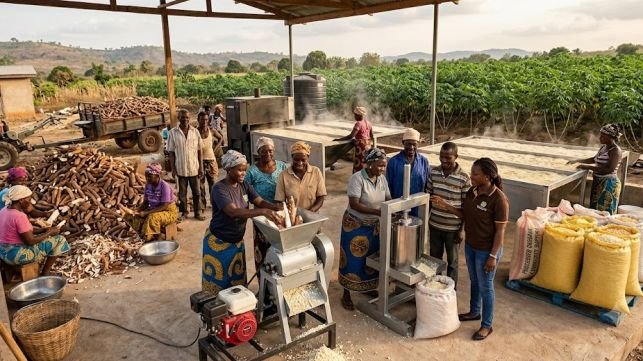
I have personally produced garri, fufu, cassava flour, and cassava starch from roots harvested on my own farm, grating, fermenting, pressing, drying, and milling through every stage of each process.
That experience, combined with a chemical engineering background that helps me understand what happens at each processing stage, is what I bring into training and support sessions.
This is not an instruction assembled from manuals. It is knowledge built from doing the work.
Table of Contents
What Processing Support Do We Currently Provide
Practical Processing Training
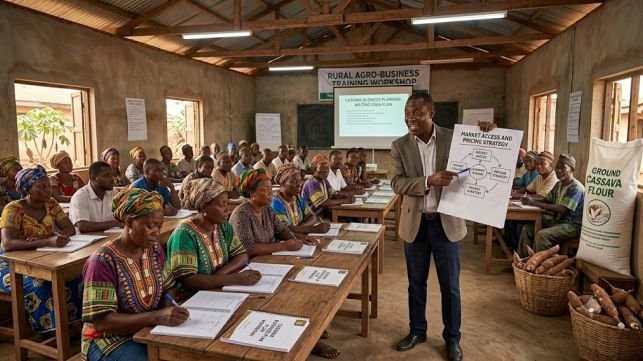
We train farmers and processors on the full processing sequence for cassava’s main product forms: garri, fufu, cassava flour, and cassava starch.
Training covers every stage:
- Peeling and washing to remove contaminants and reduce cyanogenic content
- Grating for efficient breakdown of cassava flesh
- Fermentation timing and management, one of the most critical and most poorly understood stages
- Pressing to remove moisture and control texture
- Drying to the right moisture content for shelf stability and quality
- Milling and sieving for flour and starch products
Each stage is covered practically, not theoretically. Participants leave knowing not just what to do but what goes wrong at each stage and how to fix it, knowledge that only comes from processing experience, not from reading a guide.
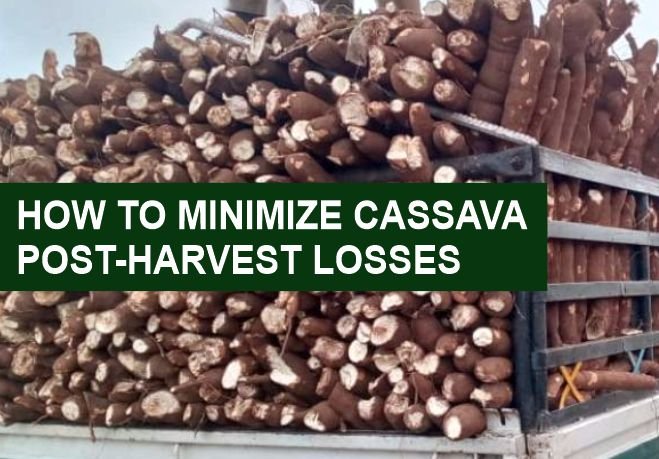
Post-Harvest Loss Reduction
While cassava is widely cultivated across Nigeria, a significant portion is still sold in its raw form, which limits profitability and exposes farmers to post-harvest losses like the cassava glut that happened in 2025.
Cassava roots begin deteriorating within 24 to 72 hours of harvest. Every hour between harvest and processing is an hour of value being lost.
In communities across South Eastern Nigeria, post-harvest losses are one of the biggest drains on cassava farmers’ income, not because of poor farming but because of poor timing and handling after the roots come out of the ground.
We train farmers on how to organise their harvest and processing schedule to minimise that window, how to handle roots between harvest and processing without accelerating deterioration, and how to prioritise which roots to process first based on root condition and intended product.
Quality Control and Food Safety
Processing cassava is not just about transforming roots into products; it is about producing products that buyers will actually pay for.
Quality problems in garri production- wrong moisture content, inconsistent colour, poor fermentation, translate directly into lower prices and rejected batches.
We train processors on the quality standards that matter for each product, how to test and manage moisture content, hygiene practices that protect product safety, and packaging and storage techniques that maintain quality between processing and sale.
Farmers who go through this training produce more consistent products and access better pricing as a result.
Product Diversification Guidance
Most smallholder processors focus on garri because it is familiar. That focus leaves significant income on the table.
Cassava flour commands higher prices in urban bakery markets and industrial food manufacturing.
Cassava starch serves pharmaceutical, cosmetic, and industrial buyers at premium price points.
Cassava chips and pellets serve export markets and animal feed manufacturers.
We help farmers understand which additional products make sense for their current resources, location, and market access, and what investments in equipment and skills are needed to produce them profitably.
The goal is not to encourage overextension but to help processors identify the most realistic next step up the value chain.
Processing Advisory and Troubleshooting
Cassava processing problems do not always appear in training sessions; they appear three months later when a batch of garri comes out the wrong colour, when starch yield is lower than expected, or when a buyer rejects a product for moisture content.
Cassava Pathway provides ongoing advisory support to processors who have been through our training programmes, helping them diagnose and fix problems as they arise rather than losing batches and income while trying to figure it out alone.
What We Are Building Toward
The processing support Cassava Pathway currently provides is knowledge- and advisory-based.
As the organisation grows, the plan is to extend this into facilitated equipment access, helping farmer groups and cooperatives identify, evaluate, and, in some cases, share access to mechanical graters, hydraulic presses, flash dryers, and milling equipment suited to small- and medium-scale operations.
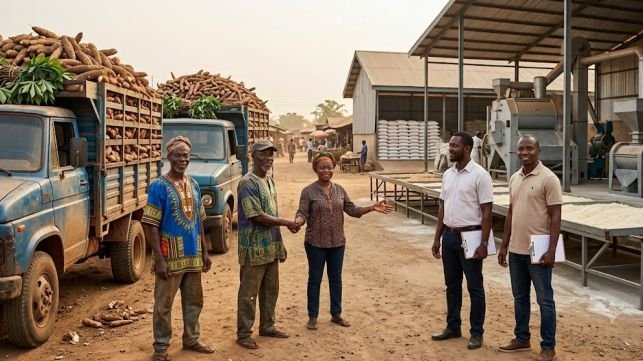
We are also working toward supporting cluster-based processing, organising farmers in the same area into shared processing groups that can pool equipment costs, increase throughput, and meet the volume requirements of larger industrial and export buyers.
That infrastructure takes time to build properly. For now, the knowledge base is active and available.
Who This Is For
- Cassava farmers currently selling raw roots who want to move into processing
- Garri and fufu processors who want to improve quality and access better markets
- Farmers considering cassava flour or starch production who need to understand what is involved before investing
- Processing groups and cooperatives looking to standardise quality across members
- Anyone who has tried cassava processing and run into problems that they cannot diagnose
Get Involved
If you are ready to move your cassava operation beyond raw root sales, contact Cassava Pathway here.
Tell us what you are currently producing, what problems you are running into, and what markets you are trying to reach.
We will tell you honestly what support we can offer right now and what is coming.
Chimeremeze Emeh
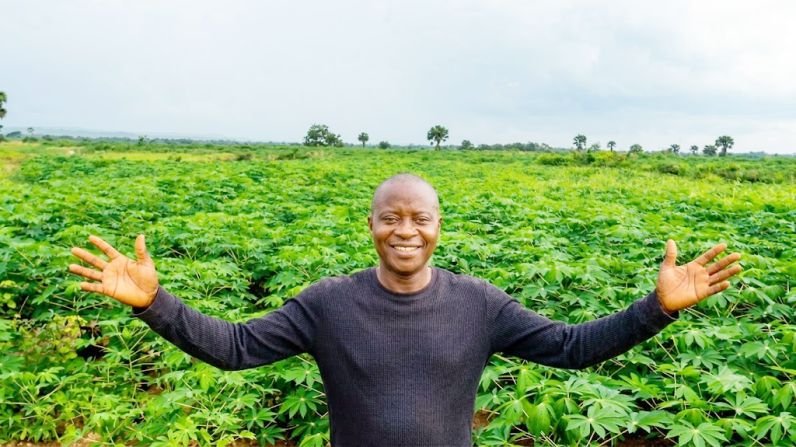
Chimeremeze Emeh is a tropical crop farmer and chemical engineer from Ntigha, Isiala Ngwa North LGA, Abia State, Eastern Nigeria, specializing in cassava and palm oil, with over 30 years of hands-on experience growing, harvesting, and processing cassava. He grows TMS series, TME 419, and local traditional varieties on his own farms and operates a small-scale cassava flour and starch production business through Cassava Pathway, which he founded as a CAMA-registered agribusiness in 2024. He is also the founder of Palm Oil Pathway, where he applies the same tropical farming expertise. His farms are located in Ntigha, Abia State.