Cassava Pathway connects Nigerian cassava farmers to trusted suppliers of certified stems, fertilisers, herbicides, and farm tools to support every planting season.
Getting the right cassava inputs before planting season is one of the decisions that separates a productive cassava farm from a struggling one.
The problem most smallholder farmers face is not that good inputs do not exist; it is knowing where to find them, who to trust, and how to avoid counterfeit or poor-quality products that waste money and reduce yield.
That is the gap Cassava Pathway fills.
We do not manufacture inputs. What we do is maintain direct contact with verified suppliers of the inputs cassava farmers need most, and we connect farmers who ask to those suppliers.
No middleman markup. No guesswork about quality. Just a direct referral to a supplier we know and trust.
This service grew out of a simple reality. As a cassava farmer myself, I have spent years navigating the input supply landscape in South Eastern Nigeria, finding out which agrodealers stock genuine certified stems, which fertiliser sources are reliable, and which crop protection products are safe and effective.
That network of contacts is now available to any farmer who comes to Cassava Pathway needing input guidance.
What We Can Connect You To
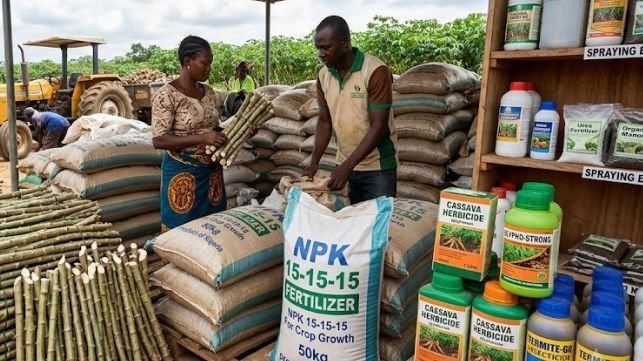
Certified Cassava Stems
The single most important input decision a cassava farmer makes is the planting material, stem selection.
Certified stems from verified sources, including institutions like NRCRI Umudike, giving you disease-free, high-yielding planting material that uncertified market stems cannot guarantee.
We can direct you to reliable stem sources suited to your agro-ecological zone and intended use, whether for garri, flour, starch, or fresh root markets.
Fertilizers
Cassava responds well to balanced NPK fertilisation applied at the right stage and in the right quantities. We connect farmers to trusted fertiliser suppliers and, where needed, guide what to buy, how much to apply, and when, based on the crop stage and soil conditions.
Buying fertiliser from the wrong source or applying it incorrectly wastes money and can damage soil health over time.
Herbicides and Weed Control Products
While we are reluctant to use herbicides and pesticides, we have people who can supply them to farmers who need them.
Weed competition in the first three to five months after planting is one of the biggest threats to cassava yield.
We connect farmers to suppliers of safe, effective herbicides and provide basic guidance on correct application to protect the crop without harming the soil or the farmer.
Pest and Disease Control Products
Cassava mosaic disease, mealybugs, and bacterial blight can devastate a farm if not caught and managed early.
We connect farmers to suppliers of crop protection products and provide referrals to agronomists who can advise on specific pest and disease situations in the field.
Basic Farm Tools
From hoes and cutlasses to planters and sprayers, having the right tools reduces labour costs and improves planting consistency.
We can point farmers toward reliable equipment suppliers depending on farm size and mechanisation needs.
How It Works
It is straightforward. If you need inputs and do not know where to get quality products at fair prices, contact us.
We will point you to the right supplier based on what you need, where you are farming, and what your budget allows.
We do not charge for referrals. This is part of how Cassava Pathway supports smallholder farmers beyond training, making sure that the knowledge gained in our programmes is backed by access to the inputs needed to act on it.
As Cassava Pathway grows, we plan to move toward direct input supply, stocking and distributing certified stems, fertilisers, and tools directly to farming communities.
That infrastructure is being built. For now, the referral network is active and available.
Importantly, Agricultural Input Supply within the Cassava Pathway is closely linked to other functions such as education and training, processing, and market access.
This integrated system ensures that every stage of the value chain is strengthened.
Who This Is For
- Farmers preparing for a new planting season who need certified stem sources
- Farmers who have experienced crop failure and suspect input quality was a factor
- New entrants to cassava farming who do not yet have established supplier relationships
- Farmer groups and cooperatives looking to source inputs in bulk at better prices
Get in Touch
If you need input referrals or guidance on what to buy before your next planting season, contact Cassava Pathway here. Tell us what you need and where you are farming, and we will connect you to the right source.
Chimeremeze Emeh
Chimeremeze Emeh is a tropical crop farmer and chemical engineer from Ntigha, Isiala Ngwa North LGA, Abia State, Eastern Nigeria, specializing in cassava and palm oil, with over 30 years of hands-on experience growing, harvesting, and processing cassava. He grows TMS series, TME 419, and local traditional varieties on his own farms and operates a small-scale cassava flour and starch production business through Cassava Pathway, which he founded as a CAMA-registered agribusiness in 2024. He is also the founder of Palm Oil Pathway, where he applies the same tropical farming expertise. His farms are located in Ntigha, Abia State.