Last updated on September 23rd, 2026 at 07:36 am
Properly processed cassava peel delivers roughly 2.86 megacalories of metabolizable energy per kilogram of dry matter, yet poorly processed peel can carry cyanide levels many times above the tolerable limit, proof that this specific by-product rewards genuine real technical care.
That gap between properly and poorly processed peel is not academic; it determines if this by-product feeds livestock safely or poisons them.
This guide goes deep specifically on cassava peel, not cassava feed broadly, covering the real nutrition profile, the exact processing steps that reduce cyanide to safe levels, and which species can actually digest it well.
You will find genuine cost and economic data, formulation guidance, and honest limitations most overviews skip entirely.
Readers wanting the broader survey across all cassava-based feed forms, including pulp, chips, and pellets, should read our own guide on cassava in animal feeds instead.
Table of Contents
Why Cassava Peel Specifically Matters
Cassava peel carries the highest cyanogenic compound concentration of any part of the root, since the outer cortex layer holds significantly more toxin than the inner flesh.
This is precisely why peel-specific processing deserves closer attention than general cassava-based feed discussions typically give it.
This step fits within the broader cassava processing sequence most operations already follow.
If you want the full science on this concentration gradient, read our guide on making cassava cyanid-free.
Real Nutrition Data for Cassava Peel
Cassava peel typically contains 29.6 percent dry matter, 2.1 percent crude protein, and 52.1 percent neutral detergent fiber.
Starch content ranges from 48 to 56 percent, according to research published in the Journal of the Science of Food and Agriculture.
Its metabolizable energy runs around 2.86 megacalories per kilogram of dry matter, making it a genuinely competitive substitute for maize.
Protein stays consistently low across all processing forms, meaning peel must always pair with protein-rich ingredients like soybean or fish meal.
How to Process Cassava Peel Safely
- Wash and sort. Remove spoiled or moldy sections, and rinse away soil and sand that carry surface microbes.
- Dry thoroughly. Sun or mechanical drying lowers moisture, slowing spoilage and improving shelf stability significantly over raw peel.
- Ferment when possible. Fermentation breaks down cyanogenic compounds naturally, improving both safety and digestibility for livestock feeding.
- Grind into meal. Dried peel ground into fine meal mixes more evenly into compounded feed formulations.
When processing is done correctly, hydrogen cyanide levels in cassava peel feed products stay below 10 parts per million.
This sits well under the 100 parts per million tolerable limit, according to processing guidance from the International Institute of Tropical Agriculture.
Skipping detoxification steps is never worth whatever cost savings it might appear to offer.
Digestibility by Species
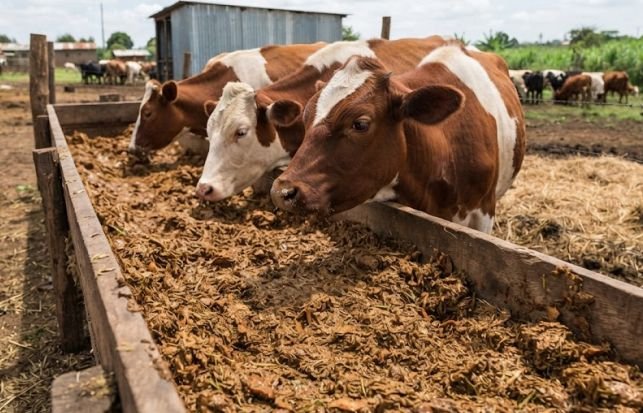
Ruminants such as cattle, sheep, and goats digest cassava peel considerably more efficiently than monogastric animals, since their rumen microbes are built to ferment fibrous material.
The high fiber content in cassava residue specifically makes it more suitable for ruminants and sows than for younger pigs or poultry.
This specific finding comes from a real comparative study published in PMC.
Fermented cassava peel has shown no meaningful difference in feed intake, digestibility, or growth performance compared with conventional concentrate in goats.
This specific finding comes from a real feeding trial published in PMC.
Cost Benefits and Economic Opportunities
Cassava peel reduces dependence on expensive commercial feed by replacing part of the energy component with material typically freely available from processing sites.
In cassava-producing regions, this availability makes peel especially valuable for smallholder farmers working with tight budgets.
Beyond direct feeding, small-scale entrepreneurs can build low-capital businesses collecting, drying, and processing peel into meal for local livestock farmers, strengthening rural economies along the way.
Readers wanting the broader picture of cassava by-products should read our guide on cassava products, and those planning a venture should read our cassava business plan example.
Limitations and Risks
Low protein content means cassava peel cannot support growth or production on its own, regardless of how well it is processed.
Overuse distorts diet balance even when detoxification is done correctly, since excessive inclusion still reduces overall feed quality.
Readers wanting the broader waste-reduction picture should read our cassava processing equipment guide for the tools involved.
Cyanogenic compounds remain the most serious risk, making proper processing non-negotiable rather than optional in any feeding system.
Readers wanting the broader environmental context should read our guide on environmental benefits of cassava.
Conclusion
Cassava peel earns its place in livestock diets when processing gets the details right: proper drying and fermentation bring cyanide down to safe levels well under 10 parts per million.
Its energy value, around 2.86 megacalories per kilogram of dry matter, suits ruminants well, while pigs and poultry need more caution and lower inclusion rates.
Low protein means it must pair with soybean or fish meal for balanced nutrition. Skipping detoxification is never worth the risk.
Frequently Asked Questions
How much energy does cassava peel provide in animal feed?
Properly processed cassava peel delivers roughly 2.86 megacalories of metabolizable energy per kilogram of dry matter, making it a genuinely cost-effective substitute for maize in many livestock diets.
Is cassava peel safe for all livestock species?
No, ruminants like cattle and goats digest cassava peel far more efficiently than pigs or poultry, which genuinely need much lower inclusion rates and additional careful processing overall.
How is cyanide reduced in cassava peel for feed?
Drying and fermentation break down cyanogenic compounds naturally, and when processing is done correctly, hydrogen cyanide levels stay well below the safety limit of 10 parts per million.
Can cassava peel replace commercial feed entirely?
No, cassava peel is low in protein and should genuinely never fully replace commercial feed, but rather supplement it alongside protein-rich ingredients like soybean or fish meal instead.

Chimeremeze Emeh is a tropical crop farmer and chemical engineer from Ntigha, Isiala Ngwa North LGA, Abia State, Eastern Nigeria, specializing in cassava and palm oil, with over 30 years of hands-on experience growing, harvesting, and processing cassava. He grows TMS series, TME 419, and local traditional varieties on his own farms and operates a small-scale cassava flour and starch production business through Cassava Pathway, which he founded as a CAMA-registered agribusiness in 2024. He is also the founder of Palm Oil Pathway, where he applies the same tropical farming expertise. His farms are located in Ntigha, Abia State.