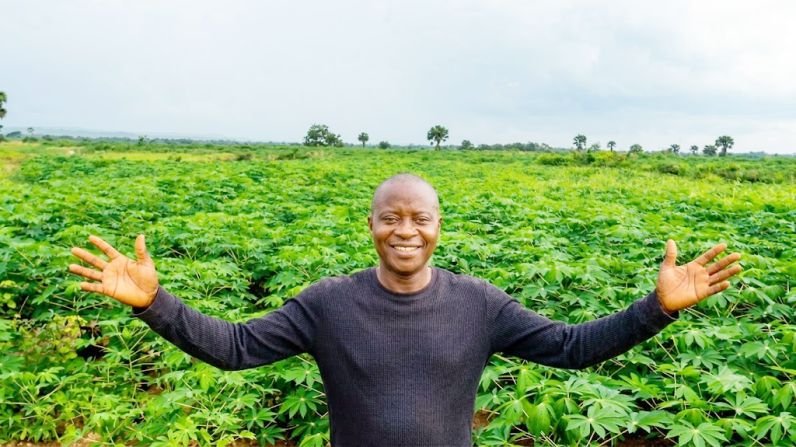
I am Chimeremeze Emeh, a cassava farmer from Ngwa land in the Eastern part of Nigeria, with over 30 years of hands-on experience growing, harvesting, and processing cassava.
But this story did not begin with me.
Roots: Growing Up in a Cassava Culture
Among my people, the Ngwa of Eastern Nigeria, cassava is not merely a crop; it is a way of life. Every family cultivates at least two cassava farmlands each season.
The logic is elegant and ancient: while the new farm is growing, the farm planted the previous year is already mature and feeding the household.
Cassava provides the carbohydrate backbone of daily life: garri in the morning, fufu in the evening, and the security of knowing the land will not let your family go hungry.
My mother farmed cassava. My father farmed yam while doing their other vocation.
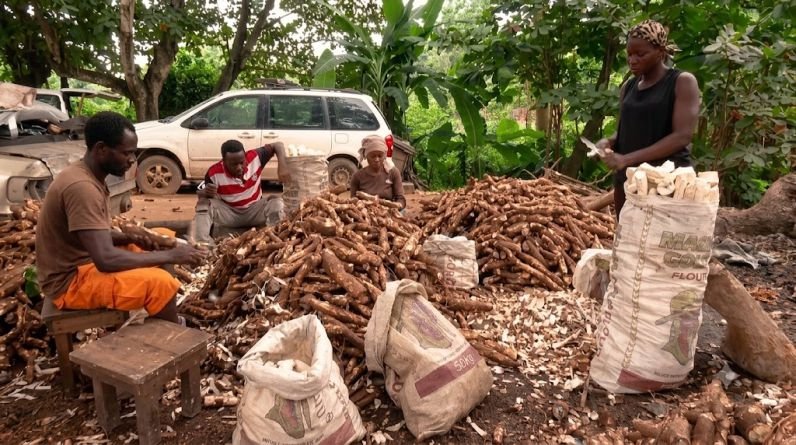
And as children, we worked both. From the earliest age I can remember, I was part of the rhythm of the farming year, clearing bush with a machete, tilling the earth, forming the mounds, pressing cassava stems into the soil, weeding between the rows under the heat of the Eastern Nigerian sun, digging up the tubers at harvest, and bringing them home for peeling, grating, fermenting, pressing, and frying/roasting into garri.
All of it done by hand, with local tools, the way our grandparents had done it before us.
That is where my cassava education began, not in a classroom, but in the field beside my mother.
30 Years in the Soil
Today, I farm my own land. On my 1–3 acre farm, I have grown several varieties over the decades, including TMS 419, TME 419, and local traditional varieties passed down through generations in my community.
I know the differences between them not from textbooks, but from planting them side by side and watching them grow, how they behave in our soil, how long they take to mature, how they yield at harvest, and how they process into garri, fufu, and flour.
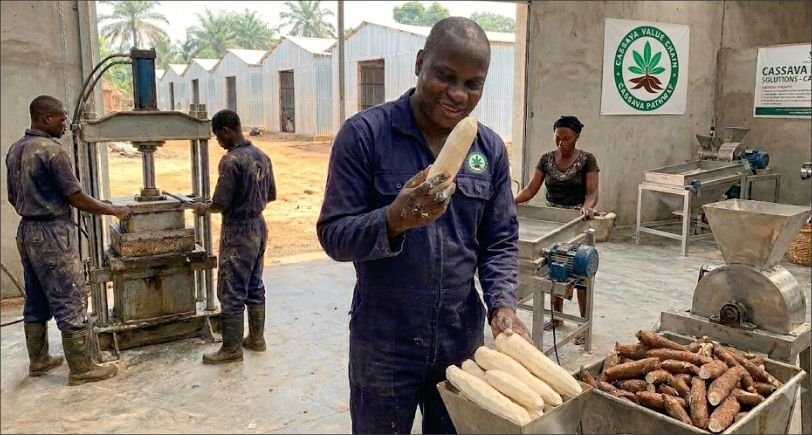
My cassava journey covers the full value chain. I grow it, I harvest it, I process it, grinding, fermenting, pressing, and frying garri the way it has been done in Ngwa land for generations.
I also sell fresh tubers and supply processors and traders in my local market. From stem to shelf, I have done every step myself.
That end-to-end experience, the kind you can only gain by doing the work season after season, year after year, is what informs everything I write on Cassava Pathway.
Why I Built Cassava Pathway
I have attained formal education and built skills in other areas. But cassava is where I belong.
And for years, something troubled me: the young people of my generation and those after us have largely turned away from farming.
A livelihood that sustained entire communities, that put food on tables and built family wealth, is being abandoned, not because it is not valuable, but because it has not been given the attention, the investment, or the respect it deserves.
At the same time, I noticed that most information about cassava online comes from researchers, institutions, and academics, people who study the crop from the outside.
There is very little written by people who have actually farmed it, processed it, and sold it for decades.
That is the gap I created cassavavaluechain.com to fill.
Cassava Pathway exists to bring knowledge back to the soil, practical, field-tested understanding of cassava from someone who has knelt in the earth to plant the stems, dug up tubers with their own hands, operated a cassava grinder, and sold in a local market.
My goal is to give cassava the serious attention it deserves, and to show the next generation that this crop is not a relic, it is an opportunity.
Where Cassava Pathway is Headed
Three decades of farming have shown me one thing clearly: cassava is one of the most underutilised crops in Africa.
We grow enormous quantities of it, yet most of it is processed at the most basic level, or not processed at all.
The gap between what cassava is and what it could be is vast, and that gap is where I want to build.
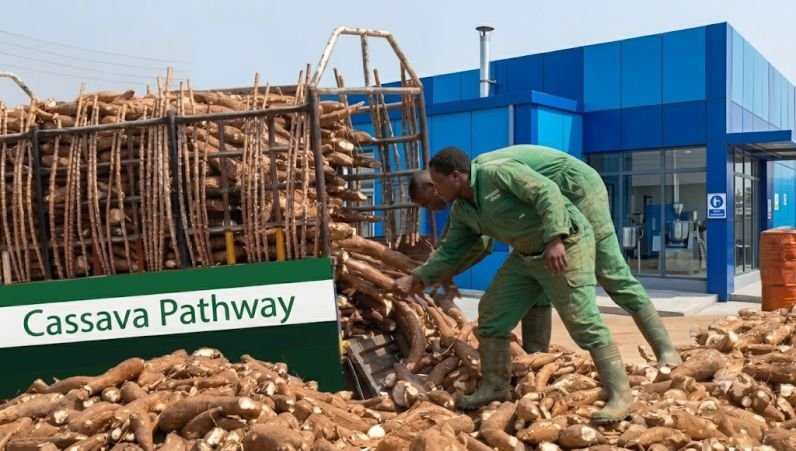
Cassava Pathway is in the final stages of establishing a modern cassava processing plant, one that moves far beyond garri and fufu into the high-value industrial products that the world already demands.
Cassava starch, used in food manufacturing, paper, textiles, and adhesives. Sorbitol, derived from cassava glucose, with applications across pharmaceuticals, cosmetics, and the food industry.
These are not niche products; they are globally traded commodities, and Nigeria grows the raw material in abundance.
But the vision goes further still. What most processors discard, I see as an entirely new value stream.
Cassava generates residues and waste at every stage of processing: peels, pulp, fibrous waste, and wastewater.
Cassava Pathway’s plan includes converting these by-products into cassava-based animal feed, and into energy through biogas and other waste-to-energy pathways.
A zero-waste processing model, where every kilogram of cassava that enters the plant generates value before anything leaves it.
This is not an abstract vision. It is the direction that 30 years of working with this crop has been pointing me toward.
Every article I research and write on this site: the agronomy, the processing science, the industrial applications, the value chain economics- is part of building the knowledge foundation for that future.
If you are an investor, a development organisation, or an industry partner who shares this vision of building a zero-waste cassava processing future in Nigeria, I would be very glad to connect.
Have a question about cassava farming, processing, or tapioca applications? Feel free to reach out through the Contact page.