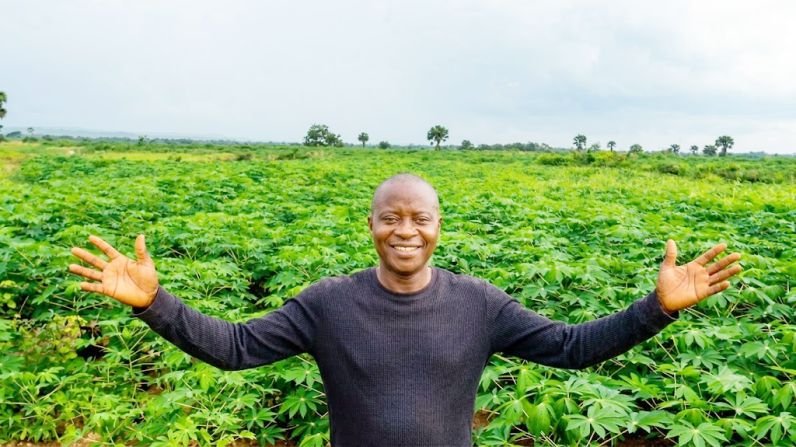
I am Chimeremeze Emeh, a cassava farmer, chemical engineer, and agribusiness entrepreneur from Ngwa land in Eastern Nigeria.
I have grown, harvested, and processed cassava for over 30 years, starting as a child on my mother’s farm and continuing today on my own land in Ntigha, Isiala Ngwa North LGA, Abia State.
Cassava is not something I studied from a distance. It is something I have lived from the inside, season after season, root to shelf.
Quick Credentials
- Years farming cassava: 30+
- Location: Ntigha, Isiala Ngwa North, Abia State, Nigeria
- Qualification: B.Eng Chemical Engineering
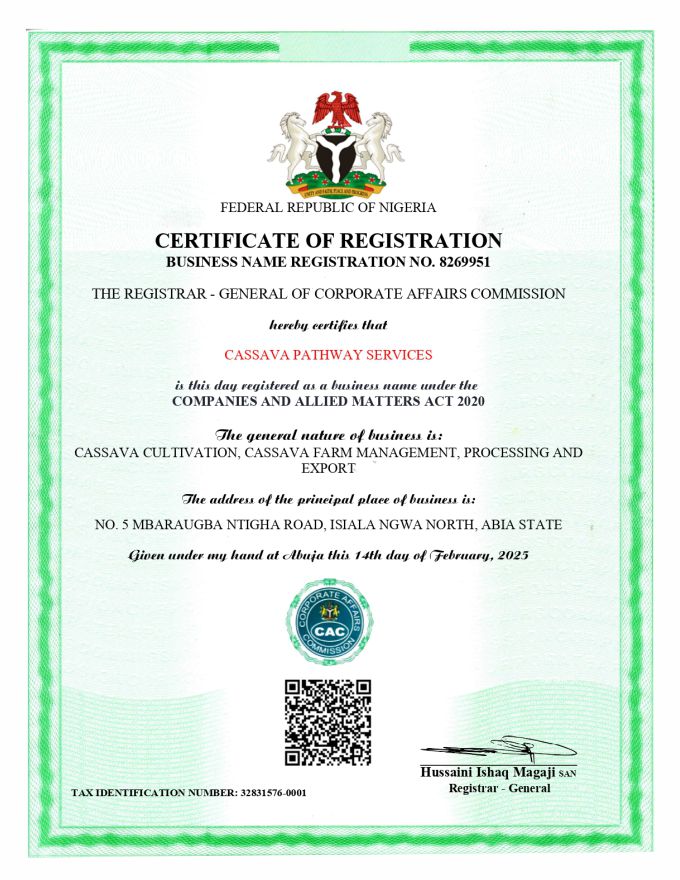
- Business registration: Cassava Pathway, CAMA 2020
- Cassava varieties grown: TMS 419, TME 419, traditional Ngwa varieties
- Products produced: Cassava flour, cassava starch, garri, fufu
Roots: Growing Up in a Cassava Culture
Among my people, the Ngwa of Eastern Nigeria, cassava is not merely a crop.
It is a way of life. Every family cultivates at least two cassava farmlands each season.
The logic is elegant and ancient: while the new farm is growing, the farm planted the previous year is already mature and feeding the household.
Cassava provides the carbohydrate backbone of daily life. Garri in the morning, fufu in the evening, and the security of knowing the land will not let your family go hungry.
I grew up eating garri, fufu, abacha, and boiled cassava as daily household food. These are not foods I discovered later in life. They are foods that shaped me.
My mother farmed cassava. My father farmed yam alongside his other work. As children, we worked together.
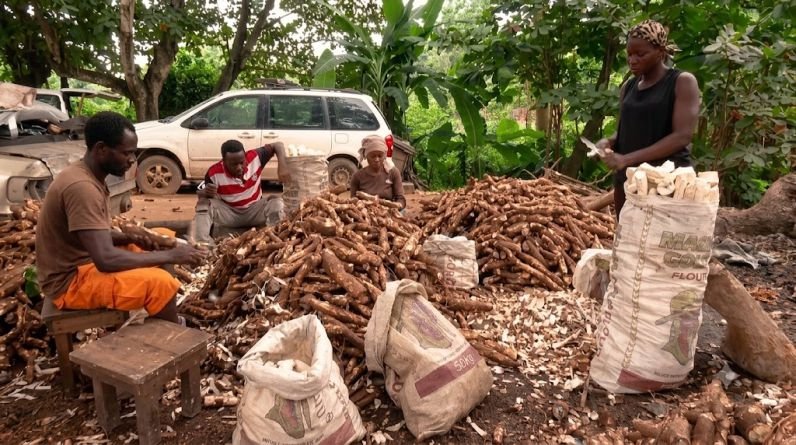
From the earliest age I can remember, I was part of the rhythm of the farming year, clearing bush with a machete, tilling the earth, forming the mounds, pressing cassava stems into the soil, weeding between the rows under the heat of the Eastern Nigerian sun, digging up the tubers at harvest, and bringing them home for peeling, grating, fermenting, pressing, and frying into garri.
All of it done by hand, with local tools, the way our grandparents had done it before us.
That is where my cassava education began, not in a classroom, but in the field beside my mother.
30 Years in the Soil
Today I farm my own land. On my 1- to 3-acre farm in Ntigha, I have grown several varieties over the decades, including TMS 419, TME 419, and local traditional varieties passed down through generations in my community.
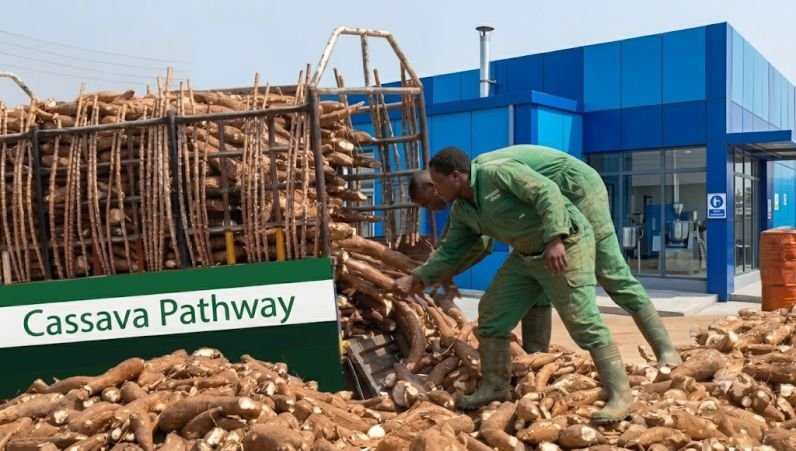
I know the differences between these varieties not from textbooks, but from planting them side by side and watching them grow. How they behave in our soil, how long they take to mature, how they yield at harvest, how they are processed into garri, fufu, and flour.
That kind of knowledge only comes from doing the work year after year.
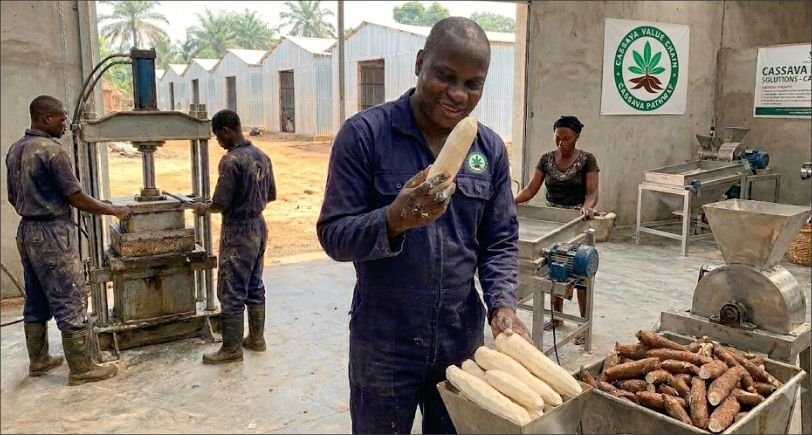
My cassava journey covers the full value chain. I grow it, I harvest it, I process it, grinding, fermenting, pressing, and frying garri the way it has been done in Ngwa land for generations.
I also sell fresh tubers and supply processors and traders in my local market. From stem to shelf, I have done every step myself.
The Engineering Behind the Farming
I hold a Bachelor of Engineering degree in Chemical Engineering from Enugu State University of Science and Technology, obtained in 2007.
That academic foundation changed how I see cassava processing in ways I did not fully appreciate until I began producing cassava flour and starch at a commercial level through Cassava Pathway.
Chemical engineering gives me the technical language to understand what is happening during starch extraction, moisture reduction, fermentation chemistry, and product quality control.
When something goes wrong in a processing run, I do not just observe the problem.
I can reason through the chemistry behind it and find a practical solution.
When I launched Cassava Pathway’s small-scale flour and starch operation, I started with simple kitchen equipment, a blender, an oven, and sieves.
That was not a limitation. It was a deliberate learning process. I needed to understand every bottleneck, every loss point, and every quality variable before investing in industrial equipment.
My engineering training made that diagnostic thinking natural.
That combination of 30 years of farm experience and a chemical engineering degree is what makes my perspective on cassava processing different from most of what you will find online.
Why I Built Cassava Pathway
For years, something troubled me. The young people of my generation and those after us have largely turned away from farming.
A livelihood that sustained entire communities, that put food on tables and built family wealth, is being abandoned.
Not because it is not valuable, but because it has not been given the attention, the investment, or the respect it deserves.
At the same time, I noticed that most information about cassava online comes from researchers and institutions who study the crop from the outside.
There is very little written by people who have actually farmed it, processed it, and sold it for decades.
Also, in my region, the Eastern region of Nigeria, there is hardly a modern cassava processing plant, and this has made the cassava farmers in this region reluctant, because after harvest, there is no company to sell to.
Most of the companies are situated in Lagos, Ogun State, Benue, which is a long distance to transport cassava roots with two days shelf life, and besides, there will be no profit.
Secondly, there is no resource to establish proper cassava processing plants. This is the bottleneck my people battle with. You can read about a 2023 study on 15 cassava farmers in Ntigha and their experiences.
That is the gap Cassava Pathway was built to fill.
I launched cassavavaluechain.com to bring knowledge back to the soil.
Practical, field-tested knowledge of cassava from someone who has knelt in the earth to plant the stems, dug up tubers with his own hands, operated a cassava grinder, and sold in a local market.
My goal is to give cassava the serious attention it deserves and to show the next generation that this crop is not a relic. It is an opportunity.
Cassava Pathway is officially registered under the Companies and Allied Matters Act 2020 (CAMA) in the Federal Republic of Nigeria, authorized to operate in cassava cultivation, farm management, processing, and export services.
Where Is the Cassava Pathway Headed
Three decades of farming have shown me one thing clearly. Cassava is one of the most underutilized crops in Africa.
We grow enormous quantities of it, yet most of it is processed at the most basic level, or not processed at all.
The gap between what cassava is and what it could be is vast, and that gap is where I want to build.
Cassava Pathway is working toward establishing a modern cassava processing plant in Nigeria, one that moves far beyond garri and fufu into the high-value industrial products the world already demands.
Cassava starch for food manufacturing, paper, textiles, and adhesives. Sorbitol is derived from cassava glucose, with applications across pharmaceuticals, cosmetics, and the food industry.
These are not niche products. They are globally traded commodities, and Nigeria grows the raw material in abundance.
The vision goes further still. What most processors discard, I see as an entirely new value stream.
Cassava generates residues and waste at every stage of processing: peels, pulp, fibrous waste, and wastewater.
Cassava Pathway’s plan includes converting these by-products into cassava-based animal feed and into energy through biogas and other waste-to-energy pathways.
A zero-waste processing model, where every kilogram of cassava that enters the plant generates value before anything leaves it.
This is not an abstract vision. It is the direction that 30 years of working with this crop has been pointing me toward.
Every article I research and write on this site, the agronomy, the processing science, the industrial applications, the value chain economics, is part of building the knowledge foundation for that future.
My Other Work
Beyond cassava, I write about palm oil at palmoilpalm.com, another crop deeply embedded in the agricultural culture of Eastern Nigeria.
My interest in African agricultural value chains, traditional crops, and making practical farming knowledge accessible online runs through everything I do.
Get In Touch
If you are an investor, a development organization, an industry partner, or a fellow cassava farmer who wants to connect, I would be very glad to hear from you.
- Email: chimeremeze@cassavavaluechain.com
- WhatsApp: +234 7036765687
- Location: Abia State, Eastern Nigeria
Have a question about cassava farming, processing, or the cassava value chain? Visit the Contact page and reach out directly.