Last updated on August 1st, 2026 at 08:41 am
I produce both flours from the same cassava roots in my small operation, and people still constantly ask me if they are the same product. They are not, and mixing them up ruins more recipes than you would expect.
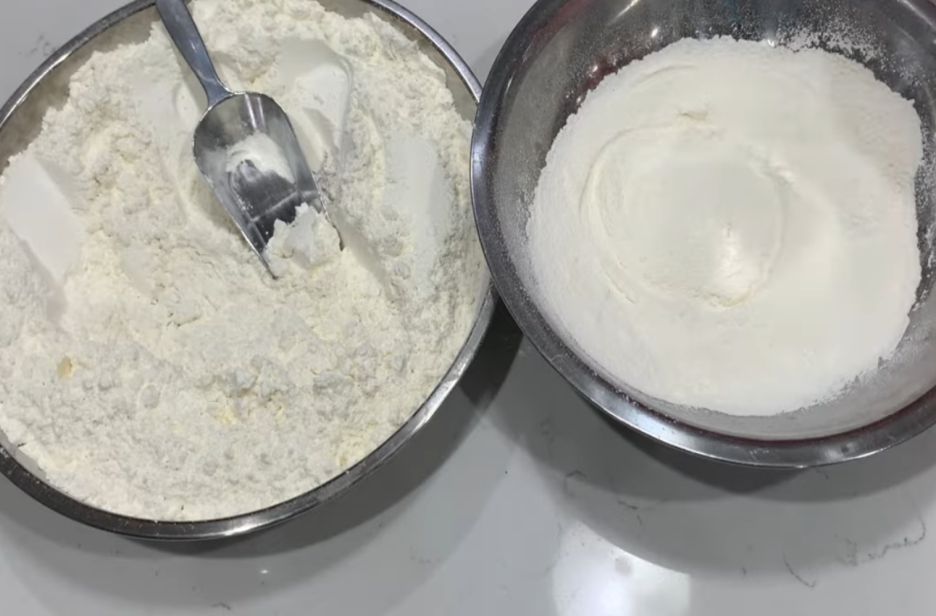
Cassava flour and tapioca flour both come from the same cassava root, which is exactly why people often confuse them.
Cassava flour uses the whole root, keeping fiber and nutrients that give it an earthy taste and a texture close to wheat flour.
Tapioca flour is pure extracted starch, almost entirely carbohydrate, with a neutral flavor and a fine, silky texture.
That difference in processing changes everything about how each flour performs, from nutrition to how it thickens a sauce or structures a loaf of bread.
This guide compares both using USDA nutrition data, so you know exactly which one your recipe actually needs.
Table of Contents
How Each Flour Is Actually Made
Cassava flour comes from peeling, drying, and grinding the entire root, keeping the fiber and nutrients present in cassava, covered in our complete cassava flour guide.
Tapioca flour, sometimes called tapioca starch, comes from washing the starch out of grated cassava root.
That starch then dries into a fine white powder with almost nothing left but carbohydrate.
In my own operation, both products start from the same batch of roots.
The starch is extracted along the way, while the whole-root flour is finished separately at the end.
Nutrition Side by Side
Cassava flour and tapioca flour diverge sharply, despite sharing the same source crop.
| Nutrient (per 100g) | Cassava Flour | Tapioca Flour |
|---|---|---|
| Calories | 360 kcal | 333 kcal |
| Carbohydrates | 87g | 87g |
| Protein | 1 to 2g | 0g |
| Fat | 0.5g | 0g |
| Fiber | 3g | 0g |
Cassava flour figures come from USDA-sourced nutrition data, and tapioca flour figures come from a USDA-sourced branded product entry for tapioca starch.
Both flours carry a similar carbohydrate load, but cassava flour retains fiber, protein, and trace micronutrients that tapioca loses entirely during starch extraction.
That resistant starch and fiber content may support gut health as a prebiotic, an area covered by resistant starch research published on PMC.
Our post on health benefits of cassava flour covers what this fiber and nutrient content actually does for you.
Texture, Baking, and Thickening
Cassava flour adds real structure to baked goods, working close to a 1:1 wheat substitute in bread, tortillas, and cakes.
Tapioca flour creates lighter, chewier, and glossier results instead, which is why it shows up in Brazilian cheese bread and as the base for boba pearls.
Cassava starch carries an amylose content of roughly 16 to 18 percent, meaning amylopectin makes up most of the rest.
This comes from our own tapioca starch composition guide, and that high amylopectin share gives tapioca its characteristic chew.
As a thickener, tapioca flour produces a clear, glossy finish in sauces and pie fillings.
Cassava flour thickens to a slightly cloudier, heartier result better suited to stews.
These guides to tapioca and tapioca pearls cover this starch product in far more depth than fits here.
Which One Should You Choose
Choose cassava flour if you need a 1:1 wheat substitute for bread, tortillas, or muffins that require real structure, or if you want the added fiber.
Commercial gluten-free flour blends commonly combine a structural flour like cassava with a starch like tapioca to balance density and elasticity.
This approach is described in a review of gluten-free flour formulation published on PMC.
Choose tapioca flour if you need a clear, glossy thickener for soups and sauces, or chewiness in cookies and gluten-free baked goods.
If cyanide safety is a concern with either product, our post on does cassava flour contain cyanide addresses processing standards directly.
For other gluten-free alternatives, our comparisons of cassava flour vs arrowroot and cassava flour vs chickpea flour cover two more options worth considering.
Conclusion
Cassava flour and tapioca flour come from the same root but serve completely different jobs in your kitchen.
Choose cassava flour when you need structure and nutrition, for bread, tortillas, and general baking that should behave like wheat.
Choose tapioca flour when you need a clear, glossy thickener or extra chewiness in cookies and Brazilian cheese bread.
On my own farm, I make both from the same harvest, and keeping both on hand gives you real flexibility.
Combine them in gluten-free blends when you want structure and elasticity together.
Frequently Asked Questions
Are cassava flour and tapioca flour the same thing?
No, cassava flour uses the whole root and retains fiber, while tapioca flour is pure starch extracted from the same root, with no fiber remaining.
Which flour is better for baking bread?
Cassava flour provides more structure for bread and muffins, while tapioca flour adds chewiness to cookies and crispiness to pie crusts.
Is tapioca flour a good thickener for sauces?
Yes, tapioca flour makes an excellent thickener for soups, sauces, and puddings, creating a glossy, clear texture that cassava flour cannot match.
Which flour is more nutritious overall?
Cassava flour is more nutritious, since it contains fiber and modest vitamins and minerals, while tapioca flour is nearly pure carbohydrate.

Chimeremeze Emeh is a tropical crop farmer and chemical engineer from Ntigha, Isiala Ngwa North LGA, Abia State, Eastern Nigeria, specializing in cassava and palm oil, with over 30 years of hands-on experience growing, harvesting, and processing cassava. He grows TMS series, TME 419, and local traditional varieties on his own farms and operates a small-scale cassava flour and starch production business through Cassava Pathway, which he founded as a CAMA-registered agribusiness in 2024. He is also the founder of Palm Oil Pathway, where he applies the same tropical farming expertise. His farms are located in Ntigha, Abia State.