Last updated on August 2nd, 2026 at 01:10 pm
Every dry season, my family turns baskets of freshly dug cassava roots into crunchy garri flakes, the same way my grandparents did decades ago on our Ntigha farmland in Abia State, using fermentation, pressing, and open-fire roasting passed down generations.
Garri is fermented, roasted cassava flakes eaten across West Africa as a daily staple, a snack, and a base for the swallow dish called eba.
I am Chimeremeze Emeh, a cassava farmer and chemical engineer from Ntigha, Abia State, and I process garri from my own harvest every other month for family use.
This guide walks through both the traditional local method my family has practiced for decades and the modern industrial method now used by larger processors.
You will learn the fermentation science, garri’s full nutrition profile, cyanide safety guidance, and where cassava flakes fit into world trade today.
Table of Contents
What Is Garri, Exactly?
Garri is a granular, gluten-free cassava product made by peeling, grating, fermenting, dewatering, and roasting fresh cassava roots.
The finished flakes are crunchy, tangy, and shelf-stable for months when stored correctly in a dry place.
Nigerians eat it soaked in cold water with sugar and groundnuts, or scalded with hot water into a stretchy dough called eba.
Garri is one of the most affordable sources of calories across West African households.
It shares shelf space with cousins like fufu and high-quality cassava flour on the family table.
A Brief History of Garri in West Africa
Cassava arrived in West Africa from South America centuries ago, carried by Portuguese traders along the coast.
Local communities needed a way to preserve the perishable root, since fresh cassava spoils within days of harvest.
Fermenting and roasting the grated pulp solved two problems at once, extending shelf life while reducing natural toxins in the root.
Garri became a food security backbone during wars, droughts, and trade disruptions across the region.
Today it remains a cultural touchstone as much as a meal, tied closely to the farming seasons and labor described in our cassava harvest timing post.
Types of Nigerian Garri
Nigeria produces several regional varieties of garri, each shaped by local taste and processing habits.
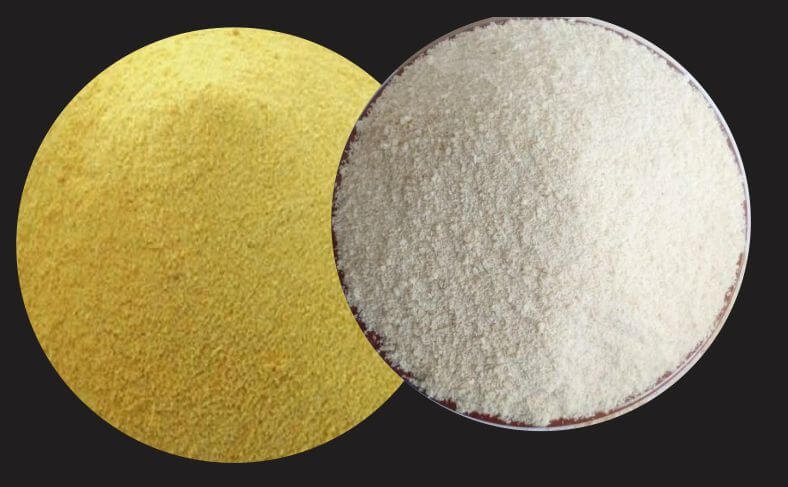
- Yellow garri gets its color from red palm oil stirred in during frying, giving it a richer aroma and a slightly higher price.
- White garri is fried without oil, leaving a plainer taste that many households prefer for soaking.
- Ijebu garri comes from the Ijebu area of southwestern Nigeria, prized for its sharp, sour tang from extended fermentation.
Each type starts from the same cassava varieties and follows the same core steps, only differing in fermentation length and frying additions.
Nutritional Profile of Garri
Garri is calorie-dense and carbohydrate-heavy, making it a reliable energy source for physically demanding work.
A 2026 systematic review of Nigerian garri studies found the product runs 70 to 88 percent carbohydrate by weight, according to OPAST Publishers.
Protein, fat, and fiber levels stay comparatively modest, ranging from 0.3 to 5.0 percent protein and 0.4 to 3.0 percent fiber depending on variety.
Garri contains almost no fat and no gluten, which explains its growing popularity among readers seeking gluten-free cassava foods in the United States and Europe.
It is not, however, a strong protein source, so households typically pair it with protein-rich soups rather than eating it alone.
| Nutrient | Amount (dry weight) |
|---|---|
| Carbohydrate | 70 to 88 percent |
| Protein | 0.3 to 5.0 percent |
| Fat | 0.2 to 1.5 percent |
| Fiber | 0.4 to 3.0 percent |
| Gluten | None (naturally gluten-free) |
| Cholesterol | None |
Readers managing diabetes or watching carbohydrate intake should review our detailed breakdown of cassava and blood sugar before making garri a regular part of the diet.
How Fermentation Makes Garri Safe to Eat
Fresh cassava root contains cyanogenic glucosides, natural compounds that release cyanide when plant tissue is damaged.
Grating the root ruptures plant cells, bringing the enzyme linamarase into contact with linamarin and starting breakdown right away.
A peer-reviewed review of cassava detoxification research found that grating alone removes about 95 percent of linamarin within three hours (Gavin Publishers cyanide review).
Fermentation over one to three days continues breaking down remaining compounds through acid-producing bacteria that lower the mash’s pH.
Roasting finishes the job, driving off residual hydrogen cyanide as steam during high-heat frying.
Market testing in Edo State found finished garri averaging around 5 parts per million cyanide.
That falls comfortably inside the FAO-recommended safe limit of 10 milligrams per kilogram dry weight (cyanogenic glucoside study, Okada, Nigeria).
Processing shortcuts matter enormously here, a point covered further in our guides to removing cyanide from cassava root and cyanide poisoning risks.
How I Process Garri the Traditional Way
Growing up on my family’s cassava farm in Ntigha, we processed garri from our own roots every few weeks.
It was the most eaten food in our house, alongside fufu and boiled yam.
We kept a rotation of farms at different growth stages, harvesting mature cassava while newer plots matured behind it.
I describe this rhythm in more detail in my post on harvesting cassava roots. Here is the traditional sequence my family still follows on our farm today.
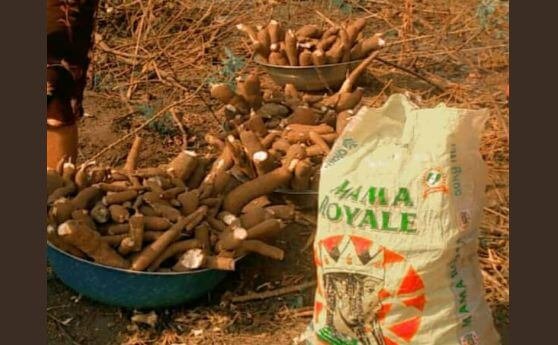
- Harvest and rest. Roots are pulled from the mound, brought home, and left for about two days before processing begins.
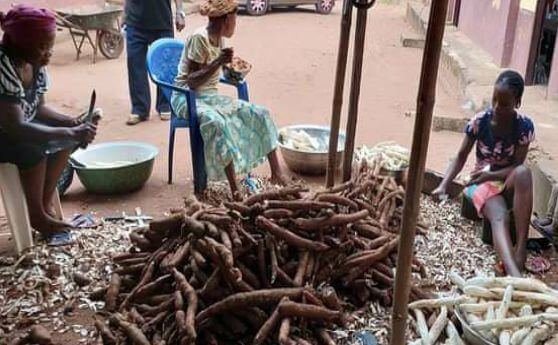
- Peel, wash, and grate. The peeled roots are washed and grated into a wet mash, a step covered fully in our guide to washing and cleaning cassava roots.
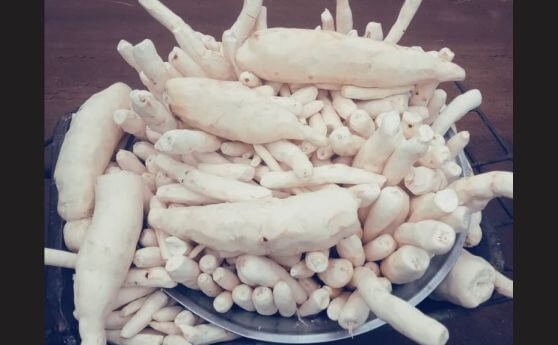
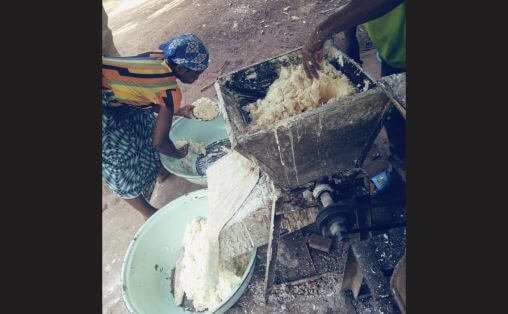
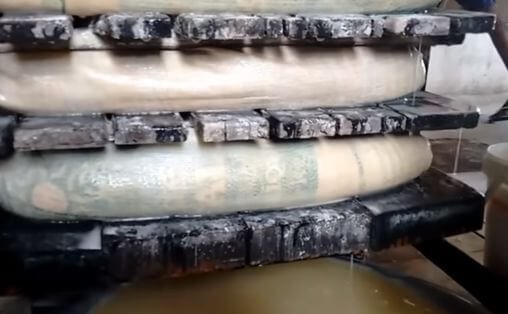
- Press and ferment. The mash is bagged and pressed with locally made equipment, draining liquid while fermentation runs for one to three days.
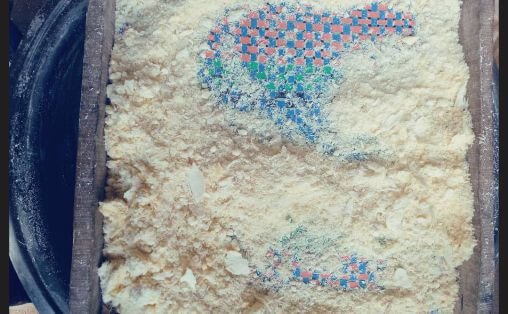
- Sieve. Once fermented, the caked mash is broken up and passed through a basket sieve to create even granules.
- Fry/Roast. The sieved granules are stirred by hand in a wide pan over an open fire until crisp, with red palm oil added for yellow garri.
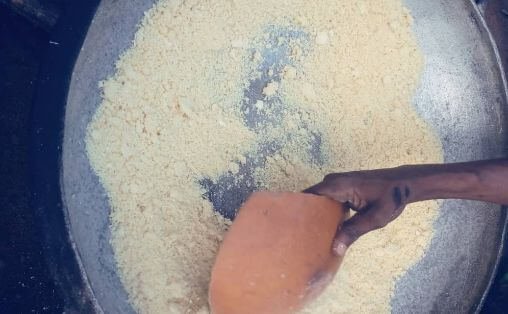
This traditional route requires almost no capital investment, which is why it remains dominant across smallholder communities described in our profile of Nigerian smallholder cassava farmers.
For a full breakdown of both old and new techniques side by side, see our post on traditional cassava processing methods.
The Modern Industrial Method for Garri Production
Larger processors now rely on dedicated machines at every stage, cutting labor time while improving consistency batch to batch.
- Washing machines remove sand and debris before peeling begins, protecting downstream equipment from grit damage.
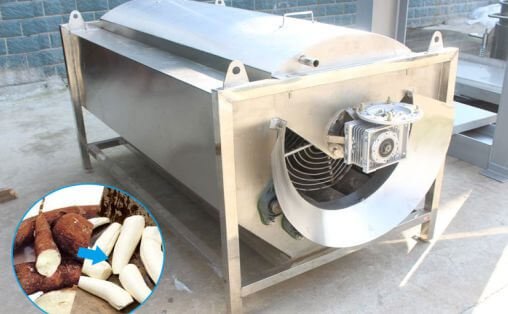
- Mechanical peelers use a motorized sand roller to strip the outer skin without harming the inner root, detailed in our cassava peeling machine guide.
- Grating machines pass roots through toothed rollers that mash them into a fine, uniform paste, covered in our cassava grater machine guide.
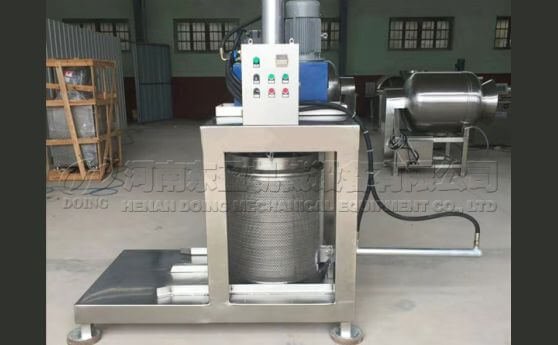
- Hydraulic dewatering presses compress bagged mash to remove liquid far faster than manual pressing.
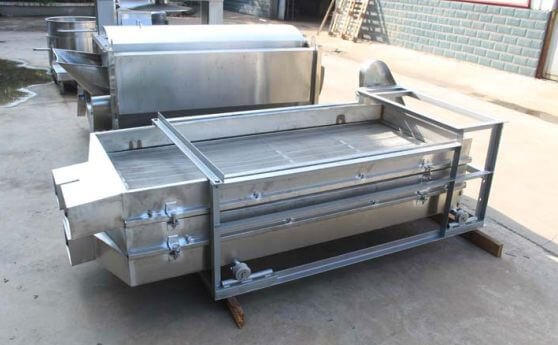
- Sieving machines vibrate the dried, fermented product through mesh screens for uniform granule size, as explained in our cassava sieving machine guide.
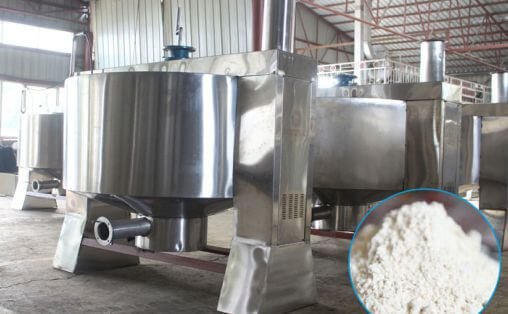
- Frying equipment uses steel compartments with electric or diesel heating and rotating stirrers for even roasting.
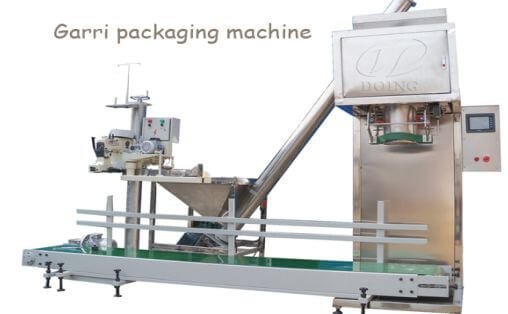
- Packaging lines weigh, bag, and seal finished garri automatically for retail or export shipment.
Processors weighing an equipment investment should start with our cassava processing equipment guide, which compares machine costs against expected throughput.
Smaller operations typically begin with our list of affordable processing machines for small businesses before scaling further.
Ways Garri Is Eaten
Garri shows up on West African tables in several forms, depending on the meal and the household.
- Soaked and sweetened, mixed with cold water, sugar, and groundnuts or coconut for a quick snack or breakfast.
- Cooked into eba, scalded with hot water and kneaded into a stretchy dough eaten with soups like egusi or okra.
- Blended into a pudding, especially with Ijebu garri, chilled and served at celebrations as a sweet treat.
Pair it with any of our cassava-based soup and swallow recipes for a complete traditional meal.
Garri in the Global Cassava Market
Nigeria remains the undisputed leader in raw cassava output, and garri sits at the center of how that root gets consumed domestically.
FAOSTAT figures place Nigeria’s cassava production above 60 million metric tonnes a year, more than 20 percent of total global output (FAOSTAT-cited comparative production study).
Domestic demand for garri alone is enormous, easily outpacing Nigeria’s export volumes.
A C:AVA market assessment estimated Nigerian garri sales at roughly 6 million tonnes a year (C:AVA Nigeria market report).
That figure equals about 68 percent of the country’s total cassava production.
Export volumes remain smaller by comparison, though they are growing steadily as diaspora demand rises.
Nigeria exported an estimated 3.5 million metric tonnes of processed cassava products in 2023.
That shipment generated close to 600 million dollars in revenue (NEPC export data via BusinessDay).
Entrepreneurs eyeing this space should read our guide on exporting cassava products from Africa and our breakdown of a realistic cassava business plan before committing capital.
I sell my own surplus roots as cassava flour and cassava starch through Cassava Pathway, our CAMA-registered agribusiness, while keeping enough garri aside for household use.
Readers curious about the American side of this market can start with our post on cassava in the United States.
Garri vs. Other Cassava Products
Garri, fufu, and cassava flour all start from the same root but diverge at fermentation and drying.
Fufu uses a wetter, longer fermentation and stays soft rather than granulated.
High-quality cassava flour skips heavy fermentation entirely, focusing instead on fast drying to preserve a neutral taste for baking.
Readers weighing which product suits a recipe or business plan should compare our full guide to cassava products before choosing a direction.
Final Word from Cassava Pathway
Garri stays one of West Africa’s most trusted cassava foods, built on fermentation and roasting steps refined across generations of farm households like mine.
Local and modern production methods both aim for the same result: safe, shelf-stable, energy-rich flakes that feed millions of people daily.
Knowing how fermentation lowers cyanide, how nutrition shifts by method, and how the trade works helps farmers, processors, and everyday eaters make better choices.
Check our guides on cassava processing equipment and cyanide safety next, or contact Cassava Pathway today to source authentic, farm-processed garri.
Frequently Asked Questions
What is garri made from?
Garri comes from fresh cassava roots that are peeled, grated, left to ferment for one to three days, dewatered under pressure, sieved, and roasted into crunchy, granular flakes.
Is garri safe to eat?
Yes. Fermentation and roasting break down cassava’s natural cyanogenic compounds to safe levels, which is why properly processed, well-fermented garri poses no real health risk for most consumers.
What is the difference between yellow and white garri?
Yellow garri gets its golden color from red palm oil added during frying, while white garri is fried plain without oil, giving both a milder, more neutral flavor.
Can garri be found outside West Africa?
Yes, garri is increasingly sold in African and Caribbean grocery stores across the United States, United Kingdom, Canada, and Europe, mainly serving diaspora communities craving familiar home foods.

Chimeremeze Emeh is a tropical crop farmer and chemical engineer from Ntigha, Isiala Ngwa North LGA, Abia State, Eastern Nigeria, specializing in cassava and palm oil, with over 30 years of hands-on experience growing, harvesting, and processing cassava. He grows TMS series, TME 419, and local traditional varieties on his own farms and operates a small-scale cassava flour and starch production business through Cassava Pathway, which he founded as a CAMA-registered agribusiness in 2024. He is also the founder of Palm Oil Pathway, where he applies the same tropical farming expertise. His farms are located in Ntigha, Abia State.