Last updated on August 6th, 2026 at 10:29 am
Many farmers scrub cassava roots as hard as they possibly can to get them fully clean, not realizing that aggressive scrubbing itself triggers a wound response that genuinely speeds up the very spoilage careful washing was actually supposed to prevent.
That contradiction sits at the center of how most people approach cleaning cassava, treating force as thoroughness when gentle, correct technique protects the roots better.
This guide walks through the real washing process step by step, the tools that matter, and the handling mistakes that undo careful cleaning before roots even reach storage.
You will learn why water quality, soak time, and scrubbing pressure each affect final root quality.
Storage itself is a separate topic covered fully in our dedicated guide, so this post stays focused entirely on getting the washing stage right. Clean roots make every later step easier.
Table of Contents
Why Washing Matters
Freshly harvested roots carry soil, insects, and organic matter that attract bacteria almost immediately after uprooting.
Prompt washing matters because internal deterioration can begin within just 24 to 72 hours of harvest.
This comes from research published in PMC, making delay a genuine race against that clock.
Readers wanting the harvesting stage that precedes washing should read our guide on best practices for harvesting cassava.
Delayed cleaning increases decay, pest infestation, and internal rot, directly reducing both usable yield and farmer income.
Cyanogenic compounds concentrate heavily in the outer layers of the root, making thorough washing and later peeling genuinely important for safety, according to research published in ScienceDirect.
Readers wanting the safety science behind peeling and detox should read our guide on removing cyanide from cassava root.
Tools and Materials Needed
Clean, potable water matters more than any other single input, since contaminated water defeats the entire purpose of washing.
Managing genuine water quality during washing is specifically flagged as important for root vegetables, according to a joint report by FAO and WHO.
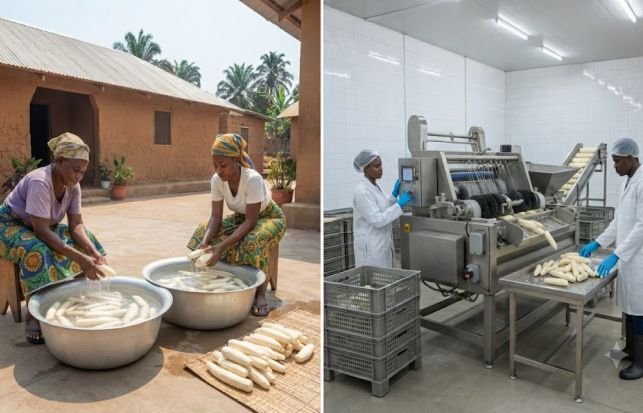
A sturdy basin handles soaking and washing, while soft-bristled brushes remove stubborn dirt without damaging root skin.
Larger operations benefit from pressure washers for speed, while rubber gloves and drying racks support hygienic handling throughout.
Readers wanting the equipment behind commercial-scale washing should read our processing equipment guide.
Readers wanting the fuller post-harvest sequence surrounding washing should read our guide on post-harvest handling of cassava.
Readers wanting the complete processing sequence after washing should read our guide on processing cassava best practices.
The Real Washing Process
- Gather materials first. Clean water, a sturdy brush, a bucket, and a sieve prevent interruptions once washing actually begins.
- Rinse off loose dirt. Running water combined with gentle hand rubbing dislodges soil before more thorough scrubbing starts.
- Scrub each root carefully. Pay attention to crevices and rough areas where dirt and residue genuinely hide from a quick rinse.
- Soak for 20 to 30 minutes. This loosens trapped dirt and prepares roots for an easier, more effective final rinse.
- Rinse a final time. Clean running water removes remaining particles, then drain thoroughly using a sieve before storage or processing.
Common Mistakes That Undo Good Cleaning
- Dirty wash water. Contaminated water introduces the exact bacteria and pathogens washing is meant to remove in the first place.
- Rough handling. Excessive force or harsh scrubbing bruises roots and damages texture, undermining both appearance and storage life. Mechanical damage specifically triggers a wound response that accelerates deterioration throughout root tissue, according to biochemical research published by FAO.
- Delayed cleaning. Leaving roots unwashed too long, especially in warm conditions, accelerates microbial growth and decay significantly.
- Skipping inspection. Failing to sort out cut, rotten, or diseased roots before washing spreads contamination to otherwise healthy ones.
After Washing: Keep Moving Forward
Washed roots do not stay usable indefinitely at room temperature, so treat washing as the start of a continuous process, not a stopping point.
Peel roots close to the time of use to limit oxidation, keeping peeled pieces submerged in clean water if any delay is genuinely unavoidable.
Readers wanting the drying stage that typically follows should read our guide on drying techniques for cassava.
Readers wanting the complete, real storage timeline should read our dedicated guide on storage methods for cassava instead of relying on this post for that detail.
Frequently Asked Questions
Why does rough scrubbing damage cassava roots during washing?
Aggressive scrubbing or dropping roots triggers a genuine wound response that speeds deterioration, so gentle handling throughout washing actually protects roots much better than forceful cleaning ever could.
What water should I use to wash cassava roots?
Always use clean, potable water throughout the entire washing process, since contaminated water introduces the exact bacteria and pathogens the process is genuinely meant to fully remove entirely.
How long should cassava roots soak during cleaning?
Soak scrubbed roots in clean water for 20 to 30 minutes, which genuinely loosens trapped dirt and properly prepares roots for an easier, more effective final overall rinse.
Can I peel cassava roots right after washing them?
Yes, peeling close to the actual time of use genuinely limits oxidation, though submerging peeled pieces fully in clean water prevents browning if any real delay happens unexpectedly.
Conclusion
Washing cassava roots properly comes down to gentle technique, not brute force: clean water, careful scrubbing, and a real 20 to 30 minute soak protect roots rough handling would damage.
Rough scrubbing and dropped roots trigger a wound response that speeds deterioration, so treat every root carefully from rinse to final drain.
Gather tools first, inspect before washing, and never reuse dirty water midway through.
Storage after washing is covered in our dedicated guide, not here.

Chimeremeze Emeh is a tropical crop farmer and chemical engineer from Ntigha, Isiala Ngwa North LGA, Abia State, Eastern Nigeria, specializing in cassava and palm oil, with over 30 years of hands-on experience growing, harvesting, and processing cassava. He grows TMS series, TME 419, and local traditional varieties on his own farms and operates a small-scale cassava flour and starch production business through Cassava Pathway, which he founded as a CAMA-registered agribusiness in 2024. He is also the founder of Palm Oil Pathway, where he applies the same tropical farming expertise. His farms are located in Ntigha, Abia State.