
Last updated on August 5th, 2026 at 08:48 am
A pedal-operated cassava grater built from locally sourced materials can outperform traditional hand grating by more than 220 percent, proof that the right small-scale machine matters genuinely just as much as even the biggest, most expensive industrial line ever could.
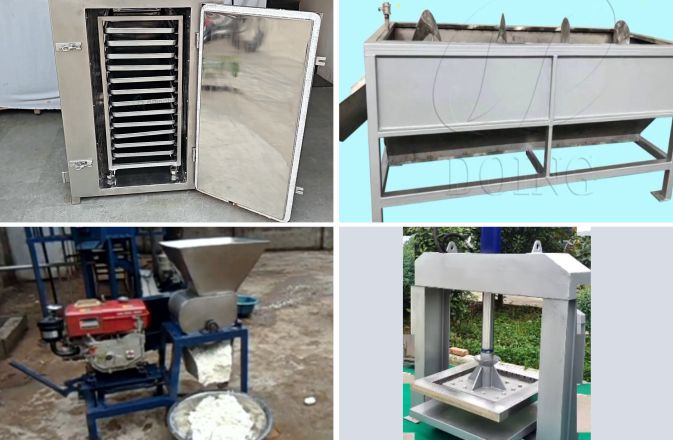
Five machines cover the core stages of small-scale cassava processing: peeling, grating, pressing, sifting, and drying, each handling a distinct step that affects your final product and your bottom line.
This guide keeps each machine’s coverage brief and practical, pointing to our dedicated equipment guides for full technical depth on types, costs, and buying advice.
What you get here instead is grounded in real, peer-reviewed engineering research, actual capacity and efficiency numbers rather than vague marketing claims.
If your operation eventually needs all five functions combined into a single unit, our guide on multi-function processing units covers that alternative approach.
Table of Contents
1. Cassava Peeling Machine
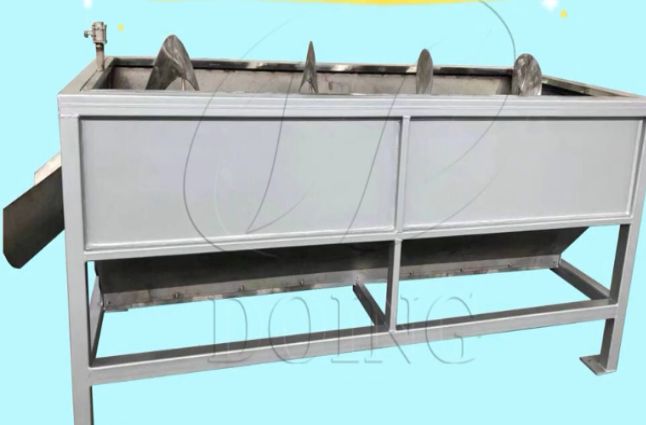
A peeling machine strips the tough outer skin quickly, giving you clean, consistent roots ready for grating without the fatigue of hand peeling.
Match capacity to your daily volume, favor stainless steel for hygiene and durability, and prioritize models that are easy to clean and service.
This cassava peeling machine guide covers types, real specifications, and verified manufacturers in full.
2. Cassava Grater or Grinder
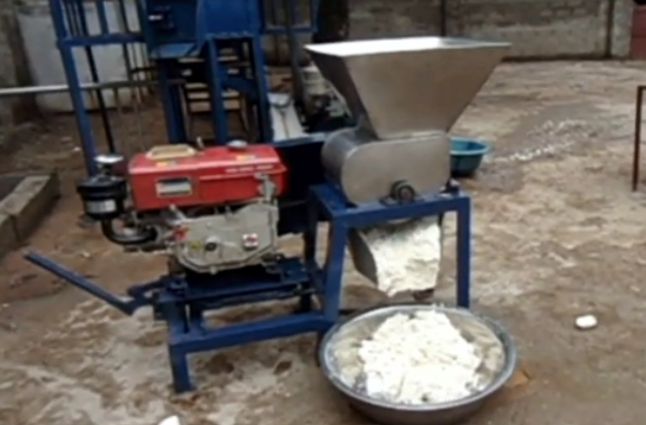
Once peeled, this machine crushes roots into the mash used for garri, fufu, or flour, and the quality of that mash determines everything downstream.
A recent stainless-steel grater design achieved a grating throughput of 173.43 kilograms per hour with 96.4 percent efficiency.
Material loss stayed as low as 3.6 percent, published in a peer-reviewed study in the Royal Society of Chemistry.
A separate pedal-operated grater design demonstrated more than a 220 percent capacity advantage over traditional manual grating, according to research from Ladoke Akintola University of Technology.
The dedicated cassava grater machine guide covers manual, electric, and hybrid models in full.
3. The Cassava Press
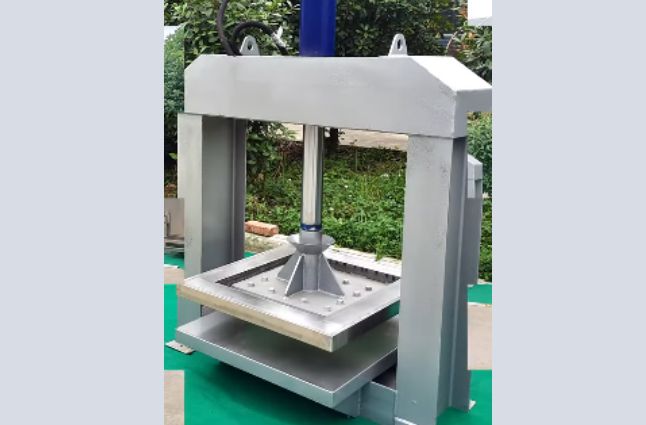
Pressing removes excess moisture from grated mash, a step that shortens drying time and directly affects shelf life and fermentation quality.
Combining pressing with peeling and grating works better for safety than relying on any single step alone, per the Food and Agriculture Organization.
Screw presses cost less and need no electricity, while hydraulic presses work faster with less physical effort for larger daily batches.
This cassava pressing machine guide covers both types, real engineering data, and buying advice in full.
4. Cassava Sifter or Sieving Machine
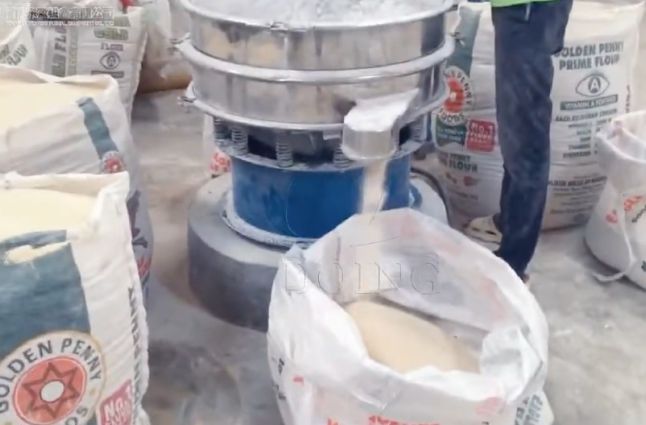
Sifting separates fine flour or starch from leftover fiber, directly determining the texture buyers expect from packaged cassava products.
A developed cassava mash sifter achieved a maximum sifting efficiency of 95.32 percent with a capacity of 613.16 kilograms per hour.
This specific finding comes from a peer-reviewed performance study published on CORE.
Choose a machine offering multiple mesh sizes so you can produce fine or coarse output depending on customer demand.
The cassava sieving machine guide covers mesh standards and buying factors in full.
5. Cassava Dryer
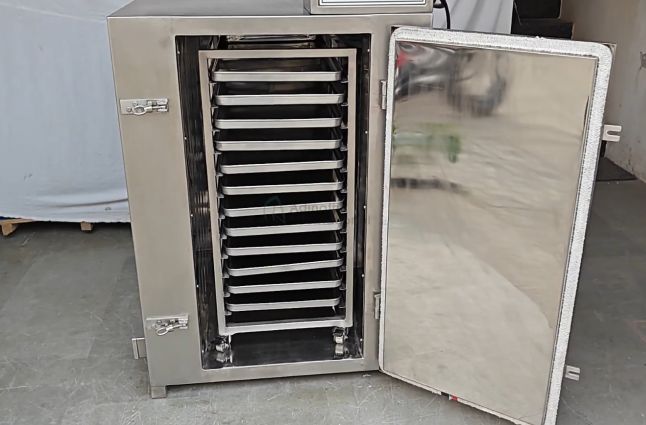
Drying finishes wet mash into a shelf-stable product, and getting it wrong risks mold, spoilage, or an inconsistent texture buyers will reject.
Flash dryers suit high-volume operations needing speed, while cabinet or tray dryers suit smaller batches where controlled, even results matter more.
Verify any specific brand or supplier independently before buying, since not every name attached to drying equipment online actually specializes in cassava.
Read more about cassava dryer machine and cassava flash dryer which cover types, real research, and verified manufacturers in full.
Choosing and Buying Considerations
Match each machine’s capacity to your actual daily volume rather than buying more than your operation currently needs.
Compare power source options against what your location realistically supports, since that could mean stable electricity, diesel, or manual operation.
Confirm spare parts and technical support are genuinely available locally before committing to any specific model.
Readers wanting a fuller, verified list of established suppliers should read our guide on cassava processing equipment manufacturers.
Our processing equipment guide covers this complete picture in a single convenient place.
Conclusion
Five machines cover cassava processing from raw root to finished product: peeling, grating, pressing, sifting, and drying, each contributing genuinely real, measurable gains backed by actual engineering research.
A well-built grater alone can outperform hand grating by more than 220 percent, and a good sifter can process over 600 kilograms hourly at above 95 percent efficiency.
Start with whichever machine addresses your single biggest current bottleneck, then add the rest as your budget allows.
Frequently Asked Questions
What are the main types of cassava processing machines?
The five core types are peelers, graters, presses, sifters, and dryers, each genuinely handling a specific task from raw root preparation through to truly finished, market-ready cassava products.
How do I choose the right cassava processing machine?
Check on machine capacity, durability, power source, and ease of maintenance, then choose equipment that genuinely matches your own actual production scale while still keeping realistic costs manageable.
Can I use these machines without electricity?
Yes, some machines like manual graters and screw presses work fine without electricity, which genuinely still helps in rural areas with unstable or even completely unavailable power supply.
Why should small businesses invest in processing machines?
Processing machines genuinely save time, reduce labor considerably, and improve product quality, which helps small businesses scale production and stay competitive in both growing local and export markets.

Chimeremeze Emeh is a tropical crop farmer and chemical engineer from Ntigha, Isiala Ngwa North LGA, Abia State, Eastern Nigeria, specializing in cassava and palm oil, with over 30 years of hands-on experience growing, harvesting, and processing cassava. He grows TMS series, TME 419, and local traditional varieties on his own farms and operates a small-scale cassava flour and starch production business through Cassava Pathway, which he founded as a CAMA-registered agribusiness in 2024. He is also the founder of Palm Oil Pathway, where he applies the same tropical farming expertise. His farms are located in Ntigha, Abia State.