Last updated on October 28th, 2026 at 06:43 am
A cassava peeling machine promises to replace a crowd of knife-wielding workers, yet peeling remains the stage engineers struggle most to mechanize. Independent tests show machines peel far faster than hands, but many waste more flesh than most buyers expect.
Every root my family processes in Abia State, Nigeria is still peeled by hand with a kitchen knife, and nobody in our village owns a peeler.
That is not stubbornness, because the machines available to small processors come with trade-offs that sellers rarely mention.
This guide gathers results from independent tests in Nigeria and Ghana, comparing throughput, peeling efficiency, and flesh loss against hand peeling.
It explains how the main designs work, what the numbers mean for your profit, and how to test a machine before paying.
It also covers when knives still make more sense for a small operation.
Table of Contents
Why Peeling Is So Hard to Mechanize
Peel makes up 5 to 15 percent of the root, the Feedipedia datasheet on cassava by-products reports.
The bigger problem is variety in the roots themselves, which come out of the ground crooked, tapered, and uneven in size.
Cassava roots differ in weight, size, form, and peel thickness, which makes peeling a serious challenge for engineers, a 2021 study in the CIGR Journal states.
A human peeler adjusts to every bend and narrow tip, while a machine treats a thick root and a thin root the same way.
That single difference explains most of the flesh losses and leftover peel patches recorded in the tests below.
How a Cassava Peeling Machine Works
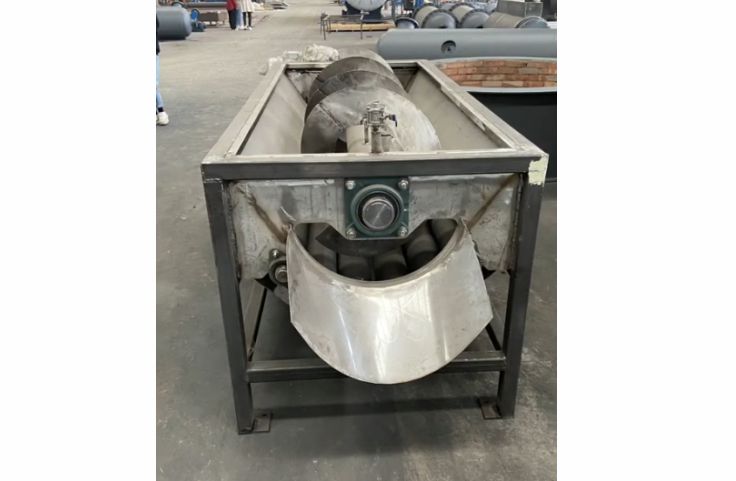
Most peelers rub or cut the skin away as roots tumble against a moving surface, then discharge peeled roots and loose peel separately.
- Abrasive drums and plates: roots rotate against rough linings of metal, concrete, rubber, or wood, which scrape the skin away.
- Blade or knife systems: rotating cutting edges slice the peel off, which can be faster but risks deeper cuts into flesh.
- Brush systems: stiff rotating brushes scrub the surface, which treats flesh gently but may leave the tougher inner rind behind.
Batch machines take a fixed load, peel it, and release it, while continuous machines accept a steady stream of roots for larger lines.
Where peeling fits among grating, pressing, drying, and milling is mapped in our cassava processing equipment guide, organized stage by stage.
What Independent Tests Show
Researchers in Nigeria and Ghana have measured how well real peelers perform, and their numbers vary widely between designs.
| Study | Machine tested | Capacity | Peel removed | Flesh lost |
|---|---|---|---|---|
| IITA, 2021 | Manual knife peeling | Slowest | 100% | 5.5% |
| IITA, 2021 | WAMABCO peeler | Under 800 kg/h | 64% | 14% |
| IITA, 2021 | FATAROY peeler | Under 800 kg/h | 72% | 23% |
| Nigerian Journal of Technology, 2017 | Type 4 peeler | 1,262 kg/h | 90% | 2.16% |
| CIGR Journal, 2021 | Abrasive drum, four linings | 157 to 1,439 kg/h | 71.8% average | 28.83% average |
An IITA comparison of four peeling devices found the machines worked about ten times faster than hand peeling.
The same study found hand peeling was the slowest and most expensive method, yet it produced the best quality output by far.
Each tested machine handled less than 800 kilograms per hour, which the researchers judged too small for industrial use.
A Nigerian Journal of Technology study recorded far better results, with its Type 4 peeler reaching 1,262 kilograms per hour and 90 percent peel removal.
For comparison, a 2007 Tropentag paper put manual peeling at roughly 20 to 23 kilograms per hour for one worker.
The Real Cost of Flesh Loss
Flesh loss is money thrown away, because every kilogram scraped off with the peel is a kilogram that never becomes garri or flour.
Using the IITA figures, hand peeling loses about 55 kilograms of flesh per tonne, while the WAMABCO peeler loses about 140 kilograms.
That gap of roughly 85 kilograms per tonne can erase much of the labor saved, especially when roots are expensive or scarce.
Machines that leave peel behind also need workers to finish each root by hand, which adds labor back into the process.
Lost flesh and peel do not have to be wasted entirely, as our hub on cassava by-products and waste explains.
How to Test a Peeler Before You Pay
Never buy a peeler from a brochure, because the only result that matters is how it handles your own roots.
- Bring your own roots: test a mixed batch of thick, thin, straight, and crooked roots from your usual varieties.
- Weigh before and after: record root weight going in, then weigh peeled roots and peel separately to calculate flesh loss.
- Count leftover peel: check how many roots still carry patches of skin that would need hand finishing.
- Time a full load: measure real throughput, including loading and unloading, rather than trusting the advertised capacity.
- Check power and parts: confirm the motor or engine suits your supply, and ask where replacement linings or blades come from.
Our checklist for vetting cassava equipment sellers shows how to confirm a manufacturer is real before sending money.
Buyers comparing a peeler with other starter machines can weigh priorities in our list of machines for small cassava businesses.
Some processors save space with combined lines, which our review of all-in-one processing units assesses honestly.
When Knives Still Make More Sense
Small processors handling a few hundred kilograms a day usually gain little from a peeler, because hand peeling keeps flesh losses low.
In my village, families peel garri roots by knife on the day after harvest, then carry them to the shared grater.
My own flour and starch batches of about three kilograms never justify a machine, because peeling takes only minutes.
A peeler starts to make sense once daily volume outgrows available workers, and a grater and press are already in place.
Good knife technique still matters, and our guide to peeling cassava the right way shows how to protect flesh and fingers.
Peeled roots should go straight to washing, following the steps in our article on washing and cleaning cassava roots.
Conclusion
A cassava peeling machine can work ten times faster than hand peeling, but independent tests show many models waste far more flesh.
Some designs leave peel behind, while others perform well enough for medium processors.
Weigh flesh loss against labor savings, and always test a machine with your own roots before paying.
Small operations peeling a few hundred kilograms daily may still do better with skilled knife work.
If you are deciding between knives and machines, contact Cassava Pathway through this website, WhatsApp, or X for practical, honest, experience-based advice.
Frequently Asked Questions
Is a cassava peeling machine worth buying for a small business?
Usually not at very small volumes, because hand peeling loses less flesh. A machine starts paying once daily volume outgrows your workers and other equipment is in place.
How much flesh do peeling machines remove with the peel?
Independent tests recorded flesh losses from about 2 to nearly 29 percent, depending on design. Hand peeling in one IITA study lost only about 5.5 percent of flesh.
How fast are peeling machines compared with hand peeling?
An IITA study found tested machines worked about ten times faster than knives. One Nigerian design exceeded 1,200 kilograms per hour, while one worker peels roughly 20 kilograms.
Will peeled roots still need hand finishing?
Probably yes, because several tested machines removed only 64 to 72 percent of the peel. Workers then trim leftover patches by knife before grating or drying the roots.

Chimeremeze Emeh is a tropical crop farmer and chemical engineer from Ntigha, Isiala Ngwa North LGA, Abia State, Eastern Nigeria, specializing in cassava and palm oil, with over 30 years of hands-on experience growing, harvesting, and processing cassava. He grows TMS series, TME 419, and local traditional varieties on his own farms and operates a small-scale cassava flour and starch production business through Cassava Pathway, which he founded as a CAMA-registered agribusiness in 2024. He is also the founder of Palm Oil Pathway, where he applies the same tropical farming expertise. His farms are located in Ntigha, Abia State.