If you have been searching for a gluten-free flour that actually behaves like the real thing in your kitchen, cassava flour keeps coming up. Bob’s Red Mill is one of the most recognizable names in the space, but does their version truly deliver?
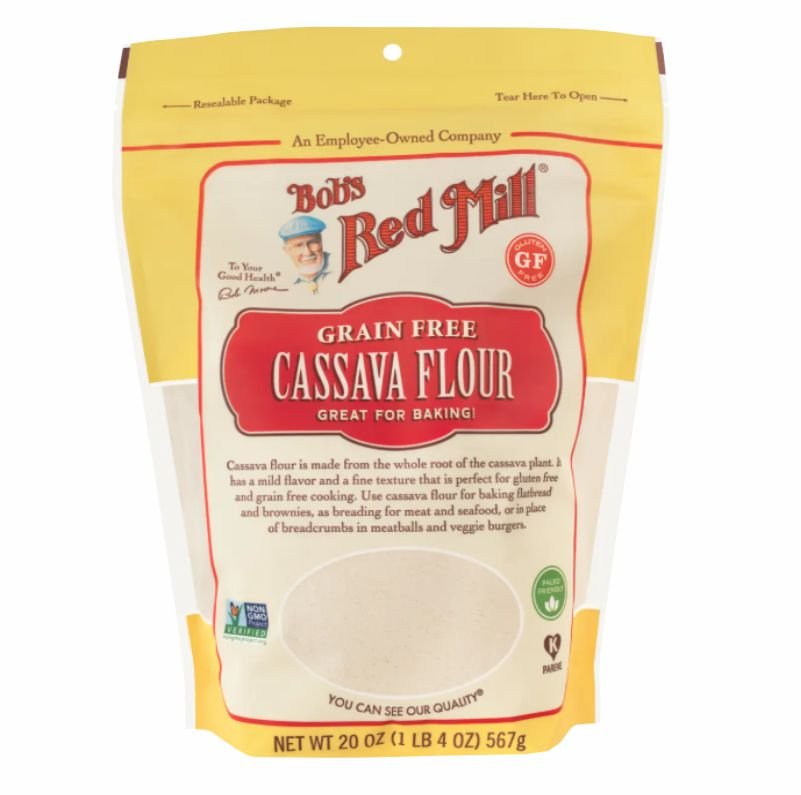
Bob’s Red Mill Cassava Flour has become one of the most widely available cassava-based flours on the market, showing up on shelves at mainstream grocery stores and online retailers alike.
Cassava flour has earned a loyal following among gluten-free, Paleo, and grain-free bakers because it mimics the soft, starchy quality of wheat flour better than most alternatives.
This review is for anyone considering adding it to their pantry, whether you are a seasoned alternative baker or simply exploring your options for the first time.
Table of Contents
What Is Bob’s Red Mill Cassava Flour?
Bob’s Red Mill Cassava Flour is a single-ingredient product made from the whole root of the cassava plant, also known as yuca.
The cassava root is peeled, dried, and ground into a fine powder, giving you a flour that retains the fiber and starch of the whole root rather than isolating just the starch.
This is the key distinction between cassava flour and tapioca flour. See cassava flour vs tapioca flour.
Tapioca flour (also called tapioca starch) is derived from cassava as well, but it goes through an extraction process that pulls only the pure starch from the root.
Cassava flour, by contrast, uses the entire root, which means it has more fiber, a slightly different texture, and better overall baking behavior when used as a one-to-one substitute for wheat flour in certain recipes.
Bob’s Red Mill sources cassava for this product and mills it at their facility in Milwaukie, Oregon, maintaining the brand’s reputation for quality control and consistent processing standards.
Key Features at a Glance
- Single-ingredient flour with no additives or fillers
- Certified gluten-free
- Grain-free and suitable for grain-free diets
- Paleo-friendly and compliant with most Paleo guidelines
- Nut-free and vegan-friendly, making it accessible across a wide range of dietary restrictions
- Available in multiple package sizes, typically 16 oz and 48 oz bags
Ingredients and Nutritional Profile
The ingredient list could not be simpler: cassava flour. That is it. No gums, starches, or additives are included.
From a nutritional standpoint, a quarter-cup serving contains approximately 110 calories, 28 grams of total carbohydrates, and 1 gram of fiber.
It is low in fat and provides a small amount of protein.
The carbohydrate content is notably higher than almond or coconut flour, which is something to keep in mind for anyone monitoring net carbs.
For those following a gluten-free diet, it fits seamlessly without the digestive concerns that come with cross-contaminated products.
Paleo followers will find it compatible with their framework, and it also works for those on AIP (Autoimmune Protocol) diets in most cases, though individuals should confirm with their specific protocol guidelines. It is not a low-carb flour, so keto dieters will want to look elsewhere.
Texture, Taste, and Consistency
Texture
Bob’s Red Mill Cassava Flour has a fine, soft grind that feels closer to all-purpose wheat flour than most gluten-free alternatives.
It is not gritty or coarse, and it does not have the heavy, dense feel of chickpea or buckwheat flour.
When you run it between your fingers, it has a silky, slightly powdery quality that signals it will blend well into batters and doughs.
Compared to wheat flour, it is slightly lighter in feel but not as airy as cake flour. It sits comfortably between the two.
Taste
The flavor profile is neutral and mild. It does not have the bitterness that some find in almond flour or the strong earthiness of coconut flour.
Baked goods made with this flour taste like baked goods, not like an alternative ingredient.
This neutrality is a significant advantage, particularly in recipes where you want other flavors such as chocolate, vanilla, or spices to take center stage.
Consistency
One notable strength is batch-to-batch consistency.
Bob’s Red Mill is a large, established manufacturer, and their quality control shows.
Each bag performs predictably, which matters enormously when you are fine-tuning a recipe and need to trust that your flour behaves the same way each time.
Baking Performance
Tortillas and Flatbreads
This is where cassava flour genuinely shines, and Bob’s Red Mill is no exception.
Tortillas made with this product come out pliable, soft, and flexible without cracking.
They hold fillings well and taste remarkably close to traditional flour tortillas.
For anyone on a gluten-free diet who misses wraps and tortillas, this is one of the most satisfying uses of this flour.
Pancakes and Waffles
Pancakes and waffles made with Bob’s Red Mill Cassava Flour turn out well, with good moisture retention and a tender crumb.
They brown nicely and hold their structure without becoming gummy.
The results are consistent and crowd-pleasing, even for people who are not eating gluten-free.
Cookies and Muffins
Cookies made with this flour tend to have a slightly denser texture than traditional wheat flour cookies, but the difference is minimal when you use cassava-specific recipes.
Muffins turn out moist and hold together without crumbling, though the crumb is a bit more compact than what you might expect from a wheat-based recipe.
Cakes and Delicate Baked Goods
This is where limitations start to show. Cassava flour does not create the same light, airy lift that wheat flour achieves with gluten development.
Cakes can turn out denser and slightly gummy if too much moisture is retained, and delicate pastry layers are more difficult to achieve.
It generally performs better in rustic or heartier applications than in refined baked goods like chiffon cakes or puff pastry.
How Easy Is It to Substitute?
Bob’s Red Mill Cassava Flour is often marketed as a one-to-one wheat flour substitute, and for some recipes, it genuinely works that way.
Tortillas, flatbreads, and simple pancake batters are strong candidates for a straight swap.
However, for most baking applications, you will get better results using recipes specifically developed for cassava flour rather than converting wheat flour recipes directly.
Cassava flour absorbs moisture differently than wheat flour, and without the binding properties of gluten, some recipes need adjustments in liquid ratios, eggs, or added binders like psyllium husk.
The learning curve is shorter than with many other alternative flours, but going in with cassava-specific recipes from the start will save you from trial-and-error frustration.
Pros
- Widely available in grocery stores, making it easy to restock
- Versatile across a broad range of recipes, particularly tortillas, pancakes, and baked goods
- Neutral flavor that does not compete with other ingredients
- Suitable for gluten-free, grain-free, Paleo, nut-free, and vegan diets
- Consistent quality from batch to batch
Cons
- Priced higher than conventional all-purpose flour and many other gluten-free options
- Absorbs moisture differently than wheat flour, requiring recipe adjustments in some applications
- Not ideal for light, airy baked goods like chiffon cakes or delicate pastries
- Higher carbohydrate content makes it incompatible with low-carb or keto diets
Bob’s Red Mill Cassava Flour vs Other Brands
Bob’s Red Mill vs Otto’s Cassava Flour
Otto’s Naturals is frequently considered the gold standard among cassava flours, and for good reason. See Otto’s cassava flour.
In terms of texture, Otto’s tends to have an even finer grind, which gives it a slight edge in delicate baking applications.
Baking consistency with Otto’s is marginally more reliable in highly precise recipes, particularly in cassava-specific baking communities where recipes are developed to Otto’s specs.
On price, Bob’s Red Mill typically comes in lower or on par, depending on where you shop.
For everyday baking, tortillas, and general use, Bob’s Red Mill performs comparably to Otto’s.
For highly specialized cassava baking or recipe development, Otto’s may be the better choice.
See a comprehensive post on Otto’s cassava flour vs Bob’s Red Mill cassava flour.
Bob’s Red Mill vs Generic Store Brands
Generic or store-brand cassava flours vary significantly in quality.
Grind size, moisture content, and sourcing are inconsistent across brands, which can lead to unreliable recipe results.
Bob’s Red Mill’s established quality control and standardized processing make it a more dependable choice than most generic alternatives, particularly for bakers who need consistent results.
Who Should Buy Bob’s Red Mill Cassava Flour?
- Gluten-free bakers looking for a versatile, widely available flour option
- Paleo followers who want a grain-free flour that performs well across multiple recipes
- Grain-free households that need an everyday baking staple
- Occasional cassava flour users who want a trusted brand without committing to a specialty order
Who May Want an Alternative?
- Budget-focused shoppers who need a lower cost per pound, as generic or bulk options may be more economical
- Strict AIP followers or those with highly specific dietary protocols who prefer a specialty brand like Otto’s with a community-built recipe library
- Bakers who need precise, consistent performance for highly technical or delicate recipes may benefit from testing Otto’s or another artisan brand
Is Bob’s Red Mill Cassava Flour Worth the Price?
For the quality and convenience it delivers, Bob’s Red Mill Cassava Flour represents solid value.
You are paying for reliable processing, consistent texture, and the peace of mind that comes with a reputable brand that undergoes quality testing.
It is priced higher than conventional flour, but that is true of virtually all alternative flours.
If cassava flour is a staple in your kitchen, buying the larger 48 oz bag brings the cost per ounce down considerably and makes it more competitive.
For occasional use, the smaller bag keeps things practical without a large upfront investment.
Compared to the cost of failed baking experiments from unreliable off-brand flours, the consistency you get from Bob’s Red Mill is worth the modest price premium.
Final Verdict
Bob’s Red Mill Cassava Flour is a reliable, versatile, and widely accessible option for gluten-free and grain-free bakers.
It excels in tortillas, flatbreads, pancakes, and everyday baked goods, and its neutral flavor makes it a seamless addition to most recipes.
It falls short in highly delicate baking applications and is not suited for low-carb diets, but these are inherent limitations of cassava flour rather than flaws specific to this brand.
For most home bakers exploring gluten-free or grain-free baking, it is an excellent starting point and a pantry staple worth keeping on hand.
It earns a solid 4 out of 5 for quality, convenience, and overall performance.
Frequently Asked Questions
Is Bob’s Red Mill Cassava Flour gluten-free?
Yes, it is certified gluten-free, made from cassava root with no gluten-containing grains or cross-contamination in the processing environment.
Can cassava flour replace wheat flour in baking?
It works as a one-to-one substitute in some recipes like tortillas, but most baking applications require cassava-specific recipes for best results.
Is Bob’s Red Mill Cassava Flour Paleo-friendly?
Yes, it is fully Paleo-compliant, made from a single whole-food ingredient with no grains, legumes, or artificial additives included.
What’s the difference between cassava flour and tapioca flour?
Cassava flour uses the whole root and retains fiber, while tapioca flour is a refined starch extracted from cassava with no fiber remaining.
How should Bob’s Red Mill Cassava Flour be stored?
Store it in a cool, dry location in an airtight container. Refrigerating or freezing it extends shelf life significantly after opening.

Chimeremeze Emeh is a tropical crop farmer and chemical engineer from Ntigha, Isiala Ngwa North LGA, Abia State, Eastern Nigeria, specializing in cassava and palm oil, with over 30 years of hands-on experience growing, harvesting, and processing cassava. He grows TMS series, TME 419, and local traditional varieties on his own farms and operates a small-scale cassava flour and starch production business through Cassava Pathway, which he founded as a CAMA-registered agribusiness in 2024. He is also the founder of Palm Oil Pathway, where he applies the same tropical farming expertise. His farms are located in Ntigha, Abia State.