
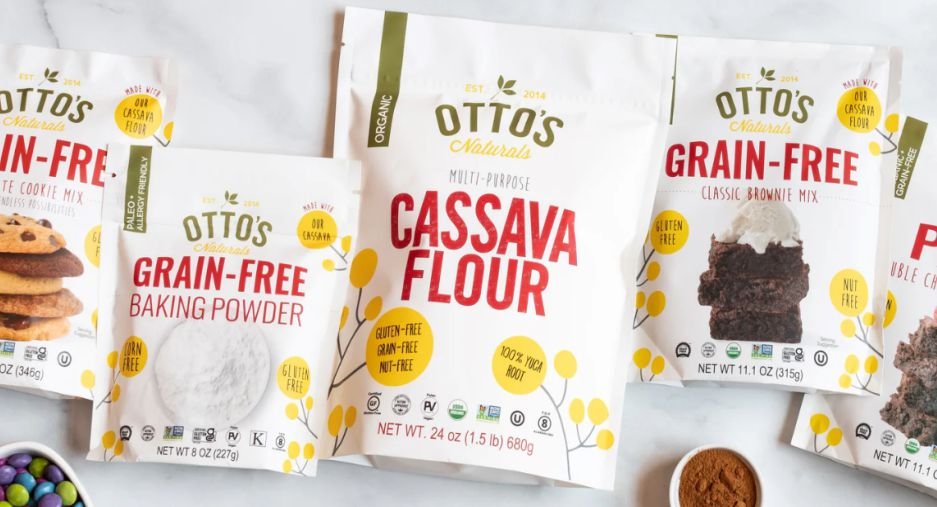
If you’ve spent any time in grain-free or autoimmune protocol (AIP) baking communities, you’ve probably seen Otto’s Naturals Cassava Flour mentioned again and again.
It has become something of a cult favorite among people following AIP, Paleo, and gluten-free diets, largely because it promises something many alternative flours can’t: a true 1:1-ish substitute for wheat flour in many recipes, without grains, gluten, nuts, or seeds.
But does it actually live up to the hype?
In this review, we’ll break down everything you need to know about Otto’s Cassava Flour: from its ingredients and packaging to how it performs in real recipes like bread, tortillas, cakes, and pancakes.
We’ll also compare it to other popular brands, look at the pros and cons, and help you decide whether it’s worth adding to your pantry.
By the end, you should have a clear picture of taste, texture, baking performance, and overall value.
Table of Contents
What Is Otto’s Cassava Flour?
Otto’s Naturals is a small, family-run brand that built its reputation almost entirely on one product: cassava flour.
The company sources cassava root, a starchy tuber widely used in tropical cuisines around the world, and processes it into a fine, single-ingredient flour.
Unlike many commercial cassava flours that may be derived from bitter cassava varieties or processed in ways that affect texture, Otto’s specifically markets its flour as being made from sweet cassava root, peeled, dried, and ground into a consistent, fine powder.
The ingredient label reads simply: cassava root. No additives, no fillers, no blending with other starches.
This single-ingredient simplicity is a big part of why Otto’s stands out.
Many grain-free flour blends combine cassava with tapioca, rice flour, or other starches to improve texture, which can introduce allergens or compliance issues for strict diets.
Otto’s positions itself as a “clean” option that bakers can trust for sensitive guts and restrictive diets, while still delivering a texture close enough to wheat flour that recipe conversions feel less intimidating.
Packaging, Price, and Availability
Packaging
Otto’s Cassava Flour is typically sold in resealable bags, with the most common sizes being smaller retail bags (around 2 pounds) and larger bulk bags (often in the 5-pound range) for households that bake frequently.
The packaging is straightforward: a simple bag with clear labeling, an ingredient list, and basic nutritional information.
You can find Otto’s Cassava Flour through several channels: directly from the brand’s website, on Amazon, and in select health food stores and specialty grocery retailers that carry Paleo or AIP-friendly products.
Availability can vary by region, and it’s not always stocked in mainstream supermarkets, so many shoppers rely on online ordering, especially for the larger bulk sizes.
Pricing
In terms of price, Otto’s tends to sit on the higher end of the cassava flour market.
Compared to more widely available brands like Bob’s Red Mill, Otto’s typically costs more per pound, though buying in bulk (the larger bags) often brings the per-ounce price down significantly compared to smaller bags.
Is it affordable for regular baking? For occasional baking, a batch of tortillas here, a loaf of bread there, the cost is reasonable for most households.
However, if you bake daily or are feeding a large family exclusively grain-free, the price difference compared to conventional flour can add up.
Many users find that buying the bulk size and reserving cassava flour for recipes where it truly shines (rather than every single baked good) helps balance cost with performance.
Ingredients and Clean Label Check
One of the simplest things to love about Otto’s Cassava Flour is its ingredient list: just cassava root.
That’s it.
For people managing food sensitivities, autoimmune conditions, or strict elimination diets, this kind of single-ingredient transparency is incredibly valuable.
So, is it AIP, Paleo, and Whole30 friendly? In general, yes.
Cassava itself is a root vegetable, not a grain or legume, which means it fits within the Paleo framework and is commonly used in AIP cooking as a flour substitute.
For Whole30, cassava flour is generally considered compliant as well, since it’s a single-ingredient, unprocessed-in-the-problematic-sense starch.
Though as always, it’s worth double-checking against the most current Whole30 program guidelines, since interpretations of “compliant” ingredients can be updated.
As for additives or processing concerns: Otto’s doesn’t list any preservatives, anti-caking agents, or other additives.
The flour is produced through peeling, drying, and milling the root. See how to make cassava flour.
Some people with very sensitive digestive systems report that cassava-based products, in general (not unique to Otto’s), can cause mild digestive discomfort in large quantities due to the starch content, something worth noting if you’re new to cassava flour and trying it for the first time.
Texture and Appearance
When you open a bag of Otto’s Cassava Flour, the first thing you’ll likely notice is how fine and silky the texture is.
It has a soft, almost powdery consistency, closer to all-purpose wheat flour than to coarser grain-free flours like almond or coconut flour, which can feel gritty or sandy by comparison.
Compared to other cassava flour brands, many reviewers describe Otto’s as notably finer and more uniform.
Some competing brands can have a slightly grainier feel or small lumps that need sifting, while Otto’s tends to pour and measure smoothly straight out of the bag.
In Dry Mixture
In dry mixtures, the flour blends easily with other dry ingredients like baking soda, salt, and spices, without clumping.
In Wet Mixture
In wet mixtures, it tends to absorb liquid readily and can thicken batters more quickly than wheat flour, which is why many recipes developed specifically for cassava flour call for slightly different liquid ratios than their wheat-based counterparts.
Absorbency
This absorbency is part of what gives cassava flour its reputation for creating a more “doughy” or cohesive texture in baked goods compared to other grain-free flours.
Baking Performance Review
Bread and Rolls
For AIP-style bread and rolls, which avoid eggs, dairy, nuts, and seeds, Otto’s Cassava Flour is often cited as one of the more reliable options.
Its starch structure can mimic some binding properties of gluten when paired with AIP-compliant binders like gelatin.
Breads tend to have a tender, slightly chewy interior with a less crumbly structure than almond or coconut flour versions, though rise remains modest and proper hydration and resting times still matter.
Tortillas and Flatbreads
This is where Otto’s Cassava Flour shines most.
Cassava flour tortillas are a signature recipe in the grain-free community, and Otto’s is frequently recommended specifically for this purpose.
Tortillas made with it roll and fold without cracking, especially when the dough is properly hydrated and rested before cooking.
Many users report the tortillas stay soft even after cooling rather than becoming brittle, making Otto’s a popular choice for wraps, soft tacos, and flatbreads.
Cakes, Muffins, and Sweet Recipes
Otto’s Cassava Flour performs well in cakes and muffins for moisture retention, helping baked goods stay moist for a day or two when stored properly.
Rise and crumb texture tend to be denser than wheat-based versions, though lighter than coconut flour bakes.
Recipes typically rely on baking soda or baking powder plus careful mixing to achieve a softer crumb.
Overall, the texture is tender rather than dry or gritty, a clear advantage for sweet baked goods.
Savory Recipes
Beyond bread and sweets, Otto’s Cassava Flour works well in savory applications.
As a coating for fried or baked proteins like chicken or fish, it creates a light, crisp crust without overpowering flavor.
In pancakes, it produces a soft, slightly chewy texture that holds up to flipping.
Its flavor neutrality is a major strength here, avoiding the dominant alternative flour taste of almond or coconut flour, making it versatile across both savory and sweet recipes.
Taste Test
So, does cassava flour have a strong taste? In short, no, and this is one of the most frequently praised qualities of Otto’s specifically.
Raw, it has a very mild, slightly starchy smell and taste, somewhat similar to a neutral potato starch.
After baking, the flavor profile remains largely neutral.
Breads, tortillas, and pancakes made with Otto’s tend to taste like the other ingredients in the recipe (butter, herbs, spices, sweeteners) rather than like the flour itself.
This is a notable contrast to coconut flour, which often imparts a distinct coconut flavor and sweetness, or to some other cassava flour brands that reviewers describe as having a faint “earthy” or starchy aftertaste.
As for any noticeable aftertaste, most reviewers report little to none with Otto’s when used in properly balanced recipes.
Some note a very subtle starchy quality if the flour is used in very high proportions or under-cooked, but this is generally minor and easily masked by other ingredients.
Pros of Otto’s Cassava Flour
Several advantages come up consistently across reviews and user experiences:
- Consistent baking results: Many bakers report that Otto’s performs predictably batch after batch, which matters a lot when you’re relying on a flour for everyday meals.
- Clean, single-ingredient product: For anyone prioritizing minimal-ingredient foods, the simplicity of “just cassava root” is a major selling point.
- Works well across multiple diets: Its compatibility with AIP, Paleo, and Whole30 frameworks makes it a versatile pantry staple for households following more than one of these approaches.
- Reliable texture for grain-free baking: The fine, smooth texture and good moisture retention make it easier to adapt favorite recipes without drastic trial and error.
Cons of Otto’s Cassava Flour
That said, there are some downsides worth considering:
- Price compared to other brands: Otto’s is often more expensive per pound than competitors like Bob’s Red Mill, which can be a barrier for budget-conscious bakers.
- Can still be tricky for beginners: While it’s more forgiving than some grain-free flours, cassava flour still behaves differently from wheat flour, and beginners may need a few attempts to get hydration ratios and baking times right.
- Not always easy to find locally: Depending on where you live, you may need to order online, which adds shipping costs and wait times compared to picking up a bag at a local store.
Otto’s vs Other Cassava Flour Brands
Otto’s and Bob’s Red Mill cassava flour are the most commonly compared brands in grain-free baking.
Otto’s is generally finer, more consistent, and closer in texture to traditional wheat flour straight from the bag.
It tends to mix smoothly and perform well in recipes needing structure, such as tortillas and bread.
Bob’s Red Mill is slightly coarser and may clump, sometimes requiring sifting before use.
For AIP baking, Otto’s is often preferred for its reliable rise and pliability.
However, Bob’s Red Mill is more affordable and widely available.
The best choice depends on whether you value performance or cost savings.
Who Should Use Otto’s Cassava Flour?
Otto’s Cassava Flour tends to be a great fit for several groups:
- AIP dieters appreciate Otto’s single-ingredient cassava flour because it fits restrictive protocols and performs reliably in AIP staples like tortillas, flatbreads, and simple breads.
- Paleo and gluten-free bakers value Otto’s for its wheat-like behavior, smooth texture, and ability to provide structure without the grittiness of nut-based flours.
- Tortilla, bread, and wrap makers are ideal users because Otto’s excels at creating soft, flexible tortillas and sturdy sandwich-style breads consistently.
- Beginners and experienced bakers can both use Otto’s successfully, though experienced grain-free bakers typically adapt recipes faster and achieve consistent results sooner.
Best Recipes to Try with Otto’s Cassava Flour
If you’re looking for ways to put a bag of Otto’s to good use, here are some of the most popular recipe categories:
- Cassava flour tortillas are the standout recipe, typically made with just cassava flour, water, salt, and a fat like avocado oil or coconut oil, cooked on a hot skillet until lightly browned and pliable.
- AIP bread and rolls often combine cassava flour with ingredients like gelatin, plantain, or other AIP-approved binders to create a soft, sliceable loaf suitable for sandwiches or toast.
- Pancakes and waffles made with cassava flour tend to have a texture close to traditional versions, making them a popular weekend breakfast option for grain-free households.
- Crackers and snacks are another great use case, cassava flour can be rolled thin and baked until crisp, creating a sturdy base for dips, cheese, or AIP-friendly toppings.
Final Verdict: Is Otto’s Cassava Flour Worth It?
Otto’s Cassava Flour is widely regarded as a reliable, clean-label option in the grain-free baking space.
It has a fine texture, neutral flavor, and consistent performance, making it especially useful for AIP, Paleo, and gluten-free diets.
It works best in recipes that need softness and flexibility, such as tortillas, wraps, pancakes, and sandwich-style breads.
It is less necessary for recipes where other flours like almond flour already perform well.
While it is more expensive, many bakers find the texture results worth it, especially for key recipes.
For frequent baking, budget brands may be more practical, with Otto’s used selectively.
Frequently Asked Questions
Is Otto’s Cassava Flour AIP compliant?
Otto’s cassava flour is generally AIP compliant because it is single-ingredient cassava root flour, fitting AIP guidelines, though protocol updates should be checked.
Can you substitute it 1:1 for wheat flour?
It sometimes works for tortillas and flatbreads, but not cakes or cookies. Cassava flour behaves differently, requiring specific recipes for best results overall.
Is it better than tapioca flour?
Cassava flour uses whole root while tapioca is starch only. Cassava offers more fiber, baking structure, while tapioca mainly thickens or binds recipes.
Does it work for all baking recipes?
No, it works best in tortillas, pancakes, and simple breads. Cakes and pastries require blending or cassava-specific recipes for proper texture and rise.
How should it be stored?
Store Otto’s cassava flour in an airtight container in a cool, dry place. Refrigeration or freezing extends shelf life in humid climates effectively.

Chimeremeze Emeh is a tropical crop farmer and chemical engineer from Ntigha, Isiala Ngwa North LGA, Abia State, Eastern Nigeria, specializing in cassava and palm oil, with over 30 years of hands-on experience growing, harvesting, and processing cassava. He grows TMS series, TME 419, and local traditional varieties on his own farms and operates a small-scale cassava flour and starch production business through Cassava Pathway, which he founded as a CAMA-registered agribusiness in 2024. He is also the founder of Palm Oil Pathway, where he applies the same tropical farming expertise. His farms are located in Ntigha, Abia State.