Last updated on August 11th, 2026 at 03:21 pm
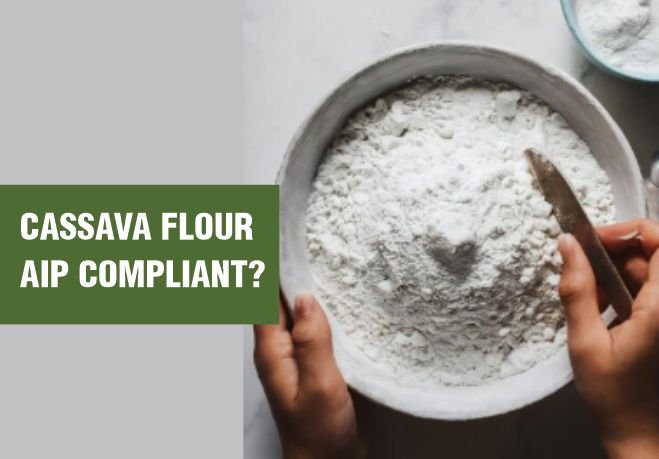
Cassava flour appears in nearly every AIP flour list, promising bread and pancakes without breaking elimination rules. Before you build meals around it, here is what the autoimmune protocol actually requires and how well cassava flour meets that bar.
Cassava flour shows up across grain-free, gluten-free, and AIP baking as a wheat flour substitute for bread, pancakes, and tortillas.
The Autoimmune Protocol removes grains, legumes, dairy, nightshades, nuts, and seeds during its elimination phase.
Cassava flour comes from the whole root rather than a grain, nut, or seed, placing it outside those excluded categories.
Clinical trials on the broader AIP diet show real symptom improvement in inflammatory bowel disease, though no study has isolated cassava flour specifically.
This guide covers where cassava flour fits, what AIP research actually shows, and how to use it without derailing your elimination phase.
Disclaimer: This article is for informational purposes only and does not constitute medical advice. The author is not a medical doctor or registered dietitian. Always consult a qualified healthcare provider before making dietary or medical decisions related to cassava consumption.
Table of Contents
What Is the Autoimmune Protocol (AIP)?
The Autoimmune Protocol is a structured elimination diet built on paleo principles, removing common trigger foods before slowly reintroducing them one at a time.
A 2024 review published in Autoimmunity Reviews describes AIP as a personalized elimination approach that centers on gut health and its role in immune regulation.
Cleveland Clinic’s overview of the AIP diet notes that people typically monitor symptoms closely during the first four to six weeks.
The elimination phase typically removes grains, legumes, dairy, refined sugar, seed oils, nightshades, eggs, nuts, seeds, alcohol, and processed additives.
A 2019 clinical trial published in Crohn’s & Colitis 360 tested this elimination and maintenance protocol in adults with inflammatory bowel disease.
Researchers found real, measurable improvements in patient-reported quality of life after the intervention.
Is Cassava Flour AIP Friendly?
Cassava flour appears on essentially every canonical AIP food list, including resources published by Sarah Ballantyne, the researcher who originated the Autoimmune Protocol.
Made from the whole cassava root, it is naturally grain-free, gluten-free, nut-free, and seed-free, which keeps it inside AIP rules during the strictest elimination phase.
Many people use it for tortillas, pancakes, and simple breads while avoiding every other flour on the market.
Tolerance still varies by person, so tracking digestion, energy, and symptoms while introducing it matters as much as its official AIP status.
This site’s cassava flour guide covers sourcing and processing basics before you buy.
Benefits of Cassava Flour on AIP
Cassava flour helps you stay consistent on AIP while keeping meals simple during a restrictive elimination phase.
It contains resistant starch, which reaches the colon largely undigested and feeds beneficial gut bacteria there.
As an allergy-friendly alternative, cassava flour stays naturally gluten-free, grain-free, nut-free, and seed-free, covering several AIP-excluded categories at once.
It also works across breads, pancakes, flatbreads, and sauces, giving you flexibility while every other conventional flour stays off the table.
Potential Downsides and Considerations
Cassava flour fits AIP rules, but it does not behave identically for everyone following the protocol.
It runs high in carbohydrates, which needs closer attention if you also manage insulin resistance or prefer lower-carb meals.
Large servings can trigger digestive discomfort or blood sugar spikes, so keeping portions moderate helps you stay balanced through elimination.
Processing quality matters too, since properly processed cassava flour removes the cyanogenic compounds present in the raw root.
This site’s guide on how to peel cassava root covers that safety step directly.
The organic cassava flour post can help with sourcing a clean, minimally processed product.
Even AIP-compliant foods can still cause symptoms in some people, so tracking bloating, fatigue, or discomfort helps you decide if cassava flour genuinely works for you.
Cassava Flour vs Other AIP Flours
Cassava flour, coconut flour, and tigernut flour all fit AIP rules, but each behaves differently in the kitchen.
Coconut flour absorbs a lot of liquid and can leave baked goods dry or dense without careful adjustment to eggs and fat.
Cassava flour behaves closer to wheat flour, giving a softer texture and needing fewer eggs and less added liquid overall.
Tigernut flour brings a naturally sweet, nutty flavor that suits cookies and snacks better than savory flatbreads or tortillas.
Cassava flour creates the most flexible, wheat-like results among the three, which explains why it works alone in most recipes.
The cassava flour vs regular flour comparison covers texture differences against wheat directly.
How to Use Cassava Flour on AIP
Cassava flour can replace wheat flour at a near one-to-one ratio in most AIP recipes, though moisture and fat content need adjustment.
It absorbs liquid differently than wheat, so extra eggs, coconut milk, or olive oil helps prevent a dry, dense result.
A slightly wetter batter works better for breads and pancakes, while resting tortilla dough improves flexibility and reduces cracking.
Combining cassava flour with AIP-friendly binders like gelatin or tapioca starch can also improve overall structure.
Small test batches help you fine-tune ratios, especially when adapting a traditional recipe to autoimmune protocol baking rules.
A few cassava flour recipes built around these ratios are a good starting point, and Otto’s Cassava Flour review covers one widely used AIP-community brand.
Bulk bakers can also check this site’s guide on buying cassava flour in bulk.
Conclusion
Cassava flour fits the Autoimmune Protocol as a grain-free, gluten-free, nut-free option that supports simple baking through the strictest elimination phase.
It appears on essentially every canonical AIP food list, and clinical research on the broader diet shows real, measurable symptom improvement in inflammatory bowel disease patients.
Responses still vary from one person to the next, so paying attention to digestion, energy, and portion size matters as much as status.
Choose properly processed flour from a reputable brand, introduce it gradually, and track your own symptoms throughout elimination and reintroduction.
Frequently Asked Questions
Is cassava flour the same as tapioca flour?
Cassava flour uses the whole root, while tapioca flour comes from extracted starch only, so texture, nutrition, and baking performance differ meaningfully across nearly all AIP-compliant recipes tested.
Can cassava flour cause inflammation?
Cassava flour is AIP-compliant, but overconsumption or poor personal tolerance may still trigger symptoms in sensitive people, so monitoring digestion and portion size remains important throughout the process.
Is cassava flour good for gut health?
Cassava flour contains resistant starch that may support beneficial gut bacteria, though effects vary depending on your existing microbiome, portion size, and overall diet balance during AIP itself.
How much cassava flour can you eat on AIP?
No fixed daily limit exists for cassava flour on AIP, but small portions work best, balanced with nutrient-dense foods and adjusted based on your own body’s ongoing response.

Chimeremeze Emeh is a tropical crop farmer and chemical engineer from Ntigha, Isiala Ngwa North LGA, Abia State, Eastern Nigeria, specializing in cassava and palm oil, with over 30 years of hands-on experience growing, harvesting, and processing cassava. He grows TMS series, TME 419, and local traditional varieties on his own farms and operates a small-scale cassava flour and starch production business through Cassava Pathway, which he founded as a CAMA-registered agribusiness in 2024. He is also the founder of Palm Oil Pathway, where he applies the same tropical farming expertise. His farms are located in Ntigha, Abia State.