Last updated on July 31st, 2026 at 02:04 pm
HQCF is the flour that shows up in bakeries and food factories, not backyard kitchens. After thirty years processing cassava myself, I have watched why this stricter method exists, and what separates it from flour made at home.
High-Quality Cassava Flour, or HQCF, is a finely processed form of cassava flour made to strict specifications for moisture, texture, and purity, unlike flour made through traditional home processing.
Cassava roots begin deteriorating within 24 to 48 hours of harvest, according to research on post-harvest physiological deterioration, which is why HQCF production moves quickly from field to factory.
This speed and precision make HQCF suitable for bakeries, food manufacturers, and industrial buyers who need consistent results batch after batch.
This guide walks through the full production process, the quality standards that define genuine HQCF, and where this flour fits compared to other cassava flour methods.
Table of Contents
What Actually Separates HQCF from Other Methods
Unlike the traditional method or the fermentation method, HQCF adds a dedicated dewatering stage using hydraulic or screw presses before drying.
This step shortens drying time and locks in a tighter final moisture target.
It also follows documented quality specifications for moisture, fiber, and purity that home processing does not track.
This makes HQCF the method of choice when a buyer, not just a household, needs to trust every batch equally.
Root Selection and Harvest Timing
Only mature roots, typically 9 to 12 months old, free of rot or excessive fiber, go into HQCF production.
Timing matters more here than in slower methods, since roots begin post-harvest physiological deterioration within 24 to 48 hours.
This comes from research at Cornell’s Gore Lab, and that deterioration alone can cost 40 to 60 percent of a root’s economic value.
This is why commercial HQCF operations process roots within a day of harvest rather than storing them.
The Full HQCF Production Process
Sorting and washing
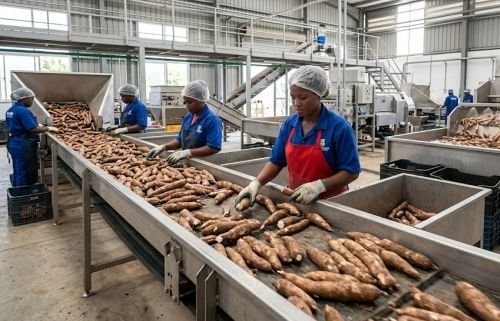
Harvested roots are sorted to remove damaged or diseased tubers, then washed to remove dirt, sand, and surface contaminants, typically using mechanized washers at industrial scale.
Peeling
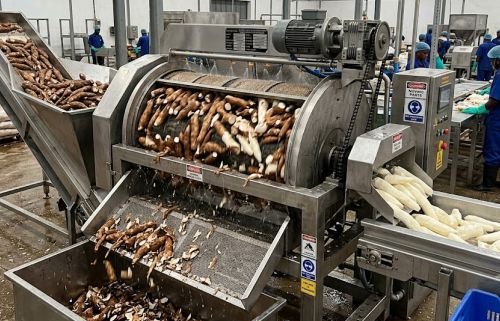
The outer corky layer and inner skin are removed by hand or machine, since leftover skin carries bitter compounds and fiber into the flour.
Grating or chipping
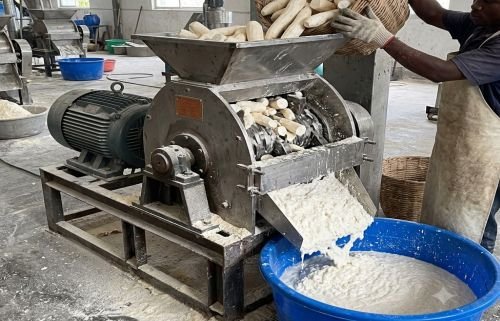
Peeled roots are grated into fine mash or cut into uniform chips, increasing surface area for the dewatering and drying stages that follow.
Dewatering
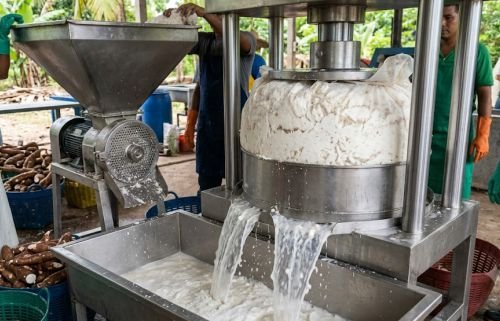
Grated mash goes through hydraulic or screw presses to remove excess moisture before drying begins.
This step is the clearest technical difference from the industrial method, and it speeds drying while reducing the risk of microbial growth in the mash.
Drying
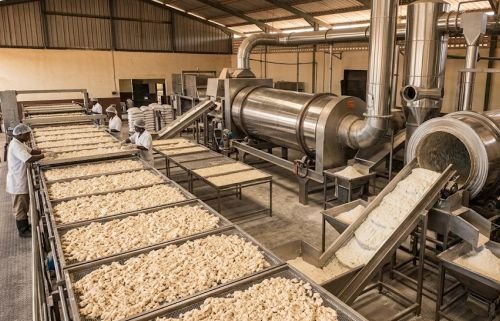
Dewatered cassava mash spreads across trays or moves through flash and rotary dryers, targeting a moisture range of roughly 10 to 12 percent.
Quick, controlled drying prevents fermentation and keeps the flour’s color white rather than gray.
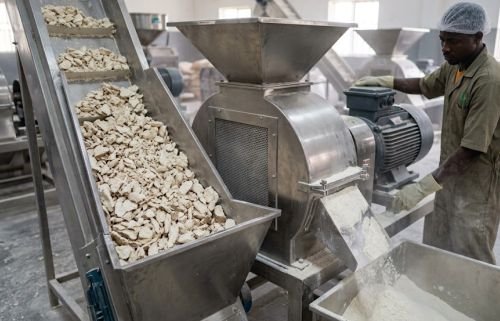
Dried chips are milled into fine flour using hammer or disc mills, then sieved to remove coarse particles for a consistent texture.
Quality Control Testing
Finished flour is checked for moisture, color, particle size, and microbial load, and tested for aflatoxins and residual cyanogenic compounds before packaging.
East African regional standards cap yeast, mold, and E. coli counts specifically, based on draft standards for high-quality cassava flour.
Packaging and Storage
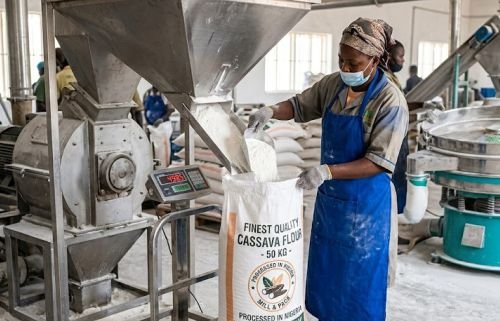
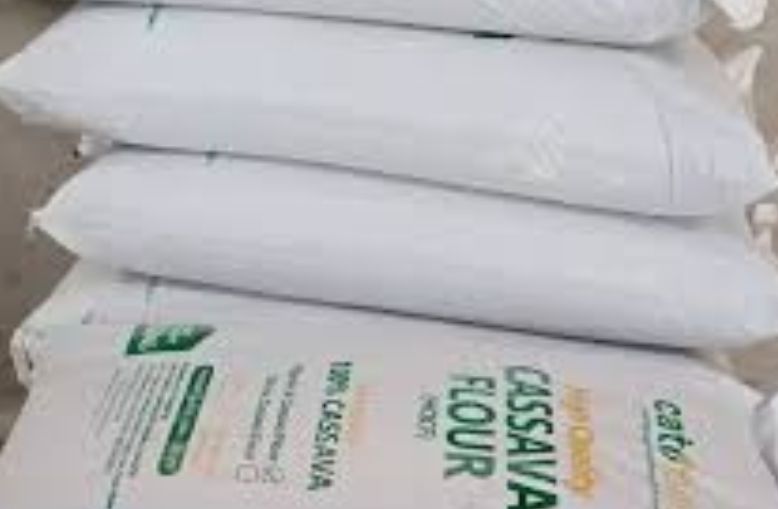
Approved flour is packed in moisture-resistant polypropylene bags and stored in a dry, ventilated space, with batch numbers and production dates recorded for traceability. More on cassava packaging ideas.
Quality Standards That Define Genuine HQCF
Certified HQCF should hold moisture content near 13 percent and fiber near 2 percent.
Hydrocyanic acid should stay below 10 mg per kilogram, based on IITA’s own processing standards.
Moisture control matters most for shelf life, since flour above these thresholds risks mold growth within weeks rather than months.
Producers who skip formal quality testing cannot reliably call their output HQCF, regardless of equipment used.
The standard is defined by the flour’s measurable specifications, not the machinery alone.
Where HQCF Is Actually Used
HQCF’s consistency makes it valuable beyond home baking, substituting for a share of wheat flour in bread, cakes, and biscuits, and improving noodle and pasta texture.
Bread blends using 10 to 30 percent HQCF with wheat flour showed acceptable sensory quality in trials, based on research on HQCF and wheat flour blends.
This guide on cassava flour in commercial food manufacturing covers these food-industry applications in more depth.
Beyond food, HQCF-derived starches serve industrial uses including paper production and pharmaceutical binders.
These posts on cassava in the paper industry and cassava in pharmaceuticals cover both in depth.
What This Looks Like on My Own Operation
My own flour production in Ntigha stays closer to traditional and small-batch methods.
HQCF-level precision requires equipment and testing that only make sense at real commercial volume.
When I have supplied buyers who need HQCF-grade consistency, moisture testing became the non-negotiable step.
A batch that looks and feels fine can still fail a proper moisture check.
That gap between “looks acceptable” and “meets specification” is exactly what separates HQCF from every other method on this site.
Conclusion
HQCF earns its name through discipline, not just equipment, since every step from harvest timing to final moisture content follows strict specification.
This makes it the right choice for bakeries and industrial buyers who cannot tolerate batch-to-batch variation.
It is not the right starting point for a home cook just beginning, where traditional or fermented methods make more sense.
In my own operation, I reserve this level of precision for buyers who specifically require it, since it demands real investment in equipment and testing.
Compare all four cassava flour methods to see which one fits your production goals.
Frequently Asked Questions
What makes HQCF different from other cassava flour methods?
HQCF undergoes a dewatering stage using hydraulic presses and follows strict moisture, texture, and purity specifications that traditional home processing does not require.
What moisture content should quality HQCF have?
Quality HQCF should keep moisture content between 10 and 13 percent, since higher levels risk mold growth and shorten the flour’s shelf life.
How quickly must cassava roots be processed into HQCF?
Roots should be processed within 24 to 48 hours of harvest, since post-harvest deterioration sets in quickly and can ruin flour quality.
Is HQCF suitable for commercial food production?
Yes, HQCF’s tight quality standards make it a reliable choice for bakeries, noodle production, and other food manufacturing that requires consistent results.

Chimeremeze Emeh is a tropical crop farmer and chemical engineer from Ntigha, Isiala Ngwa North LGA, Abia State, Eastern Nigeria, specializing in cassava and palm oil, with over 30 years of hands-on experience growing, harvesting, and processing cassava. He grows TMS series, TME 419, and local traditional varieties on his own farms and operates a small-scale cassava flour and starch production business through Cassava Pathway, which he founded as a CAMA-registered agribusiness in 2024. He is also the founder of Palm Oil Pathway, where he applies the same tropical farming expertise. His farms are located in Ntigha, Abia State.