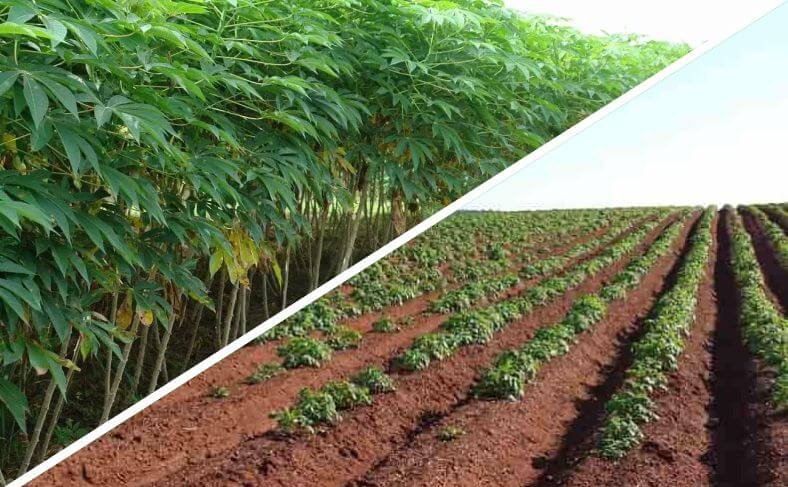
Cassava is one of the most forgiving crops you can farm. It tolerates poor soil, survives dry spells, and produces food when other crops have failed.
But forgiving does not mean effortless. The difference between a farmer who harvests 8 tonnes per hectare and one who harvests 30 from the same land is not luck; it is a series of decisions made at every stage, from stem selection to post-harvest handling, that either compound into a good outcome or quietly erode one.
The difference between a struggling farm and a thriving one often comes down to decisions made before a single stem hits the soil.
Cassava Farming Knowledge That Comes From the Field, Not a Textbook
I did not learn cassava farming in a classroom, but on family farms in Ntigha, Abia State, where cassava was a way of life.
As an adult, I have run my own cassava projects, made the mistakes, and learned what actually moves the needle on yield.
I have selected and rejected stem cuttings, prepared land by hand and with equipment, and weeded through those early months when the crop is most vulnerable.
I have harvested roots that went straight to processors the same day, and I have also harvested too early and paid the price.
The late weeding, the poor stem selection, the misjudged harvest timing, I have done all of it.
That is why the best practices in this guide are not assembled from research papers alone.
They are the practices that have shown up consistently in real yield, on real farmland, season after season.
By the way, if you are new to cassava, this is the best place to start: Introduction to cassava.
Table of Contents
What is Cassava Farming?
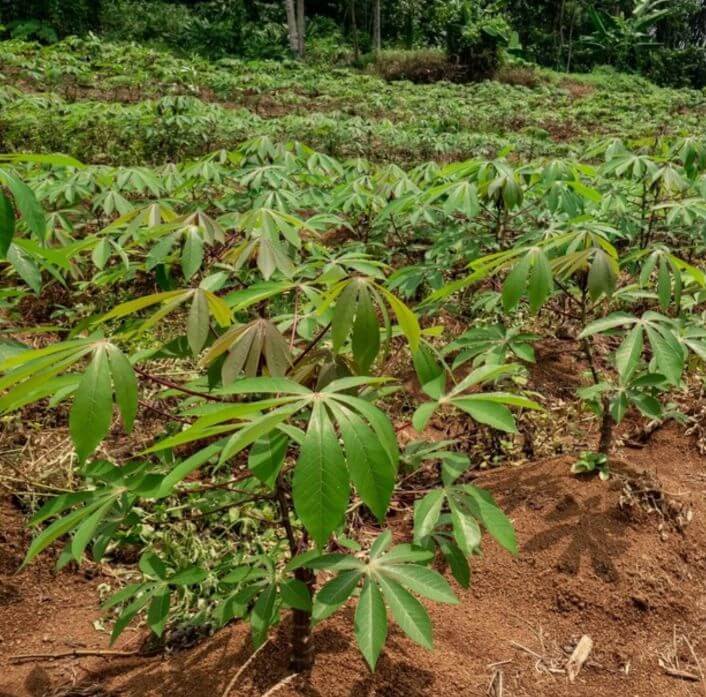
Cassava farming is the complete process of growing cassava, from land preparation and planting to maintenance and harvest.
Practiced across tropical and subtropical regions, it spans from traditional smallholder methods relying on manual labor to modern approaches using improved varieties and mechanized tools.
The goal is simple: produce healthy tubers for food, animal feed, flour, starch, or bioethanol processing.
Ideal Conditions for the Growth of Cassava
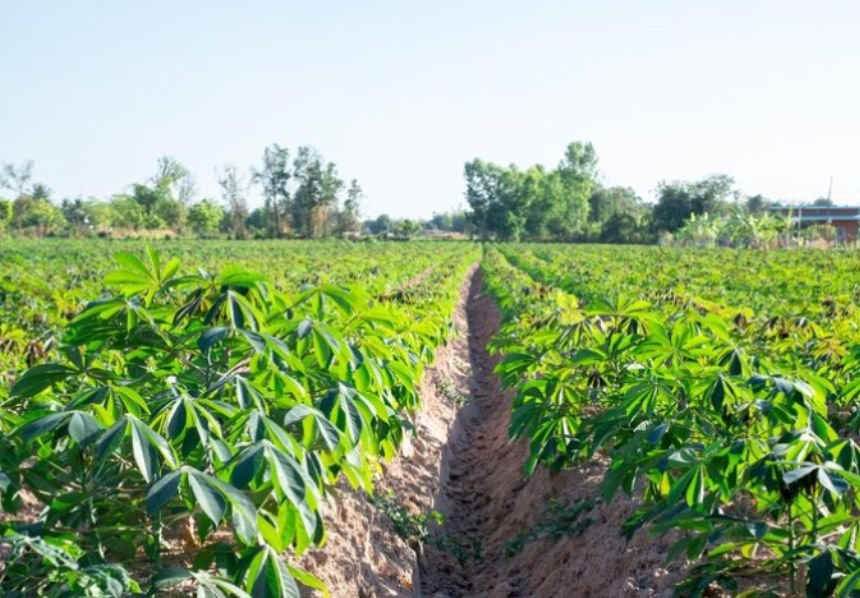
Cassava grows best in warm, tropical climates with temperatures between 25°C and 29°C.
It requires moderate rainfall, ideally well-distributed throughout the growing season, though it can tolerate periods of drought once established.
Excess water should be avoided as it leads to poor root development.
The crop thrives in well-drained, loose soils, especially sandy loam or loamy soils with moderate fertility.
A soil pH of 5.5 to 7.0 is ideal for optimal nutrient uptake and growth.
Cassava is widely cultivated in tropical and subtropical regions, with strong performance in West Africa, South America, and parts of Southeast Asia where conditions are suitable.
More on the ideal conditions for cassava farming.
Selecting and Preparing the Land
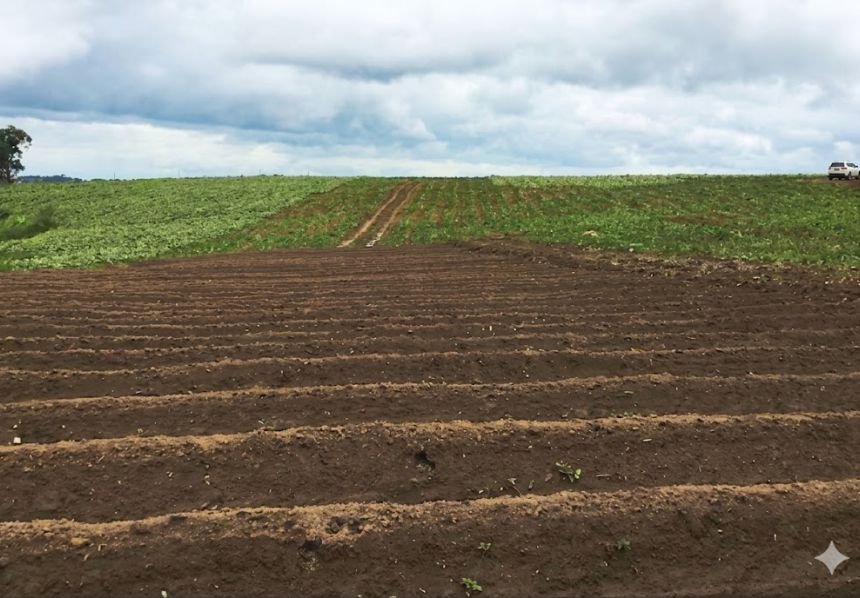
Successful cassava farming begins with proper land selection and preparation to support strong root development.
Choose well-drained, sunny land with a pH of 5.5–7.0, ideally with loose loamy soil for better growth and easier harvesting.
Avoid flood-prone or overly dry areas, as they reduce yield.
Clear weeds and debris, then test the soil to determine nutrient needs.
Based on results, add organic matter, lime, or fertilizers to balance nutrients.
Use appropriate tools depending on farm size, and plan irrigation where rainfall is inconsistent to ensure healthy early growth.
Proper preparation gives cassava a strong start and sets the stage for efficient planting and long-term success.
See a dedicated article on land preparation for cassava farming.
Soil Testing and Fertility
Soil testing is the foundation of successful cassava farming, providing insight into nutrient levels, pH, organic matter, and macro and micronutrients.
By knowing your soil health, you can create a fertilization plan tailored to your cassava crops, avoiding poor yields and inefficient fertilizer use.
Enhancing soil fertility involves using both organic and inorganic sources.
Organic manure improves soil structure, moisture retention, and microbial activity, gradually supplying nutrients.
Balanced fertilizers rich in nitrogen, phosphorus, and potassium support leafy growth, root development, and stress resistance.
Applying fertilizers based on soil test results boosts productivity while sustainable practices like crop rotation and cover cropping maintain long-term soil health.
Healthy, fertile soil strengthens resilience against pests and diseases, supports robust cassava growth, and ensures a productive and sustainable farming operation that maximizes yield and profitability over time.
While cassava can do well in most soil types, here are some requirements that can boost its yield from research.
Cassava Variety Selection
Cassava variety selection affects yield, disease resistance, maturity, and end use.
In Nigeria, popular varieties include improved TME types like TME 419 and TME 30572, known for high yields, drought tolerance, and resistance to cassava mosaic and brown streak diseases.
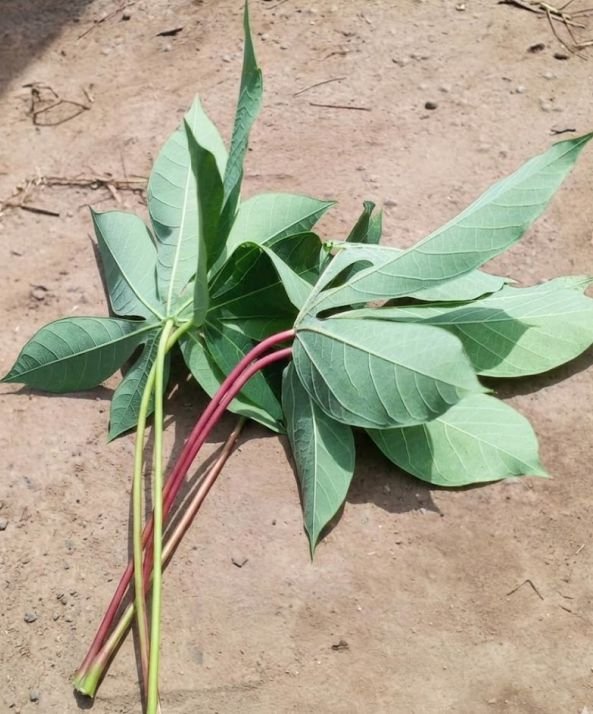
Biofortified pro-vitamin A cassava provides added nutrition, while farmer-preferred local varieties are valued for taste and early maturity.
Good varieties are high-yielding, early maturing, disease-resistant, drought-tolerant, and rich in starch with good cooking quality.
Selection also depends on use, for garri, fufu, starch, animal feed, or ethanol production, ensuring suitability for both farming conditions and market demand.
See: Best Cassava Varieties for High Yield in Africa and the Tropics
Cassava Stem Selection and Preparation
Cassava stem selection is critical because it determines plant health, survival rate, and eventual yield.
Healthy mother plants should be disease-free, vigorous, and taken from mature crops with strong growth performance.
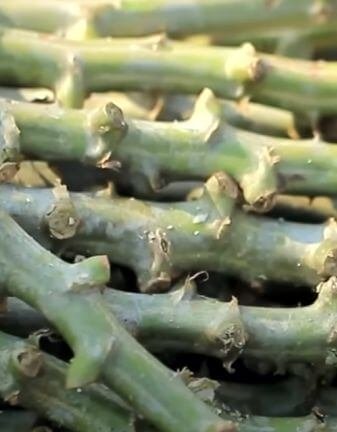
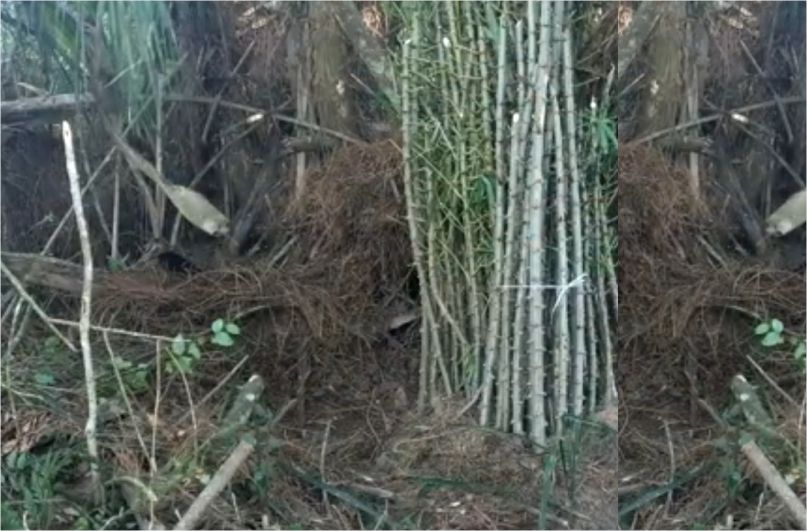
Good stem cuttings are straight, woody, and free from pests, typically sourced from 8–14-month-old plants.
Proper cuttings are 20–30 cm long with 5–7 nodes to support strong sprouting. See how to cut cassava stems.
Before planting, stems should be stored in a cool, shaded place to prevent drying.
Common mistakes include using diseased stems, very young plants, or poorly stored cuttings, all of which reduce germination and field performance.
See: How to Select and Prepare Cassava Stem Cuttings
Cassava Planting Techniques
Planting techniques directly shape how well cassava establishes, develops roots, and ultimately performs in yield.
Getting this stage right reduces early crop failure and improves field uniformity.
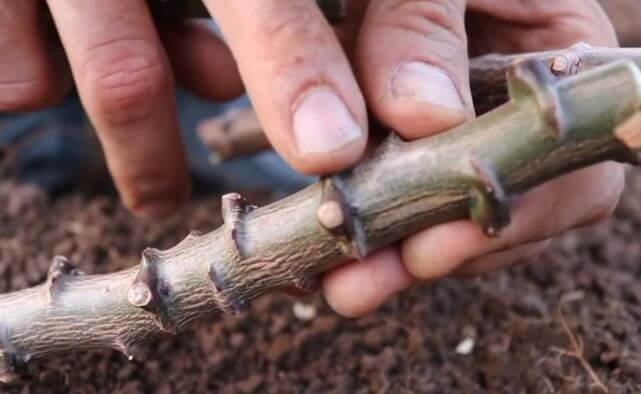
Start with healthy, disease-free stem cuttings, typically 20–30 cm long with at least two nodes.
Using mature, well-selected stems improves sprouting strength and lowers disease risk.
Quality planting material can be sourced from reputable institutions like the National Root Crops Research Institute (NRCRI), Umudike, or trusted private seed suppliers.
👉 See full guide: Sourcing Quality Cassava Stems.
Correct planting orientation is necessary. Cuttings are best planted in a slanted position with about one-third of the stem buried in the soil.
This encourages faster root development and better access to moisture and nutrients.
The timing of planting also influences establishment success. Early rainy season planting ensures consistent soil moisture for sprouting and early growth.
👉 See: Best Time to Plant Cassava
Spacing practices affect light penetration, airflow, and nutrient competition.
Smallholder systems often use 1m × 1m spacing, while more intensive or mechanized systems may adopt 0.8m × 0.8m spacing depending on variety and farm design.
👉 See: Cassava Spacing Guide (Intra-row & Inter-row)
When these planting fundamentals are properly applied, cassava fields establish faster, grow more uniformly, and set the foundation for higher yields.

Choose the Right Planting Method
You can plant cassava directly in the field or use nursery transplants if that’s common in your area. The best method depends on your climate, land type, and tools.
Whichever you choose, make sure the soil is loose and rich with organic matter so roots can grow freely.
👉 See: Cassava planting methods.
Water Management and Irrigation
Proper water management maintains soil moisture throughout cassava’s growth cycle, supporting root development and preventing drought or waterlogging stress.
- Mulching: Applies organic or plastic mulch to retain soil moisture, suppress weeds, and enrich soil nutrients, reducing irrigation frequency while boosting overall plant health.
- Drip Irrigation: Delivers water directly to the root zone, reducing evaporation, preventing waterlogging, and allowing liquid fertilizer integration for optimized tuber expansion.
- Furrow Irrigation: Channels water through shallow trenches along cassava rows, gradually seeping into soil while supporting root growth and large-scale planting cost-effectively.
- Soil Moisture Monitoring: Uses tensiometers or sensors to provide real-time moisture data, enabling precise irrigation decisions that prevent stress and improve tuber yield.
Weed Management in Cassava Farming
Weed management is a must in cassava farming because weeds compete with young plants for nutrients, sunlight, and water, especially during early growth stages.

Early-stage weed control is most important because cassava is slow to establish and highly vulnerable at this time.
Farmers use both manual weeding and chemical herbicides depending on farm size and labour availability.
The most critical weeding periods are within the first 3–5 months after planting.
Mulching helps suppress weed growth while conserving soil moisture.
Effective weed control prevents yield loss by ensuring cassava plants develop strong stems and healthy root systems without competition.
See: Effective Weed Control in Cassava Farms
Intercropping to Maximize Land Use
Consider intercropping and growing cassava alongside other crops.
This helps you make the most of your land, increases biodiversity, and may improve pest management.
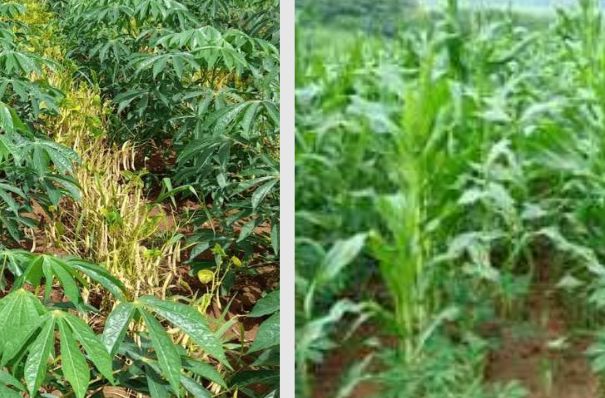
Intercropping cassava with legumes, for example, can enrich the soil with nitrogen, a natural nutrient that benefits your cassava plants.
You can also practice crop rotation to maintain healthy soil and keep pests in check.
Here is more on intercropping cassava.
Nutrient Management in Cassava Farming
Fertilizer and nutrient management play a key role in cassava growth, especially for improving root development and overall yield.
Organic fertilizers from plant or animal sources help improve long-term soil fertility, while proper nutrient balance ensures strong plant performance.
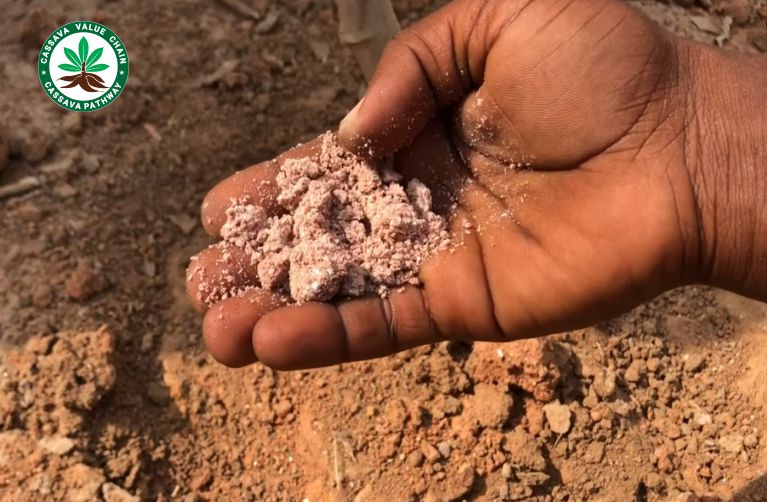
Key macronutrients include nitrogen, which supports leafy growth for photosynthesis, phosphorus, which promotes root establishment and energy transfer, and potassium, which improves water regulation and stress resistance.
Micronutrients like magnesium, calcium, and sulfur support chlorophyll formation and cell structure.
Fertilizer is most effective when applied in split doses at planting and during early root development stages.
See: Nutrient Needs and How to Apply Fertilizer to Cassava Plant
Cassava Pests and Diseases
Cassava is vulnerable to pests and diseases that can reduce yield and quality if not managed properly.
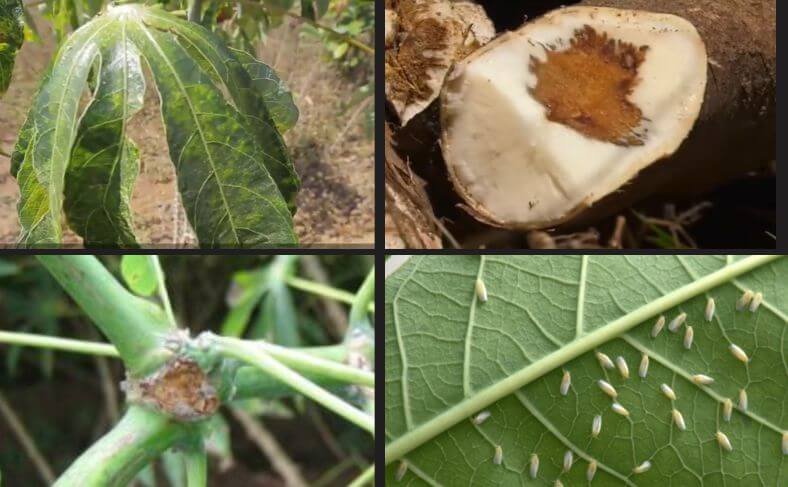
Common threats include cassava mosaic virus, mealybugs, and bacterial blight, each affecting plant health in different ways.
Preventive measures such as using disease-free cuttings, crop rotation, and resistant varieties are essential.
Eco-friendly controls like natural predators and neem oil help manage pests, while good sanitation and drainage reduce disease spread.
Combining multiple control methods, along with regular monitoring and early action, helps protect cassava crops and maintain consistent, healthy yields.
See a dedicated post for cassava pests and diseases.
Harvesting and Post-Harvest Management
Harvesting cassava at the right time is essential for achieving maximum yield and good root quality.
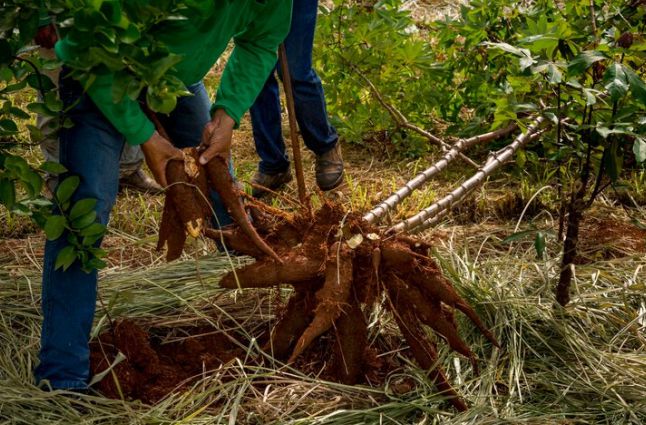
Most cassava varieties are ready for harvest about 10 to 12 months after planting, depending on the type and growing conditions.
Key maturity signs include yellowing leaves, mature stems, and roots that are well-formed, usually at least 2 inches in diameter.
It is important to be sure your cassava is ready for harvest before harvesting. See how to know your cassava is ready.
Harvesting should be done carefully using a spade or hoe to loosen the soil and avoid damaging the roots.
After lifting, roots should be cleaned and handled gently to prevent bruising.
Post-harvest management involves storing cassava in cool, shaded, and well-ventilated conditions if immediate processing is not possible, as fresh roots deteriorate quickly.
Proper handling reduces spoilage, maintains quality, and improves market value.
See: How to Harvest Cassava Properly, and you will also be interested in how cassava is handled after harvesting to avoid spoilage and wastage.
Post-Planting Field Management (Transition Section)
Post-planting field management is important for maintaining soil health and ensuring long-term productivity in cassava farming.
After harvest, field rotation helps break pest and disease cycles while restoring soil fertility through the introduction of different crops, such as legumes.
Stubble management involves properly clearing or incorporating cassava residues back into the soil to improve organic matter content.
Preparing land for the next cycle includes ploughing, soil amendment, and correcting nutrient imbalances before replanting.
Preventing soil depletion requires balanced fertilization, crop rotation, and reduced overuse of the same land.
These practices ensure sustained yields and healthier farming systems over time.
See: Cassava Crop Rotation and Soil Recovery Practices
Cassava Yield Expectations and Benchmarks
Understanding yield benchmarks helps farmers measure performance, identify gaps, and set realistic production targets across different farming conditions and scales.
- Traditional Farming Yields: Smallholder farmers using manual methods typically harvest between 8 and 15 tonnes per hectare, often limited by poor variety selection and minimal inputs.
- Improved Variety Yields: Farmers using certified improved varieties with proper agronomic practices consistently achieve 20 to 35 tonnes per hectare under favorable conditions.
- Commercial Scale Benchmarks: Large-scale operations combining mechanization, irrigation, and soil management regularly record yields exceeding 40 tonnes per hectare annually.
- Yield Gap Warning: Any harvest below 8 tonnes per hectare signals serious agronomic problems requiring immediate soil, variety, or management intervention.
Record Keeping and Farm Management
Systematic record-keeping transforms cassava farming from guesswork into a data-driven operation, enabling smarter decisions, better yields, and consistent profitability season after season.
- Planting Records: Document planting dates, stem varieties, spacing, and field zones to track performance differences across your farm accurately and consistently.
- Input and Cost Tracking: Record every fertilizer application, pesticide use, and labor cost to calculate your true cost per tonne and protect profit margins.
- Yield and Harvest Logs: Capture harvest dates, quantities, and buyer prices per season to identify your most productive fields and most profitable periods.
- Season-on-Season Comparison: Comparing records across farming cycles reveals patterns, exposes recurring mistakes, and guides better planning for every subsequent planting season.
Common Cassava Farming Mistakes
Common cassava farming mistakes often reduce yield and affect overall farm profitability.
Poor stem selection leads to weak plant establishment and disease spread, while wrong spacing limits root development and reduces final harvest size.
Late weeding allows weeds to compete with cassava during its early growth stages, slowing plant development.
Ignoring pests and diseases early can result in severe crop damage and irreversible yield loss.
Harvesting too early reduces root size and starch content, while late harvesting may lead to root decay or woody tubers.
Avoiding these mistakes is essential for achieving healthy growth and high cassava productivity.
See: Top Mistakes Cassava Farmers Make and How to Avoid Them
Sustainable Cassava Farming Practices
Sustainable cassava farming focuses on maintaining soil health, improving yields, and protecting the environment over time.
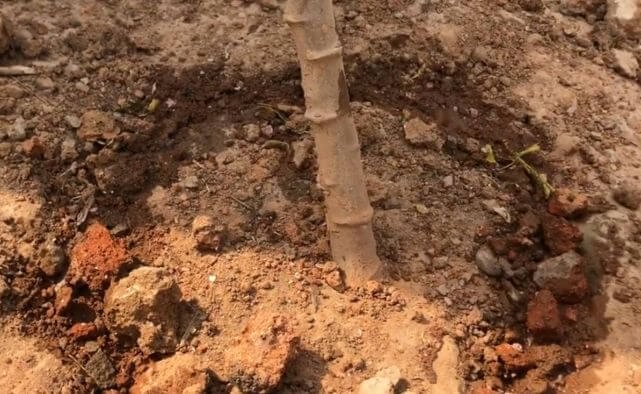
Soil conservation methods such as contour farming, mulching, and cover cropping help reduce erosion and preserve soil nutrients.
Organic farming approaches use compost, manure, and natural inputs to improve fertility while reducing reliance on synthetic chemicals.
Climate-smart cassava farming promotes resilience through drought-tolerant varieties and efficient water use.
Reducing chemical dependency helps maintain soil balance and lowers production costs.
Long-term productivity strategies include crop rotation, proper land management, and continuous soil enrichment to ensure consistent yields across multiple planting cycles.
See: Sustainable Cassava Farming Techniques for Higher Yields
The Best Practices in Cassava Farming
Every section above covers these areas in full detail. This table summarises the key actions in each area for quick reference.
| Area | Key Action |
|---|---|
| Soil Preparation | Test soil, correct pH to 5.5–7.0, till for aeration, construct ridges in waterlogged areas |
| Stem Selection | Use disease-free cuttings 20–30cm long from 8–14 month old plants with 5–7 nodes |
| Planting | Plant at a slant, one-third buried, at the start of the rainy season, 1m x 1m spacing |
| Nutrient Management | Apply NPK in split doses, combine with organic matter, base on soil test results |
| Weed Control | Weed within first 3–5 months after planting, use mulch to suppress regrowth |
| Pest and Disease | Use resistant varieties, clean planting material, monitor regularly, rotate crops |
| Harvesting | Harvest at 10–12 months, check for yellowing leaves and root size before cutting |
| Post-Harvest | Clean, sort, and move roots to processing or storage within 48 hours of harvest |
Categories of Cassava Farming
Cassava farming and cultivation are divided into three main categories: small-scale, large-scale, and commercial.
Small-Scale Cassava Farming
Small-scale farmers cultivate yuca for subsistence purposes – for their own use, using traditional farming techniques such as a hoe, shovel, and other local farming equipment, and rely solely on family effort and labor.
Large-Scale Cassava Farming
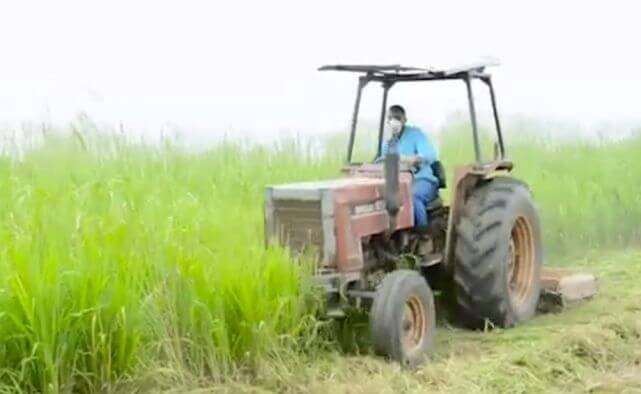
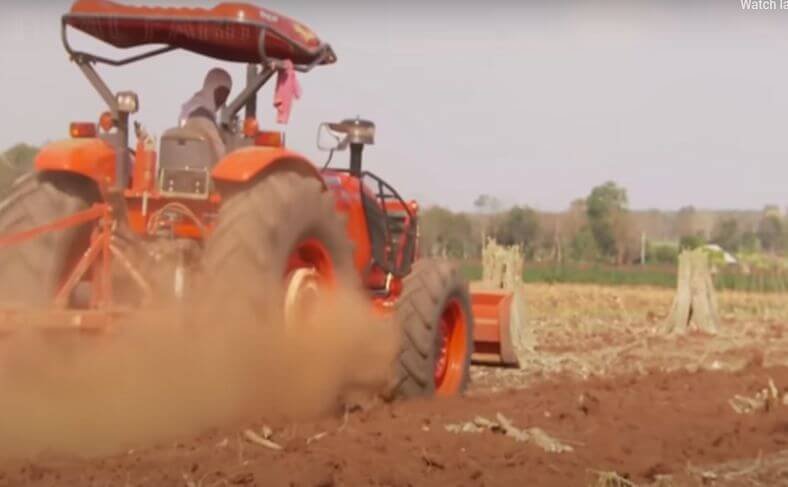
Large-scale farmers use relatively more advanced farming tools, techniques, and equipment, including tractors and irrigation systems, to increase yield.
Commercial farmers, on the other hand, produce cassava for sale in local or international markets. See our comprehensive post on commercial cassava production.
Challenges in Cassava Farming and Production
Despite its importance as a food crop, cassava farming and production face several challenges:
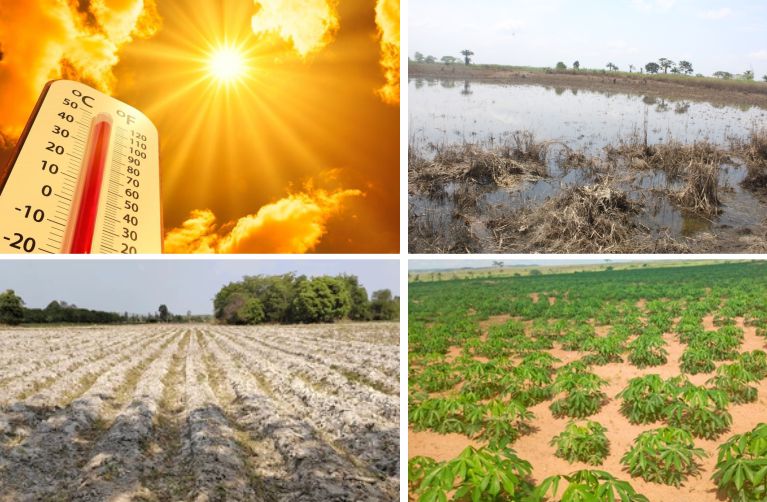
1. Climate change: Climate change is increasing the frequency and severity of droughts, floods, and other extreme weather events, which can hurt cassava yields.
2. Pests and diseases: Cassava is susceptible to a variety of biotic factors – pests and diseases, including cassava mosaic disease, cassava brown streak disease, and cassava green mite. These can cause real crop losses if not properly managed.
3. Postharvest losses: Cassava roots are highly perishable and can spoil quickly after harvesting. Improper handling and storage can lead to postharvest losses. See how to curb cassava post-harvest losses.
4. Processing challenges: Processing cassava to remove toxins and prepare it for consumption or further processing can be time-consuming and labor-intensive, especially for small-scale farmers.
5. Market access: Many cassava farmers, especially small-scale farmers, face challenges in accessing markets for their products. Poor infrastructure, lack of market information, and low prices can make it difficult for farmers to sell their crops.
See more on challenges facing the cassava value chain and solutions.
Government Policies, Support, and Market Access for Cassava Farmers
Cassava farming is a key part of agriculture in many countries, with government support playing a major role in boosting productivity and sustainability.
Through financial assistance such as grants, loans, and subsidies, governments help farmers meet the costs of production and improve their yields.
Since cassava is both a food source and a cash crop, these policies are designed to encourage growth in this sector.
Cooperatives and Resource Sharing
Government-backed cooperatives are an effective way for cassava farmers to pool resources, share knowledge, and secure better deals with buyers.
By working together, farmers can increase their bargaining power, improve yields, and reduce costs.
These cooperatives also make it easier to access new tools and technologies that can improve farming practices and productivity.
Improving Market Access
Market access is another area where government support is crucial.
Governments help identify potential buyers and export markets, often through trade agreements that lower tariffs and make it easier to sell cassava products abroad.
Policies promoting cassava-based products, such as flour and starch, open new revenue streams.
Additionally, investment in infrastructure, such as better roads and storage facilities, ensures that farmers can transport their products to markets efficiently.
In short, government support in the form of policies, financial aid, and market access plays a key role in helping cassava farmers grow their businesses.
The reality at the farm level in communities like Ntigha, Isiala Ngwa North LGA is that the gap between policy intent and practical delivery remains wide.
The interventions that make the most immediate difference are rarely the headline programmes; they are reliable road access between farms and processors, consistent availability of certified stems, and market information that reaches farmers before they have already sold at the wrong price.
When those basics work, everything else the policy intends becomes possible.
Conclusion
Cassava farming rewards farmers who pay attention. The crop is resilient but not invincible; poor stem selection, late weeding, wrong harvest timing, and careless post-harvest handling each take something from the final yield in ways that compound season after season.
The practices in this guide are not theoretical ideals. They are the decisions that separate a farm producing 8 tonnes per hectare from one producing 30 on the same type of land.
Soil preparation, variety selection, planting technique, nutrient management, pest control, and post-harvest handling: each stage builds on the previous one.
Farming cassava well is not complicated. It is consistent. The farmers who get the most from this crop are the ones who apply the right practice at the right time, season after season, without cutting corners when the work gets heavy.
Frequently Asked Questions
What are the basic requirements for successful cassava farming?
Successful cassava farming needs well-drained soil, disease-free stems, correct spacing, steady moisture during early growth, weed control, and timely fertilization to support healthy root development and higher yields.
When is the best time to plant cassava stems?
Plant cassava at the beginning of the rainy season to help stems establish quickly. Adequate early moisture boosts sprouting, root formation, and overall crop performance.
How can farmers control pests and diseases in cassava fields?
Control pests and diseases using resistant varieties, clean planting materials, crop rotation, field sanitation, and regular monitoring to catch early infections before they reduce yield.
What determines cassava yield at harvest?
Cassava yield depends on stem quality, soil fertility, moisture levels, spacing, weed control, and timely harvesting. Good management from planting to maturity ensures stronger tubers.
Chimeremeze Emeh
Chimeremeze Emeh is a tropical crop farmer and chemical engineer from Ntigha, Isiala Ngwa North LGA, Abia State, Eastern Nigeria, specializing in cassava and palm oil, with over 30 years of hands-on experience growing, harvesting, and processing cassava. He grows TMS series, TME 419, and local traditional varieties on his own farms and operates a small-scale cassava flour and starch production business through Cassava Pathway, which he founded as a CAMA-registered agribusiness in 2024. He is also the founder of Palm Oil Pathway, where he applies the same tropical farming expertise. His farms are located in Ntigha, Abia State.
References
- A systemic map of cassava farming practices and their agricultural and environmental impacts
- Farmers’ knowledge, attitudes and practices towards management of cassava pests and diseases
- https://scripts.farmradio.fm/radio-script/backgrounder-good-agricultural-practices-cassava-production-case-cote-divoire/
- https://farms.trwconsult.com/step-by-step-procedures-to-cultivate-your-cassava/