Last updated on July 16th, 2026 at 08:59 pm
Two farmers plant the same-sized plot. One harvests twice what the other does, using the same rainfall and the same soil. The difference is usually the variety.
Hybrid cassava is bred by crossing two parent plants to combine their strongest traits into one variety: higher yield, faster growth, and real resistance to disease and drought.
You do not need to overhaul your entire farming system to benefit from it.
With the right planting materials and reasonable care, hybrid cassava fits into a farm you already know how to run.
This guide covers what makes a variety genuinely hybrid, which releases are actually worth growing, and the real tradeoffs involved before you switch.
Table of Contents
What Is Hybrid Cassava?
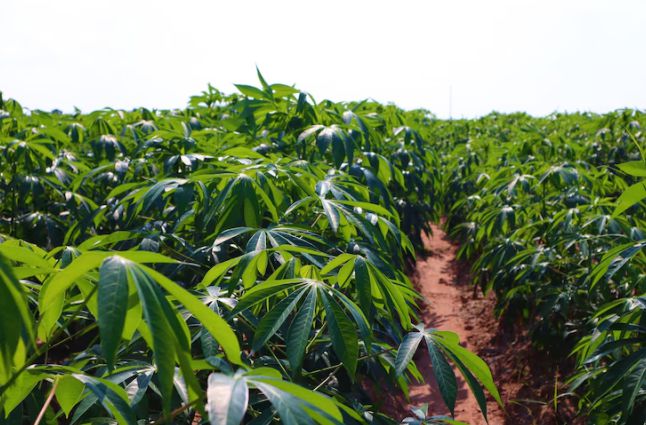
Hybrid cassava comes from crossing two parent plants that each carry desirable traits, aiming for offspring that grow faster and yield more.
Plant breeders call this hybrid vigor, and Cornell’s NextGen Cassava project documents it across breeding programs.
It combines strengths across different conditions, making it reliable for food, processing and commercial farming alike, rather than one narrow set of circumstances.
For the fuller picture of how hybrid varieties compare to landraces like TME 419, see the dedicated guide on cassava varieties.
Why Hybrid Cassava Matters
Higher yields without extra effort
Hybrid varieties deliver more roots per plant and more tons per hectare.
They do this consistently across different soil types and climates, not only under ideal conditions.
According to IITA’s own variety release data, recent hybrid releases reached 49 to 53 tons per hectare in trials, against less than 10 for local stock.
That gap shows up with the same planting materials and basic field care most farmers already practice.
Real disease resistance
Cassava mosaic disease and brown streak disease have cost farmers entire harvests for decades, and hybrid breeding directly targets that vulnerability.
IITA’s field data shows resistant varieties holding CMD incidence to just 15 to 20 percent, against nearly 100 percent in susceptible stock nearby.
That difference means fewer plants lost, less spent on chemical control, and a harvest you can actually count on.
Drought tolerance when the rains fail
Hybrid cassava keeps growing through dry spells that would stall a traditional variety.
That gives real control over harvests in regions where rainfall is unpredictable.
In drought-prone areas, that resilience keeps a farm productive while neighboring fields planted with older stock struggle.
Why Hybrid Cassava Was Developed
Hybrid cassava exists to solve problems that had been building for decades: low yields, disease outbreaks that wiped out entire seasons, and unpredictable weather patterns.
Local landraces simply were not built for the demands modern farming and processing now place on the crop.
Cassava mosaic and brown streak diseases, in particular, have devastated farming communities.
They spread fast enough to leave a season with almost nothing to show for it.
Research centers, including IITA, CIAT, and NRCRI worked together to breed cassava holding up against exactly these threats, guided by farmer priorities over lab conditions.
Cassava has also stopped being just a food crop over the past decade.
It now feeds flour, starch, animal feed, and ethanol production too, beyond direct food use.
That demand needed a variety producing more without perfect land or expensive equipment.
Verified Hybrid Cassava Varieties
A quick clarification before naming specific varieties: cassava breeding uses two different prefix systems.
TME codes generally mark landrace accessions collected from farmers, including the widely grown TME 419.
TMS codes mark varieties actually bred and selected through IITA’s own crossing programs.
The varieties below are genuine TMS-prefixed hybrid releases, verified against Cassava Matters’ official variety list.
TMS 30572
TMS 30572 grows faster than most releases, letting you harvest sooner and plan for a second season on the same land.
It performs well in low-rainfall areas and poor soil, and its output works equally well for direct food use or sale to processors.
This variety remains popular across both West and East Africa for exactly that flexibility.
TMS 98/0581 (renamed Dixon)
Renamed “Dixon” in Nigeria’s 2020 official variety naming exercise, this hybrid combines strong disease resistance with good yield performance.
It handles a genuinely wide range of soil conditions reliably across regions.
That reliability is part of why Nigeria’s release committee gave it a farmer-facing name instead of its technical code alone.
TMS 01/1368 (Vitamin A / Yellow variety)
This biofortified hybrid combines standard hybrid vigor with meaningfully higher beta-carotene content, addressing vitamin A deficiency directly through a staple food rather than a supplement.
It performs acceptably on yield and processing quality while delivering a real nutritional advantage that standard white-fleshed varieties simply do not offer.
Traits That Define a Good Hybrid
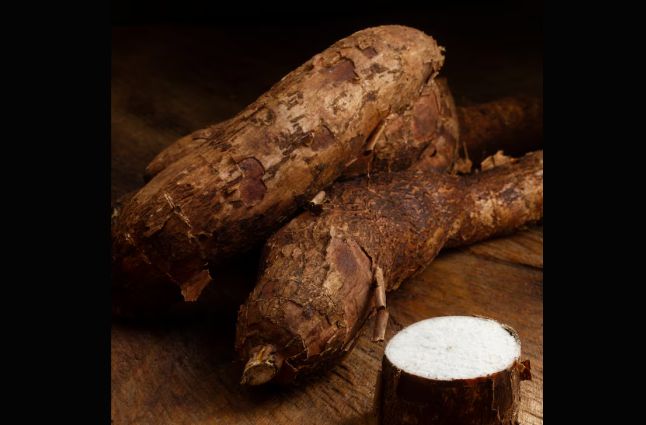
- High starch content: more starch per root means stronger returns across food, flour, and industrial markets alike
- Faster growth: most hybrids mature in 6 to 10 months, letting you plan two seasons in a single year
- Disease resistance: real protection against cassava mosaic and brown streak disease, cutting both losses and chemical input costs
- Drought tolerance: dependable growth through dry spells that would otherwise force a total loss
- Soil adaptability: solid performance even on tired or poorly improved land that would limit a traditional variety
Getting Started With Hybrid Cassava on Your Farm
Land preparation, correct plant spacing, and fertilizer application matter just as much for hybrids as for any other cassava.
Switching does not require learning an entirely new farming system from scratch.
Use healthy, disease-free stem cuttings from a trusted source, planted at the start of the rainy season with methods you already use.
The variety does the heavy lifting from that point forward in the season.
Watch for the same common pests you would monitor on any cassava crop, since hybrid resistance reduces risk but does not eliminate it.
Real Challenges Worth Knowing About
- Access to genuine planting material remains the biggest hurdle. Not every farmer can reach certified cuttings, and counterfeit or low-quality stems undercut the entire benefit of planting a hybrid in the first place. Buy from trusted cooperatives or your local extension office rather than an unverified roadside seller.
- Knowledge gaps cost real money too. Hybrid varieties respond differently to spacing, fertilizer timing, and pest pressure than the local stock most farmers grew up managing. Extension services and field days close that gap faster than trial and error alone.
- Input costs add up, and fertilizer, labor, and pest control all cost more when a farm is trying to unlock a hybrid’s full potential. Group buying, farmer cooperatives, and local subsidy programs can ease that burden meaningfully for smallholders working with tight margins.
- Relying on a single hybrid is risky. Pests and diseases adapt, and a farm planted entirely in one variety can lose everything to a single outbreak. Mixing hybrids and staying connected to your local research institute keeps that risk manageable.
My Own Experience With Hybrid and Local Varieties
On my farm in Ntigha, I grow the TMS series alongside TME 419 and local traditional varieties, deliberately, not by accident. The hybrids give me yield and disease protection I can count on.
The local varieties still earn their place through taste and processing qualities my community values that no lab-bred line fully replicates.
Choosing a hybrid does not mean abandoning everything that already works well for you.
It means adding a genuinely stronger tool to a system you already understand.
Conclusion
Hybrid cassava gives farmers more than just better numbers written on paper.
It gives real control over yield, disease risk, and drought exposure that traditional varieties cannot consistently match.
You do not need to start completely from scratch to benefit from this.
With quality planting materials, correct spacing, and basic care, a hybrid fits directly into the farm you run.
Start with one verified hybrid on a portion of your land this season, and expand once you have seen the difference for yourself.
Frequently Asked Questions
Is hybrid cassava genetically modified?
No, hybrid cassava is not genetically modified in any way at all. It results from crossbreeding two strong parent plants to combine desirable traits like yield, disease resistance, and drought tolerance naturally.
How long does hybrid cassava take to mature?
Most hybrid cassava varieties mature in 6 to 10 months, which lets farmers harvest sooner and potentially grow two full cassava cycles within a single year.
Can hybrid cassava grow in poor soil?
Yes, hybrid cassava tolerates poor soil better than most traditional varieties, though it still benefits from added compost or fertilizer to reach its full yield potential.
Where can farmers get certified hybrid cassava cuttings?
Certified planting materials are available through research centers like IITA and NRCRI, government agricultural agencies, or trusted farmer cooperatives that guarantee disease-free, true-to-name stock.

Chimeremeze Emeh is a tropical crop farmer and chemical engineer from Ntigha, Isiala Ngwa North LGA, Abia State, Eastern Nigeria, specializing in cassava and palm oil, with over 30 years of hands-on experience growing, harvesting, and processing cassava. He grows TMS series, TME 419, and local traditional varieties on his own farms and operates a small-scale cassava flour and starch production business through Cassava Pathway, which he founded as a CAMA-registered agribusiness in 2024. He is also the founder of Palm Oil Pathway, where he applies the same tropical farming expertise. His farms are located in Ntigha, Abia State.