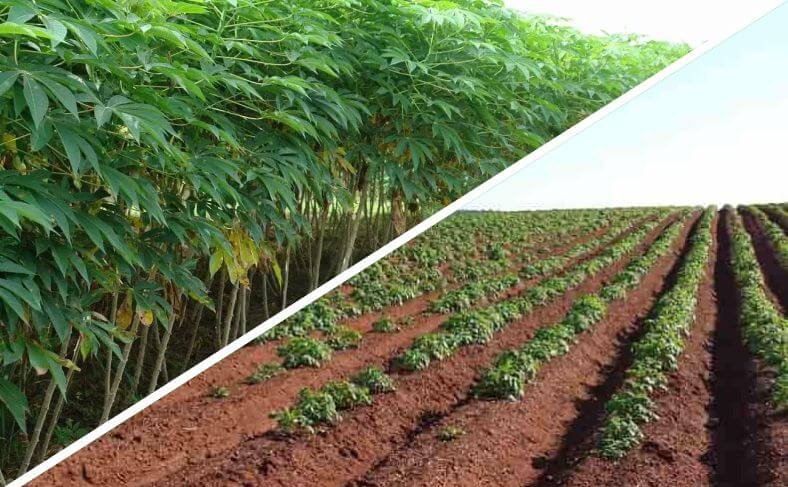
Two farmers can plant the same variety on similar land and harvest wildly different tonnages at the end of the year. In cassava farming, that gap comes from a chain of small, timed decisions, most made long before harvest day.
This guide covers the whole growing cycle, from picking a plot to moving fresh roots off the field before they spoil.
I have kept each section short on purpose, because this site already has deeper, dedicated posts for every single stage.
Think of this page as the map, and treat those linked guides as the detailed roads you travel once you know your route.
Where a number appears, I name the research behind it, and where a tip comes from my own farm, I say so plainly.
Nothing here demands expensive machinery, only attention, patience, and timing through the season.
Table of Contents
What is Cassava Farming?
Cassava farming is the complete process of growing cassava, from land preparation and planting to maintenance and harvest.
Practiced across tropical and subtropical regions, it spans from traditional smallholder methods relying on manual labor to modern approaches using improved varieties and mechanized tools.
The goal is simple: produce healthy tubers for food, animal feed, flour, starch, or bioethanol processing.
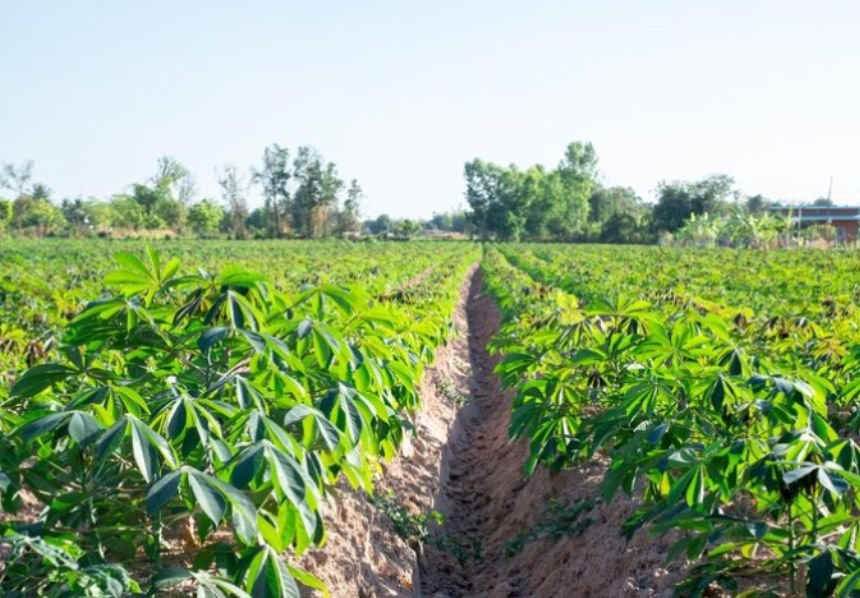
What Three Decades in Ntigha Taught Me About Yield
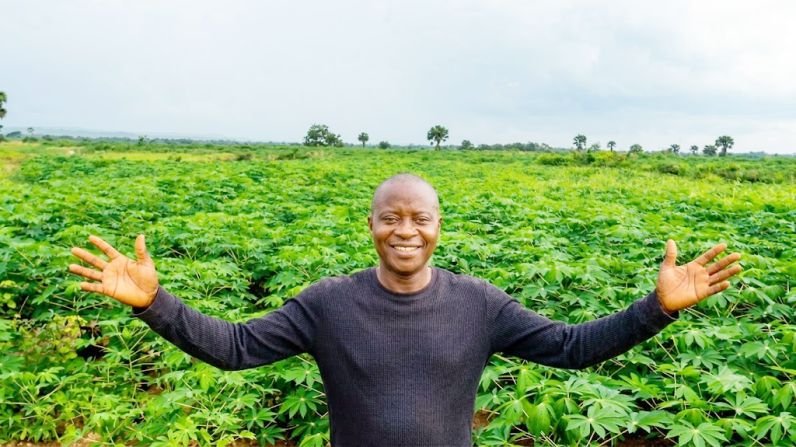
I learned to grow cassava on family plots in Ntigha, Isiala Ngwa North, long before I trained as a chemical engineer.
Across 30 years of cassava farming, I have planted TMS 419, TME 419, and local varieties, and I have processed the roots into flour and starch.
I have also made the classic mistakes, including late weeding, weak stems, and digging a field before the roots had filled out.
Each of those mistakes cost me tonnage, which is why this guide leans on timing as much as on research.
Where Yields Stand Today, and Why the Gap Matters
Nigeria grew about 63 million tonnes of cassava in 2021, roughly a fifth of world output, according to a 2024 bibliometric study in Discover Agriculture.

Volume is not the problem, though, because output per hectare remains stubbornly low on most smallholder plots across the country.
A panel analysis published in Heliyon put Nigeria’s 2017 average at 8.75 tonnes per hectare, below the world average of 11.08 tonnes.
From my own fields, I would say most of that gap comes from management choices rather than from poor soil.
Choose the Site and Test the Soil Before You Clear
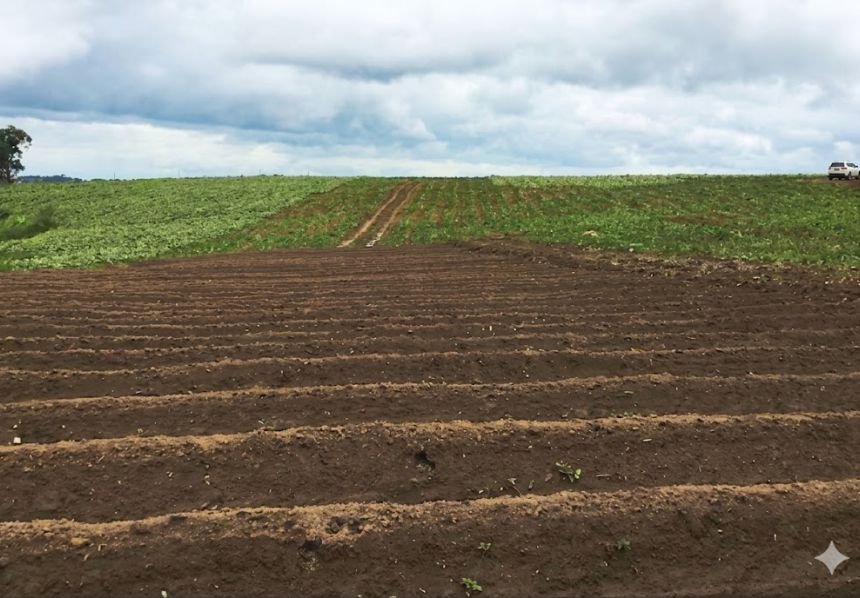
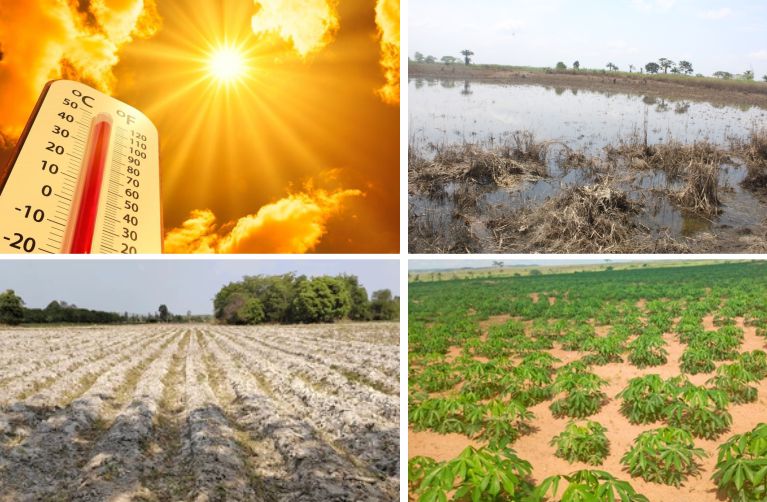
Cassava tolerates weak soil, but it punishes waterlogged ground quickly, so drainage is the first thing I check on any new plot.
Walk the land after a heavy rain and note where water stands, because those low spots will rot cuttings and roots alike.
A basic soil test tells you pH and nutrient levels, which then decide how much lime or fertilizer the field really needs.
Our breakdown of the soil conditions cassava prefers covers pH, texture, and organic matter targets in detail.
For clearing, tilling, ridging, and planting depth, follow the step-by-step soil preparation and planting walkthrough instead.
Pick a Variety That Matches Your Expectations
Most farmers pick whatever variety their neighbor grows, yet the smarter question is what the roots will become after harvest.
Garri processors, starch factories, and fresh-root markets each reward different traits, including dry matter, cooking quality, and disease resistance.
On my own land, improved TMS and TME lines carry the yield, while local varieties stay in rotation for taste and processing qualities.
Our variety selection guide compares improved and local types by purpose.
The cassava basics primer explains the plant’s botany and safety points for newcomers.
Clean Stems Are the Cheapest Disease Control You Will Ever Buy
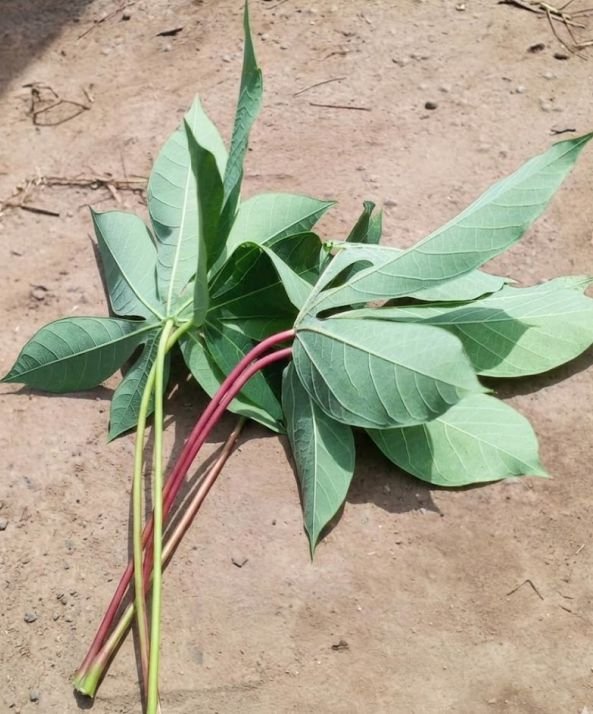
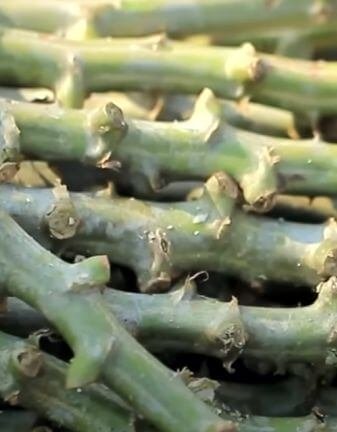
Cassava is planted from stem cuttings, so any virus in the mother plant travels straight into your new field.
A 2020 survey of 343 Cameroonian fields, available on PubMed Central, found contaminated cuttings were the likely main route of cassava mosaic infection.
The same study noted a useful field clue: cutting-borne infections show symptoms on the lowest, first-formed leaves, not only the upper ones.
Before I cut stems, I walk the mother plants and reject any showing yellow mosaic patterns on those bottom leaves. PubMed CentralPubMed Central
For cutting length, node count, and tool choice, see how I cut stems for planting.
The anatomy and propagation guide explains why buds and nodes matter so much for sprouting.
Planting Angle, Depth, and Spacing
Cuttings go in vertically, slanted, or flat, and the right choice depends mostly on how wet your soil stays after planting.
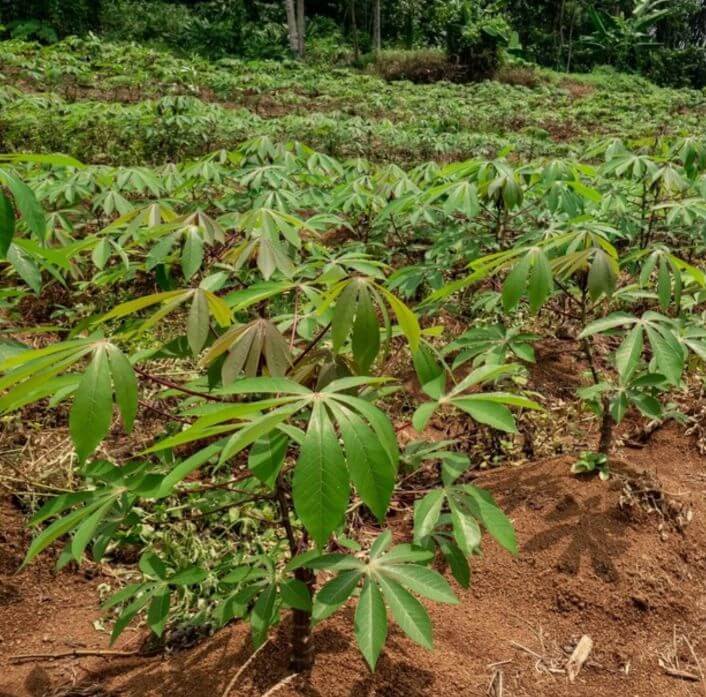
In my wet Abia soils, a slanted cutting on a ridge has given me the most reliable sprouting across seasons.
Our comparison of planting methods by soil and rainfall weighs each option, including mechanized planting for larger fields.
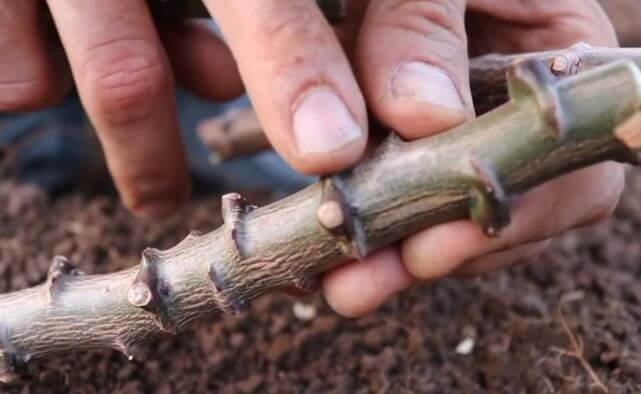
Spacing sets your plant population, and one square meter per plant gives you roughly 10,000 stands on one hectare.
The row and in-row spacing guide shows how to adjust that figure for branching varieties and intercrops.
The First Twelve Weeks Decide Your Cassava Farming Results
Cassava sprouts slowly and closes its canopy late, which leaves bare soil open to weeds during the first few months.
IITA reports that weeds cause over 30 percent yield loss and recommends weeding at 4, 8, and 12 weeks after planting.
The same IITA report says African smallholders harvest 8 to 12 tonnes per hectare, against a potential of 25 tonnes or more.
A review in Crop Protection found that uncontrolled weeds during the critical period can cut cassava yields by 50 to 100 percent.
Scientists recommend additional herbicides for weed control in cassava farming – IITA +2
The weeding I skipped in my early years always showed up later, as thinner roots and a lighter harvest at the processor.
Our guide to integrated weed control methods covers hoeing, mulching, herbicides, and rotation in practical detail.
Feed the Crop With Data, Not Guesswork
Blanket fertilizer rates waste money on rich soils and underfeed poor ones, which is why site-specific advice now matters so much.
ACAI field trials in Nigeria and Tanzania applied fertilizer between 2 and 6 weeks after planting.
Where the recommended rate was higher, the trials split it, adding a second dose between 8 and 12 weeks.
According to the International Fertiliser Society, over 75 percent of 5,000 farmers in AKILIMO validation trials saw higher yields and profits than with their usual practice.
1st African Conference on Precision Agriculture | 8-10 December | 2020 260 +2
Nutrient roles, application methods, and organic options are all covered in our cassava fertilizer application guide.
Combine Crops Early to Maximize Land Use and for Early Cash While the Roots Bulk
Cassava takes close to a year to mature, so a fast crop between the rows keeps money coming in meanwhile.
Maize, cowpea, and melon are common partners in southeastern Nigeria, and legumes add some nitrogen back into tired soil.
Keep partner crops out of the cassava row itself, because crowding young stands during those early weeks costs more than it earns.
Our list of crops that pair well with cassava explains the trade-offs for each partner.
Scout for Pests and Disease Every Two Weeks
Mosaic disease, brown streak, bacterial blight, mealybugs, and green mites are the threats growers across Africa meet most.
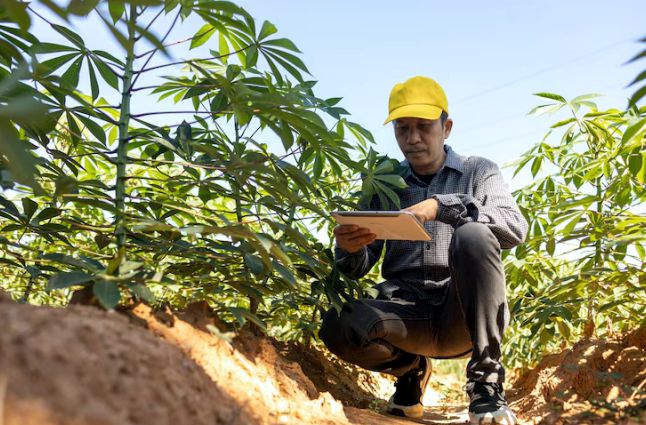
A walk through the field every two weeks catches problems while you can still rogue a few plants rather than lose a whole block.
Pull and burn infected plants early, and never take planting material from a block that showed heavy symptoms the previous season.
Identification photos and control steps for each threat are in our pest and disease prevention guide.
Water, Mulch, and Dry-Season Stress
Rain-fed cassava survives dry spells once established, but moisture stress in the first two months can stall sprouting badly.
A light mulch of crop residue around young plants holds moisture and slows weeds, and it costs almost nothing on a smallholding.
Drip or furrow irrigation pays off mainly on commercial plots planted off-season, where roots must reach a buyer on a fixed schedule.
Harvest at the Right Time, Then Beat the Clock
Roots can stay in the ground for months after maturity, which gives you flexibility but also tempts you to wait too long.
The FAO cassava post-harvest compendium notes that starch quality rises until about 12 to 15 months after planting, then declines as roots turn woody.
The same source warns that spoilage begins within 48 to 72 hours after harvest, so arrange transport or processing before you dig.
I have harvested too early to meet a cash need, and the smaller roots returned less flour for the same labor. FAOFAO
Our guides to reading the signs of harvest readiness and lifting roots without bruising them cover the practical steps.
Once roots leave the field, the processing methods guide explains how quickly each product line should receive them.
A Growing Season at a Glance
| Timing | Task | Why it matters |
|---|---|---|
| 1 to 2 months before rains | Soil test, clear, ridge, and inspect mother plants for stems | Corrections and clean stems cost least before planting |
| Onset of rains | Plant cuttings at your chosen angle and spacing | Early moisture drives sprouting |
| 2 to 6 weeks after planting | First fertilizer dose, based on the soil test | Matches ACAI trial timing |
| 4, 8, and 12 weeks | Weed | IITA’s recommended schedule |
| 8 to 12 weeks | Second fertilizer dose where rates are high | Split dosing reduces waste |
| Every 2 weeks, months 1 to 6 | Scout and rogue diseased plants | Early removal limits spread |
| 10 to 15 months | Check maturity and confirm a buyer | Starch quality peaks in this window |
| Harvest day | Deliver or process within 48 to 72 hours | Roots begin deteriorating fast |
Best Practices That Protect Yield Season After Season
Best practices in cassava growing are the habits that keep yields steady beyond a single good year, not one-off tricks.
- Protect the Soil You Farm: Cassava removes large amounts of potassium and other nutrients, so land planted back-to-back without care loses fertility quickly.
- Rotate and Rest the Land: I avoid planting cassava on the same plot for more than two cycles in a row without a legume break.
- Use Chemicals as a Last Resort: Resistant varieties, clean stems, timely weeding, and field sanitation handle most problems before herbicides or pesticides become necessary.
- Plan for Erratic Rainfall: In my experience around Ntigha, the rains have become harder to predict, so drought-tolerant varieties and staggered planting dates help spread your risk.
| Practice | What it prevents | Shortcut to avoid |
|---|---|---|
| Soil test before liming or fertilizing | Wasted inputs and nutrient imbalance | Copying a neighbor’s fertilizer rate |
| Contour ridging on slopes | Erosion and topsoil loss | Ridging straight downhill |
| Inspected, disease-free stems | Mosaic and blight carried in from day one | Buying unlabeled stems by the roadside |
| Weeding at 4, 8, and 12 weeks | Early competition for light and nutrients | Waiting until weeds overtop the crop |
| Split fertilizer doses | Leaching and wasted fertilizer | Applying the full rate at planting |
| Rotation with legumes | Pest build-up and declining fertility | Planting cassava on one plot year after year |
| Harvest tied to a confirmed buyer | Post-harvest spoilage | Digging first and finding buyers later |
Adopting even three of these habits this season will show up in your harvest weights and your soil for years afterward.
Keep Records Like a Business, Even on One Plot
For years I farmed from memory, and memory is a poor accountant when you are comparing one season against the next.
Write down planting dates, stem source, fertilizer used, weeding days, labor costs, harvest weight, and the price each buyer paid.
After two or three seasons, those notes show which fields, varieties, and buyers actually make you money.
The sample cassava business plan shows how those figures feed into budgets, projections, and loan applications.
Matching Your Approach to Your Scale
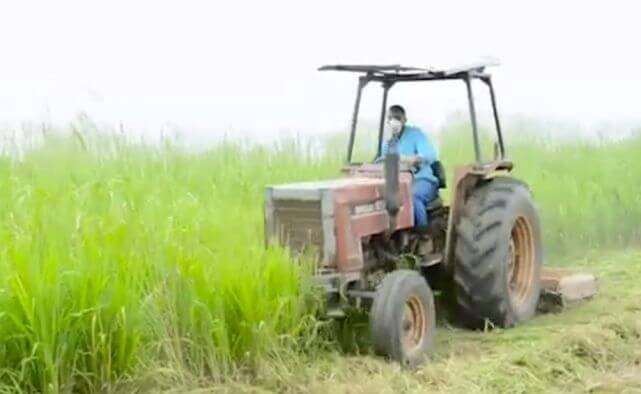
A backyard grower, a two-hectare smallholder, and a contract supplier follow the same agronomy, but their margins for error differ.
Home growers with limited space can adapt these steps using our guide to growing cassava in containers and small plots.
American readers in frost-free zones will find climate specifics in our post on raising cassava in Florida’s climate.
Farmers ready to sell under contract should start with a buyer, as laid out in our commercial production roadmap.
When Problems Start Beyond the Farm Gate
Some problems start in the field but end in the market, including price swings, poor roads, and roots spoiling while buyers delay.
Our analysis of value chain bottlenecks and fixes tackles those issues from farm to processor.
Growers clearing new land should also weigh the ecological costs described in our look at cassava’s environmental footprint.
Conclusion
Good cassava farming is less about secret inputs and more about doing ordinary jobs on time, every season.
Choose drained land, match the variety to your buyer, and plant only stems you have inspected yourself. Weed hard through the first twelve weeks, feed the crop by soil test, and scout every two weeks.
Plan the harvest around a confirmed buyer so roots move within two days of lifting.
Before your next planting, pick last season’s weakest link, fix it first, then share your results with me in the comments below.
Frequently Asked Questions
How many cassava stem cuttings do I need per hectare?
At one-meter-by-one-meter spacing, you need about 10,000 cuttings per hectare. Buy roughly ten percent extra to replace cuttings that fail to sprout after planting.
How soon after planting should I weed cassava?
IITA recommends weeding cassava at four, eight, and twelve weeks after planting. After the canopy closes, shade suppresses most weeds, so later weeding is lighter and less frequent.
Can I plant cassava stems taken from my last harvest?
Yes, provided the mother plants looked healthy and showed no mosaic symptoms on their lower leaves. Stems from heavily infected blocks carry the virus into your new field.
How long can cassava roots stay in the ground after maturity?
Roots can stay underground for months, but FAO notes quality declines after about 15 months. Older roots turn woody, lose starch quality, and fetch lower prices from processors.
Chimeremeze Emeh
Chimeremeze Emeh is a tropical crop farmer and chemical engineer from Ntigha, Isiala Ngwa North LGA, Abia State, Eastern Nigeria, specializing in cassava and palm oil, with over 30 years of hands-on experience growing, harvesting, and processing cassava. He grows TMS series, TME 419, and local traditional varieties on his own farms and operates a small-scale cassava flour and starch production business through Cassava Pathway, which he founded as a CAMA-registered agribusiness in 2024. He is also the founder of Palm Oil Pathway, where he applies the same tropical farming expertise. His farms are located in Ntigha, Abia State.