Last updated on July 19th, 2026 at 05:45 pm
Preserving cassava stems well between harvest and planting determines how strong your next season starts. I learned that lesson on my mother’s own cassava farm in Ntigha, decades before I understood the actual science behind it.
I have preserved cassava stems on my own farm in Ntigha for more than thirty years.
Every season, my mother would take us to the almost mature cassava farm before the rains returned.
She taught us to choose healthy stems early, long before anyone called it stem selection.
A cassava stem left in the wrong conditions dries out, rots, or loses its buds within days.
Good preservation protects the nodes and buds that decide how well your next planting season goes.
This guide covers the storage methods I still use today, along with what the research supports.
Table of Contents
Why Preservation Still Matters
Cutting cassava stems correctly is only half the job of good propagation in cassava farming.
What happens between the cut and the planting hole matters just as much.
Our guide on cutting cassava stems covers technique, but preservation decides if that work survives.
IITA’s own agronomy research guide confirms that healthy, fresh stem cuttings remain the most reliable planting material available to farmers. Stems bruised, dried out, or left in full sun rarely sprout, no matter how well they were cut.
When to Harvest Stems for Storage
Harvest stems for storage from healthy plants between 8 and 18 months old, following the Organic Africa cassava production guide.
Many farmers, myself included, prefer plants closer to 8 to 12 months for firmer, easier stems.
Cut in the morning or on a cool, dry day, never right after heavy rain.
Preparing Stems Before Storage
Trim both ends of the stem before storage begins, since the soft tip and woody base rot fastest.
Tie healthy stems into bundles of fifteen to twenty for easy handling and good airflow.
Keep diseased or damaged stems out of the bundle entirely, since one bad stem can spoil the rest.
Storage Methods That Work
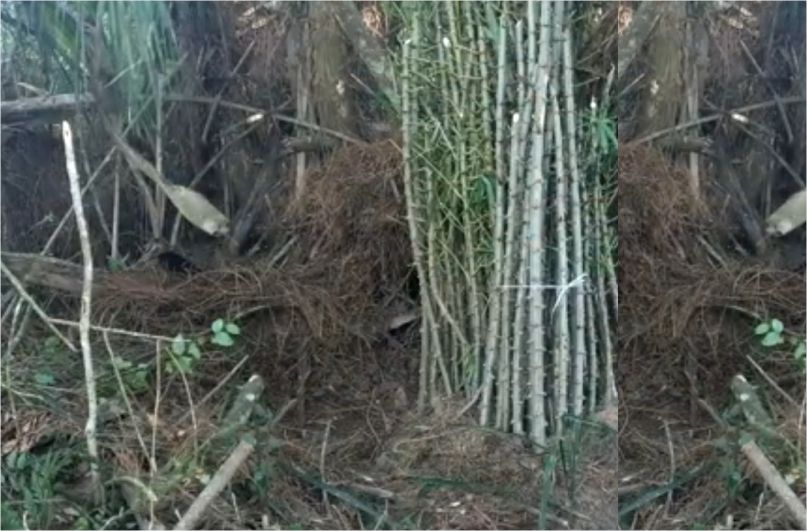
Short-term storage works best when bundles stand upright with cut ends resting in moist soil or sand.
The CARDI Growing Cassava Factsheet recommends planting within about five days when stored this way.
For longer storage, bundle stems and keep them in a dry, shaded, well-ventilated spot away from direct sun.
The Organic Africa cassava production guide notes that stems handled this way can be kept for over two months before planting.
Mulching stored stems reduces moisture loss and improves sprouting once they finally reach the field.
A peer-reviewed field study from Tanzania found that mulched stems lost less moisture and established better than uncovered ones.
Signs a Stored Stem Has Gone Bad
- A stem with dry, shriveled buds that no longer look plump or firm.
- Bark that has turned dark, soft, or slimy instead of firm and dry.
- A strong sour or moldy smell is coming from the stored bundle itself.
- Stems that feel noticeably lighter in weight than when they were first harvested.
Getting Stems Ready for Planting
Once planting season returns, inspect every stem before it goes into the ground.
Discard any stem showing the warning signs above, even if only one end looks affected.
Healthy stems can then follow our guide on cassava planting methods for spacing and depth.
Final Word by Cassava Pathway
Good stem preservation is not complicated, but it does require attention between harvest and planting.
Choose healthy stems, trim both ends, and store them upright or bundled depending on how long you need to wait.
Check regularly for soft spots, shriveled buds, or a sour smell before you plant anything.
My mother taught me this decades ago, long before anyone wrote it down as a method.
That same simple routine still protects my harvest every single planting season.
Read our other cassava stem guides next, so every stage from cutting to planting goes smoothly.
Frequently Asked Questions
What is the best way to store cassava stems for just a few days?
Stand bundled stems upright with the cut ends resting in moist soil or sand. This method keeps stems viable for about five days before you need to plant them.
How long can cassava stems stay in storage before they lose viability?
Short-term storage in moist soil keeps stems viable for roughly five days. Longer storage in a dry, shaded, ventilated spot can extend that window to nearly two full months.
Why do some stored cassava stems fail to sprout at all?
Stems bruised during handling or left exposed to direct sun rot or dry out fast. Dead buds and rotted tissue never sprout, no matter how well you planted them.
Does mulching stored cassava stems actually help them survive?
Yes, mulch reduces moisture loss and keeps stems from drying out too quickly in storage. A peer-reviewed Tanzania field study found that mulched stems established better once replanted.

Chimeremeze Emeh is a tropical crop farmer and chemical engineer from Ntigha, Isiala Ngwa North LGA, Abia State, Eastern Nigeria, specializing in cassava and palm oil, with over 30 years of hands-on experience growing, harvesting, and processing cassava. He grows TMS series, TME 419, and local traditional varieties on his own farms and operates a small-scale cassava flour and starch production business through Cassava Pathway, which he founded as a CAMA-registered agribusiness in 2024. He is also the founder of Palm Oil Pathway, where he applies the same tropical farming expertise. His farms are located in Ntigha, Abia State.