Last updated on September 23rd, 2026 at 04:35 pm
A good cassava cake recipe produces a slab that is chewy, custardy, and golden, never gummy, dry, or sunken in the middle. The whole difference comes down to squeezing the grated root properly and baking until the starch fully sets.
In Nigeria, grated cassava usually becomes garri or fufu, so a sweet baked cake is a very different use of the same mash.
Yet the skills carry over directly, because both depend on grating finely and pressing out excess liquid before heat touches the starch.
This cassava cake recipe guide covers the Filipino classic, a simpler everyday bake, and a steamed Vietnamese-style cake.
You will also learn which cassava to buy, why cakes turn gummy, and how to store leftovers. Each method is written for home kitchens in the US, UK, and Nigeria alike, using standard measures.
Table of Contents
What Is Cassava Cake?
Cassava cake is a sweet and chewy dessert made from grated cassava, coconut milk, and sugar.
It has deep roots in tropical regions where cassava, also known as yuca, is a staple crop.
It has a variation that is animal-free (without eggs) for vegan lovers, and also turns out very good if you follow the instructions correctly. More on vegan cassava cake here.
While its origins trace back to South America, the recipe has traveled across cultures, evolving into unique variations.
Why Cassava Cake Turns Chewy Instead of Fluffy
Cassava cake contains no wheat flour, so its structure comes entirely from cassava starch setting into a firm, sliceable gel.
As a chemical engineer, I find this the most interesting part, because the whole cake is really a starch gelatinization exercise.
Research in the Journal of Agricultural and Food Chemistry found cassava starch begins gelatinizing at roughly 57°C to 64°C (135°F to 147°F), depending on cultivar.
A study indexed on PubMed found cassava granules leached about 8.5% of their amylose at 60°C, against roughly 51% for potato starch.
That intact, swollen granule structure helps explain the springy chew of a finished slice, rather than a crumbly crumb.
It also explains why underbaked cassava cake stays gummy, since starch at the center never fully gelatinized.
A Filipino Dessert With Deep Roots
The best-known version comes from the Philippines, where cassava cake grew out of bibingka, a traditional rice cake cooked on banana leaves.
Cooks swapped the usual ground glutinous rice for grated cassava, a crop that reached the islands from the Americas aboard Spanish galleons.
Our short history of the mandioca plant follows that journey from Brazil to Asia and Africa.
The crop remains important there, with the Philippine Statistics Authority recording 709,910 metric tons harvested between April and June 2023 alone.
Northern Mindanao grew 39.3 percent of that quarter’s output, followed by the Bangsamoro region at 30.8 percent.
Vietnam has its own relative, bánh khoai mì, while Brazilian bakers make bolo de mandioca from the same grated root.
Fresh, Frozen, or Flour: Choosing Your Cassava
Many home cooks outside the tropics buy frozen grated cassava, which Filipino and Asian grocery stores commonly stock in one-pound packs.
Thaw it fully in the refrigerator, then squeeze it in a clean cloth until the liquid stops running freely.
Pressing grated cassava is second nature to anyone who makes garri, and the same cloth-and-weight trick works well for cake.
Fresh roots give the best flavor, but they must be a sweet variety, peeled completely, and grated finely before baking.
Read the method for peeling cassava before boiling also works well for roots headed for the grater.
Food Standards Australia New Zealand requires cassava sold there to carry a statement that it must be peeled and fully cooked before eating.
FSANZ’s technical review adds that sweet cassava is made safe by peeling and fully cooking, including baking, while bitter roots need heavier processing.
For roots of unknown variety, follow our step-by-step cassava detox guide instead of baking raw gratings.
Cassava flour behaves differently and gives a lighter, more uniform crumb, so save it for recipes like our vegan cassava flour cake.
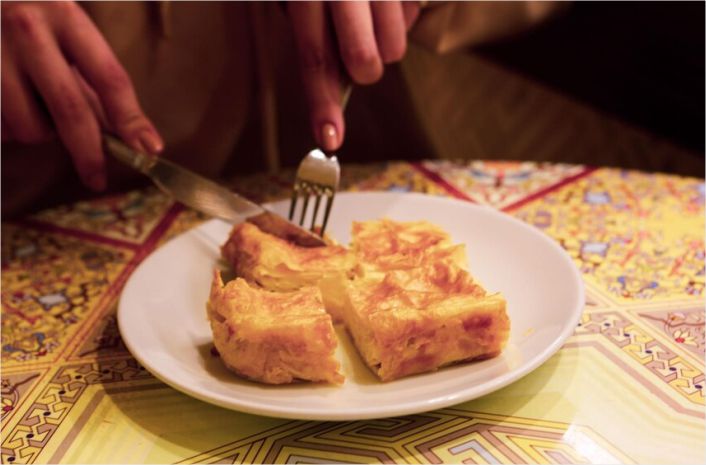
Classic Filipino Cassava Cake Recipe With Custard Topping
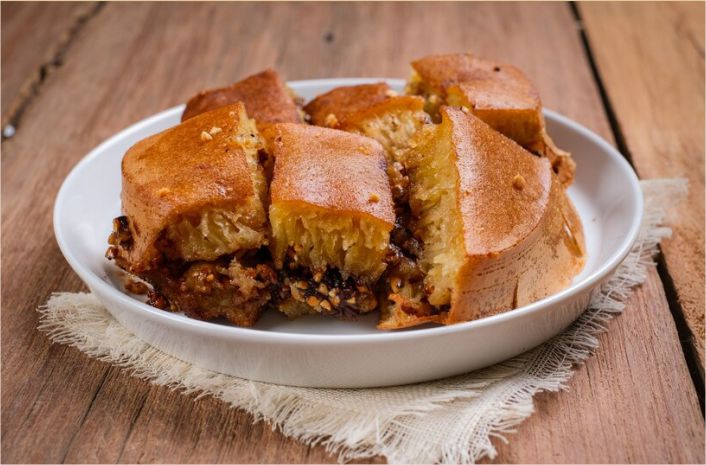
This version fills a 9×13-inch pan, cutting into roughly 24 squares, with a glossy, lightly browned custard layer on top.
What You Need for the Batter
- 2 lb (about 900 g) grated cassava, fresh or thawed, squeezed
- 1 can (400 ml / 13.5 fl oz) coconut milk
- 1 can (397 g / 14 oz) sweetened condensed milk
- 2 large eggs
- ½ cup (100 g) granulated sugar
- ¼ cup (57 g) melted butter
- A pinch of salt
For the Custard Topping
- 1 cup (240 ml) coconut cream
- ½ cup (120 ml) sweetened condensed milk
- 2 egg yolks
- ½ cup grated cheddar (optional)
Baking the Classic
- Heat the oven to 350°F (175°C) and grease a 9×13-inch baking dish with butter.
- Whisk the coconut milk, condensed milk, eggs, sugar, melted butter, and salt together until the sugar dissolves completely.
- Stir in the squeezed cassava, breaking up clumps with a fork so the batter looks evenly mixed.
- Pour the batter into the dish and bake for 45 to 55 minutes, until the center feels set when pressed.
- While it bakes, whisk the topping ingredients in a small saucepan and stir over low heat until slightly thickened.
- Spread the topping evenly over the hot cake, add cheese if using, and return it to the oven for 15 minutes.
- Switch to the broiler for two to three minutes, watching closely, until the top shows golden brown spots.
- Cool the cake for at least two hours before slicing, since warm cassava cake tears and clings to the knife.
Grated cheddar on top may sound odd, but that salty edge against sweet custard is a much-loved Filipino touch.
Easy Everyday Cassava Cake Without Condensed Milk
This lighter bake skips condensed milk and custard, making it a good choice for weeknights or first attempts.

- 2 cups (about 450 g) grated cassava, squeezed
- 1 cup (200 g) granulated sugar
- 1 cup (240 ml) coconut milk
- 3 large eggs
- 1 teaspoon vanilla extract (optional)
- A pinch of salt
Heat the oven to 350°F (175°C) and line an 8-inch square pan with greased parchment paper.
Beat the eggs with the sugar until pale, then whisk in coconut milk, vanilla, and a pinch of salt.
Fold in the cassava, pour the batter into the pan, and bake 45 to 50 minutes until golden and firm.
A toothpick rarely comes out perfectly clean from cassava cake, so judge doneness by a firm, springy center.
Steamed Cassava Cake, Vietnamese Style
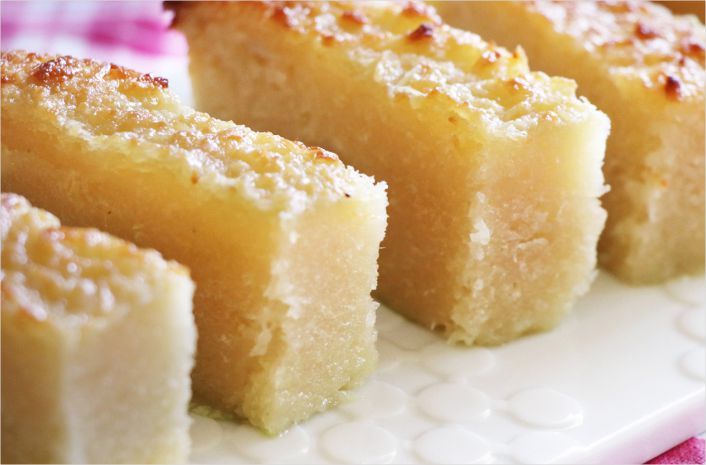
Vietnamese bánh khoai mì comes in baked and steamed forms, and steaming gives a paler, softer, moister slice.
- 1 lb (about 450 g) grated cassava, squeezed
- ¾ cup (180 ml) coconut milk
- ½ cup (100 g) sugar
- A pinch of salt
- ½ teaspoon pandan extract (optional)
- Toasted sesame seeds or grated coconut, for finishing
Mix the cassava, coconut milk, sugar, salt, and pandan extract, then press the mixture into a greased heatproof dish.
Steam over boiling water for 45 to 60 minutes, topping up the water as needed and wrapping the lid in a towel.
The towel catches condensation so droplets do not drip back and leave a soggy, pitted surface.
The cake is done when it turns translucent throughout and no chalky white patches remain at the center.
Cool completely, cut into diamonds, and finish with toasted sesame seeds or grated coconut for texture.
Pandan extract is optional, adding a soft green tint and a sweet, grassy aroma to the finished cake.
Egg-Free and Dairy-Free Options
Coconut milk already keeps the steamed and everyday versions free of dairy, since neither uses condensed milk or butter.
For a fully egg-free bake, follow our plant-based cassava cake, which is built around the same grated root.
Cassava contains no gluten, so these cakes suit gluten-free diets, provided every added ingredient and surface stays free of gluten.
Why Cassava Cake Fails and How to Fix It
- Gummy center: the starch never fully set, so bake longer and let the cake cool completely before judging.
- Dry, crumbly edges: the cassava lost too much liquid or baked too long, so add two tablespoons more coconut milk next time.
- Watery bottom layer: frozen cassava went in without draining, leaving free liquid that the starch could not absorb in time.
- Topping separating: the base had cooled before the custard went on, so add it while the cake is still hot.
- Bitter aftertaste: the roots may have been a bitter variety or poorly peeled, so discard the cake instead of eating it.
Our explainer on the cassava root and its varieties covers how sweet and bitter types differ before you buy.
Storing, Reheating, and Serving
Cover leftovers and refrigerate them for up to four days, since the custard topping should not sit out overnight.
Single slices freeze well for about two months when wrapped tightly in plastic wrap and then foil.
Warm chilled slices for 20 to 30 seconds in the microwave, or enjoy them cold, which firms the chew nicely.
Serve squares with fresh mango, a cup of strong coffee, or ginger tea for a balanced afternoon snack.
If you enjoy this dense style of dessert, our cassava pie guide covers sweet and savory bakes from the same root.
Final Thoughts
A reliable cassava cake recipe depends less on fancy ingredients and more on squeezing, patient baking, and full cooling.
Start with the Filipino classic if you want a showpiece, or the everyday bake if you want something quick.
Steam the Vietnamese-style version when your oven is busy or you prefer a softer, paler slice.
Buy sweet cassava from a trusted seller, and skip any roots with dark streaks or a sour smell.
Bake one version this weekend, share a photo in the comments, and browse our library of cassava dishes.
Frequently Asked Questions
Can I use cassava flour instead of grated cassava?
Cassava flour does not work as a direct swap for freshly grated root in this dessert. Choose a recipe written specifically for flour to get a pleasant crumb.
Why is my cassava cake gummy in the middle?
A gummy center means the starch never fully gelatinized, so the cake needed more oven time. Letting the cake cool completely before slicing also firms the texture noticeably.
Do I need to cook frozen grated cassava before baking?
Frozen grated cassava needs no precooking, because baking or steaming the cake cooks it fully. Buy reputable brands, and never taste the thawed mash straight from the pack.
How long does cassava cake keep?
Refrigerated in a covered container, cassava cake keeps for up to four days. Wrapped slices last about two months in the freezer and thaw overnight in the fridge.

Chimeremeze Emeh is a tropical crop farmer and chemical engineer from Ntigha, Isiala Ngwa North LGA, Abia State, Eastern Nigeria, specializing in cassava and palm oil, with over 30 years of hands-on experience growing, harvesting, and processing cassava. He grows TMS series, TME 419, and local traditional varieties on his own farms and operates a small-scale cassava flour and starch production business through Cassava Pathway, which he founded as a CAMA-registered agribusiness in 2024. He is also the founder of Palm Oil Pathway, where he applies the same tropical farming expertise. His farms are located in Ntigha, Abia State.