Last updated on July 12th, 2026 at 01:36 pm
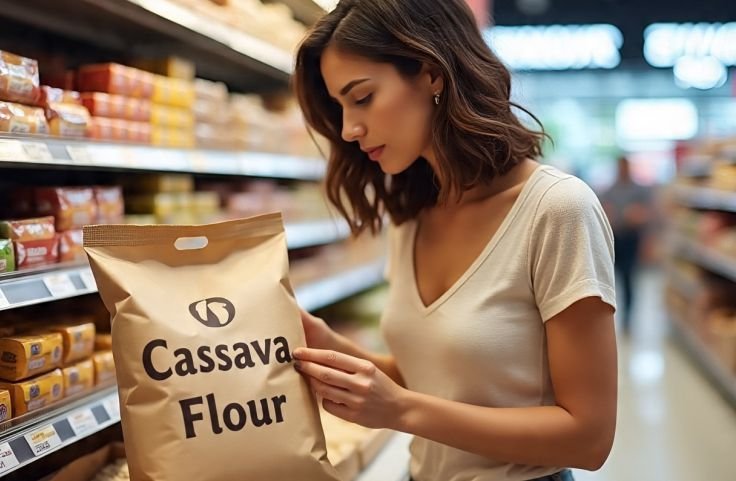
Two bags on the same shelf can both say cassava on the label, yet one is made from the whole root and the other is just starch, and nothing about the packaging makes that obvious at a glance.
Buying cassava flour in the U.S. should be simple, but mislabeled packaging, inconsistent quality, and confusing pricing make it easy to get wrong.
This guide covers exactly what to check before you buy, how to store what you bring home, and which certifications actually mean something on a label.
It stops short of ranking specific brands, since our dedicated guide to the best cassava flour brands in the USA covers that comparison in full.
Table of Contents
Cassava Flour vs. Tapioca Flour: Read the Fine Print
Cassava flour uses the whole dried, milled root, while tapioca flour is only the extracted starch, and the two behave very differently in recipes.
If a bag says cassava starch rather than cassava flour, you are buying tapioca in a different name, not the fiber-rich whole-root product most bakers want.
Our full breakdown of cassava flour versus tapioca flour covers exactly how the two perform differently in baking.
Certifications Worth Checking
Cassava flour should list one ingredient, the whole root itself, with no gums, fillers, or starch blends mixed in.
Look for USDA Organic certification or Non-GMO Project Verified, since both require independent verification rather than a manufacturer’s own claim.
Our full guide to organic cassava flour and top organic cassava flour suppliers covers this segment specifically.
Brands Worth Knowing
Otto’s Naturals has built a reputation for consistent texture and reliable wheat-like performance, though it typically costs more than bulk alternatives.
Bob’s Red Mill offers wider retail availability at a lower price point, a solid entry option for anyone testing cassava flour for the first time.
Our full reviews of Otto’s cassava flour and Bob’s Red Mill cassava flour, plus our direct comparison between the two, cover the details.
For a full ranked look at every major brand available in the U.S., see our guide to the best cassava flour brands in the USA.
Where to Actually Buy It
Whole Foods, Sprouts, and similar health food chains carry cassava flour in the gluten-free baking aisle, though selection varies by location.
Online retailers offer the widest brand selection and the easiest price comparison, particularly useful if your local stores carry only one option.
Ethnic grocers, especially Latin American and African markets, frequently sell cassava flour at lower prices, sometimes labeled yuca flour instead.
Buying in bulk makes sense once you know a brand works for you. Our guide on purchasing cassava flour in bulk covers sourcing options.
Storing It Once You’re Home
Transfer the opened cassava flour to an airtight container and keep it somewhere cool and dry, away from heat and direct light.
Our full guide to storing and preserving cassava flour covers shelf life and freezing in complete detail.
If you notice an off smell, discoloration, or clumping, our guide on how to know cassava flour has gone bad covers exactly what to check.
Mistakes That Waste Money
Confusing cassava flour with tapioca starch remains the single most common and costly mistake, since the two behave completely differently once you start baking.
Paying a premium for attractive packaging without checking the actual ingredient list rewards branding over quality, which rarely serves your recipe or your wallet.
Buying unlabeled or untested imports skips the safety verification that reputable brands already handle, a real risk given cassava’s natural cyanogenic compounds if poorly processed.
Conclusion
Buying cassava flour well comes down to reading the label carefully, checking for real certifications, and knowing the difference between flour and starch before anything else.
Brands like Otto’s and Bob’s Red Mill each serve a different need, performance versus price, and neither is automatically the wrong choice.
Store what you buy properly, and it will last far longer than most shoppers expect.
Get the label right the first time, and everything else about buying cassava flour gets easier from there.
Frequently Asked Questions
What’s the difference between cassava flour and tapioca starch?
Cassava flour uses the whole root for structure in baking, while tapioca starch is only the extracted starch, used mainly for thickening and texture.
Where can I buy cassava flour in the U.S.?
Cassava flour is sold online, at health food stores like Whole Foods and Sprouts, and frequently at lower prices in Latin American or African grocery stores.
Is cassava flour gluten-free and non-GMO?
Check the label directly, since certification varies by brand, but reputable options like Otto’s and Bob’s Red Mill are both gluten-free and independently certified.
How long does cassava flour last once opened?
Properly stored in an airtight container away from heat and moisture, opened cassava flour typically stays fresh for about six months.


Chimeremeze Emeh is a tropical crop farmer and chemical engineer from Ntigha, Isiala Ngwa North LGA, Abia State, Eastern Nigeria, specializing in cassava and palm oil, with over 30 years of hands-on experience growing, harvesting, and processing cassava. He grows TMS series, TME 419, and local traditional varieties on his own farms and operates a small-scale cassava flour and starch production business through Cassava Pathway, which he founded as a CAMA-registered agribusiness in 2024. He is also the founder of Palm Oil Pathway, where he applies the same tropical farming expertise. His farms are located in Ntigha, Abia State.