Last updated on July 19th, 2026 at 05:42 pm
I once planted cuttings broken by hand on my farm in Ntigha because I had no cutlass on site, and though they sprouted, the harvest was thinner than in the season I used a sharp blade and cut with real care.
While many farmers focus on soil quality, pH levels, and water management, the process of cutting cassava stems plays an equally vital role in ensuring healthy growth and high yield.
I have cut cassava stems on my own farm for more than thirty years, and I learned the hard way that the cut itself decides how well a planting season turns out.
Early on, without proper tools, I broke stems by hand, and while those cuttings still grew, the yield never matched stems cut cleanly with a sharp blade.
A cassava stem is not just wood to be hacked apart.
The angle, the length, the number of nodes, and the tool you use all affect how fast roots form or if the cutting rots in the soil instead.
This guide covers the technique I rely on every season.
New to cassava farming? Start here.
Table of Contents
Why the Cut Itself Matters
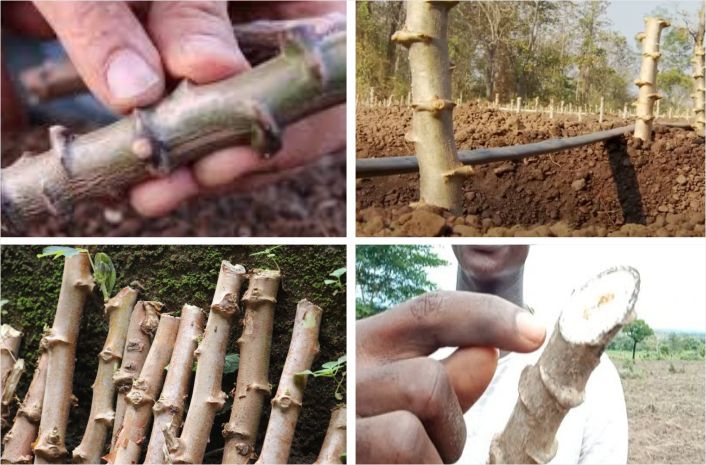
A poor cut bruises the tissue around a node, and a bruised node often fails to sprout even when the rest of the stem looks healthy.
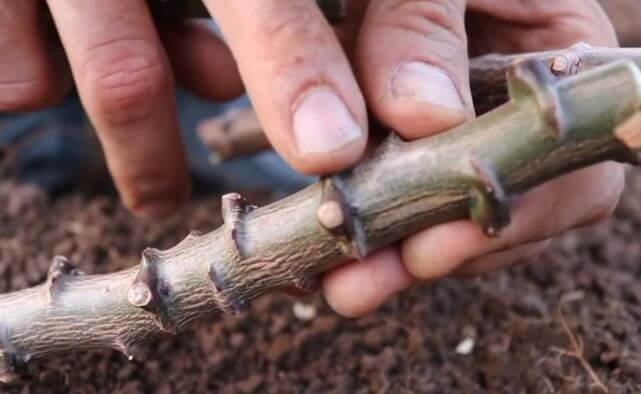
Getting familiar with a stem’s internal anatomy makes it easier to see why a clean, angled cut protects the vascular tissue that feeds new growth.
When to Cut: Stem Age and Timing
Stem age matters as much as the cut itself. A peer-reviewed study on cassava plantlet performance found that farmers traditionally use stems aged 8 to 12 months, cut into segments with 6 to 8 nodes, since younger or older stems root less reliably, according to Photosynthetic Traits, Growth, and Yield of Cassava Plantlets.
Broader agronomic guidance extends that window to 8 through 18 months for healthy, high-yielding plants, so the right age within that range depends on your variety and how quickly it matures, per the Organic Africa cassava production guide.
On my own farm, I lean toward the lower end of that range, since younger stems are easier to handle without cracking.
Selecting the Right Portion of the Stem
Not every part of a stem cuts into good planting material.
Older guidance from the Food and Agriculture Organization recommends discarding the first 20 centimeters of stem and cutting from the firmer lower-to-middle section instead of the soft green tip.
- Avoid the soft green tip, which dehydrates quickly and rarely survives transplanting.
- Avoid the oldest, woodiest base, which sprouts slowly and is more prone to pest damage.
- Choose stems roughly 2 to 4 centimeters thick with visible, undamaged nodes.
Tools and Cutting Technique
A sharp cutlass, pruning saw, or fine-toothed handsaw all work, as long as the blade is clean and sharp enough to cut in one motion rather than crushing the fibers.
Dull tools tear the bark and bruise the nodes nearest the cut, which slows sprouting even on otherwise healthy stems.
Cut at a slight angle rather than straight across, since an angled cut sheds excess water more easily and reduces the chance of rot at the cut surface.
Wipe your blade between plants if you suspect any disease in your stock, since contaminated tools spread stem-borne pathogens from one cutting to the next.
Cutting Length and Node Count
Cut each stem into sections of 20 to 30 centimeters, with 6 to 8 nodes per cutting, since more nodes generally raise sprouting success rates across most varieties.
A CARDI Growing Cassava Factsheet recommends leaving at least two nodes above the soil line once the cutting is planted, with the buds facing upward.
After the Cut
Fresh cuttings do not need to go straight into the ground, but they also do not last forever.
If you need to hold cuttings for even a few days, our guide on preserving cassava stems for the next season covers how to keep them viable without letting them dry out or rot.
Common Cutting Mistakes
- Cutting stems too young, before the tissue has firmed enough to hold moisture.
- Using a blunt or rusted blade, which bruises nodes and invites disease.
- Cutting cuttings shorter than 20 centimeters leaves too few nodes to guarantee sprouting.
- Mixing healthy and visibly diseased stems in the same cutting batch.
Final Word by Cassava Pathway
Cutting cassava stems well is a small, repeatable habit that decides most of what happens after planting.
Choose stems in the right age range, cut from the firm middle section, keep 6 to 8 nodes per piece, and use a clean, sharp blade rather than tearing stems apart by hand.
None of this takes special equipment, just attention and a bit of practice each season.
I have seen the difference a proper cut makes on my own farm, season after season.
Read our guide on preserving cassava stems next, so your cuttings stay healthy until planting day arrives.
Frequently Asked Questions
What is the best age for a cassava stem before cutting it for planting?
Most agronomic guidance recommends cutting stems between 8 and 18 months old, though many farmers, myself included, prefer 8 to 12 months for firmer, easier stems that root well.
How long should each cassava stem cutting be?
Cut each stem into sections of 20 to 30 centimeters, with 6 to 8 nodes per cutting, since more nodes generally raise sprouting success rates across most varieties.
Is it fine to cut cassava stems with a machete instead of a saw?
A machete works fine if it is sharp and used carefully at a slight angle, though a fine-toothed saw gives cleaner cuts with less bark tearing and node damage.
What happens if I plant a cutting from the top green part of the stem?
Cuttings from the soft green tip dehydrate fast, root poorly, and rarely survive transplanting, so farmers should always cut from the firmer middle section of the stem instead.

Chimeremeze Emeh is a tropical crop farmer and chemical engineer from Ntigha, Isiala Ngwa North LGA, Abia State, Eastern Nigeria, specializing in cassava and palm oil, with over 30 years of hands-on experience growing, harvesting, and processing cassava. He grows TMS series, TME 419, and local traditional varieties on his own farms and operates a small-scale cassava flour and starch production business through Cassava Pathway, which he founded as a CAMA-registered agribusiness in 2024. He is also the founder of Palm Oil Pathway, where he applies the same tropical farming expertise. His farms are located in Ntigha, Abia State.