
Last updated on July 8th, 2026 at 10:24 pm
On my farm in Abia State, cassava root feeds my family every week, yet its glycemic index can swing from 46 to 94 depending entirely on how it is peeled, boiled, or fermented before it ever reaches your plate at home.
Cassava root feeds more people across the tropics than almost any other staple crop, yet most articles online repeat the same vague claims about its health benefits without citing real data.
I have grown and processed cassava for decades, and I also hold a background in chemical engineering that helps me read the actual nutrition and glycemic index research behind this root.
This guide breaks down cassava’s real nutrition profile, explains why its glycemic index varies widely between studies, and covers who should be cautious before eating it.
Disclaimer: This article is for informational purposes only and does not constitute medical advice. The author is not a medical doctor or registered dietitian. Always consult a qualified healthcare provider before making dietary or medical decisions related to cassava consumption.
Table of Contents
Health Benefits of Cassava Root, Backed by Research
- Delivers steady, sustained energy. Cassava’s carbohydrate content breaks down gradually during digestion, especially when boiled rather than fried, giving you longer-lasting fuel than sugary snacks provide.
- Naturally gluten-free and grain-free. Cassava root contains none of the gluten proteins found in wheat, barley, or rye, making it a safe carbohydrate base for people with celiac disease or gluten sensitivity. Our post on cassava’s gluten-free status covers this in more depth.
- Supports gut health through resistant starch. As covered above, cassava’s resistant starch reaches the colon largely undigested, where it can soften post-meal blood sugar spikes according to the PMC review on resistant starch.
- Contributes potassium for blood pressure support. A 100-gram serving supplies 271 mg of potassium, and the NIH Office of Dietary Supplements notes that diets higher in potassium and lower in sodium are linked to reduced blood pressure and stroke risk.
- Provides meaningful vitamin C for immune function. Cassava root supplies about 23 percent of the daily value for vitamin C per 100 grams, a nutrient the NIH Office of Dietary Supplements describes as necessary for normal immune function and collagen production.
- Naturally low in fat. At just 0.3 grams of fat per 100 grams, cassava root fits easily into low-fat eating patterns without needing special preparation.
- Supports food security for smallholder farmers. Cassava tolerates poor soil and drought better than many staple crops, which is part of why Nigeria and the rest of Africa produce most of the world’s supply, as covered further down.
- Adapts easily to many diets and cooking styles. Boiled, pounded into fufu, or ground into flour, cassava root fits into gluten-free, grain-free, and traditional diets across several continents.
Cassava Root Nutrition Facts (Per 100 Grams, Raw)
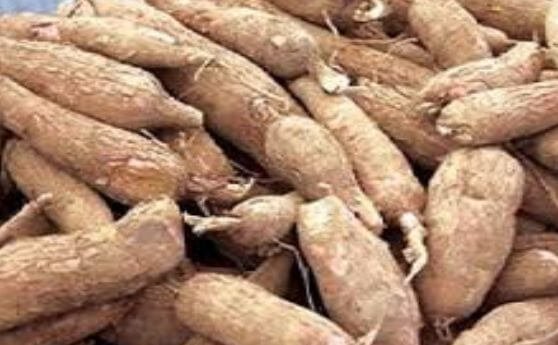
These figures come from the USDA FoodData Central database, the same government dataset referenced throughout this site’s nutrition posts.
Here is what each nutrient actually means for your body before you look at the numbers side by side:
- Calories: A 100-gram serving of raw cassava root provides about 160 calories, mostly from starch, making it a dense energy source for active people.
- Carbohydrates: Cassava root supplies 38 grams of carbohydrate per 100 grams, giving your body a steady, digestible fuel source throughout your entire working day.
- Dietary fiber: With 1.8 grams of dietary fiber per 100 grams, cassava root supports digestion and helps keep you feeling fuller for noticeably longer.
- Protein: Cassava root contains only 1.4 grams of protein per 100 grams, so pairing it with beans, fish, or eggs rounds out a meal.
- Fat: At just 0.3 grams of fat per 100 grams, cassava root fits easily into low-fat diets without any special preparation or substitutions needed.
- Vitamin C: Cassava root delivers 20.6 milligrams of vitamin C per 100 grams, roughly 23 percent of your daily recommended intake for most healthy adults.
- Potassium: A 100-gram serving contains 271 milligrams of potassium, a mineral tied to healthy blood pressure regulation according to NIH research on cardiovascular health.
- Calcium: Cassava root provides 16 milligrams of calcium per 100 grams, a modest but useful contribution toward daily bone health needs for growing children.
Here is the same data side by side for quick reference:
| Nutrient | Amount per 100g |
|---|---|
| Calories | About 160 kcal |
| Carbohydrates | 38 grams |
| Dietary fiber | 1.8 grams |
| Protein | 1.4 grams |
| Fat | 0.3 grams |
| Vitamin C | 20.6 mg (roughly 23% of daily value) |
| Potassium | 271 mg |
| Calcium | 16 mg |
Cassava root carries far more carbohydrate energy than protein or fat, which is why it works best as a staple, not a complete meal.
Pairing it with beans, fish, or leafy vegetables rounds out the protein and micronutrients it lacks on its own.
What Is the Glycemic Index?
The glycemic index (GI) ranks how quickly a carbohydrate food raises blood sugar after eating, on a scale from 0 to 100, with pure glucose set at 100.
Foods with a high GI, 70 or above, cause a fast blood sugar rise. Low GI foods, 55 or below, raise blood sugar more gradually.
GI values come from feeding real human volunteers a measured portion of a food and tracking their blood glucose over two hours against a glucose reference.
Why Cassava’s Glycemic Index Varies So Much Between Studies
Most articles quote a single glycemic index number for cassava, but the research tells a messier story.
A peer-reviewed study in the Journal of Food and Nutrition Sciences measured predicted glycemic index values ranging from 47.75 for raw cassava up to 79.05 for fermented cassava products like akyeke, showing that the processing method changes the number as much as the root itself.
A separate cross-sectional study published in Functional Foods in Health and Disease measured the glycemic index of common cassava-based meals directly in healthy adults, finding values of 93.26 for cassava dough (fufu), 95.92 for cassava flakes (garri), and 91.94 for cassava chips.
These numbers sit far higher than the raw or lightly boiled root, mainly because grinding, drying, and frying break down the starch structure and make it digest faster.
For the full nutrition and processing breakdown of garri specifically, see our dedicated garri guide.
In practice, this means:
- Boiled, minimally processed cassava tends to sit in the moderate glycemic range, roughly 46 to 55
- Pounded, fermented, or fried cassava products climb into the high range, typically above 90
- The cooking method you choose matters more for blood sugar response than the variety of cassava you grow
Resistant Starch and Gut Health
Cassava root contains resistant starch, a type of starch that resists digestion in the small intestine and reaches the colon largely intact.
A review in PMC covering resistant starch and glucose-insulin homeostasis found that resistant starch can soften the blood sugar and insulin spike that follows a meal, when it replaces more rapidly digestible carbohydrate sources.
This is one reason boiled cassava, eaten in moderate portions, behaves differently in the body than heavily processed cassava chips or flakes.
Cassava as a Global Food Security Crop
Cassava is far from a minor regional crop, since Nigeria alone accounts for over 20 percent of total global production, and Africa as a whole produces more than half of the world’s supply, according to FAO production data compiled through FAOSTAT.
That scale is part of why getting basic facts right about its nutrition and safety matters well beyond any single household or farm.
Who Should Be Careful With Cassava
Cassava root is not risk-free, and a responsible health guide has to say so directly:
- Raw cassava is never safe to eat. It carries cyanogenic glycosides that convert to cyanide unless removed through peeling, soaking, fermenting, or thorough cooking. Our guide on how to remove cyanide from cassava root covers the full process, and our post on cyanide poisoning from cassava explains symptoms and prevention in more depth.
- People managing diabetes need to watch portion size and preparation method closely, since fried or heavily processed cassava products carry a much higher glycemic index than boiled root. Our dedicated guide on cassava root for diabetics walks through the pros and cons in full.
- People relying on cassava as a near-exclusive dietary staple without adequate protein intake face a documented risk of chronic conditions linked to prolonged cyanide exposure. This is exactly why crop diversity and proper processing both matter at the household level.
How Processing Changes Both Safety and Nutrition
The same root can end up as boiled cassava, garri, fufu, or flour, and each processing path changes its safety profile and nutrient retention differently.
Our full guide on cassava processing methods breaks down boiling, fermentation, sun-drying, and grinding side by side.
If you are working with cassava flour specifically, our post on cassava flour covers how milling changes its nutrition profile compared to the whole root, and our cassava starch health benefits guide covers the refined starch form in full.
For a wider list of everyday culinary and nutritional advantages beyond what is covered here, see our 34 cassava root benefits roundup.
If you are exploring cassava specifically for a gluten-free diet, our post on cassava’s gluten content answers that directly.
And if you want to understand the health condition linked to long-term improper cassava processing in some communities, our guide to konzo disease explains the science and prevention methods.
Conclusion
Cassava root earns its place as a global staple because it delivers steady carbohydrate energy, resistant starch for gut health, and real kitchen flexibility.
Its glycemic index depends more on preparation than on the variety you grow, so boiling gently and pairing it with protein or fiber matters more than avoiding it.
Always peel, soak, ferment, or cook cassava thoroughly before eating, since raw root is never safe.
Frequently Asked Questions
What is the biggest health benefit of eating cassava root?
Its combination of steady carbohydrate energy and resistant starch stands out most, since resistant starch may soften post-meal blood sugar spikes compared to refined carbohydrates like white bread.
What is the glycemic index of raw cassava root?
Raw or lightly boiled cassava root generally scores between 46 and 55 on the glycemic index, though deep frying or extended boiling can push that number above 90.
Is cassava root safe for people with diabetes?
Cassava can fit a diabetic diet in small portions paired with protein or fiber, though its glycemic index rises sharply with deep frying or heavy commercial processing methods.
How much cassava root can I safely eat raw?
None. Raw cassava root always carries cyanogenic compounds and must be peeled, soaked, fermented, or thoroughly cooked before eating, regardless of the variety or region it came from.
Does cassava root contain any fiber or protein?
Cassava root contains roughly 1.8 grams of fiber and 1.4 grams of protein per 100 grams, modest amounts compared to legumes or whole grains like oats or barley.


Chimeremeze Emeh is a tropical crop farmer and chemical engineer from Ntigha, Isiala Ngwa North LGA, Abia State, Eastern Nigeria, specializing in cassava and palm oil, with over 30 years of hands-on experience growing, harvesting, and processing cassava. He grows TMS series, TME 419, and local traditional varieties on his own farms and operates a small-scale cassava flour and starch production business through Cassava Pathway, which he founded as a CAMA-registered agribusiness in 2024. He is also the founder of Palm Oil Pathway, where he applies the same tropical farming expertise. His farms are located in Ntigha, Abia State.