
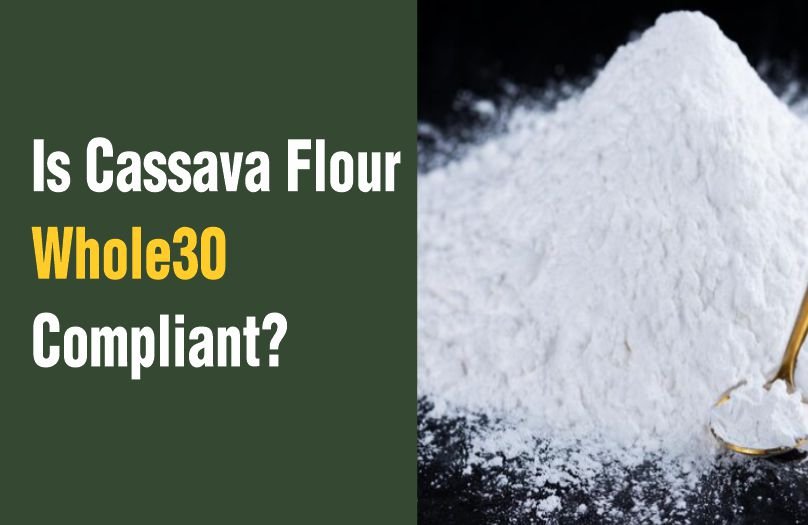
Cassava flour is grain-free, paleo-friendly, and perfect for pancakes and tortillas. But before you toss it in your cart, there’s one question to answer: does it actually fit within Whole30’s rules?
The quick answer is yes: cassava flour itself is Whole30 compliant, made from a single whole-food ingredient (the cassava root) with nothing added.
But compliant doesn’t automatically mean “encouraged in every form.
Cassava flour has become a favorite among Whole30 participants because it mimics the elasticity of wheat, allowing for tortillas, pancakes, and other familiar foods without grains, gluten, or legumes, making the transition feel less restrictive.
This guide breaks down what Whole30 actually says about cassava flour, the often-misunderstood SWYPO concept, the best ways to use it, how it compares to other compliant flours, cooking tips, common mistakes, and FAQs.
If you are new to cassava flour, see the introductory guide.
Table of Contents
What is Whole30?
Whole30 is a 30-day elimination diet designed to identify how certain foods affect your energy, mood, digestion, and overall health.
During the program, participants eliminate sugar, alcohol, grains, legumes, dairy, and additives like carrageenan, MSG, and sulfites.
The focus is on whole, unprocessed foods: meat, seafood, eggs, vegetables, fruit, and natural fats.
Unlike many diets, Whole30 isn’t about calorie counting or weight loss; it’s a short-term reset meant to reveal food sensitivities and break unhealthy habits.
After 30 days, eliminated foods are slowly reintroduced one at a time to assess how your body responds to each.
Why Cassava Flour is Whole30 Compliant
Official Whole30 Position on Cassava Flour
Cassava flour is made by peeling, drying, and grinding the cassava root into a fine powder. See how cassava flour is made.
Because it contains no added sugars, grains, dairy, legumes, or other excluded ingredients, plain cassava flour fits within the Whole30 rules.
The Whole30 program does not list cassava flour as a forbidden ingredient, and it’s widely recognized within the Whole30 community as an approved pantry item.
Why Cassava Flour Is Allowed
The reasoning follows the same logic Whole30 applies to other approved flours and starches, such as almond flour, coconut flour, and arrowroot starch.
It’s a minimally processed ingredient derived from a single plant source, free of the categories of food Whole30 eliminates (added sugar, alcohol, grains, legumes, soy, dairy, and certain food additives).
Since cassava is a root vegetable, flour made purely from it doesn’t violate any of the core Whole30 exclusions.
Important Considerations Before Using It
While the flour itself is compliant, how you use it matters.
Whole30 isn’t just about which ingredients are technically allowed; it’s also about the spirit of the program, which encourages whole, minimally processed foods and discourages recreating treats and comfort foods that mimic off-limits items.
Before reaching for cassava flour, check the label to confirm it’s 100% cassava with no additives.
Also, think about whether the recipe you’re making aligns with Whole30’s broader goals or simply recreates a less healthy food in a technically compliant wrapper.
Why People Use Cassava Flour on Whole30
Grain-Free and Gluten-Free Alternative
Since Whole30 eliminates all grains, including wheat, rice, oats, and corn, finding substitutes that don’t rely on grains is essential for anyone who wants bread-like foods.
Cassava flour fits this need perfectly, offering a grain-free option that’s also naturally gluten-free.
Similar Texture to Wheat Flour
One of the biggest draws of cassava flour is how closely it can replicate the texture of all-purpose wheat flour.
Unlike almond or coconut flour, which can produce denser, crumblier results, cassava flour tends to create a smoother, more pliable texture, ideal for tortillas, wraps, and flatbreads that need to fold without cracking.
Versatility in Cooking and Baking
Cassava flour works in a wide range of applications: as a 1:1 substitute in some recipes, as a thickener for sauces and gravies, as a binder in baked goods, and as a coating for proteins and vegetables.
This flexibility makes it a practical staple for anyone trying to keep meals interesting during a 30-day reset.
Suitable for Many Dietary Restrictions
Beyond Whole30, cassava flour is popular among people following paleo, AIP (autoimmune protocol), and grain-free diets more broadly.
It’s nut-free (unlike almond flour), making it a good option for those with tree nut allergies, and it doesn’t carry the strong coconut flavor that some people find off-putting in coconut flour.
Whole30 Rules for Cassava Flour
Approved Ingredients vs. Approved Foods
A key distinction in the Whole30 program is the difference between an approved ingredient and an approved food.
Cassava flour, on its own, is an approved ingredient.
But the foods made from it, like pancakes, cookies, tortillas, and baked goods, are evaluated differently.
Just because every individual ingredient in a recipe is compliant doesn’t mean the finished product aligns with the program’s intent.
Understanding the SWYPO Principle
SWYPO stands for “Sex With Your Pants On,” a phrase the Whole30 creators use to describe recipes that technically follow the rules but recreate the format, texture, or experience of foods the program is meant to help you move away from.
Think pancakes, waffles, baked treats, or fake versions of bread and pizza.
Cassava flour is one of the most common ingredients flagged in SWYPO discussions because it’s so good at mimicking wheat-based textures.
The SWYPO principle isn’t a strict ban on cassava flour foods; rather, it’s a guideline asking participants to be honest about why they’re eating something.
A cassava flour tortilla used to hold a protein-and-vegetable filling is different, in spirit, from a stack of cassava flour pancakes drizzled with compliant syrup as a daily treat.
When Cassava Flour Recipes May Not Align with Whole30 Goals
If cassava flour foods become a daily crutch, replace whole-food meals, or are used primarily to satisfy cravings for bread, pasta, or desserts, they may run counter to the goals of the program.
Even if the ingredients themselves pass the compliance test.
The official Whole30 guidance suggests being mindful of how often and why these foods appear in your meals.
Focusing on Whole Foods First
The most reliable approach is to build meals around proteins, vegetables, fruits, and healthy fats first, then use cassava flour as an occasional supporting ingredient rather than a foundation.
This keeps the focus on the program’s core intent: resetting your relationship with food and identifying how different foods make you feel.
Best Ways to Use Cassava Flour on Whole30
Tortillas and Wraps
Cassava flour tortillas are one of the most popular uses during Whole30.
A simple dough made from cassava flour, water, oil, and salt can be rolled thin and cooked in a skillet, producing a pliable wrap perfect for fajitas, tacos, or breakfast scrambles.
Flatbreads
Similar to tortillas but often slightly thicker, cassava flour flatbreads can serve as a base for toppings or a side for soups and stews, giving meals a more complete, satisfying feel without grains.
Pancakes
While pancakes fall into SWYPO territory for some, an occasional cassava flour pancake made with compliant ingredients (eggs, mashed banana, almond milk) can be a reasonable treat if it’s not a daily habit and doesn’t replace a more balanced meal.
See the full guide on cassava flour pancakes.
Crackers
Cassava flour can be rolled thin, seasoned, and baked into crispy crackers, a useful option for those craving something crunchy to pair with guacamole, compliant dips, or charcuterie-style plates.
Coatings for Meat and Vegetables
Cassava flour makes an excellent dredging flour for chicken, fish, or vegetables before pan-frying or baking, giving you a crisp exterior similar to a traditional breaded coating.
Homemade Baked Goods
For special occasions, cassava flour can be used in small batches of grain-free baked goods, such as muffins or biscuits, made with compliant ingredients like eggs, coconut oil, and approved sweetener-free flavorings.
Keep in mind Whole30 doesn’t allow any added sweeteners, even natural ones like honey or maple syrup.
Cassava Flour vs. Other Whole30-Friendly Flours
Cassava Flour vs. Almond Flour
Almond flour is made from ground almonds and has a denser, slightly nutty profile.
It works well in recipes that benefit from a heartier crumb, like muffins or breading, but it doesn’t fold or stretch the way cassava flour does.
Cassava flour is generally better for tortillas and wraps, while almond flour shines in baked goods with a cake-like texture.
Cassava Flour vs. Coconut Flour
Coconut flour is highly absorbent and has a distinct coconut flavor, requiring more liquid and eggs in recipes to avoid a dry, crumbly result.
Cassava flour is more neutral in taste and behaves more like all-purpose flour, making it a better choice when you want the flavor of the dish itself to come through.
Cassava Flour vs. Arrowroot Starch
Arrowroot starch is primarily used as a thickener for sauces, soups, and gravies, similar to cornstarch.
Cassava flour can also thicken liquids, but it’s better suited for doughs and batters where structure matters.
Arrowroot is lighter and more starch-like, while cassava flour retains more fiber and substance from the whole root.
Which Flour Works Best for Different Recipes
As a general guide: choose cassava flour for tortillas, flatbreads, and recipes needing a wheat-like texture.
Choose almond flour for denser baked goods like muffins or cookies
Choose coconut flour when you want extra moisture absorption in small-batch baking; and choose arrowroot starch for thickening sauces, gravies, and stir-fry liquids.
Common Mistakes to Avoid with Cassava Flour in Whole30
Confusing Cassava Flour with Tapioca Flour
Cassava flour and tapioca flour (also called tapioca starch) both come from the cassava root, but they’re processed differently and behave differently in recipes.
Cassava flour uses the whole root, retaining more fiber, while tapioca flour is extracted starch only.
Using one in place of the other without adjustment can significantly change a recipe’s outcome. See more on tapioca flour.
Using Too Much Flour
Because cassava flour is dense, a little goes a long way.
Overloading a recipe with cassava flour can result in a gummy or overly thick texture rather than the light, pliable result you’re aiming for.
Assuming All Cassava-Based Products are Whole30 Compliant
Not every cassava-based product on the market is automatically compliant.
Some cassava flour tortillas, chips, or baked goods include added sugars, oils not approved on Whole30, or other non-compliant ingredients.
Always read the ingredient label rather than relying on the product name alone.
Overrelying on Flour-Based Foods
Even compliant cassava flour foods shouldn’t become the centerpiece of every meal.
Whole30 emphasizes whole, unprocessed foods, and leaning too heavily on flour-based recipes, even grain-free ones, can shift the focus away from the program’s core principles.
Conclusion
Cassava flour is Whole30 compliant on its own, made from a single whole-food ingredient with nothing added.
But compliance doesn’t end with the ingredient label; it extends to how you use it.
Leaning on cassava flour for tortillas, wraps, or coatings can make your Whole30 feel more sustainable, while overusing it for pancakes, treats, or daily baked goods can drift from the program’s intent.
The key is balance: build meals around proteins, vegetables, and healthy fats first, and let cassava flour play a supporting role.
Used thoughtfully, it’s a valuable, compliant tool for your reset.
Frequently Asked Questions
Can You Bake with Cassava Flour on Whole30?
Yes, as long as all other ingredients are still compliant, with no added sugars, dairy, grains, or legumes, while keeping the general SWYPO principle in mind.
Are Cassava Flour Tortillas Whole30 Approved?
Homemade tortillas made with compliant ingredients (cassava flour, water, oil, salt) are approved; store-bought versions vary, so always check labels for added sugars.
Is Tapioca Flour the Same as Cassava Flour?
No, both come from cassava root, but tapioca is a refined starch, while cassava flour uses the whole root, dried and finely ground.
Can Cassava Flour Replace Wheat Flour?
Often, especially in tortillas, flatbreads, and certain baked goods, though it doesn’t always behave identically due to wheat’s gluten structure, so adjustments help.
What Is the Best Way to Use Cassava Flour During Whole30?
Use it sparingly for functional purposes, tortillas, wraps, or coatings, rather than as a base for multiple meals, pairing it with vegetables and lean proteins.



Chimeremeze Emeh is a tropical crop farmer and chemical engineer from Ntigha, Isiala Ngwa North LGA, Abia State, Eastern Nigeria, specializing in cassava and palm oil, with over 30 years of hands-on experience growing, harvesting, and processing cassava. He grows TMS series, TME 419, and local traditional varieties on his own farms and operates a small-scale cassava flour and starch production business through Cassava Pathway, which he founded as a CAMA-registered agribusiness in 2024. He is also the founder of Palm Oil Pathway, where he applies the same tropical farming expertise. His farms are located in Ntigha, Abia State.