Last updated on August 14th, 2026 at 04:34 pm
Cassava flatbread earned UNESCO recognition in 2024, but most articles about it get the details wrong, mixing up casabe and beiju as though they were the same dish. Here is what each flatbread actually is, and how to make one.
Cassava flatbread covers a genuine family of thin, quick-cooked breads, distinct from denser cassava loaves and cakes covered elsewhere on this site.
Casabe, Brazil’s beiju, Colombian arepas de yuca, and cassava flour tortillas all fall under this umbrella, though each uses a different form of the root and a different technique.
UNESCO recognized the knowledge and practices behind casabe specifically as Intangible Cultural Heritage in December 2024, a distinction worth getting right rather than glossing over.
Reporting on the nomination process confirms the exact scope of that recognition.
This guide covers what separates each flatbread type, a working recipe for the flour-based version, and where to find full dedicated guides for tortillas.
Disclaimer: This article is for informational purposes only. Historical and cultural details are drawn from published UNESCO documentation and news reporting current as of this writing; consult primary sources for the most current status of any cultural heritage listing.
Table of Contents
What Is Cassava Flatbread?
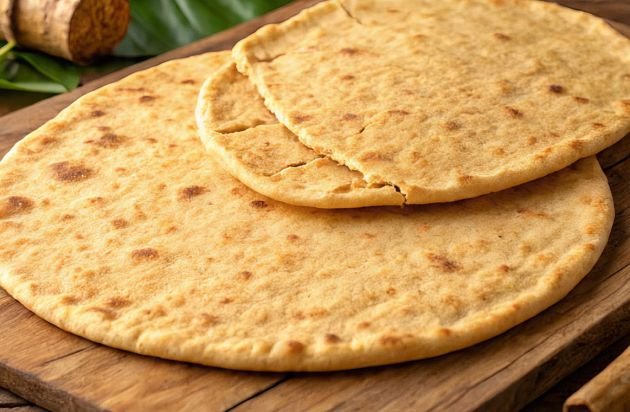
Cassava flatbread is a thin, quick-cooked bread made from either cassava flour or grated fresh root.
That distinguishes it from the denser loaves and cakes this site’s broader cassava bread guide covers.
Some versions ferment for a tangier flavor, while others cook fresh within minutes of mixing.
Flour-based versions turn out soft and pliable, closer to a wheat tortilla, while grated-root versions stay firmer and slightly rustic.
Both share the same core appeal: a genuinely gluten-free bread that works as a wrap, a side, or a base for other dishes.
Types of Cassava Flatbread
Cassava flour flatbreads mix flour with water and a pinch of salt into a soft, workable dough, then cook on a skillet until lightly browned.
The result stays flexible and tender, with a neutral flavor that pairs with both savory and sweet toppings.
Grated cassava flatbreads start from finely grated root with the excess moisture pressed out first.
They cook on a hot surface until firm at the edges and tender inside.
This traditional method produces a more rustic texture and a naturally earthy flavor, closer to how the bread has been made for centuries.
Cassava Tortillas as a Flatbread
Cassava tortillas count as a flatbread in their own right, and two distinct versions exist depending on which form of cassava you start with.
- Cassava flour tortillas use dried, ground cassava mixed with water into a soft dough, producing a texture close to a wheat flour tortilla. This site’s full cassava flour tortillas covers that version in complete detail.
- A separate method uses raw grated root instead of dried flour, producing a different texture worth comparing directly in this site’s grated cassava tortillas guide.
The main cassava flour guide covers sourcing basics for anyone new to the ingredient.
Regional Variations of Cassava Flatbread
Venezuelan and Caribbean Casabe
Casabe is the oldest cassava bread in the Americas, developed by the Taíno people from bitter cassava long before European contact.
Traditional preparation grates the root and presses out the toxic juice using a woven sleeve called a cibucán.
The dry pulp then cooks on a hot griddle known as a burén.
In December 2024, UNESCO formally recognized the knowledge and practices behind casabe as Intangible Cultural Heritage.
That recognition followed a joint nomination from the Dominican Republic, Cuba, Haiti, Honduras, and Venezuela, documented in additional coverage of the announcement.
Fermented versions develop a tangier flavor, while fresh versions stay milder, and both remain staples across the Caribbean today.
Brazilian Beiju
Beiju is frequently confused with casabe, but the two are genuinely different dishes made through different processes entirely.
Brazilian beiju comes from tapioca starch, the extracted starch of the cassava root, rather than the whole grated root casabe uses.
Hydrated tapioca starch spreads across a hot pan and fuses into a thin, chewy disc as it heats through.
It cooks in under two minutes with no added flour or egg.
Vendors along Brazilian beaches fill it with cheese, coconut, or condensed milk, folding it like a taco for a fast, portable snack.
That serving style is well documented in Brazilian food writing on the dish.
Colombian Arepas de Yuca
Arepas de yuca are soft, chewy Colombian flatbreads made from cassava flour rather than the corn used in standard arepas.
You can grill, bake, or fry them, and they work as a base for toppings or a filling for a light meal.
This bread gives corn-sensitive households a genuine gluten-free alternative that still fits familiar Colombian meal patterns.
This site’s cassava recipes guide covers more regional dishes built around the same root.
Its adaptability shows how far cassava has traveled beyond its Caribbean and Brazilian origins into everyday South American cooking.
Dominican Cassava Flatbread
In the Dominican Republic, cassava flatbread stays thin and crisp, closely related to Venezuelan casabe and sharing much of the same preparation method.
Grated cassava gets pressed to remove excess moisture, then cooked on a flat griddle until firm.
Some households work local spices or herbs into the dough for a subtle flavor twist beyond the plain version.
Served alongside meats, fish, or stews, it plays the same communal role across Dominican and wider Caribbean cooking.
This site’s how to remove cyanide from cassava root discusses the safety science behind pressing out that toxic juice.
Cassava Flatbread Recipe
This version uses cassava flour, since it needs the fewest specialty tools and produces the most consistently pliable result for beginners.
You will need 2 cups cassava flour, half a teaspoon of salt, and about 1 cup of water.
Add 2 tablespoons of olive oil, plus optional herbs like rosemary or garlic powder.
Combine the cassava flour and salt in a large bowl, then gradually add the water and oil, mixing until a soft, pliable dough forms.
Divide the dough into small balls and flatten each into a round disc about half an inch thick.
Heat a non-stick skillet over medium heat and cook each piece for 3 to 5 minutes per side until golden brown.
Alternatively, bake at 375°F for 15 to 20 minutes on a parchment-lined tray.
Let the bread cool slightly before serving alongside dips, soups, or stews.
This site’s cassava mash guide shows another simple way to turn the same root into a comforting side.
If the dough feels too dry, add a splash more water; if too sticky, work in a little extra flour.
Cassava flatbread tastes best fresh but keeps in an airtight container for two to three days.
Serving Suggestions
Cassava flatbread pairs naturally with salsas, chutneys, or bean spreads, soaking up flavor while keeping its own texture intact for a snack or light meal.
Alongside hearty stews, curries, or coconut-based sauces, its absorbent texture captures every drop without falling apart.
It also works as a straightforward swap for tortillas or sandwich bread, holding grilled vegetables, proteins, or spreads for a genuinely gluten-free wrap.
Used as a pizza base or a scoop for fresh salads, it stretches into a surprising range of everyday meals.
Cultural Significance
Cassava flatbread carries real weight beyond its role as food across the communities that developed it.
UNESCO’s December 2024 recognition of casabe specifically credited the tradition for supporting food security, cultural identity, and economic livelihoods across five Caribbean nations.
Preparing it remains a shared activity in many households, where techniques pass between generations through direct hands-on teaching rather than written recipes.
In Brazil, beiju vendors and home cooks keep tapioca-based flatbread central to daily life in the country’s north and northeast.
Cassava flatbread adapts to local ingredients across South America while staying connected to its indigenous roots, a real throughline from pre-Columbian kitchens to modern pans.
Conclusion
Cassava flatbread spans a genuinely diverse family of dishes, from Taíno-origin casabe to tapioca-based Brazilian beiju to flour-based tortillas, each with distinct origins and methods.
Getting the details right matters, since casabe and beiju are frequently confused despite coming from entirely different processes.
UNESCO’s real 2024 recognition of casabe underscores how much cultural weight this bread carries beyond the kitchen.
Whichever version you make, the same core appeal holds: a naturally gluten-free bread built from one humble root.
Start with the flour-based recipe here, then try the regional variations too.
Frequently Asked Questions
What is Cassava Flatbread?
Cassava flatbread is a thin, genuinely gluten-free bread made from cassava flour or grated root, cooked on a hot surface until lightly browned and soft or fully crisp.
How is Cassava Flatbread Made?
Mix cassava flour with water and salt, or use grated cassava with excess moisture pressed out, then form into rounds and cook on a hot skillet or griddle.
Are Casabe and Beiju the Same Thing?
No, casabe uses whole grated bitter cassava pressed to remove toxic juice, while beiju uses tapioca starch alone, making them genuinely different dishes with entirely different cooking processes.
Can Cassava Flatbread Replace Regular Bread?
Yes, its pliable texture lets it reliably replace tortillas, wraps, or sandwich bread, holding fillings well while offering a genuinely gluten-free option for most grain-free meals available today.

Chimeremeze Emeh is a tropical crop farmer and chemical engineer from Ntigha, Isiala Ngwa North LGA, Abia State, Eastern Nigeria, specializing in cassava and palm oil, with over 30 years of hands-on experience growing, harvesting, and processing cassava. He grows TMS series, TME 419, and local traditional varieties on his own farms and operates a small-scale cassava flour and starch production business through Cassava Pathway, which he founded as a CAMA-registered agribusiness in 2024. He is also the founder of Palm Oil Pathway, where he applies the same tropical farming expertise. His farms are located in Ntigha, Abia State.