Last updated on August 3rd, 2026 at 01:43 pm
Despite its name, sweet cassava starch has nothing much to do with actual sugar or a special low-cyanide variety, since the word sweet simply marks the plain, unfermented starch that sits opposite its tangy, fermented kitchen cousin, sour cassava starch.
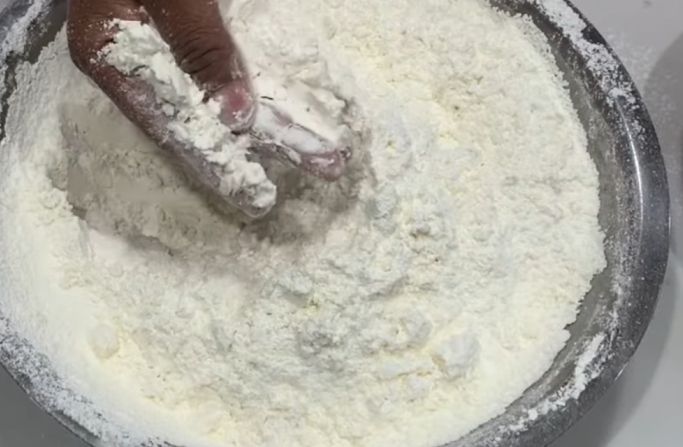
Sweet cassava starch, known in Brazil as polvilho doce, is simply plain cassava starch dried without fermentation, named sweet only in contrast to its fermented counterpart, sour cassava starch.
It is not, as many sources claim, a starch made from a special low-cyanide cassava variety.
We correct that confusion in this post by covering what sweet cassava starch actually is, its real properties, nutrition, and best culinary uses, from gluten-free baking to a milder version of pão de queijo.
You will also learn exactly how it differs from sour cassava starch, and when each one belongs in your kitchen over the other.
Table of Contents
What Sweet Cassava Starch Actually Is
Sweet cassava starch is extracted the same way as any standard cassava starch: roots are peeled, grated, washed, settled, and dried into a fine powder.
This process is covered step by step in our guide on making cassava starch at home.
The “sweet” in its name refers only to the absence of fermentation, distinguishing it from sour cassava starch, which undergoes days of natural fermentation after extraction.
This has nothing to do with bitter versus sweet cassava root varieties, a separate distinction covered fully in our guide to bitter versus sweet cassava.
Both bitter and sweet cassava varieties can produce either sweet or sour starch, since the starch itself is washed clean of the compounds causing bitterness.
What Being Unfermented Actually Changes
Sweet cassava starch is functionally the same product as standard tapioca starch, so its texture and thickening behavior are already covered in our tapioca pillar guide.
What matters here specifically is what fermentation status alone actually changes about it.
- No puffing ability. Unlike sour cassava starch, sweet cassava starch lacks the acid and depolymerized starch structure that fermentation produces. A study on sour starch’s baking behavior, published in Starch/Stärke, found that native, unfermented starch shows no meaningful expansion property at all. Fermentation itself is specifically what creates that expansion property in the finished starch.
- No fermented tang. Sweet cassava starch stays neutral in both smell and taste, letting it disappear into a recipe rather than adding character the way sour starch’s acidity does.
- Faster, simpler production. Skipping fermentation means sweet cassava starch reaches a finished, shelf-stable state in a fraction of the time sour starch requires.
Sweet vs. Sour Cassava Starch
| Feature | Sweet Cassava Starch | Sour Cassava Starch |
|---|---|---|
| Fermentation | None | 3 to 7 days, sometimes longer |
| Flavor | Neutral, mild | Tangy, slightly acidic |
| Baking behavior | Thickens, does not puff | Puffs dramatically without yeast |
| Texture when baked | Soft, smooth | Chewy, stretchy |
| Best known use | General thickening, mild pão de queijo | Classic pão de queijo, crisp snacks |
A wider review of sour starch production, published in ScienceDirect, confirmed that fermentation and sun-drying measurably increase expansion and reduce hardness compared with native, unfermented starch.
This is the real mechanism behind why sour cassava starch puffs and sweet cassava starch does not.
Readers wanting the full picture on the fermented version should read our guide on sour cassava starch.
Nutritional Value
Sweet cassava starch is nutritionally identical to standard tapioca starch, since both are pure, refined starch.
The full breakdown of calories, carbohydrates, fiber, and gluten-free status already lives in our dedicated tapioca nutrition facts guide.
In short: it is carbohydrate-dense, low in fiber and protein, and naturally gluten-free, according to standard reference data compiled for cassava starch.
When to Choose Sweet Over Sour
- Recipes that need neutrality. Anywhere a fermented tang would clash, sweet cassava starch disappears into the dish instead of adding its own flavor.
- A milder pão de queijo. Produces a softer, less elastic version of Brazil’s famous cheese bread, worth trying before the classic sour-starch recipe.
- Faster turnaround. Skipping fermentation entirely makes sweet cassava starch the practical choice when sour starch’s multi-day production timeline is not an option. Standard cassava starch extraction, without any fermentation step, is detailed in processing documentation from the Food and Agriculture Organization.
Conclusion
Sweet cassava starch earns its name simply by not being fermented, not by coming from some special variety of cassava root.
That difference explains everything else: its neutral flavor, its texture, and why it cannot puff the way sour cassava starch does.
Reach for it when a recipe needs a mild thickener, a gluten-free binder, or a softer version of pão de queijo.
Reach for sour cassava starch when you need chew, stretch, and oven rise instead.
Frequently Asked Questions
Why is it called sweet cassava starch if it doesn’t taste sweet?
The name refers only to fermentation status, not flavor, marking this starch as the plain, unfermented counterpart to tangy sour cassava starch, which undergoes days of fermentation instead.
Does sweet cassava starch come from a special cassava variety?
No, that is a common misconception, since sweet cassava starch comes from the same cassava root as sour starch, with fermentation being the only real difference between them.
Can sweet cassava starch make pão de queijo?
Yes, sweet cassava starch produces a milder, less chewy version of pão de queijo, while sour cassava starch delivers the classic dramatic puff and stretchy, tangy bite instead.
Is sweet cassava starch the same as tapioca starch?
Essentially yes, sweet cassava starch and standard tapioca starch describe the same plain, unfermented product, though regional naming commonly varies depending on where the starch is simply sold.

Chimeremeze Emeh is a tropical crop farmer and chemical engineer from Ntigha, Isiala Ngwa North LGA, Abia State, Eastern Nigeria, specializing in cassava and palm oil, with over 30 years of hands-on experience growing, harvesting, and processing cassava. He grows TMS series, TME 419, and local traditional varieties on his own farms and operates a small-scale cassava flour and starch production business through Cassava Pathway, which he founded as a CAMA-registered agribusiness in 2024. He is also the founder of Palm Oil Pathway, where he applies the same tropical farming expertise. His farms are located in Ntigha, Abia State.