

Last updated on August 3rd, 2026 at 07:41 am
Swap tapioca starch for potato starch in the wrong recipe and you will notice immediately, since one holds up through freezing while the other turns a sauce watery and thin as soon as it eventually cools right back down again.
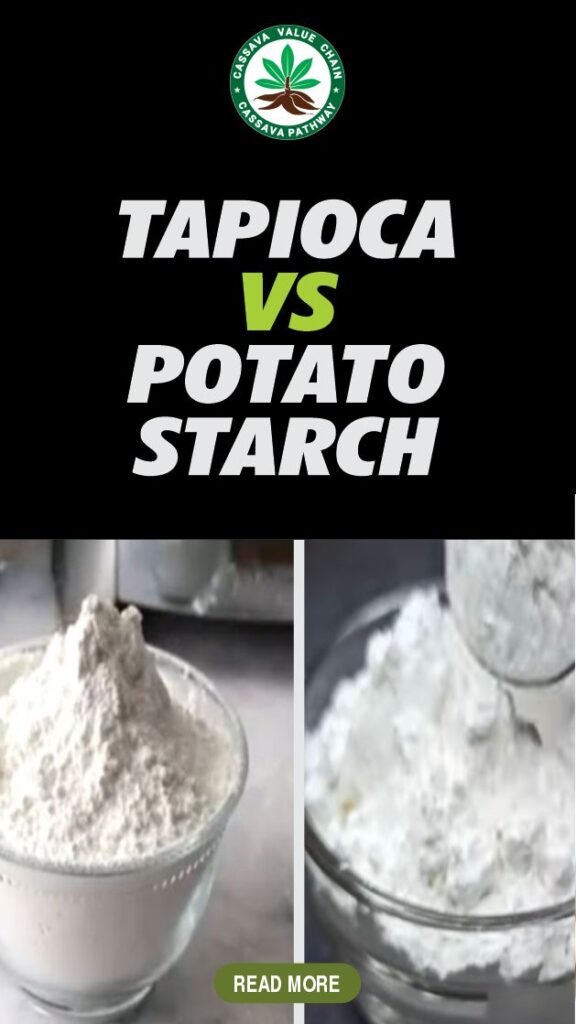
Tapioca starch and potato starch both thicken food, but they come from entirely different plants and behave differently once heat and cold enter the picture.
Tapioca starch, extracted from cassava root, stays elastic, glossy, and stable through freezing and reheating.
Potato starch, pulled from potato tubers, thickens quickly at lower temperatures but breaks down under prolonged cooking and loses stability when frozen.
This guide compares both starches side by side, covering their real nutrition, culinary strengths, and an important correction about potato starch’s resistant starch claims once it hits the stove. You will learn which starch fits your recipe best.
Table of Contents
Overview of Tapioca Starch
Tapioca starch is a fine, white powder extracted from cassava root, prized for its neutral flavor and glossy, elastic finish.
It holds up well through freezing and reheating, which makes it a reliable choice for frozen sauces and pie fillings.
Readers wanting the full picture on this ingredient should read our guide on what tapioca starch actually is.
What Is Potato Starch?
Potato starch is a fine white powder extracted from potato tubers, composed almost entirely of starch with very little protein or fat.
It thickens quickly at a relatively low temperature, giving sauces and soups a fast set.
Its texture runs slightly grainier than tapioca starch, and it tends to break down if cooked too long or frozen and thawed repeatedly.
This exact comparison is covered further in our tapioca versus cornstarch post.
Side-by-Side Comparison
| Feature | Tapioca Starch | Potato Starch |
|---|---|---|
| Source | Cassava root | Potato tubers |
| Texture | Fine and smooth | Slightly grainy |
| Thickening power | Medium to strong | Strong |
| Heat sensitivity | High heat resistance | Lower heat tolerance |
| Elasticity | High, chewy and stretchy | Low, light and airy |
| Appearance when cooked | Glossy and clear | Matte and opaque |
| Freeze stability | Good | Poor |
| Best uses | Bubble tea, sauces, gluten-free baking | Baked goods, soups, frying |
A structural comparison of common starches found that cassava-derived starch gelatinizes at a notably higher temperature than potato starch (corn, cassava, and potato starch study).
That higher threshold explains why tapioca starch tolerates prolonged cooking better than potato starch does.
Nutritional Comparison
| Nutrient (per 100g) | Tapioca Starch | Potato Starch |
|---|---|---|
| Calories | ~358 kcal | ~350 kcal |
| Carbohydrates | ~88 g | ~83 g |
| Protein | ~0.2 g | ~0.3 g |
| Fiber | ~0.9 g | ~0.5 g |
| Fat | 0 g | 0 g |
Both starches sit close together nutritionally, since both are refined, low-fiber, low-protein carbohydrate sources.
Readers wanting the fuller comparison across multiple starches should read our tapioca nutrition facts guide.
Health Considerations, Including a Key Correction
Potato starch’s reputation as a resistant starch source deserves a closer look, since the claim only holds true under specific conditions.
Raw, uncooked potato starch does carry meaningful resistant starch, but that resistance largely disappears once heat enters the picture.
Research on cooked potato products found that gelatinization sharply reduces resistant starch content compared with the raw form (ScienceDirect, potato resistant starch cooking study).
A separate study on boiling and pressure cooking confirmed that raw potatoes carry the highest resistant starch of any sample tested (Wiley, resistant starch cooking study).
That resistant starch content then drops steadily as cooking time increases further.
Since this entire comparison concerns potato starch used for cooking and thickening, not raw supplementation, the resistant starch benefit mostly does not apply here.
Readers wanting the accurate, detailed picture should read our guide on resistant starch in cassava versus potato.
Our broader post on cassava as a resistant starch source covers this topic further.
Culinary Uses Compared
- Baking: tapioca starch adds chewiness to gluten-free bread and cookies, while potato starch creates a softer, airier crumb in cakes and muffins.
- Thickening sauces and soups: tapioca starch gives a glossy, clear finish ideal for stir-fries and pie fillings, a technique covered fully in our thickener guide. Potato starch suits creamy soups and custards but can break down with extended cooking.
- Frying: potato starch produces an especially light, crispy coating, while tapioca starch is rarely used alone for frying.
- Freezer stability: tapioca starch resists syneresis in frozen dishes far better than potato starch, according to research on tapioca starch blends (ScienceDirect, tapioca freeze-thaw study).
Which One Should You Choose?
- Choose tapioca starch for chewy textures like mochi or bubble tea, dishes headed for the freezer, or sauces that need a glossy finish.
- Choose potato starch for light, airy baked goods, crispy fried coatings, or soups and stews needing strong, fast thickening.
- Still deciding between starch options generally? Our tapioca starch substitutes guide covers several alternatives side by side.
Conclusion
Tapioca starch and potato starch both earn a place in the pantry, for different reasons.
Reach for tapioca starch when you need a glossy sauce or a freezer-stable thickener.
Reach for potato starch when frying needs a crisp coating or baking calls for a lighter crumb.
Potato starch loses most of its resistant starch once cooked, so treat gut-health claims with practical caution.
Getting this choice right saves your sauces from turning watery and your fried food from turning soggy.
Frequently Asked Questions
Is tapioca starch better than potato starch?
Neither is universally better, since tapioca starch suits glossy sauces and freezer-stable dishes, while potato starch works genuinely best for crispy frying and light, delicate airy baked goods.
Can I substitute tapioca starch for potato starch?
Yes, in most recipes you can substitute them at a roughly 1:1 ratio, though tapioca starch delivers more chew and gloss while potato starch stays lighter and airier.
Does potato starch really contain resistant starch?
Only in its raw, uncooked form. Once potato starch is heated for thickening, cooking destroys almost all of its resistant starch, leaving mainly ordinary digestible carbohydrate behind instead.
Which starch works best for frying?
Potato starch works best for frying, since it creates an especially light, crisp coating on foods like Korean fried chicken, far crispier than tapioca starch alone typically manages.

Chimeremeze Emeh is a tropical crop farmer and chemical engineer from Ntigha, Isiala Ngwa North LGA, Abia State, Eastern Nigeria, specializing in cassava and palm oil, with over 30 years of hands-on experience growing, harvesting, and processing cassava. He grows TMS series, TME 419, and local traditional varieties on his own farms and operates a small-scale cassava flour and starch production business through Cassava Pathway, which he founded as a CAMA-registered agribusiness in 2024. He is also the founder of Palm Oil Pathway, where he applies the same tropical farming expertise. His farms are located in Ntigha, Abia State.