

Last updated on August 3rd, 2026 at 08:00 am
Bite into a tapioca pearl and you get a slow, chewy resistance that lasts through the whole sip, but bite into popping boba and the entire experience ends almost instantly in one small burst of juice right against your tongue.
Tapioca pearls and popping boba both show up in the same drinks, but they come from different ingredients and processes.
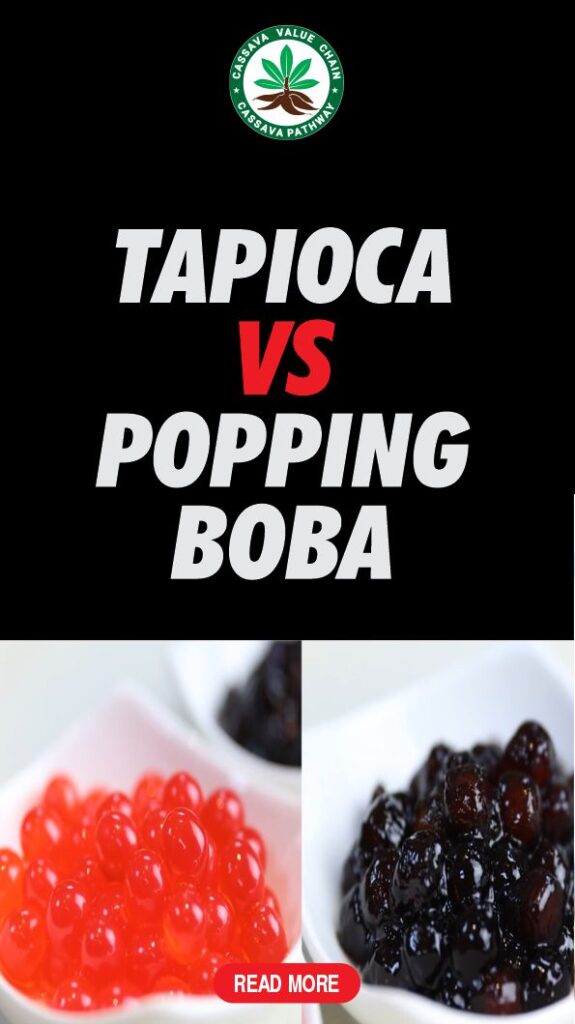
Tapioca pearls form from cassava starch, boiled and soaked in syrup until they turn soft and chewy.
Popping boba forms through a chemical process called spherification, encasing flavored liquid inside a thin gel skin that bursts on contact.
This guide breaks down what each topping is actually made from, how their nutrition and shelf life compare, and which drinks or desserts suit each one best.
You will learn when substituting one for the other works, and when it does not.
Table of Contents
What Is Tapioca Boba?
Tapioca boba, also known as tapioca pearls, comes from starch extracted from cassava root.
National Geographic traces the drink’s origins to Taiwanese tea houses in the 1980s.
Tapioca pearls were first dropped into cold milk tea there, giving rise to bubble tea as we know it today.
The pearls themselves are typically dyed black with caramel or brown sugar, though white and pastel versions exist.
Chewy, soft, and neutral in flavor until soaked in syrup, tapioca pearls need boiling before they take on their signature texture.
This full process is covered in our guide to making bubble tea at home. Readers wanting a deeper dive into this process should read our full tapioca pearls guide.
What Is Popping Boba?
Popping boba works nothing like tapioca, since it relies on a chemistry technique called spherification rather than cassava starch.
A chemistry explainer published by Science Buddies breaks the process down to a single reaction.
Sodium alginate, extracted from seaweed, binds with calcium ions to form a gel-like membrane called calcium alginate.
Manufacturers mix fruit juice with sodium alginate, then drip that mixture into a calcium bath.
A thin skin forms around each droplet there, while the liquid center stays intact throughout.
Food historians writing for Fine Dining Lovers trace this technique back to chef Ferran Adrià’s restaurant El Bulli in 2003.
That moment at El Bulli helped define the modern culinary movement known as molecular gastronomy.
Popping boba requires no cooking and comes ready to use straight from the package.
Tapioca vs Popping Boba: The Differences
| Feature | Tapioca Boba | Popping Boba |
|---|---|---|
| Source | Cassava-derived starch | Fruit juice with sodium alginate |
| Texture | Chewy and soft | Thin skin that bursts with liquid |
| Taste | Neutral, needs sweetening | Pre-flavored and juicy |
| Preparation | Boiled, then soaked in syrup | Ready to use, no cooking |
| Shelf life | Hardens within hours once cooked | Keeps for weeks refrigerated |
| Appearance | Black, white, or pastel | Bright colors matching fruit flavors |
Nutritional Comparison
Standard nutrition data compiled by NutritionValue.org places dry pearl tapioca at roughly 358 calories per 100 grams, almost entirely from carbohydrate.
Popping boba generally runs lower in calories per serving, since its center is mostly fruit juice and water rather than dense starch.
The added sugar syrup still contributes meaningfully to its overall total, though.
Neither topping qualifies as nutrient-dense, and both work better as an occasional textural addition than an everyday health food.
Readers whose homemade tapioca pearls turn out too soft should read our troubleshooting guide on tapioca balls that turn mushy.
Readers wanting a fuller nutrition breakdown across boba types should read our tapioca nutrition facts guide.
Can You Substitute One for the Other?
This swap works well in some cases and fails badly in others, depending entirely on what you are making.
- Works fine: if you just want a fun texture in a drink, either topping generally does the job, since both add interest to milk tea, fruit tea, or smoothies.
- Does not work: traditional bubble tea recipes are built around tapioca’s slow, chewy bite, so popping boba changes the entire experience rather than merely substituting into it.
- Also does not work: frozen yogurt and fruit-forward drinks rely on popping boba’s juicy burst, a quality tapioca pearls simply do not replicate.
Conclusion
Tapioca pearls and popping boba both add texture to a drink, but almost nothing else about them is the same.
Tapioca delivers a slow, chewy bite built on tradition dating back to Taiwan in the 1980s.
Popping boba delivers an instant fruity burst built on a chemistry technique barely two decades old.
Neither topping is objectively superior, since the right pick depends on the drink you are making and the bite you want.
Read our broader comparison of tapioca versus boba next, or check our own crystal boba guide today.
Frequently Asked Questions
What is the main difference between tapioca and popping boba?
Tapioca pearls come from cassava starch and deliver a chewy bite, while popping boba comes from fruit juice encased in a thin gel skin that bursts open instead.
Is popping boba healthier than tapioca pearls?
Popping boba generally carries fewer calories than tapioca pearls, though it still contains real sugar from fruit juice and syrup, so neither necessarily counts as diet food either.
Can I substitute popping boba for tapioca pearls in bubble tea?
You can, but the texture changes completely, since popping boba bursts with juice instead of delivering the very slow, chewy bite classic bubble tea recipes are built around.
How long do tapioca pearls and popping boba last?
Tapioca pearls harden within hours and should be eaten fresh, while popping boba keeps well in the refrigerator for several weeks without losing its signature burst at all.

Chimeremeze Emeh is a tropical crop farmer and chemical engineer from Ntigha, Isiala Ngwa North LGA, Abia State, Eastern Nigeria, specializing in cassava and palm oil, with over 30 years of hands-on experience growing, harvesting, and processing cassava. He grows TMS series, TME 419, and local traditional varieties on his own farms and operates a small-scale cassava flour and starch production business through Cassava Pathway, which he founded as a CAMA-registered agribusiness in 2024. He is also the founder of Palm Oil Pathway, where he applies the same tropical farming expertise. His farms are located in Ntigha, Abia State.