Last updated on August 6th, 2026 at 04:15 am
Marketing copy for large tapioca pearls sometimes stretches their diameter up to 12 millimeters, yet that figure actually belongs to a separate jumbo category, since commercial suppliers consistently measure true large pearls at just 8 to 10 millimeters in size.
Confusion between large and jumbo pearls costs you more than a labeling technicality, since the wrong assumption about size changes how long you should actually boil them.
This guide sorts out the real size standard, the correct two-stage cooking technique that prevents hard centers, and nutrition numbers grounded in actual serving sizes rather than vague ranges.
You will also find genuine troubleshooting guidance, proper storage timelines, and creative ways to use these pearls beyond bubble tea.
Readers wanting the smaller variety or the precooked instant version should read our own guides on small tapioca pearls and instant tapioca pearls instead.
Table of Contents
What Are Large Tapioca Pearls?
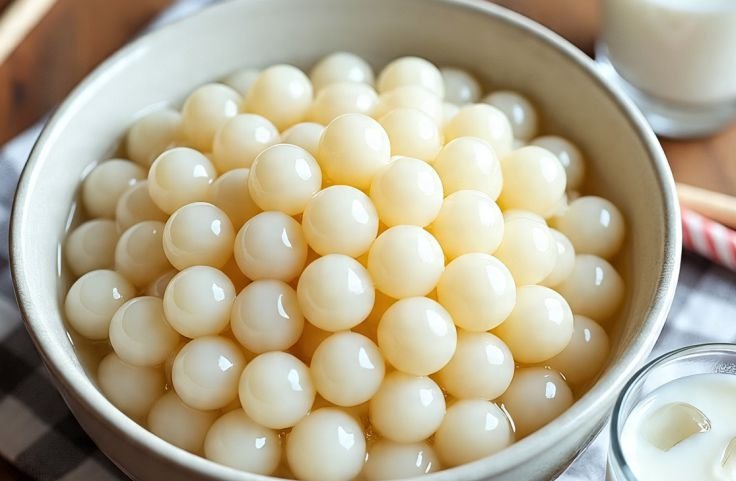
Large tapioca pearls are chewy starch spheres made entirely from cassava root.
Their substantial size delivers the bold, satisfying bite associated with bubble tea and desserts.
Commercial suppliers consistently measure genuine large pearls at 8 to 10 millimeters, according to product specifications published by Bossen, a major boba supplier.
Pearls marketed above roughly 10 millimeters typically fall into a separate jumbo category instead, according to size analysis published by ElevatingKitchen.
What Sets Large Pearls Apart
Their thicker cross-section means large pearls genuinely absorb flavor more deeply than smaller varieties, adding richness to drinks and desserts alike.
This same thickness also demands a longer cooking process, since heat needs more time to penetrate fully to the center.
Once cooked, large pearls develop a soft exterior with a chewy core, a textural contrast smaller pearls rarely achieve as distinctly.
Readers wanting the full picture of cassava-derived tapioca products should read our general tapioca guide.
Popular Uses
Bubble tea remains the defining use, where large pearls create a playful, visually striking contrast against sweetened tea and milk.
Asian desserts, including Thai tapioca pudding and Taiwanese shaved ice, rely on large pearls for chewy bursts amid coconut milk or flavored syrup.
Savory applications are less common but genuinely effective, particularly in Thai-inspired salads where chewy pearls balance crisp vegetables.
Readers wanting more recipe ideas should read our guide on tapioca pearl recipes.
Cooking Large Tapioca Pearls Correctly
Rinse pearls under cold water first to remove excess surface starch, then soak for about 30 minutes to give them a hydration head start.
Bring a full pot of water to a rolling boil, add pearls while stirring occasionally, and boil for 30 to 45 minutes total.
Reduce heat, cover, and let pearls rest off direct heat for several minutes so the center finishes cooking without the exterior turning mushy.
Drain and rinse under cold water immediately, then toss lightly with oil to prevent sticking before use.
Readers wanting a full recipe for making pearls from scratch should read our guide on making boba tapioca pearls at home.
Storage and Shelf Life
Store uncooked pearls in a dry, airtight container in a cool, dark space, where they typically stay usable for up to a year.
Cooked pearls have a far shorter window, lasting about 24 hours at room temperature or up to three days refrigerated, though texture firms up over that time.
Reheat refrigerated pearls by dipping briefly in boiling water for 30 seconds to a minute before serving.
Troubleshooting Common Problems
Hard centers usually mean boiling time was too short or heat too high, so lower the heat gradually and extend cooking as needed.
Mushy pearls result from overcooking past their ideal point, a mistake that cannot be reversed once it happens.
Sticky pearls need more water during cooking and a thorough cold rinse afterward.
Readers wanting the complete troubleshooting picture across every pearl type should read our guide on troubleshooting tapioca balls.
Where to Buy
Asian grocery stores offer direct, in-person access to multiple large tapioca pearl brands, letting you inspect packaging and freshness before buying.
Online specialty retailers provide detailed descriptions and reviews, useful for comparing brands without a local store nearby.
Look for opaque, uniform pearls free from cracks, and check expiration dates carefully regardless of where you shop.
The Real Nutrition Numbers
Cooked tapioca pearls contain roughly 130 to 150 calories per 100 grams, according to nutritional analysis published by SnapCalorie.
A typical commercial serving size runs 60 to 80 grams, according to preparation guidance from SAC Food Supplies.
This puts a realistic serving closer to 80 to 120 calories rather than a flat, unsourced range.
Pearls are naturally gluten-free, a property confirmed in nutritional analysis published by FoodStruct, making them suitable for gluten-sensitive diets.
Conclusion
Large tapioca pearls genuinely earn their reputation for a bold, chewy bite, but only at 8 to 10 millimeters, not the 12 some marketing claims.
Soak first, boil 30 to 45 minutes, then rest off heat so centers finish without turning mushy.
A 60 to 80 gram serving runs closer to 80 to 120 calories, not the 100 to 200 range quoted.
Store unopened pearls up to a year, and always use cooked batches within a day. Read our own guide on tapioca pearls next, or visit Cassava Pathway today.
Frequently Asked Questions
What are large tapioca pearls made from?
Large tapioca pearls are made from tapioca starch extracted from the cassava root, providing a genuinely chewy texture that absorbs flavors well in traditional beverages and sweet desserts.
How do you cook large tapioca pearls properly?
Rinse and soak the pearls first, boil for a full 30 to 45 minutes while gently stirring occasionally, then rest off heat so centers finish cooking genuinely evenly.
How should you store large tapioca pearls?
Store uncooked pearls in a dry, airtight container in a cool, dark place, ideally always used within a year for genuinely best texture, flavor, and overall quality instead.
Can large tapioca pearls be used in savory dishes?
Yes, they can genuinely be incorporated into salads, soups, or traditional savory Asian dishes, adding even a chewy texture while absorbing flavors from dressings and sauces quite well.

Chimeremeze Emeh is a tropical crop farmer and chemical engineer from Ntigha, Isiala Ngwa North LGA, Abia State, Eastern Nigeria, specializing in cassava and palm oil, with over 30 years of hands-on experience growing, harvesting, and processing cassava. He grows TMS series, TME 419, and local traditional varieties on his own farms and operates a small-scale cassava flour and starch production business through Cassava Pathway, which he founded as a CAMA-registered agribusiness in 2024. He is also the founder of Palm Oil Pathway, where he applies the same tropical farming expertise. His farms are located in Ntigha, Abia State.