Last updated on August 2nd, 2026 at 12:19 pm
Pulling cassava roots by hand can cost a farmer up to 51 man-days per hectare, real research confirms. A mechanized harvester can cut that same job down to a single afternoon.
In my own cassava-farming community, harvest still means pulling roots up by hand, cutting stems, loosening soil, and extracting each root with care.
That traditional method works, but it demands real labor, roughly 11 to 51 man-days per hectare depending on the tools used, and carries an 8 to 10 percent root breakage rate even when done carefully.
Modern mechanized equipment changes that math entirely, cutting labor demand to as little as 1 to 4 man-hours per hectare for the digging stage alone.
This guide covers both approaches in full, the real tradeoffs between them, and how to choose the right method for your specific farm.
Table of Contents
Traditional Manual Harvesting
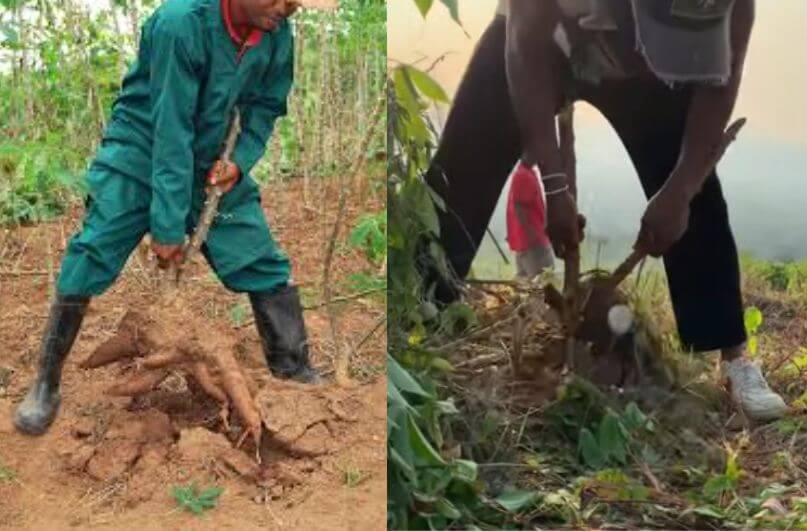
Manual harvesting starts with cutting the cassava stems at ground level using a machete or cutlass.
Workers then loosen the surrounding soil with a hoe or digging stick, a process detailed in Trinidad and Tobago’s cassava harvesting guide.
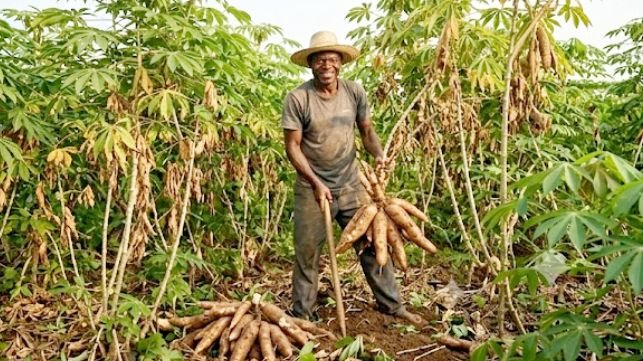
Workers then pull the roots by hand, a step that genuinely requires skill.
Rough handling causes bruising or splitting that lowers both quality and market value.
Soil moisture matters more than most farmers expect: moist soil loosens easily, while dry soil turns extraction into a much slower, physically demanding task. This connects directly to broader field maintenance, covered in our guide on cassava weed management strategies.
This traditional method carries real, measured costs worth knowing upfront, before you commit to it for a full season. Hand harvesting with a hoe or cutlass produces an 8 to 10 percent root breakage rate.
It demands between 11 and 51 man-days per hectare depending on tools used, per a review published in the International Journal of Engineering Research and Development.
A single worker using bare hands and basic tools can typically manage around 500 kilograms of harvested cassava per day.
In exchange for that labor, manual harvesting keeps costs low and gives farmers direct control over root maturity timing.
It also tends to produce better culinary quality, making it the right fit for smallholder plots with limited capital.
Modern Mechanized Harvesting
Mechanization comes in two real forms, though both still depend on healthy planting material.
Our guide on sourcing cassava stems covers that starting point in the growing cycle.
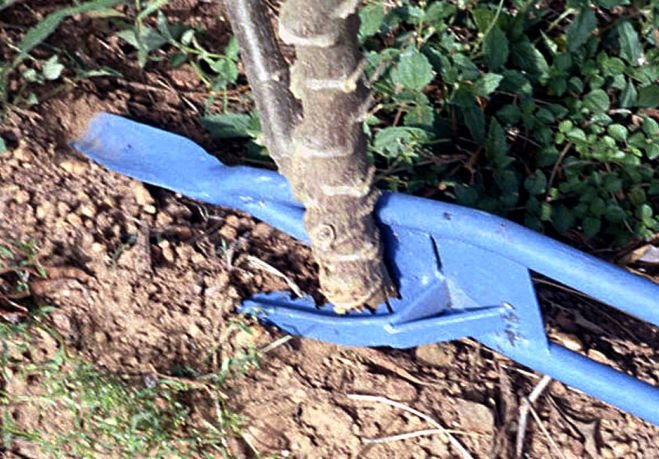
Semi-mechanized harvesting uses tractor-mounted implements to dig into the soil and loosen roots, after which workers still collect roots by hand.
This hybrid approach only mechanizes digging, but it drops labor demand to roughly 1 to 4 man-hours per hectare, per the same review.
Fully mechanized harvesting goes further, using dedicated machines that uproot and collect roots simultaneously with minimal manual effort.
Nigeria’s NCAM harvester achieves 0.8 to 1.2 hectares per hour, while Colombia’s CLAYUCA-tested P600 covers 5 to 8 hectares daily, per the review’s field data.
Mechanized methods reduce both labor demand and root damage when operated correctly and maintained properly.
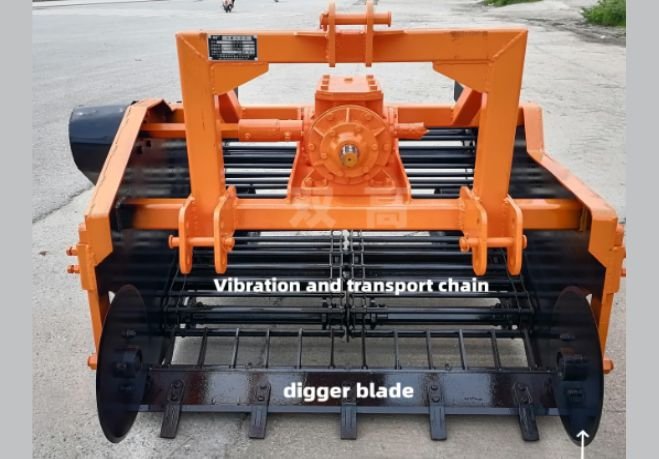
This makes them the clear choice for large-scale production, where speed matters more than upfront cost.
The tradeoff for that speed and consistency is real, though, and it shows up in both cost and maintenance demands.
Machinery requires meaningful capital investment and maintenance, and improperly operated equipment can damage roots just as easily as careless manual handling.
Comparing the Two Approaches
| Factor | Traditional (Manual) | Modern (Mechanized) |
|---|---|---|
| Labor demand | 11 to 51 man-days per hectare | 1 to 4 man-hours per hectare (semi-mechanized digging) |
| Root breakage | 8 to 10 percent | Lower, with proper operation |
| Upfront cost | Low | High |
| Best fit | Smallholder farms, limited capital | Medium to large-scale operations |
Choosing the Right Method for Your Farm
Financial resources are usually the deciding factor, since mechanized equipment demands a real upfront investment that smallholder farmers regularly cannot justify against their harvest volume.
Labor availability in your specific region matters just as much as your budget.
Regions with abundant labor can lean on traditional methods effectively, while labor shortages tend to make mechanization pay off faster.
Climate and soil conditions influence this too, a factor our climate conditions guide covers directly.
Whatever method you choose, cassava roots begin deteriorating within one to three days of harvest, per research from Cornell’s Gore Lab.
Timing your harvest around market or processing readiness matters as much as the method itself.
Our guide on signs cassava is ripe for harvest covers that timing question.
This post on how to store cassava root also covers what happens after.
Conclusion
Harvesting cassava well comes down to matching the method to your actual farm, not defaulting to whatever your neighbors use.
Traditional manual harvesting remains the right call for smallholder plots with limited capital, since the tools cost little and control over timing and root quality is genuinely good.
Mechanization earns its higher upfront cost on larger operations, where cutting labor from tens of man-days to a few man-hours per hectare changes the entire economics of harvest.
Whichever method you choose, harvest at peak root maturity and handle roots gently, since damage at this stage costs money no matter how the roots came out of the ground.
Frequently Asked Questions
How much labor does manual cassava harvesting require?
Manual harvesting typically demands 11 to 51 man-days per hectare depending on tools used, compared to just 1 to 4 man-hours for mechanized digging.
How much root damage happens during manual harvesting?
Studies show manual harvesting produces roughly 8 to 10 percent root breakage, even with careful technique and experienced workers handling the extraction.
What is semi-mechanized cassava harvesting?
Semi-mechanized harvesting uses tractor-mounted implements to loosen soil while workers collect roots by hand, balancing cost against speed for mid-sized farms.
Is traditional harvesting still worth it for small farms?
Smallholder farms with limited capital and abundant labor generally benefit more from traditional methods than from investing in expensive mechanized equipment.

Chimeremeze Emeh is a tropical crop farmer and chemical engineer from Ntigha, Isiala Ngwa North LGA, Abia State, Eastern Nigeria, specializing in cassava and palm oil, with over 30 years of hands-on experience growing, harvesting, and processing cassava. He grows TMS series, TME 419, and local traditional varieties on his own farms and operates a small-scale cassava flour and starch production business through Cassava Pathway, which he founded as a CAMA-registered agribusiness in 2024. He is also the founder of Palm Oil Pathway, where he applies the same tropical farming expertise. His farms are located in Ntigha, Abia State.