
Last updated on July 8th, 2026 at 10:52 am
One ingredient, three names, and a reach most people never notice. Tapioca thickens your pie, gives bubble tea its chew, and quietly powers pharmaceutical tablets and cardboard glue. Few people realize all three trace back to one humble tropical root.
In the beginning, my farming community processed cassava root just for garri and fufu and discarded the cassava water, which contained the starch, also called tapioca. The biggest processing mistake any cassava processor can make.
While this was done in ignorance, Cassava Pathway is sensitizing rural farmers and processors about the importance and use of tapioca.
Tapioca sits at the center of a genuinely global industry, yet most guides only cover its kitchen uses.
This page treats tapioca as a whole, covering its identity, its chemistry, its nutrition, and its reach into food, pharmaceuticals, textiles, and manufacturing worldwide.
You will see why one starch holds together both puddings and pill tablets, why its naming causes so much confusion across regions, and why it matters beyond a single recipe.
Cooks, bakers, formulators, and commercial buyers will each find the full picture here, backed by real data rather than assumptions, guesswork, or marketing claims.
Disclaimer: This article is for informational purposes only and does not constitute medical advice. The author is not a medical doctor or registered dietitian. Always consult a qualified healthcare provider before making dietary or medical decisions related to cassava or tapioca consumption.
Table of Contents
What Is Tapioca?
Tapioca is a fine, odorless, white powder extracted from the root of the cassava plant, also called yuca or manioc. Whatever the package calls it, tapioca starch, tapioca flour, or cassava starch, all three names point to the same refined product with a neutral taste and strong thickening power.

Because tapioca retains none of the fiber or plant solids found in whole cassava flour, it behaves very differently in cooking, a distinction covered fully in the next section.
Tapioca Starch, Cassava Starch, and Tapioca Flour: Are They the Same?
Yes. Tapioca starch and tapioca flour come from the same source and perform identically in your kitchen.
- Both Come From the Cassava Root: The root gets washed, peeled, and ground into a liquid, then dried into a fine powder. That powder is what shows up on shelves labeled either starch or flour. Read more about the cassava root.
- Identical Texture and Appearance: Both forms appear as a fine white powder with a neutral taste. Both are naturally gluten-free, light, and smooth, mixing easily into sauces, puddings, or baked goods without altering flavor.
- Interchangeable in Recipes: A recipe calling for tapioca flour works the same with tapioca starch, and the reverse holds too. Swap one for the other at a 1:1 ratio and expect the same texture and result.
- Regional Naming Differences: The confusion mostly comes down to geography rather than the product itself. In the United States, packaging usually reads “tapioca flour.” In Europe, Asia, and several other regions, “tapioca starch” is the more common label. Once you know the naming split is regional, you can follow a recipe from any country without worrying about the ingredient behaving differently.
- Labeling Confusion: Checking the ingredient list settles any doubt, since both labels describe the same cassava-derived starch. Neither name signals a more processed or purer version of the other.
This is entirely different from cassava flour, which is made from the whole dried root, fiber included, and behaves quite differently in cooking. Learn more about cassava flour here.
Origin and History
Tapioca’s story begins in South America, where indigenous communities first cultivated cassava and extracted its starch for breads, porridges, and fermented drinks.

Portuguese traders carried cassava to Africa and Asia in the 16th century, and the crop adapted readily to tropical climates, becoming a dietary staple across both continents.
In West and Central Africa, cassava became central to daily nutrition, eaten as fufu, garri, or starchy gruel.
In Southeast Asia, the starch was shaped into pearls and folded into desserts and drinks.
Taiwan’s bubble tea movement in the 1980s brought tapioca pearls to global attention, and the modern gluten-free movement has since cemented tapioca flour as a mainstream baking ingredient worldwide.
Types and Variations of Tapioca
Tapioca shows up in several forms, and each one suits a different job in the kitchen or in manufacturing.
Tapioca Pearls
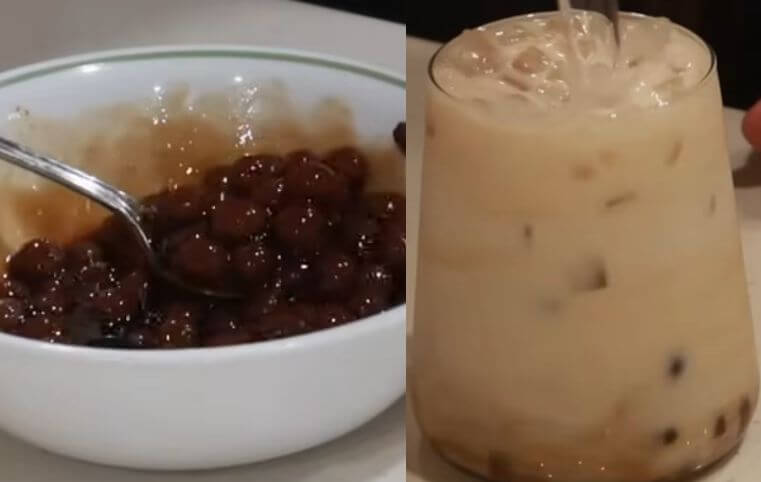
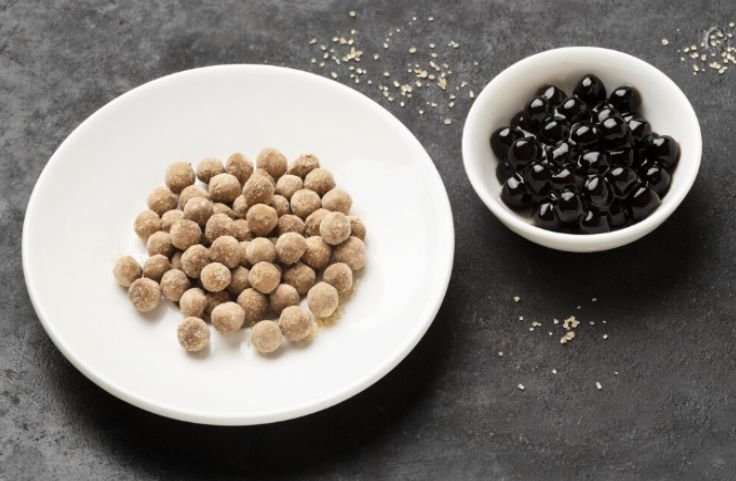
Small, round spheres made from cassava starch, sized from mini to large depending on the chew and texture wanted.
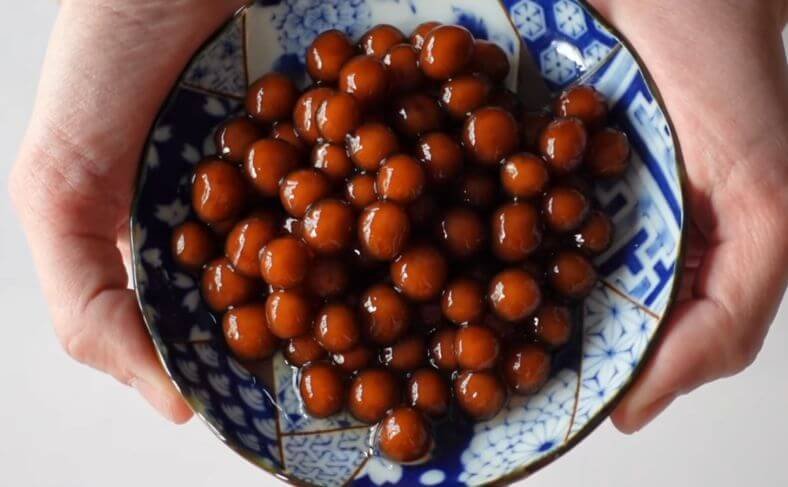
This dedicated guide to tapioca pearls covers sizing, cooking, and troubleshooting in full.
Instant Tapioca
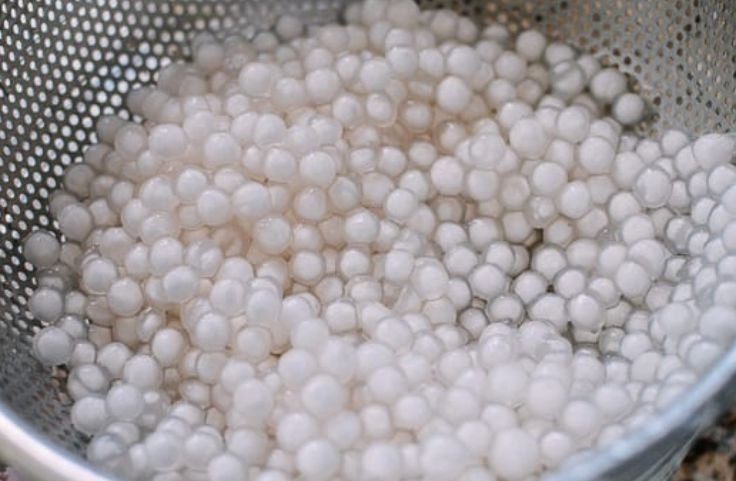
A quick-cooking form designed to swell fast in liquid, useful for pudding, pie filling, or fruit toppings when you do not want a long simmer.
Tapioca Chips
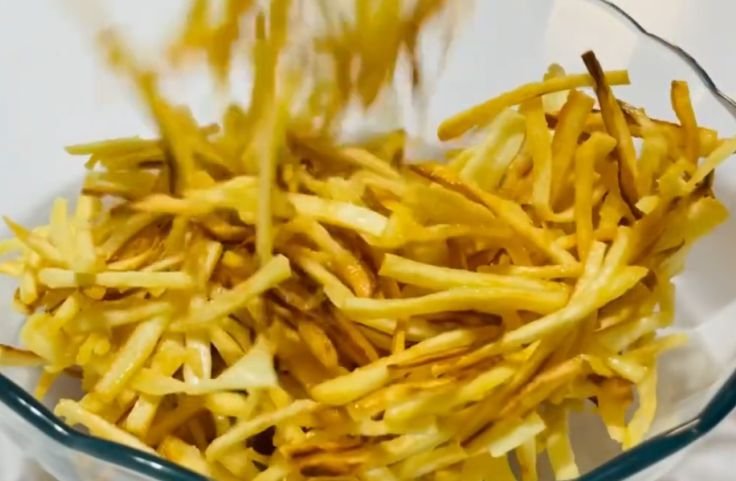
Thin, crispy slices made from processed cassava starch, dried and fried or baked until crunchy, then seasoned with salt, chili, or herb blends. The full tapioca chips recipe lives here.
Tapioca Grits
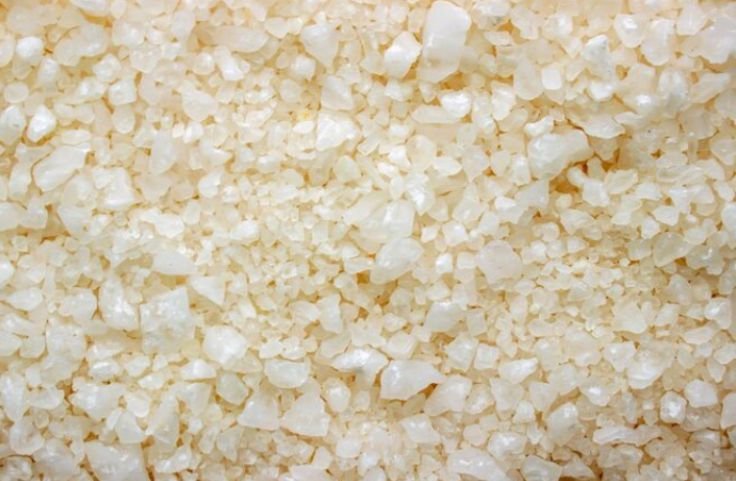
Coarse granules that soften into a creamy, slightly chewy texture, well suited to porridge, pudding, and mild soups where you want body without changing the dish’s flavor.
Tapioca Starch and Flour
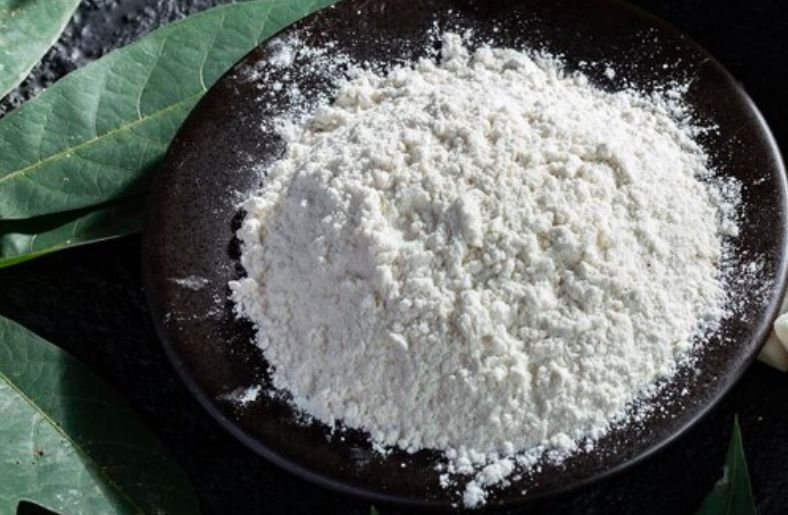
The fine powder form covered above is used for thickening, baking structure, and gluten-free recipe support.
Modified Tapioca Starch
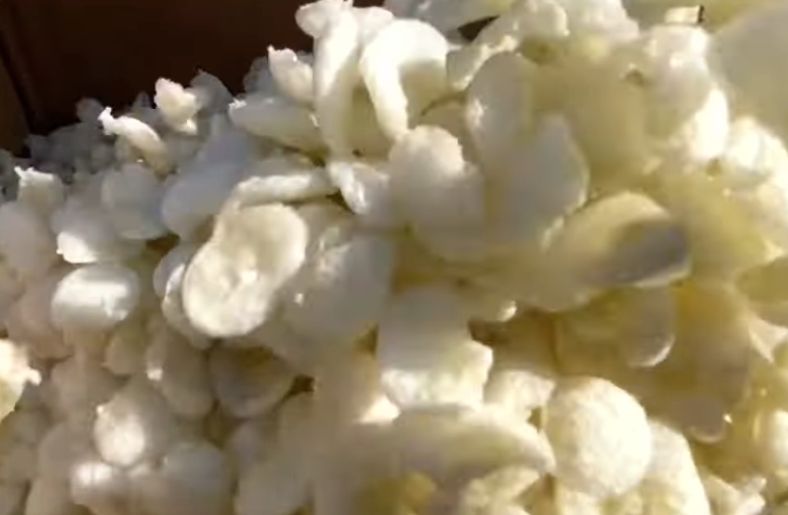
Cassava starch is treated with food-safe processes to hold up better through heating, cooling, and freezing, common in commercial sauces and fillings that need to stay smooth after reheating. See more on modified tapioca starch.
Tapioca Syrup
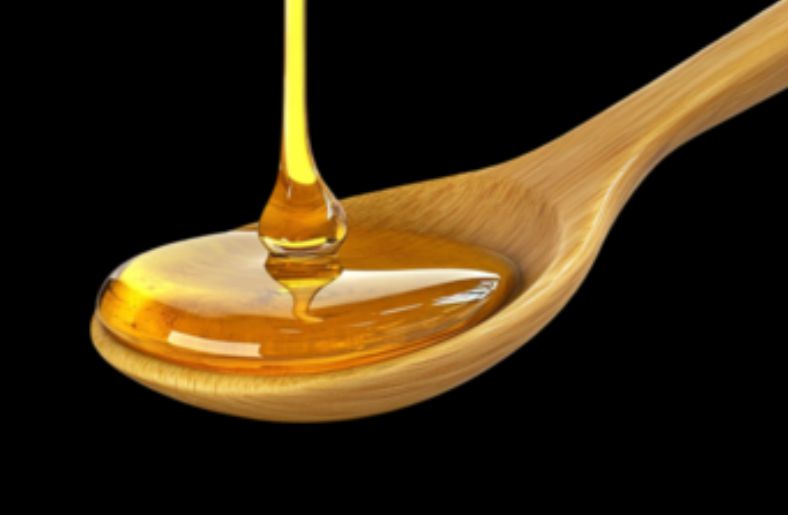
A mild, sweet liquid made by converting tapioca starch into natural sugars, used as a corn syrup alternative in drinks, glazes, and baked goods.
Pregelatinized Starch
Cooked and dried in advance so it dissolves in cold or warm water without further heating, common in instant food mixes and nutritional products.
Resistant Starch
Resistant starch from cassava is a form that resists digestion in the small intestine and acts as a prebiotic fiber.
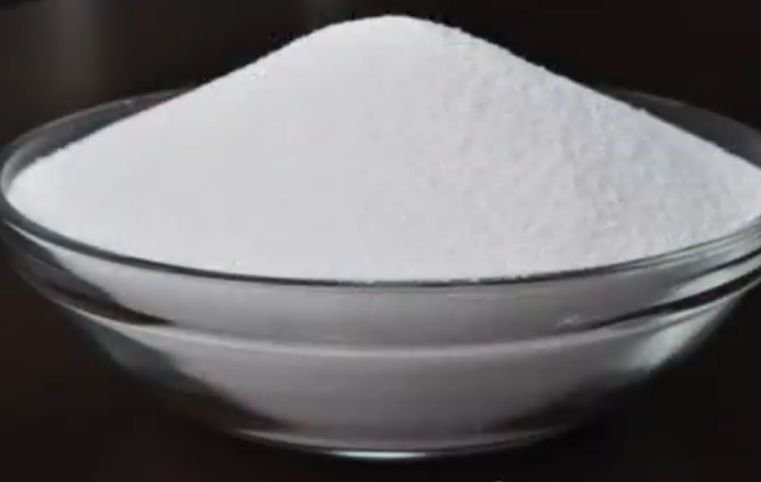
Used in health foods, dietary supplements, and functional foods designed to support gut health and moderate blood sugar response.
How Tapioca Is Made
Tapioca starch begins with freshly harvested cassava roots, washed, peeled, and grated into a fine pulp to release the starch granules.
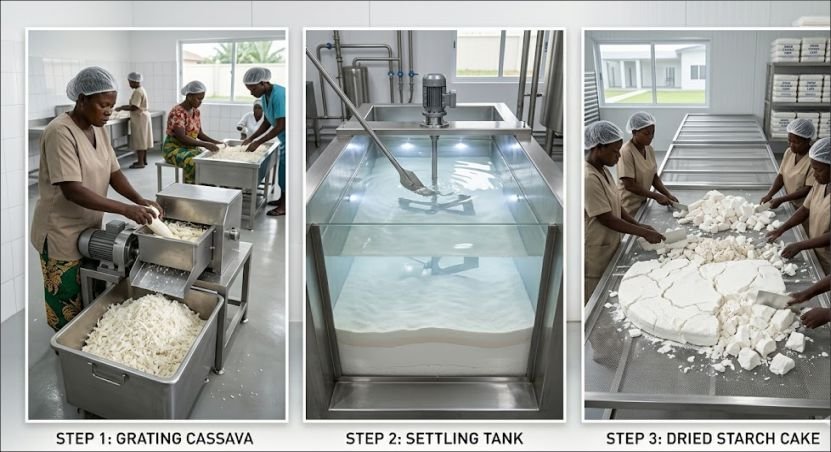
The pulp is pressed and rinsed with water to separate the starchy liquid from fiber, which also removes most of cassava’s naturally occurring toxins in the process.
The extracted starch settles, gets refined through repeated washing, then dried and milled into powder.
See the complete step-by-step production process here.
Physical and Functional Properties of Tapioca Starch
Granule Structure
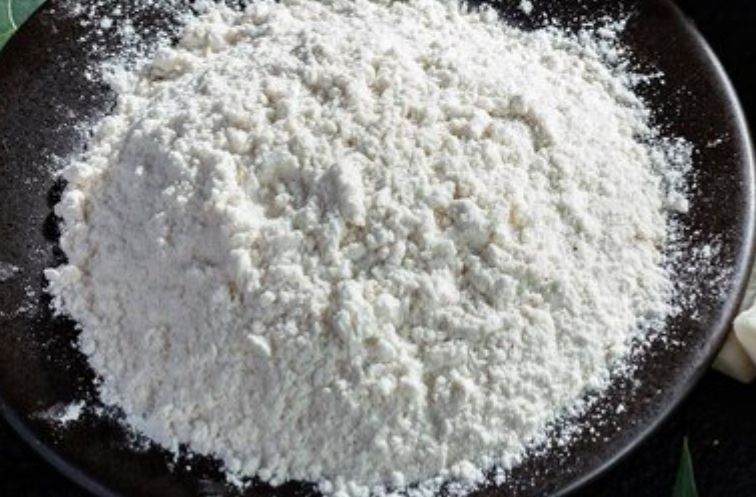
Cassava starch granules run roughly 5 to 35 micrometers across, oval to truncated in shape, according to a detailed review of cassava starch properties.
That uniform granule structure supports even water absorption during cooking, which is part of why tapioca thickens smoothly rather than unevenly.
Gelatinization
Cassava starch gelatinizes at a lower temperature than many other starches, generally in the high 50s to low 60s Celsius, according to a study published in the Journal of Agricultural and Food Chemistry.
This lower gelatinization point means tapioca thickens quickly without extended cooking, which helps preserve the color and flavor of delicate ingredients.
Thickening Strength
Tapioca starch thickens strongly at small quantities. As a general kitchen guideline, use roughly half the amount of tapioca starch compared with all-purpose flour when thickening a sauce.
Clarity
Tapioca starch thickens to a clear, glossy finish, unlike cornstarch, which produces a slightly opaque, greyish sauce.
This makes tapioca a better fit for fruit pie fillings, glazes, and clear Asian-style sauces where appearance matters.
Elasticity and Chewiness
Cassava starch typically carries an amylose content between 16 and 18 percent, meaning amylopectin, the branched starch molecule responsible for stretchy, elastic gels, makes up most of the rest.
That high amylopectin share is exactly what gives boba pearls their chew and gives tapioca-based dumplings their bounce.
Health Benefits
Tapioca is mostly carbohydrate, easy to digest, and naturally gluten-free, which explains why it shows up in so many diets worldwide.
Yet it carries real limits: low protein, low fiber, and a high glycemic index, which matter before regular use, particularly if you manage blood sugar or watch carbohydrate intake.
Read the health benefits and nutrition breakdown of cassava starch here.
Nutrition Profile of Tapioca
Tapioca is almost entirely carbohydrate. It contains negligible protein, minimal fat, and very little fiber in its refined form.
This makes it a concentrated energy source but a poor standalone food from a micronutrient standpoint. Always pair it with protein- and fiber-rich ingredients for balanced meals.
Read the full guide on tapioca nutritional facts.
Glycemic Index of Tapioca
Tapioca carries a high glycemic index compared with many other starches.
A peer-reviewed comparative digestibility study ranks it above corn and potato starch.
It ranks below rice and wheat starch in the same testing.
Reported values vary meaningfully by study, preparation method, and cassava variety.
For anyone managing diabetes or insulin sensitivity, pairing tapioca with protein, fat, and vegetables in the same meal measurably softens its effect on blood sugar. See more on the tapioca glycemic index.
Tapioca vs Other Starches and Flours
This comparison is the single most searched question in the tapioca space, so here is the full picture, including workable substitution ratios.
- Tapioca vs Cassava Flour: The most important distinction on this whole page. Cassava flour uses the entire root, peeled, dried, and ground, so it retains fiber, some protein, and a denser, coarser texture. It substitutes for wheat flour at close to a 1:1 ratio in some recipes. Read the full comparison between tapioca and cassava flour.
- Tapioca vs Cornstarch: Use roughly 2 tablespoons of tapioca starch in place of 1 tablespoon of cornstarch. Tapioca creates a clearer, more elastic sauce, while cornstarch runs denser and slightly opaque. Tapioca holds up better in pie fillings served cold, while cornstarch performs better in high-heat, acidic sauces. See the full tapioca versus cornstarch breakdown.
- Tapioca vs Potato Starch: Substitute 1 tablespoon of potato starch for 1 tablespoon of tapioca starch. Potato starch holds up better through freezing and thawing, useful for soups you plan to freeze, and carries a slightly more neutral flavor. Tapioca delivers more chew and gloss in exchange.
- Tapioca vs Arrowroot: Substitute 1 tablespoon of arrowroot for 1 tablespoon of tapioca starch. Arrowroot works best in delicate, low-heat, or finished-sauce applications, since it breaks down under prolonged heat. Tapioca holds up better in long-simmered dishes.
| Property | Tapioca | Cassava Flour | Cornstarch | Potato Starch | Arrowroot |
| Source | Cassava root, pure starch | Whole cassava root | Corn kernel | Potato | Arrowroot plant |
| Fiber/Protein | Negligible | Moderate | Negligible | Negligible | Negligible |
| Texture in cooking | Clear, elastic, glossy | Dense, slightly grainy | Opaque, can turn gummy | Clear, light | Clear, silky |
| Best culinary use | Thickening, boba, gluten-free baking | Bread, tortillas, porridge | Sauces, stir-fries | Soups, gravies | Delicate sauces, custards |
| Freeze/thaw stable | No, weeps slightly | Yes | No | Yes | No |
Substitution ratios are general kitchen guidance, not fixed rules. Results vary with recipe, temperature, and cook time, so test before scaling up a batch.
Industrial Applications
Beyond the kitchen, tapioca is a workhorse ingredient across multiple industries.
- Pharmaceutical Industry: Cassava starch serves as a binder, filler, and disintegrant in tablet manufacturing. Its excellent compressibility, stability, and biocompatibility make it valuable for producing reliable pharmaceutical formulations and controlled-release medications. Read the full post.
- Adhesives and Glues: Manufacturers use cassava starch to produce biodegradable adhesives for corrugated cardboard, paper products, packaging materials, labels, wallpaper paste, and woodworking applications requiring strong yet sustainable bonding performance.
- Paper Manufacturing: Cassava starch improves paper strength, surface smoothness, printability, and ink retention. It is widely used in paper coating and sizing processes to enhance product quality.
- Textile Industry: Textile producers apply cassava starch during yarn sizing and fabric finishing. It strengthens fibers, reduces breakage during weaving, and contributes to improved fabric texture and appearance.
- Bioplastics and Sustainable Packaging: Cassava starch is increasingly used to manufacture biodegradable plastics, compostable bags, food packaging, and eco-friendly materials that reduce dependence on petroleum-based plastics.
- Animal Feed Production: Tapioca pellets, chips, and starch residues provide a high-energy feed ingredient for livestock. They support feed formulation while creating value from cassava processing by-products.
- Food Processing Industry: Beyond direct consumption, cassava starch functions as a thickener, stabilizer, binder, and texture enhancer in commercial food manufacturing, helping improve consistency and shelf life. Read more about this here.
- Biofuel and Fermentation Industries: Cassava starch serves as a feedstock for producing bioethanol, organic acids, enzymes, and other fermentation-based industrial products due to its high carbohydrate content. See more on cassava biofuel.
- Cosmetics and Personal Care Industry: Cassava starch is used in powders, creams, lotions, dry shampoos, and skincare products. Its absorbent properties help control oil, improve texture, and provide a smooth, silky feel. Learn more here.
- Food and Culinary Applications: Tapioca transforms everyday cooking and baking with its ability to thicken, bind, and add texture without altering flavor. In desserts, tapioca pearls create the signature chew in puddings and bubble tea. Explore the full breakdown of how tapioca is used in cooking and baking.
Its renewable origin, low toxicity, biodegradability, and versatile functional properties make cassava starch an increasingly important raw material across modern industries focused on sustainability and resource efficiency.
Dive deeper into the industrial uses of cassava starch.
Proper Storage Practices
Store unused tapioca in a cool, dry place, sealed in an airtight container away from direct sunlight, since moisture exposure is the main driver of clumping and early spoilage.
Flour and flakes hold up well refrigerated or frozen for longer storage, though pearls change texture unpleasantly if frozen.
Watch for an off smell, discoloration, or an unusual texture as signs a batch should be discarded rather than used.
Market and Global Importance
Cassava starch is a genuine global commodity. Nigeria remains the world’s largest cassava producer, contributing close to a fifth of global output as of 2021, according to FAOSTAT data covered in a recent bibliometric review.
Thailand, Brazil, and Vietnam also rank among the major producers and exporters.
Beyond domestic food markets, these countries supply starch to food, pharmaceutical, textile, and packaging industries worldwide.
Cassava processing also supports real rural employment across farming, processing, and logistics in producing regions.
Learn more about the global tapioca market landscape.
Conclusion
Tapioca, cassava starch, and tapioca flour describe the same refined product, sold under different names depending on region and use.
Its low gelatinization temperature, strong thickening power, and naturally gluten-free profile explain why it shows up everywhere from bubble tea to pharmaceutical tablets.
Understanding the real distinction, tapioca versus whole cassava flour, matters more than the starch-versus-flour naming debate that causes most of the confusion online.
Whether you are stocking a home pantry or sourcing starch for commercial production, the fundamentals here should serve as a reliable reference point.
Explore the linked guides above for the specific application you need next.
Frequently Asked Questions
Is tapioca starch the same as tapioca flour?
Yes. Both terms describe the same cassava-derived starch. The naming split is regional: tapioca flour in the United States, tapioca starch in much of Europe and Asia, not a difference in the product itself.
Is tapioca starch bad for you?
Not inherently — it’s a carbohydrate-heavy, nutrient-poor starch. It’s fine in moderation, but excessive intake can contribute to weight gain and blood sugar spikes.
What is tapioca made from?
Tapioca comes from cassava root. The root is washed, peeled, grated, and pressed to extract its starch, which is then dried and processed into flour, pearls, syrup, or flakes.
Is tapioca the same as cassava flour?
No. Tapioca is pure starch with the fiber removed. Cassava flour uses the entire root, retaining fiber and protein, which gives it a denser texture in baking.
What are the types of tapioca?
It comes in various forms, including pearls, starch, flour, flakes, and sticks, each with unique culinary uses such as thickening, baking, or making desserts.
What are the common uses of tapioca?
It is used in desserts, puddings, bubble tea, gluten-free baking, thickening sauces, soups, snacks like chips, and industrial applications like adhesives or animal feed.
Can you eat tapioca if you have diabetes?
Tapioca is high in carbohydrates and can spike blood sugar, so people with diabetes should consume it cautiously and in small portions.
Is tapioca safe for people with gluten allergies?
Yes, it is safe for those with gluten allergies since it contains no wheat or related grains and is entirely gluten-free.

Chimeremeze Emeh is a tropical crop farmer and chemical engineer from Ntigha, Isiala Ngwa North LGA, Abia State, Eastern Nigeria, specializing in cassava and palm oil, with over 30 years of hands-on experience growing, harvesting, and processing cassava. He grows TMS series, TME 419, and local traditional varieties on his own farms and operates a small-scale cassava flour and starch production business through Cassava Pathway, which he founded as a CAMA-registered agribusiness in 2024. He is also the founder of Palm Oil Pathway, where he applies the same tropical farming expertise. His farms are located in Ntigha, Abia State.