Last updated on October 30th, 2026 at 01:45 pm
Cassava drying turns a root that spoils within days into chips, flour, starch, or abacha that keep for months. Done badly, it produces mouldy chips, off-white starch, and flour that clumps, so each product needs its own method and test.
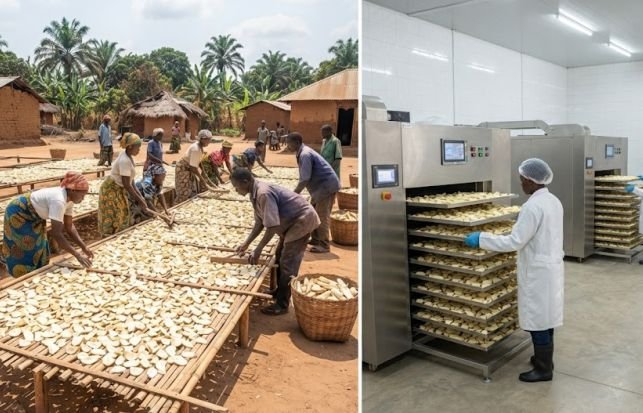
My starch and flour dry in an electric oven in Nigeria, while chips and abacha around me dry under the sun on sacks.
Both approaches work, but each product has its own rules, from slice size to heat level and signs of dryness.
This guide to cassava drying compares sun, rack, solar, oven, and machine drying, then gives product-by-product instructions with the tests I use at home.
It covers the moisture targets buyers set, why rainy-season drying fails, and what power cuts mean for oven drying.
Storage advice at the end keeps dried products safe long after drying.
Table of Contents
Why Cassava Drying is Important
Drying must take roots from 60 to 75 percent water down to 10 to 14 percent, according to research on Nigerian processors published in 2022.
Removing that water stops the rapid deterioration that ruins fresh roots, as the guide to post-harvest handling of cassava explains.
Dry products also weigh less, store without refrigeration, and travel to buyers far beyond the village.
Leftover moisture invites mould, so the goal is a product dry enough to resist fungi for months.
Drying Methods Compared
| Method | Speed | Control | Typical cost | Best for |
|---|---|---|---|---|
| Sun drying on sacks or concrete | Days | Low, weather-dependent | Almost nothing | Chips and abacha in the dry season |
| Raised trays or racks | Days, but more even | Low to moderate | Cheap wood and mesh | Cleaner chips and abacha |
| Solar dryers | Faster than open sun | Moderate | Moderate | Small processors in sunny areas |
| Kitchen or electric oven | Hours | High | Oven plus power bills | Small batches of starch and flour |
| Cabinet, tray, or flash dryers | Hours or minutes | High | High | Commercial flour, starch, and chips |
Feedipedia notes that chips dried on trays look better and dry more evenly than those spread on concrete floors.
Machine types, capacities, and prices are compared in the buyer’s guide to the cassava dryer machine.
Large plants use flash dryers, though many Nigerian firms abandoned them, as the guide to the cassava flash dryer explains.
Moisture Targets Buyers Expect
The Codex standard for edible cassava flour sets a maximum moisture of 13 percent by mass.
Export buyers of dried chips generally require moisture below 14 percent, according to Nigerian trade research cited in the chips guide.
Without a moisture meter, use physical tests, because properly dried products snap, crumble, or feel crisp rather than cool and bendy.
How to Dry Each Cassava Product
| Product | Preparation | Method | Typical time | How to tell it is dry |
|---|---|---|---|---|
| Chips for flour or feed | Peeled, sliced evenly | Sun on sacks or racks, turned daily | 4 to 5 days in the dry season | Pieces snap cleanly |
| Flour cubes | Peeled, cut into half-inch cubes | Oven, stirred during drying | Several hours | Broken pieces show uniform color and brittleness |
| Wet starch | Decanted and dripping stopped | Oven on low heat, door slightly open | Several hours | Crisp, not sticky, falls apart in the fingers |
| Abacha | Cooked, sliced, soaked overnight | Sun on mats or sacks | 3 to 4 days | Hard and rigid, breaks without bending |
| Starch pulp | Pressed to remove free water | Thin layer in sun or a dryer | Varies with moisture | Crumbles without feeling damp |
Chips for Traditional Flour
Along highways in Igboland, Kogi, and Benue, sliced chips dry on sacks in the dry-season sun.
Around Ntigha, they take four to five days, and people turn or stir them so every face dries.
Those chips are later milled into traditional flour, following the traditional cassava flour method.
Export-grade chips need the same care plus strict cleanliness, as the article on cassava chips and pellets describes.
Flour Cubes in the Oven
For flour, I chop peeled roots into half-inch cubes, because that size dries quickly and lets heat reach the center.
Uneven pieces cause trouble, since small cubes finish early while large ones stay damp inside.
I stir the cubes during oven drying, then check by breaking a few open to confirm uniform color and brittleness.
Milling and sieving steps that follow appear in the guide to high quality cassava flour.
Wet Starch in the Oven
Starch goes into the oven only after decanting, once the wet cake has stopped dripping.
I set the oven to low heat, because high heat dries starch faster but turns it off-white.
Leaving the oven door slightly open lets moisture escape, which gives the starch its crisp, dry feel.
The starch is ready when it feels crisp between my fingers, never sticky, and falls apart on its own.
The full extraction process, from grating to settling, is described in the guide to making tapioca starch and flour.
Abacha Slices
Abacha slices dry in the sun for three to four days after cooking, slicing, and overnight soaking.
They are ready when hard and rigid, breaking cleanly without bending, and then they store well for months.
Pulp and Other Residues
Starch pulp is mostly water, so pressing out free liquid before drying saves days of sun.
Its uses and buyers are covered in the guide to the cassava pulp market.
Why Rainy-Season Drying Fails
Chips sun-dried in the rainy season mostly grow mould in my area, turning brown or black and becoming unreliable.
A 2019 study in Food Control found mould counts above limits in sun-dried chips from Madagascar and Tanzania.
Some of those samples also carried aflatoxin B1 above regulatory limits, a serious food and feed safety risk.
During rainy months, switch to ovens, cabinet dryers, or covered solar dryers, or sell roots fresh instead.
Power Cuts and Oven Drying
My oven runs on the national grid, and outages frequently interrupt a drying batch before it finishes.
When power goes, I wait for it to return, and so far no batch has spoiled during those pauses.
Spreading the product thinly helps, because thin layers lose less ground when heating stops for a few hours.
Power costs and reliability affect every small processor, as my account of a cassava flour production business shows.
Storing Dried Cassava Products
Let dried products cool completely before packing, because warm product sweats and traps moisture inside the bag.
Pack flour and starch in airtight bags or jars, and keep chips in clean bags raised off the floor.
Detailed shelf-life tips appear in the guide to storing cassava flour properly.
Conclusion
Cassava drying works when each product gets the right preparation, heat, and finish test.
Cut even pieces, turn them, and dry chips four to five days in dry-season sun.
Dry starch on low oven heat with the door slightly open to keep it white, and test flour cubes by breaking them.
Aim below 13 percent moisture for flour, and avoid open-air drying during rains.
Cool everything completely before packing it into airtight bags or clean sacks.
For training on drying and processing, contact Cassava Pathway through this website or WhatsApp.
Frequently Asked Questions
How long does cassava take to sun dry?
Sliced chips take about four to five days of dry-season sun around Ntigha, turned daily.
Abacha slices usually dry in three to four days, becoming hard and rigid.
What moisture level should dried cassava reach?
The Codex standard caps edible cassava flour at a maximum of 13 percent moisture.
Export chip buyers generally want below 14 percent, so dry until pieces snap cleanly.
Why does my cassava starch turn off-white when drying?
High oven heat dries starch quickly but can darken it to off-white.
Use low heat, leave the oven door slightly open, and stir the starch gently during drying.
Can cassava be dried in the rainy season?
Open sun-drying in the rainy season frequently produces mouldy, darkened chips that buyers reject.
Use an oven, cabinet dryer, or covered solar dryer, or wait for dry weather.

Chimeremeze Emeh is a tropical crop farmer and chemical engineer from Ntigha, Isiala Ngwa North LGA, Abia State, Eastern Nigeria, specializing in cassava and palm oil, with over 30 years of hands-on experience growing, harvesting, and processing cassava. He grows TMS series, TME 419, and local traditional varieties on his own farms and operates a small-scale cassava flour and starch production business through Cassava Pathway, which he founded as a CAMA-registered agribusiness in 2024. He is also the founder of Palm Oil Pathway, where he applies the same tropical farming expertise. His farms are located in Ntigha, Abia State.