
Last updated on July 6th, 2026 at 12:51 pm
From paper to bioplastics, industrial uses of cassava starch are redefining eco-efficiency, fueling innovation with a biodegradable edge that industries can’t afford to ignore.
You’ve probably seen cassava starch, also known as tapioca, listed on food packaging or mentioned in talks about eco materials, but do you know how far its impact reaches?
The industrial uses of cassava starch go well beyond the kitchen.
Extracted from the root of the cassava plant, this starch plays a key role in food production, pharmaceuticals, paper, textiles, and biodegradable packaging.
It’s valued for its thickening, binding, and film-forming abilities, making it a practical option in both everyday and large-scale manufacturing.
You’ll find it in gluten-free foods, medicine tablets, adhesives, and even compostable bags.
Its appeal lies in being cost-effective, plant-based, and biodegradable, qualities that matter more than ever.
If you’re looking to understand how one natural starch is shaping industries worldwide, here we go.
Let’s unpack the real-world applications behind the rise of cassava starch.
Why Tapioca is an Industrial Raw Material
Tapioca, also known as cassava starch or flour, serves as a key industrial raw material because of its natural binding, thickening, and stabilizing properties, helping your manufacturing processes achieve consistent quality, smooth texture, and cost-effective performance across industries.
Thickening and gelling agent
Tapioca is used in industries for its thickening effect.
Thickening and gelling agent properties make tapioca suitable for food, textile, and paper production.
It forms stable pastes, adjusts viscosity precisely, and holds structure under heat or shear, helping your products maintain uniform texture and performance during processing.
Adhesive and binder applications
Adhesive and binder applications benefit from tapioca’s strong sticking power.
It supports plywood, paper, and packaging production by providing reliable bonding, easy handling, and a clean finish, helping your operations reduce reliance on chemical adhesives while keeping production safe and efficient.
Film-forming and coating potential
Film-forming and coating potential allows tapioca to protect surfaces and improve product durability.
In textiles, paper, or coatings, it creates smooth layers, improves water resistance, and supports color or print retention, helping your products maintain quality and finish over time.
Cost-effective and renewable source
Cost-effective and renewable source makes tapioca a practical choice for industrial use.
Locally grown, easy to process, and widely available, it helps your business reduce raw material costs, secure consistent supply, and rely less on imported alternatives.
Quick List of the Industrial Applications of Cassava Starch
- Food Industry
- Bioethanol Production
- Animal Feed
- Printing and Dyeing
- Tobacco Industry
- Leather Industry
- Adhesives and Glues
- Personal Care Products
- 3D Printing
- Sustainable Foam Materials
- Bio-Inks in 3D Bioprinting
Table of Contents
Why Cassava Starch is a Preferred Industrial Material
From its environmental advantages to its cost-effectiveness, here are five reasons why it’s gaining popularity and why many industries prefer it over traditional starch sources.
1. Abundant Availability
Cassava is grown in tropical regions around the world, ensuring a consistent and reliable supply.
This availability makes it an attractive option for industries that need a steady flow of raw material.
Its widespread cultivation reduces the risk of supply chain disruptions, providing manufacturers with stability.
2. Renewable and Sustainable
Cassava requires less water and fertilizer compared to other crops, making it a more sustainable option.
As industries shift towards greener practices, cassava starch stands out as an eco-friendly alternative.
Its renewable nature supports sustainable production, aligning with global efforts to reduce environmental impact and promote eco-conscious materials.
3. High Viscosity
Cassava starch offers excellent thickening properties, making it ideal for food production, pharmaceuticals, and textiles.
Its high viscosity helps improve the texture and consistency of products, from sauces to adhesives.
This versatility in various applications ensures that manufacturers can rely on cassava starch for consistent performance across industries.
4. Biodegradable
One of cassava starch’s key benefits is its biodegradability. Unlike synthetic materials, which can persist in the environment for years, cassava starch breaks down naturally.
This makes it an appealing choice for companies focused on reducing plastic waste, especially in the production of eco-friendly packaging, coatings, and disposable products.
5. Cost-Effective
Compared to traditional starches like corn or potato starch, cassava starch is more affordable to produce.
This cost efficiency allows manufacturers to maintain profitability while meeting their production needs.
The lower production costs, combined with its functional properties, make cassava starch an economically viable option for a wide range of industries.
Related Posts
- Guide to Tapioca
- What is Modified Cassava Starch?
- Is Tapioca Gluten-free?
- What is Tapioca Syrup and What are the Benefits?
- Guide to Tapioca Starch Industry Trends
- Modified Tapioca Starch: What is It?
- Are Tapioca Balls the same as Tapioca Pearls?
- Understanding Tapioca Flour and its Uses
Industrial-Grade vs Food-Grade Cassava Starch

Cassava starch is commonly used in both the food industry and various industrial applications, but the two grades, food-grade and industrial-grade, serve very different purposes.
Understanding these differences is important to ensure you’re using the right type for your needs.
Food-Grade Cassava Starch
Food-grade cassava starch is safe for human consumption and meets strict safety regulations set by health authorities like the FDA or EFSA.
The focus is on purity, with controlled moisture levels and uniform granule size.
This ensures consistency, texture, and quality in food products like sauces, baked goods, and gluten-free options. See more on cassava starch in the food application market
Industrial-Grade Cassava Starch
On the other hand, industrial-grade cassava starch is used in non-food applications. It doesn’t require the same level of purity as food-grade starch.
While it still follows quality control standards, it can tolerate higher moisture content and a wider granule size range.
This makes it suitable for use in industries like textiles, pharmaceuticals, and biodegradable packaging.
Key Differences
- Purity and Safety: Food-grade starch follows strict regulations for safety; industrial-grade does not.
- Moisture Content: Industrial-grade starch can handle higher moisture levels, while food-grade starch has limits for safety.
- Granule Size: Food-grade requires uniform size for even texture, whereas industrial-grade offers flexibility in particle size.
Choosing the right grade is essential for ensuring your product performs as expected while adhering to industry standards.
Related: Understanding the Market for Native Cassava Starch
Major Industrial Uses of Cassava Starch

From food production to bioethanol and personal care, its unique properties make it essential in manufacturing, offering sustainable, efficient solutions for diverse applications.
Here’s how it plays a role in different sectors:
1. Food Industry
Cassava starch is widely used in the food industry as a thickening agent for soups, sauces, gravies, and baby foods.
It adds texture and helps maintain consistency without affecting the flavor. It is also commonly used in gluten-free foods, replacing wheat flour.
Cassava starch helps bind ingredients, making it a key component in processed foods such as noodles, snacks, and bakery products.
Its neutral taste and smooth consistency make it a versatile and effective ingredient in various culinary applications.
2. Bioethanol Production
Cassava starch is a valuable raw material for bioethanol production and a renewable energy source.
Through fermentation, cassava starch is converted into ethanol, which can be used as biofuel in various industries, including transportation.
This process helps reduce dependence on fossil fuels, contributing to cleaner energy alternatives.
Cassava’s high starch content makes it an efficient feedstock, and its cultivation supports local economies in regions where it is abundant.
As the demand for sustainable biofuels increases, cassava starch offers a cost-effective and environmentally friendly solution to energy needs. More on cassava ethanol here.
3. Animal Feed
Cassava starch is an important ingredient in animal feed, particularly for livestock.
It serves as a valuable source of carbohydrates, providing energy for animals and promoting healthy growth.
It is commonly used in poultry, swine, and cattle feed, where it contributes to balanced nutrition and helps animals gain weight efficiently.
Cassava starch is easily digestible and offers a cost-effective feed option, especially in regions where cassava is plentiful.
Its use helps enhance the productivity of livestock and improves the quality of meat and eggs, supporting the agricultural sector.
4. Printing and Dyeing
In the printing and dyeing industry, cassava starch is used as a thickening agent in the preparation of inks and dye pastes.
It improves the viscosity of printing solutions, ensuring that colors are applied evenly and adhere well to fabrics.
This is particularly crucial in textile printing, where precision and consistency are needed for high-quality designs.
The starch also stabilizes the dye, preventing it from losing color or fading.
With its natural properties, cassava starch provides a safe, biodegradable alternative to synthetic thickeners, making it a sustainable choice in the textile industry.
Related: Everything to Know about Sour Cassava Starch
5. Tobacco Industry
Cassava starch serves as a binder in the tobacco industry, particularly in the production of cigarette filters and other tobacco products.
Its binding properties help hold the materials together during manufacturing, ensuring the final product remains intact.
Cassava starch also enhances the structural integrity of tobacco packaging and products, contributing to their overall quality.
Using cassava starch in tobacco production provides a natural, biodegradable alternative to synthetic additives, aligning with eco-friendly practices in the industry.
This sustainable solution is increasingly popular with manufacturers seeking cleaner, greener production methods.
6. Leather Industry
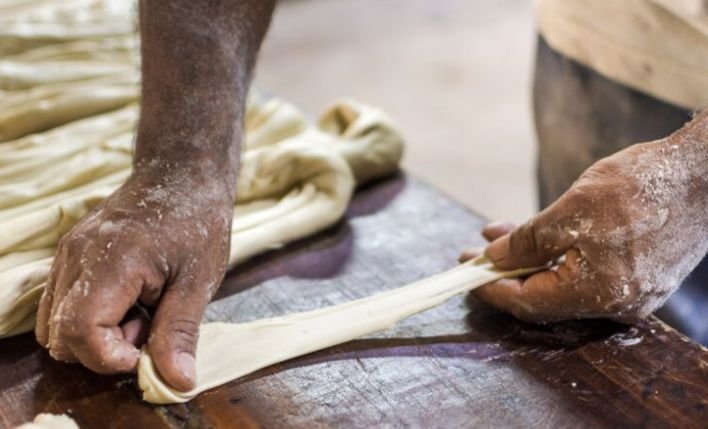
In the leather industry, cassava starch is used during the tanning process to improve the texture and flexibility of leather.
It acts as a softening agent, ensuring that the leather maintains a smooth, supple finish.
This use of cassava starch is especially important in high-quality leather products, such as shoes, bags, and belts, where a durable and flexible finish is necessary.
It also reduces the reliance on harsh chemicals, making the leather production process more environmentally friendly.
Cassava starch contributes to better quality leather, increasing the demand for natural, sustainable tanning alternatives.
7. Adhesives and Glues
Cassava starch is widely used in the production of natural adhesives and glues.
Its binding properties make it an ideal ingredient for various applications, including woodworking, packaging, and labeling.
As a renewable and biodegradable material, cassava starch offers an eco-friendly alternative to synthetic adhesives that often contain harmful chemicals.
In industries like paper and textiles, cassava starch-based adhesives provide strong bonding without compromising on sustainability.
Additionally, they are cost-effective, making them a preferred choice for companies focused on reducing environmental impact while maintaining high-quality adhesive performance in their products.
Learn more about how tapioca is used by adhesive manufacturers.
8. Cosmetics and Personal Care Products
Cassava starch is utilized in personal care products, such as baby powders, dry shampoos, and deodorants, due to its ability to absorb moisture and enhance product texture.
It provides a smooth, silky feel, making it ideal for skin-contact products. In baby powders, it serves as a natural alternative to talc, offering a safer option for sensitive skin.
Cassava starch is also used in cosmetics, where it helps to stabilize formulations and improve the spreadability of products.
Its natural origin and skin-friendly properties make it an attractive choice for clean beauty brands seeking to offer safer, eco-conscious products.
👉 Discover how tapioca starch is used in cosmetics and skincare.
9. Pharmaceuticals Industry
Tapioca starch is a chief raw material in pharmaceutical manufacturing.
It acts as a binder that holds tablet and capsule ingredients together for consistent dosage and stability.
It also works as a stabilizer in liquid and powdered medicines, preventing separation and clumping while improving flow.
In controlled-release formulations, its natural viscosity allows gradual drug release, supporting sustained therapeutic effects, improving patient compliance, and ensuring reliable, effective medication delivery. Read the full post.
10. Paper Industry
Tapioca starch plays an important role in the paper industry by improving the strength, durability, and surface quality of paper products.
It acts as a natural binder that helps hold paper fibers together, increasing resistance to tearing and wear.
In paper manufacturing, it is also used in surface sizing and coating to enhance smoothness, ink absorption, and print clarity.
These properties allow producers to manufacture stronger, higher-quality paper suitable for printing, packaging materials, cartons, labels, and various commercial paper products.
Dive deeper into how cassava starch plays this role.
11. Textile Industry
Tapioca is used in the textile industry, particularly in yarn treatment and fabric finishing processes.
It is widely used in textile sizing, where it coats yarns before weaving to increase strength and reduce breakage during mechanical stress.
The starch forms a thin protective film around the fibers, improving smoothness and helping the yarn move easily through looms. This improves weaving efficiency and fabric quality.
Tapioca starch is also used in finishing treatments to add stiffness, improve texture, and enhance fabric appearance.
These properties make it valuable for producing durable textiles used in garments, upholstery, and other industrial fabric products.
12. Bioplastics and Eco-Friendly Materials
Researchers and manufacturers are increasingly turning to tapioca as a renewable raw material for developing bioplastics and sustainable alternatives to conventional plastics.
Because cassava starch is biodegradable and widely available, it offers a compelling base for eco-friendly films, wraps, and molded packaging materials.
These materials decompose naturally, reducing plastic pollution in landfills and oceans. Several startups and research institutions are refining cassava-based bioplastics for commercial scalability.
As global pressure mounts to reduce single-use plastics, tapioca positions itself as a viable, planet-friendly solution for the next generation of green manufacturing.
👉 Explore tapioca’s emerging role in bioplastics and sustainable innovation.
Related: Cassava Starch Substitute
Emerging and Innovative Applications of Cassava Starch

Cassava starch is making waves in emerging industries with its sustainable and adaptable properties.
Let’s dive into a few innovative uses that are reshaping the way industries approach eco-friendly solutions.
13. 3D Printing
Cassava starch is gaining attention as a material for 3D printing. With its biodegradable nature, it serves as a sustainable alternative to traditional plastic-based printing materials.
This allows manufacturers to create prototypes and components with a minimal environmental impact.
As more companies adopt green manufacturing practices, using cassava starch in 3D printing offers a way to support the growing demand for eco-friendly solutions in production.
14. Sustainable Foam Materials
Cassava starch is being developed into bio-based foam products, replacing petroleum-derived materials.
These starch-based foams are biodegradable, offering a more sustainable option for packaging, insulation, and cushioning products.
This shift away from harmful plastic foams helps reduce the carbon footprint and plastic waste.
As more companies invest in research, cassava starch foam materials are becoming a go-to solution for businesses looking to minimize their environmental impact.
15. Bio-Inks in 3D Bioprinting
Cassava starch is also finding its way into the field of 3D bioprinting, particularly in the development of bio-inks.
These inks are used to print living tissues and organs in lab settings.
Thanks to its natural properties, cassava starch mimics the extracellular matrix, essential for cell growth.
This innovation could be a game-changer in tissue engineering and regenerative medicine, allowing for more sustainable practices in medical research and potentially transforming how we approach healthcare.
16. Biodegradable Films
Researchers are developing biodegradable films from tapioca starch to replace conventional plastics.
These films naturally break down while protecting food and other products.
Using tapioca reduces plastic pollution and aligns with global sustainability goals, making it an attractive option for manufacturers and consumers seeking environmentally responsible packaging solutions.
17. Sustainable Composites
Studies are exploring tapioca combined with natural fibers to create composites for construction and automotive uses.
These materials reduce dependence on petroleum-based components, offering durable, sustainable alternatives.
By integrating tapioca into composites, industries can contribute to eco-conscious innovation and responsible manufacturing practices.
Challenges in Industrial Application of Tapioca

While cassava starch offers promising benefits in various industries, some challenges affect its wider adoption. Here are some key obstacles you need to consider:
Supply Chain Instability
One of the main challenges with cassava starch is the instability of its supply chain.
Factors like climate change, pests, and diseases directly impact cassava yields, leading to fluctuations in availability.
Additionally, regions that produce cassava often face socio-economic issues and inadequate infrastructure, making production and transportation unreliable.
This inconsistency can disrupt manufacturing processes, making it risky for industries to rely solely on cassava starch.
Lack of Standardization
Cassava starch lacks universal quality standards, unlike other starches like corn or potato starch.
This absence of standardized grading makes it difficult for industries to ensure consistent product quality.
Without clear benchmarks, manufacturers may hesitate to use cassava starch in their processes, especially for food and pharmaceutical applications where consistency is key.
Establishing industry-wide quality and grading standards would help streamline its use across various sectors.
Competition from Synthetic and Other Natural Starches
Synthetic starches and other natural alternatives, such as corn and potato starch, pose stiff competition for cassava starch.
Synthetic options are often more stable under varying conditions and can be tailored to meet specific functional needs, making them a preferred choice for many industries.
Furthermore, natural starches from well-established sources have more robust supply chains and recognized standards, making them more reliable.
To compete, cassava starch will need to improve its processing techniques and highlight its sustainable, eco-friendly advantages.
Sustainability and Environmental Benefits of Tapioca Flour
Cassava starch is gaining recognition as a sustainable resource, offering eco-friendly solutions across industries.
Its biodegradable and renewable qualities make it a better alternative to petroleum-based products, especially in a world facing environmental challenges like climate change and plastic pollution.
Low Resource Requirement
Cassava is a low-maintenance crop compared to other traditional crops like corn or wheat. It requires fewer resources, such as water and fertilizers to grow.
With high yields per hectare, cassava requires less land for production, reducing the pressure on natural habitats.
This makes it a smart choice for sustainable farming.
Lower Carbon Footprint
The cultivation and processing of cassava starch involve significantly lower energy input than synthetic polymers derived from fossil fuels.
Unlike petroleum-based materials, cassava starch has a much smaller carbon footprint.
This is crucial in efforts to reduce global emissions and mitigate climate change.
Biodegradability and Waste Reduction
One of the most impactful benefits of cassava starch is its ability to decompose naturally in the environment.
Unlike plastic, which can take hundreds of years to break down, cassava starch-based products break down quickly, reducing waste in landfills and oceans.
This contributes to reducing the plastic pollution crisis and supports cleaner ecosystems.
Supporting a Circular Economy
Cassava starch supports the concept of a circular economy by encouraging the recycling of organic materials.
Products made from cassava starch are not only biodegradable but also help promote sustainability in production and waste management.
By using this renewable resource, industries can play a part in reducing their environmental impact.
Frequently Asked Questions
What makes cassava starch eco-friendly for industrial use?
Cassava starch is biodegradable, plant-based, and renewable, offering a sustainable alternative to synthetic materials in packaging, textiles, and adhesives across various industries.
How is tapioca used in the paper and packaging industry?
It’s used as a binder and coating agent to improve paper strength, printability, and to create biodegradable packaging materials that reduce plastic pollution.
Is there a difference between food-grade and industrial-grade cassava starch?
Yes, food-grade is highly purified for consumption, while industrial-grade allows higher moisture and varied granule sizes for non-food applications like textiles and glues.
What industries benefit most from tapioca starch applications?
Industries like food processing, bioethanol, textiles, printing, adhesives, personal care, and bioplastics benefit from cassava starch’s functional, affordable, and eco-friendly properties.
What are the medicinal uses of cassava starch?
Cassava starch is used medicinally to soothe skin irritation, act as a baby powder alternative, and aid in digestive issues. It’s also used as a binding agent in pharmaceutical tablets.
Conclusion
The industrial uses of cassava starch, also called tapioca touch nearly every part of modern production, from food and pharmaceuticals to paper, textiles, adhesives, and biodegradable plastics.
Its biodegradable nature and renewable origin make it a smart alternative to synthetic materials.
If you’re working in manufacturing or product development, cassava starch offers reliable performance through its binding, gelling, and stabilizing properties.
As industries shift toward cleaner, greener practices, cassava starch is becoming a practical solution for long-term sustainability.
The more you understand its benefits and potential, the better equipped you are to apply it in ways that support both your business and the planet.
How to Make Cassava Starch at Home: Step-by-Step Guide
Referemces
- Uses of Organic Cassava Starch across Industries
- Progress in Research and Application of Cassava Flour
- The Industrial Application of Cassava Starch
- What’s the application of dry cassava flour in food industrial field?
- Tapioca Starch Applications: Comprehensive Industrial Uses
- Top 5 Applications of Tapioca Starch in Modern Industries

Chimeremeze Emeh is a tropical crop farmer and chemical engineer from Ntigha, Isiala Ngwa North LGA, Abia State, Eastern Nigeria, specializing in cassava and palm oil, with over 30 years of hands-on experience growing, harvesting, and processing cassava. He grows TMS series, TME 419, and local traditional varieties on his own farms and operates a small-scale cassava flour and starch production business through Cassava Pathway, which he founded as a CAMA-registered agribusiness in 2024. He is also the founder of Palm Oil Pathway, where he applies the same tropical farming expertise. His farms are located in Ntigha, Abia State.