Last updated on July 12th, 2026 at 12:37 pm
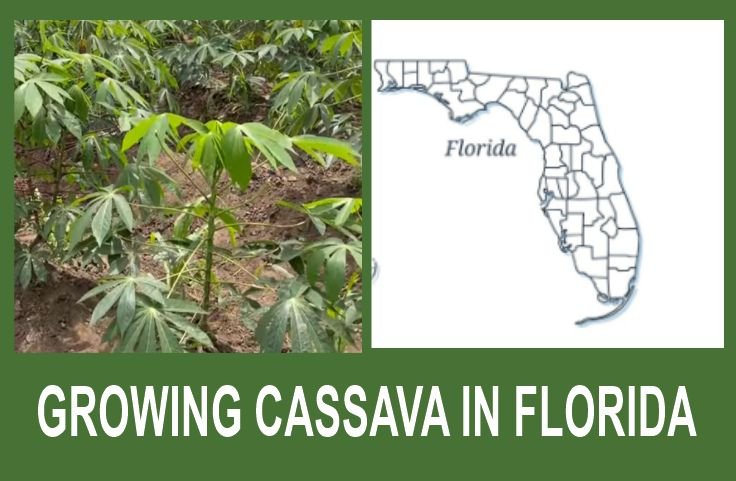
Florida gives cassava almost everything it gets in its native tropics, warm soil, a long season, steady rain, minus the frost-free guarantee that makes timing the single most important decision a Florida grower makes.
Florida offers some of the strongest cassava-growing conditions in the United States, and our guide on where cassava grows in the U.S. covers why in full.
This guide skips that groundwork and goes straight into execution, when to plant, how to prepare the soil, and what actually threatens a Florida cassava crop between planting and harvest.
I farm cassava in Nigeria, not Florida, but the agronomic fundamentals travel, and this guide draws on real UF/IFAS extension guidance for the details specific to Florida’s climate.
Table of Contents
When to Plant in Florida
Plant cassava between late April and early June, once soil temperatures reach 70 to 95 degrees Fahrenheit, the range cassava needs for strong root development.
Planting too early risks cold soil slowing establishment, while planting too late shortens the frost-free window a mature root actually needs.
Most of South and Central Florida offers at least eight frost-free months, enough for a full 8 to 12-month growing cycle. North Florida growers should track frost dates closely.
Choosing Your Planting Site
Cassava needs well-drained sandy or loamy soil with a pH between 5.5 and 7.0. Standing water after rain is the clearest warning sign of a bad site.
Full sun matters more than most growers expect; aim for at least six to eight hours of direct light daily for the strongest root development.
Mixing compost or aged manure into the bed improves both structure and nutrients. Tilling to at least 12 inches deep gives roots room to expand.
Propagating from Stem Cuttings
Cassava propagates from stem cuttings rather than seeds, using healthy sections 12 to 18 inches long with at least two to three nodes each.
Let cut ends dry in shade for a few hours to reduce rot risk, then plant 6 to 8 inches deep, spaced 3 to 4 feet apart.
Caring for Cassava Through the Season
Water consistently for the first two to three months while roots establish, then ease back once the plant can handle short dry spells on its own.
Cassava roots can reach 3 feet deep, so shallow watering does little good; deep, infrequent watering serves the plant far better than frequent light watering.
Apply a balanced fertilizer every two to three months during active growth. Watch specifically for whiteflies, a common Florida pest that weakens plants by draining sap.
Harvesting Your Crop
Cassava is ready between 8 and 12 months after planting, signaled by lower leaves turning yellow and roots feeling noticeably thicker at the base.
Read how to know when cassava is ready for harvest.
Loosen soil with a spade or fork rather than pulling the plant directly, since forceful pulling breaks roots and shortens their usable shelf life.
Handle harvested roots gently, since bruising or cut skin accelerates spoilage.
Process or sell within days, since cassava does not store well once harvested. More on how to harvest cassava.
Florida-Specific Risks
North Florida faces genuine frost risk even in a state known for warmth, and a single hard freeze can kill young plants before they establish.
Hurricane season brings flooding risk that cassava handles poorly, so raised beds and drainage ditches matter more here than in drier growing regions.
Feral pigs and raccoons will dig up roots before harvest given the chance, and fencing or motion-sensor deterrents are worth the investment in rural areas.
Turning a Florida Crop Into Income
Ethnic markets already familiar with cassava, West African, Caribbean, and Latin American, offer the most reliable early buyers for a small Florida operation.
Farm-to-table restaurants increasingly want locally grown ingredients with a real story, and cassava’s novelty in Florida can work in a grower’s favor here.
Our full guide to cassava as a U.S. cash crop covers the broader economics, costs, and regulatory requirements in depth.
Local Resources Worth Using
The University of Florida’s IFAS Extension provides research-based guidance on soil management, pest control, and regional growing conditions specific to Florida.
Regional extension offices also host workshops and field days where growers can connect and compare notes on what actually works locally.
Conclusion
Florida gives cassava real advantages: warmth, a long season, and generally forgiving soil, but timing and site selection still decide most outcomes.
Plant in the late spring window, prepare the soil properly, and watch for the specific risks this climate carries: frost in the north, flooding in hurricane season, and wildlife pressure throughout.
None of these risks is unusual for Florida agriculture; they just apply differently to a crop most local growers have never worked with before. Start small, learn what your specific plot needs, and scale from there.
Frequently Asked Questions
When should I plant cassava in Florida?
Plant cassava between late April and early June when the soil warms up. This ensures a full growing season before frost risks return.
What kind of soil does cassava need in Florida?
Cassava grows best in well-drained sandy or loamy soil with a pH between 5.5 and 7.0. Avoid compacted or waterlogged ground.
How long does cassava take to grow in Florida?
Cassava matures in 8 to 12 months. Ensure your planting site is frost-free for at least eight months to reach full root development.
Can cassava be grown from seed in Florida?
Yes, but it’s uncommon. Stem cuttings are preferred because they root faster and produce more uniform crops with higher yields than seeds.


Chimeremeze Emeh is a tropical crop farmer and chemical engineer from Ntigha, Isiala Ngwa North LGA, Abia State, Eastern Nigeria, specializing in cassava and palm oil, with over 30 years of hands-on experience growing, harvesting, and processing cassava. He grows TMS series, TME 419, and local traditional varieties on his own farms and operates a small-scale cassava flour and starch production business through Cassava Pathway, which he founded as a CAMA-registered agribusiness in 2024. He is also the founder of Palm Oil Pathway, where he applies the same tropical farming expertise. His farms are located in Ntigha, Abia State.