Last updated on August 11th, 2026 at 09:40 am
A single recipe guide once told readers to boil fresh cassava leaves for 20 to 30 minutes in one section, then just 10 to 15 minutes in another entirely different section- four different numbers for essentially the same safety step.
That kind of confusion genuinely matters when the step in question determines if a dish is truly safe to eat, not just tasty enough to serve.
This post collects the dishes genuinely worth cooking, from West African palaver sauce to Madagascar’s curry to Indonesian stir-fry, alongside modern takes like pesto and smoothies.
Preparation technique gets one clear answer here, backed by verified detoxification research, rather than four conflicting numbers scattered haphazardly across different sections.
Readers wanting the fuller preparation science should read our own dedicated guide on that exact important topic before cooking anything specific found below on this page.
Table of Contents
Getting Preparation Right
Combined pounding and boiling for 10 to 120 minutes removes cyanogenic compounds effectively, with exact timing depending on leaf toughness and chosen method, according to research published in ScienceDirect.
Cassava leaf sap contains linamarin and lotaustralin, compounds that release toxic hydrogen cyanide without adequate cooking, according to research published in PubMed.
Readers wanting the complete technique for fresh, frozen, and dried leaves should read our guide on how to cook cassava leaves rather than relying on a single generic number.
Chopped vs Ground Leaves
Chopped leaves keep some texture and work well in stews or palaver sauce, where distinct pieces blend with spices and protein.
Ground or pounded leaves create a smoother, thicker, sauce-like consistency common in dishes like saka saka and pondu.
Both forms require full detoxification regardless of texture, so grinding does not reduce the need for proper boiling beforehand.
Read the broader botanical picture in our general guide on cassava leaves.
Regional Dishes Worth Knowing
Congolese Pondu (Saka Saka)
Pondu, also called saka saka, simmers ground cassava leaves with palm oil, onions, and ground peanuts until the mixture turns thick, earthy, and deeply savory.
Congolese cooks regularly enrich the pot with smoked fish or beef, turning a simple leaf dish into a filling, protein-rich meal.
The dish carries real cultural weight in the Democratic Republic of Congo, where cassava paste and pounded leaves function as the recognized national meal.
That detail comes from World Food Programme field reporting gathered across the country’s cassava-growing regions.
Pondu differs from lighter West African cassava leaf stews through its long, slow simmer.
That extended cooking, paired with generous palm oil, builds a thicker, creamier texture as the leaves cook down.
For the complete method and a closer look at regional variations, this site’s dedicated guide on pondu cassava leaves walks through every stage of preparation.
Palaver Sauce (Sierra Leone and Liberia)
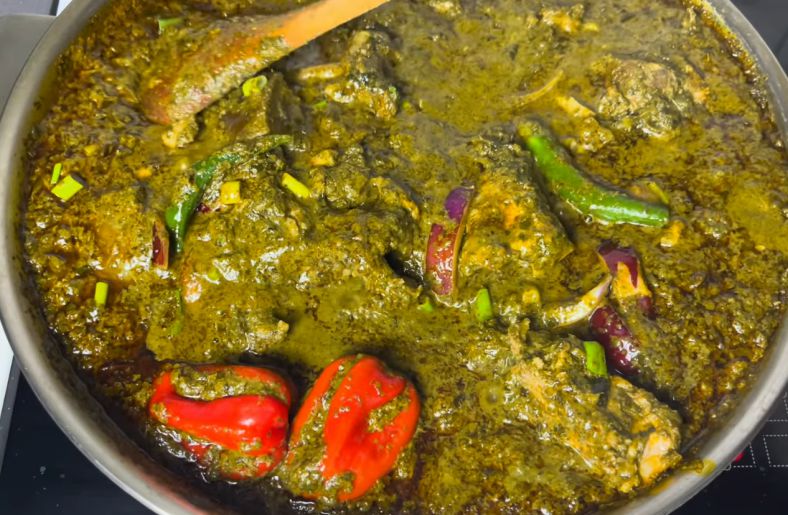
Palaver sauce, known locally as plasas, combines cassava leaves with tomatoes, onions, hot peppers, and fish such as mackerel.
The result is a chunkier, tomato-forward stew popular across Sierra Leone and Liberia.
Cooks boil the leaves until tender, then build a separate base of sautéed onions, tomatoes, and peppers before combining everything to simmer together in one pot.
Palm oil or ground peanut paste can deepen the flavor further, and the finished dish pairs naturally with steamed rice or fufu.
The name traces back to a Portuguese word meaning speech or discussion, reflecting centuries of coastal trade and cultural exchange along the West African coast.
That etymology and the stew’s regional spread are documented in food writing from Eat Your World, a travel and culinary reference.
For a thicker, meatier take on the same base ingredient, see this site’s guide to cassava leaves stew.
Malagasy Ravitoto (Madagascar)
Ravitoto, Madagascar’s best-known cassava leaf dish, pounds young leaves in a mortar before simmering them slowly with garlic, oil, and fatty pork over a charcoal fire.
Coastal households frequently stir in coconut milk, which softens the flavor and adds a rounder, creamier finish to the dish.
Some regions substitute beef for pork, and dried fish or small shrimp appear in certain family recipes as well.
Ravitoto is not officially Madagascar’s national dish, but it ranks among its most beloved comfort foods, prepared for weddings, religious ceremonies, and ordinary family dinners alike.
This cultural context comes from food reporting published by Eat Your World on Malagasy cuisine.
The finished dish is served with a mountain of rice and a spicy ginger-garlic sauce called rougail, a pairing found on nearly every Malagasy table.
Indonesian Tumis Daun Singkong
Indonesian daun singkong tumis takes a completely different approach from slow-simmered African and Malagasy versions, quickly stir-frying boiled cassava leaves with garlic, chili, and dried anchovies.
This version stays green and slightly firm rather than soft, delivering heat and umami in far less cooking time than the slow-cooked dishes found elsewhere.
Cooks in Sumatra also prepare a richer relative called gulai daun singkong, a coconut curry built from ground spices, turmeric, and candlenuts.
Both versions rely on the same boiling step to soften the leaves and neutralize compounds cassava leaves naturally carry before eating.
Anyone curious about the coconut-milk soup style used across Africa can compare it against a dedicated guide to cassava leaves soup.
Modern Applications
A cassava leaf smoothie works once leaves are fully detoxified and blended with banana, mango, and plant-based milk for a fiber-rich, earthy drink.
Properly detoxified leaves carry meaningful phenolic and antioxidant content worth noting, according to research published in PMC.
Cassava leaf pesto swaps basil for detoxified, finely chopped leaves blended with garlic, olive oil, and pine nuts or walnuts, pairing well with pasta or crusty bread.
Both applications require the same thorough detoxification as any traditional dish, regardless of how far removed they feel from tradition.
For the full nutrition and health benefits, read our guide on how cassava leaves benefit health.
Storage for Later Use
Fresh leaves keep in the refrigerator for about a week when stored in a sealed bag, while blanched and frozen leaves last up to six months without meaningful flavor loss.
Readers wanting the complete frozen-leaf handling guide should read our post on frozen cassava leaves.
Conclusion
Cassava leaf recipes span more territory than most guides admit, from Congolese pondu to Sierra Leonean palaver sauce to Madagascar’s curry and Indonesian stir-fry.
Modern applications like pesto and smoothies prove these leaves work beyond tradition, provided detoxification happens properly every time.
Combined pounding and boiling for 10 to 120 minutes handles that safety step correctly, not the scattered numbers many guides still repeat.
Chopped or ground, fresh or frozen, technique matters more than form.
Frequently Asked Questions
What do cassava leaves taste like?
They carry a mild, earthy, slightly bitter overall flavor that genuinely absorbs spices, oils, and fresh aromatics quite well once properly cooked and thoroughly detoxified before final serving.
Are cassava leaves safe to eat?
Yes, but only after proper boiling. Raw or undercooked leaves genuinely contain toxic compounds that must be fully removed through thorough cooking before any safe consumption whatsoever occurs.
Can I use cassava leaves in non-traditional recipes?
Absolutely, once fully and properly detoxified, cassava leaves genuinely work well in modern dishes like pesto or smoothies, adding meaningful fiber, iron, and earthy flavor throughout each dish.
How long do cassava leaves actually need to boil?
Combined pounding and thorough boiling for 10 to 120 total minutes genuinely handles detoxification properly, an honest range that depends on leaf toughness and your chosen preparation method.

Chimeremeze Emeh is a tropical crop farmer and chemical engineer from Ntigha, Isiala Ngwa North LGA, Abia State, Eastern Nigeria, specializing in cassava and palm oil, with over 30 years of hands-on experience growing, harvesting, and processing cassava. He grows TMS series, TME 419, and local traditional varieties on his own farms and operates a small-scale cassava flour and starch production business through Cassava Pathway, which he founded as a CAMA-registered agribusiness in 2024. He is also the founder of Palm Oil Pathway, where he applies the same tropical farming expertise. His farms are located in Ntigha, Abia State.