Most rural cassava farmers grow enough to feed their families and a little more. Cassava Pathway’s training programmes exist to change that, one farmer at a time.
Farming cassava and building a business from cassava are two different things.
Most rural farmers in Nigeria know the first. Very few have been shown how to do the second.
That gap, between growing a crop and profiting from it, is what Cassava Pathway’s education and training programmes are designed to close.
Since 2020, we have been working directly with rural farming communities, equipping farmers with practical knowledge across every stage of the cassava value chain.
Not classroom theory. Not policy documents. Hands-on, field-level training from someone who has farmed, harvested, processed, and sold cassava commercially for decades.
Table of Contents
Why These Programmes Exist
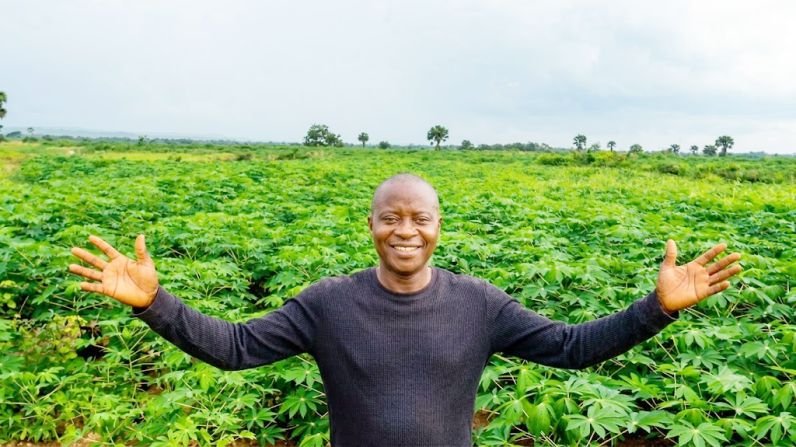
I started farming cassava the way most people in my community did, because it was what the land produced and what the family needed.
For years, the goal in the community was to farm two or three plots of cassava each year that will just be enough.
Apply fertiliser when the time is ripe, weed when the weeds arrive, and then harvest, make garri or fufu, sell some in the market where there is a money emergency, and that is it.
No innovation, no added value.
Enough roots to eat, enough surplus to sell at the local market, enough to get through to the next harvest.
It took time, study, and commercial experience to understand how much value was being left in the ground.
Better variety selection, proper post-harvest handling, small-scale processing, storage that reduces waste, and knowing where to sell, none of these were complicated once someone showed you how.
But nobody had shown most of the farmers in my community any of it.
That is why Cassava Pathway started these programmes. Not to bring external knowledge into communities that know nothing, but to bridge the gap between what farmers already know and what they need to know to participate fully in the cassava value chain, and actually profit from it.
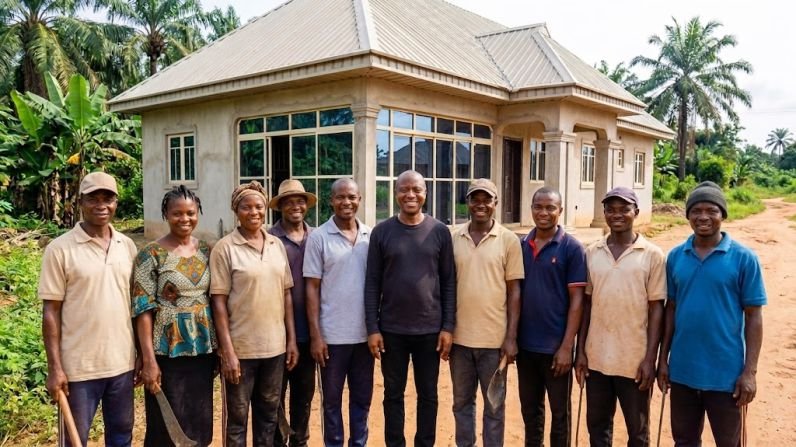
What We Cover in the Programmes
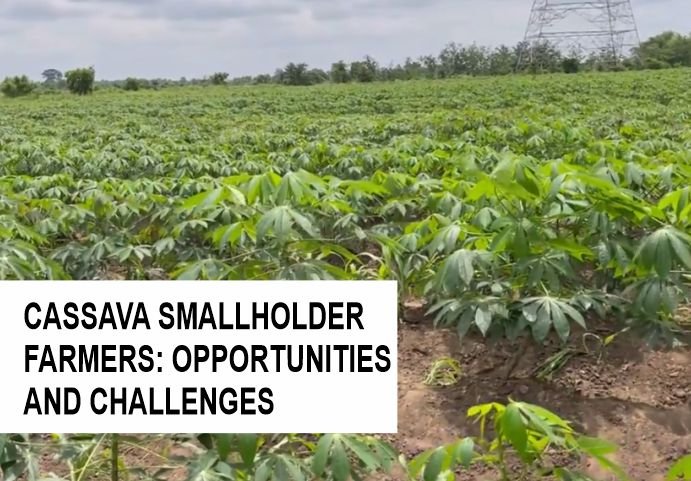
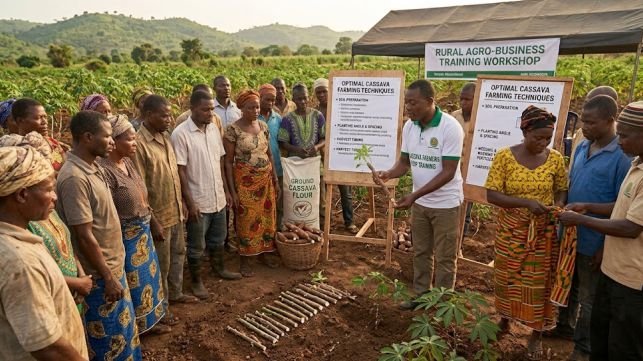
Our training programmes are practical, field-based, and built around what rural cassava farmers actually need to move from subsistence farming to income generation.
Cassava Farming Best Practices
Growing cassava is a skill. While my people do it casually, when a goal is injected, there is a tremendous result.
Good farming decisions made at planting time determine everything that follows.
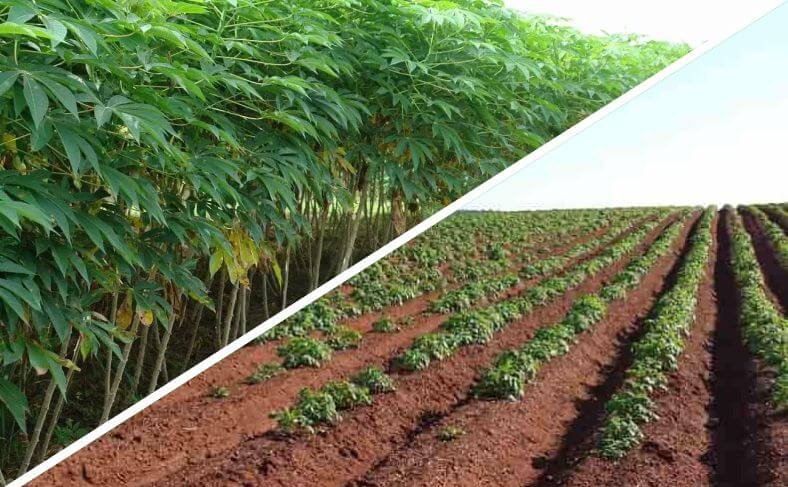
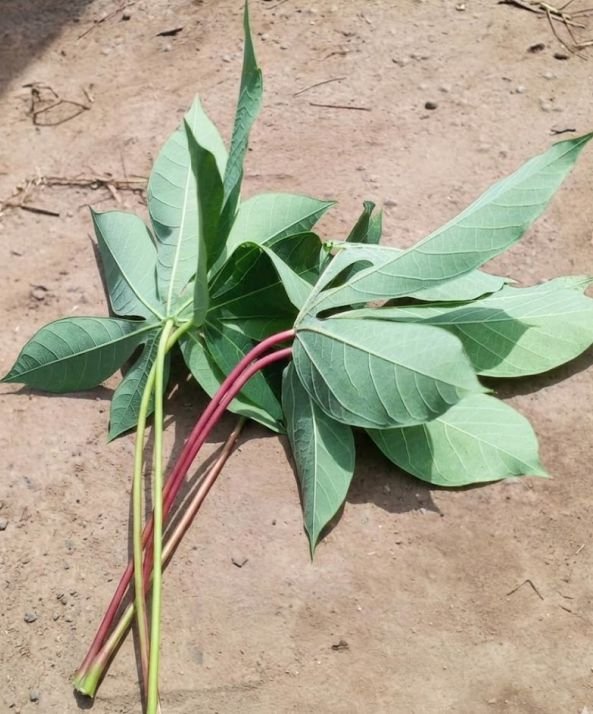
We train farmers on variety selection, choosing high-yielding, disease-resistant varieties suited to their soil and climate rather than planting whatever stem is available.
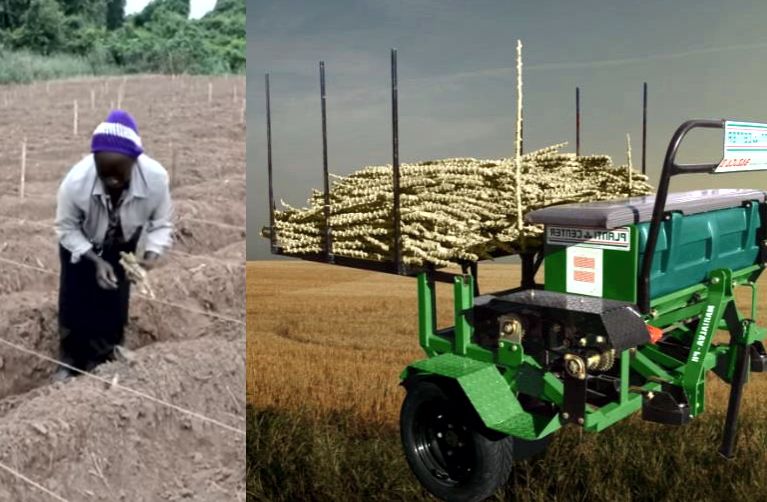
We cover land preparation, planting density, spacing, weed management, and fertiliser application in practical terms that farmers can implement on their own plots without expensive inputs.
The goal is not maximum yield at any cost. It is a consistent, reliable yield that makes planning and selling possible.
Post-Harvest Handling
Cassava spoils within two to five days of harvest without proper handling.
That window is where most smallholder farmers lose the most value, not to poor farming but to poor timing and handling after the roots come out of the ground.
We train farmers on how to harvest at the right stage, how to sort and grade roots, how to handle them without bruising, and how to move them quickly to processing or storage before losses set in.
Understanding post-harvest handling is often the single change that makes the biggest difference to a farmer’s income without requiring any additional land or inputs.
Processing Training
Processing is where raw cassava becomes something shelf-stable, transportable, and worth significantly more per kilogram than fresh roots.
We train farmers and processors on producing garri, fufu, cassava flour, chips, and starch on a small scale using methods that improve consistency and quality.
Quality matters because industrial buyers, traders, and export markets all pay more for a consistent product than for whatever comes out of an unmanaged process.
I have processed cassava starch from roots grown on my own farm, grating, sieving, drying, and milling by hand and with small equipment.
That hands-on processing knowledge is what we bring into the training, not a manual written by someone who has never stood over a grater.
Storage
Poorly stored cassava and cassava products lose quality, attract pests, and reduce in market value quickly.
We cover practical storage methods for both fresh roots and processed products, drying standards, moisture management, container types, and storage conditions that extend shelf life without requiring expensive facilities.
For farmers who process garri or chips, proper storage is the difference between a product that sells for a good price in three months and one that has to be sold cheap or discarded.
Market Access
Growing cassava and knowing where to sell it are separate skills.
Many rural farmers sell to the nearest buyer at whatever price is offered because they have no visibility into what the market is actually paying downstream.
In 2025, there was a sorry situation for cassava farmers because there was cassava glut.
I know of many first-time farmers whom this bad experience made to give up on cassava farming.
We help farmers understand the cassava market, who buys what, at what quality standard, in what quantities, and at what price points.
We connect farmers to aggregators, processors, and, where possible, to direct buyers, including industrial users of cassava products.
Market access training also covers group formation and cooperative selling, which allow smallholder farmers to aggregate volumes large enough to attract better buyers and negotiate better prices than they could achieve individually. See cassava market access for farmers and buyers.
Our History
Cassava Pathway launched its first training programme in early 2020, working directly with rural farming communities to deliver practical cassava knowledge at the farm level.
The programme was suspended shortly after as the COVID-19 pandemic made community gatherings impossible.
We resumed in 2022 and have not stopped since. To date, we have trained more than 100 rural farmers across our programmes, men, women, and young people who came to grow cassava for family consumption and left with the knowledge and confidence to treat it as a commercial crop.
One hundred farmers are not a large number measured against Nigeria’s cassava farming population.
But every farmer we train takes that knowledge back to their farm, their household, and often their neighbours.
The reach extends further than the headcount suggests.
Who Our Programmes Are For
Our training is designed for:
- Smallholder cassava farmers who want to increase yield and reduce losses without increasing their land size
- Rural processors who want to improve product quality and access better markets for garri, fufu, flour, or chips
- Young people and women entering cassava farming or processing as a commercial activity for the first time
- Farmer groups and cooperatives looking to build collective capacity and access larger buyers
- Anyone currently farming cassava for family consumption who wants to understand how to participate in the value chain commercially
If you grow cassava and want to do more with it than feed your household, these programmes were built for you.
Benefits of Participating in Our Programmes
- Increased Productivity: Trained farmers achieve significantly higher yields through improved varieties and practices.
- Higher Incomes: Better processing techniques and product quality open access to premium markets and industrial buyers.
- Reduced Losses: Knowledge of proper harvesting, storage, and processing minimizes post-harvest waste.
- Sustainability: Training promotes environmentally friendly methods, including soil fertility management and reduced chemical use.
- Empowerment: Women and youth gain confidence, skills, and economic independence.
- Networking: Participants connect with researchers, input suppliers, and buyers for long-term support.
Studies and participant feedback consistently show positive impacts on income, product quality, and adoption of new technology.
We do not offer certificates that collect dust. We offer working knowledge that shows up in yield, product quality, and income, and it is pro bono for now.
Looking Ahead
Cassava Pathway’s training programmes are growing. We are actively working toward formal collaboration with the International Institute of Tropical Agriculture, AATF in the South West, NRCRI Umudike and other agricultural research institutions to strengthen the academic and technical foundation of our programmes, including access to improved cassava stem varieties that give farmers a yield advantage from the first planting.
That collaboration, when it comes, will connect the ground-level practical training we already deliver with the research-backed variety development and agronomic science that institutions like IITA have spent decades building.
The combination of field experience and research partnership is what takes a community training programme and makes it genuinely transformative at scale.
For now, we train. We improve. We reach more farmers each cycle.
And we measure success the way it should be measured in agriculture, not in certificates issued but in better harvests, less waste, and farmers who are building something rather than just surviving a season.
Get Involved
Our programmes run at farm-level sites and community locations across cassava-producing areas.
Sessions are announced through this site and our social media channels.
We welcome:
- Individual farmers and farmer groups seeking training
- Organisations interested in partnering to deliver training in their communities
- Corporate bodies looking to support rural cassava development through structured CSR programmes
- Institutions interested in research collaboration and improved stem supply partnerships
To register for an upcoming programme or discuss partnership opportunities, contact us here.
Chimeremeze Emeh
Chimeremeze Emeh is a tropical crop farmer and chemical engineer from Ntigha, Isiala Ngwa North LGA, Abia State, Eastern Nigeria, specializing in cassava and palm oil, with over 30 years of hands-on experience growing, harvesting, and processing cassava. He grows TMS series, TME 419, and local traditional varieties on his own farms and operates a small-scale cassava flour and starch production business through Cassava Pathway, which he founded as a CAMA-registered agribusiness in 2024. He is also the founder of Palm Oil Pathway, where he applies the same tropical farming expertise. His farms are located in Ntigha, Abia State.