Last updated on July 17th, 2026 at 07:09 am
Cassava normally grows into a small tree, six to ten feet tall, yet home gardeners across the world are successfully raising it in containers and buckets. You do not need farmland, just the right pot and a warm, sunny spot.
During my early days of obsession with cassava, I would plant cassava in small containers on the veranda to see how they would turn out.
I have grown cassava in open fields in Abia State, Nigeria, and the same root biology applies in open soil and in a five-gallon bucket alike.
Container growing changes the scale of a few variables: soil volume, drainage, and how much heat the plant can access before winter arrives, if you are in a temperate region.
This guide pulls from university extension research alongside my own field experience with cassava root development to help home gardeners in tight spaces avoid the most common container mistakes.
You will find pot sizing, soil depth, climate limits, and realistic harvest expectations below.
Table of Contents
Why Container Growing Works for Cassava
Cassava is fundamentally a field crop, and our pillar guide to cassava farming covers full-scale cultivation from planting to harvest.

Container growing does not change the plant’s biology, only the amount of soil, water, and heat available to it.
Get those three variables right, and a five-gallon bucket on a balcony can produce real, usable roots.
Readers in Florida or elsewhere in the warm US South should also see our guide on growing cassava in Florida for climate-specific timing.
1. Choosing the Right Container Size and Depth
Cassava grown in open ground reaches six to eight feet tall with roots that can run thirty inches long, according to UF/IFAS Gardening Solutions.
A container restricts root expansion, which naturally caps the plant’s mature size and keeps growth manageable on a patio or balcony.
Choose the deepest, widest container your space allows, since a bigger pot generally produces bigger, more usable roots.
Most home growers succeed with a container at least 18 to 24 inches wide and equally deep, though anything larger only helps.
2. Climate, USDA Zones, and Overwintering Indoors
Cassava stays evergreen only in USDA zones 10 through 12, according to North Carolina State Extension.
It needs eight to nine months without frost to form roots worth harvesting.
Gardeners in cooler zones can still grow it successfully in a container that gets moved indoors before the first frost.
In zone 8b and similar borderline climates, the plant may survive outdoors but rarely produces roots worth harvesting without that extra protection, per Epic Gardening.
A sunny indoor spot near a window keeps the plant alive through winter until it goes back outside in spring.
For a broader look at growing cassava across different US regions, see our guide on cassava in the United States.
3. Soil Mix, Drainage, and Watering in Containers
Cassava tolerates poor field soil but rots quickly in a waterlogged pot, so drainage matters even more in containers than in open ground.
A loose mix of compost, loamy soil, and coarse sand keeps roots aerated while holding enough moisture between waterings.
Every container needs multiple drainage holes, and a saucer underneath should never be allowed to hold standing water.
For planting depth, spacing, and cutting preparation specific to your setup, our guide on preparing soil and planting cassava cuttings covers the full process.
4. Feeding Container Cassava
Nutrients wash out of container soil faster than field soil, since watering flushes them through the drainage holes with every session.
A balanced fertilizer with extra potassium supports the root development that container growers actually want to see.
See the guide on applying fertilizer to cassava, which covers exact timing and ratios for different growth stages.
5. Variety Selection for Compact Growing
No true miniature cassava cultivar exists for home gardeners, despite what some growing guides claim.
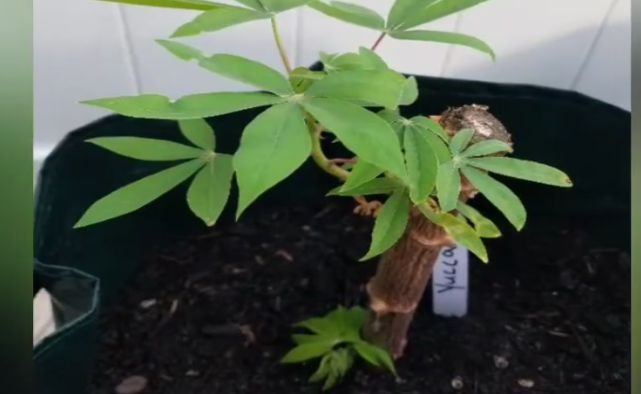
Container root restriction alone naturally limits mature height compared to a plant grown in open field soil, according to Top Tropicals nursery cultivation notes.
Sweet varieties with lower cyanogenic potential suit home kitchens better than bitter industrial varieties, a distinction covered in our guide to bitter versus sweet cassava.
Read the full breakdown of cassava varieties comparing yield, disease resistance, and root quality across popular cultivars.
If sourcing cuttings locally, ask a nursery or extension office which sweet varieties grow well in your specific climate zone.
6. Harvesting Roots From a Container
Roots grown in containers mature on the same general timeline as field-grown cassava, typically eight to eighteen months depending on variety and conditions.
Because pot space limits total root mass, container harvests run smaller than a comparable field planting, and that is normal.
Our full guide on harvesting cassava roots covers timing signals and technique in depth.
Roots deteriorate within days of harvest regardless of how they were grown, per UF/IFAS.
Plan to process or cook the roots soon after pulling the plant from its container.
7. Common Problems in Small-Space Growing
Container-grown cassava faces the same pests and diseases as field crops, just concentrated in less soil and easier to monitor closely.
Watch for spider mites, mealybugs, and early leaf mosaic symptoms, since a small growing area makes early detection realistic.
The full guide to cassava pests and diseases covers identification and treatment for each threat in detail.
Overwatering causes more container losses than any pest, since root rot sets in fast once a pot stays soggy for more than a day or two.
8. What to Do With a Small Harvest
Even a modest container harvest is enough for a few real meals, from boiled roots to homemade chips.
See the collection of cassava recipes, which covers boiling, frying, and baking methods suited to small batches.
For longer storage between harvests, see our guide on storing cassava root fresh versus frozen.
Final Word From Cassava Pathway
Growing cassava in a container comes down to getting three things right: enough soil volume, drainage that never lets roots sit wet, and enough warm months before winter arrives.
None of that requires a farm, just a large pot, a sunny spot, and realistic expectations about harvest size.
I have watched this same root biology play out on my own field in Ntigha for thirty years, and the plant rewards patience wherever it grows.
If you are ready to start, pick your largest available container this week and plant a healthy cutting before your warm season begins.
Frequently Asked Questions
What size container do I need to grow cassava?
Use the widest, deepest container available, ideally at least 18 to 24 inches across, since container size directly limits how large the roots can grow.
Can cassava grow indoors year-round?
Cassava can survive indoors near a bright window, but it needs eight to nine months of warm conditions to form roots worth harvesting.
Do I need a special dwarf variety for small spaces?
No true dwarf cassava cultivar exists for home gardeners, since container root restriction alone naturally limits how large any variety grows.
How much smaller is a container harvest compared to a field harvest?
Container harvests are smaller than field harvests because limited soil volume caps total root mass, though roots remain fully usable for cooking.

Chimeremeze Emeh is a tropical crop farmer and chemical engineer from Ntigha, Isiala Ngwa North LGA, Abia State, Eastern Nigeria, specializing in cassava and palm oil, with over 30 years of hands-on experience growing, harvesting, and processing cassava. He grows TMS series, TME 419, and local traditional varieties on his own farms and operates a small-scale cassava flour and starch production business through Cassava Pathway, which he founded as a CAMA-registered agribusiness in 2024. He is also the founder of Palm Oil Pathway, where he applies the same tropical farming expertise. His farms are located in Ntigha, Abia State.