Last updated on September 23rd, 2026 at 02:36 pm
Yuca fries look like steak fries, but one bite reveals a denser, creamier center and a crust that stays crisp far longer. The secret sits in the root itself, and in one step most home cooks rush: the initial boil.
Most of the cassava harvested from my farm in Ntigha becomes garri or flour, not fries.
So the first time I fried thick sticks of the root in my own kitchen, the batch taught me more than any recipe had.
Undercooked centers, soggy crusts, and stringy cores all trace back to how the root is chosen, peeled, and boiled.
This guide explains what these fries are, where they come from, and how to make them properly at home.
It also corrects a few popular diet and nutrition claims that did not hold up when I checked them against official sources.
Disclaimer: This article is for informational purposes only and does not constitute medical advice. The author is not a medical doctor or registered dietitian. Always consult a qualified healthcare provider before making dietary or medical decisions related to cassava consumption.
Table of Contents
What Are Yuca Fries?
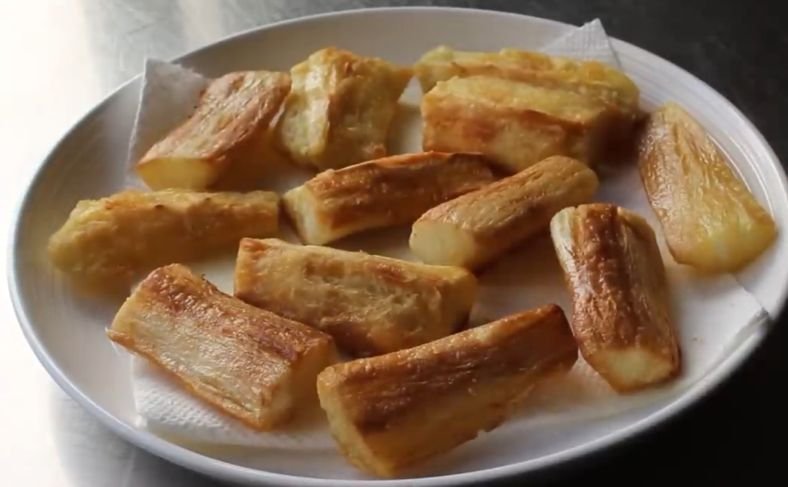
They are thick batons of cassava root, boiled until tender and then fried until the outside turns crisp and golden.
Spanish speakers call them yuca frita, Brazilians say mandioca frita or aipim frito, and English menus list them as cassava fries.
The inside cooks up dense and creamy, closer to a floury potato than a waxy one, with a faintly sweet, nutty taste.
They are not the same as the crunchy cassava chips, which are sliced paper-thin, or tapioca sticks, which are made from starch dough.
Where Fried Cassava Comes From
Frying boiled cassava is common across Latin America and the Caribbean, where the root has been a staple for thousands of years.
Cuba pairs it with garlicky mojo, Colombia and Venezuela serve it beside grilled meats, and Brazil sells it in bars with cold beer.
Our Cuban-style recipe with mojo goes deeper on the island version, and our country-by-country tour of Latin American cassava dishes places it in context.
How to Make Yuca Fries
Choose the Right Root Before You Cook
Everything starts with sweet cassava, which the Codex standard defines as roots holding less than 50 mg/kg of hydrocyanic acid.
That same standard requires labels stating that cassava must be peeled and fully cooked before eating, according to a Food Standards Australia New Zealand summary.
Our guide on cutting cyanide in cassava at home explains each of those steps.
If a root tastes distinctly bitter after cooking, discard it, and see our notes on telling bitter cassava apart from sweet.
The Classic Boil-Then-Fry Method
Ingredients (serves 4):
- 1 kg (about 2 lb) sweet cassava, fresh or frozen
- 1 tablespoon salt for the boiling water, plus flaky salt to finish
- Neutral oil for frying, about 5 cm (2 in) deep in a heavy pot
- Optional: garlic powder, smoked paprika, lime wedges, and chopped parsley
Peel and cut
Cut the root into 8 to 10 cm sections, score the brown skin lengthwise, and pry off both the bark and the pinkish layer beneath.
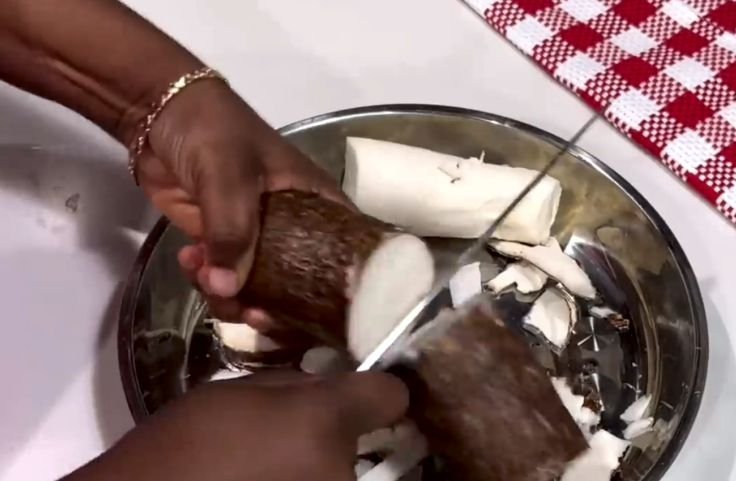
Quarter each section lengthwise and remove the woody core, a fibrous strand that never softens.
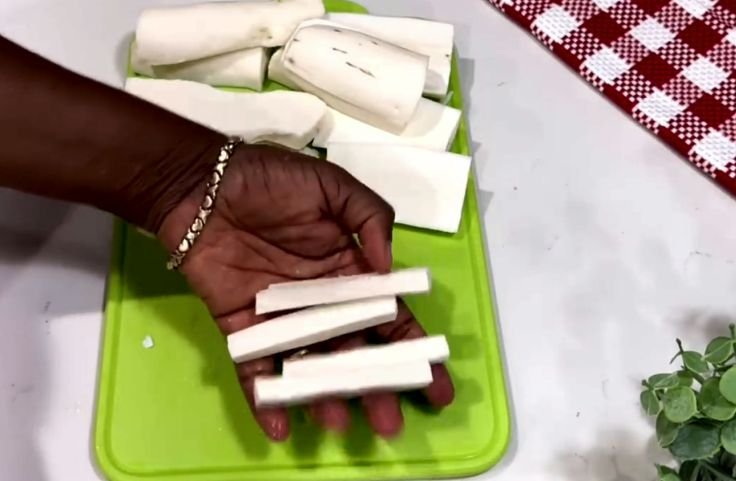

Boil until the edges split
Cover the pieces with cold salted water, bring to a boil, and simmer for 15 to 20 minutes until a knife slides in easily.
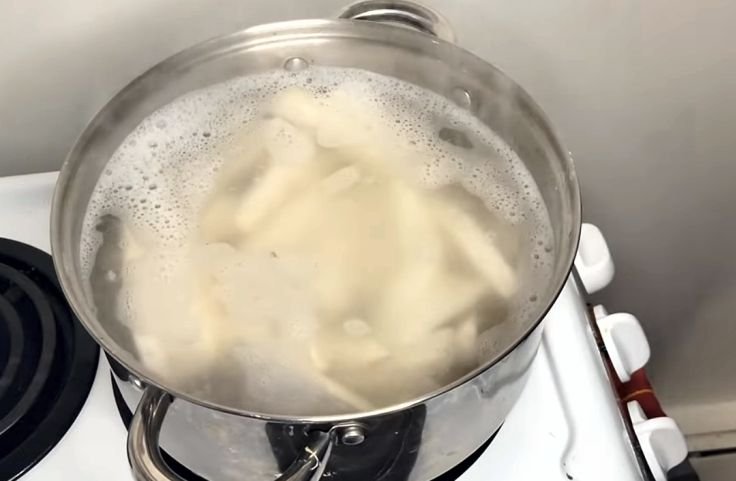
Small cracks along the edges are a good sign, because those rough surfaces turn into the crispiest bits later.
Discard the cooking water rather than reusing it, since cyanogenic compounds leach into it.
Cool and dry
Drain the pieces, spread them on a rack, and let them steam-dry for at least 15 minutes.
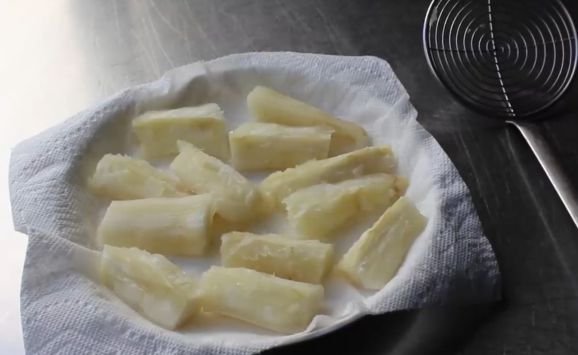
Cut them into thick fries once cool, since hot cassava crumbles under the knife.
Add Spices and Oil
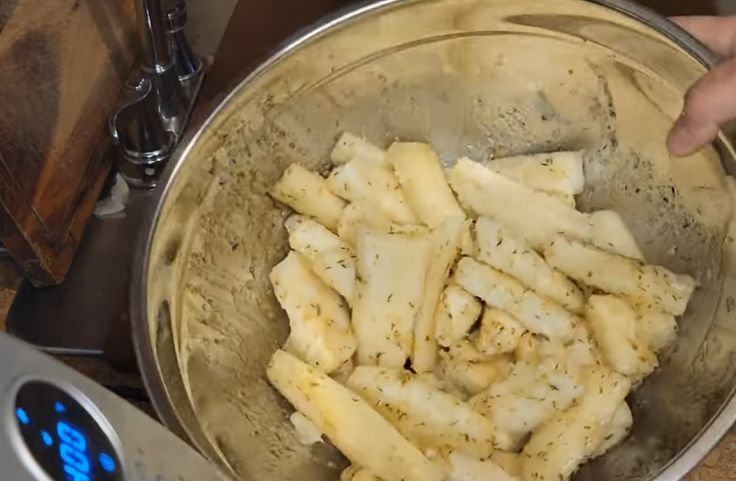
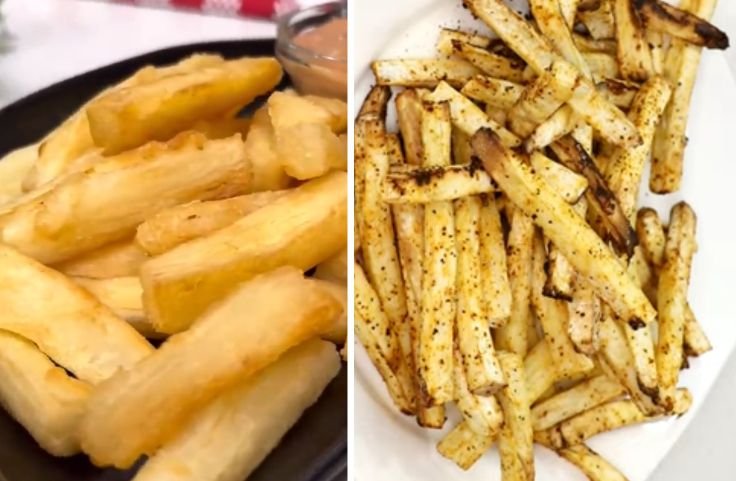
After boiling and cutting the yuca into fry-sized sticks, toss them in a bowl with a drizzle of olive or avocado oil to help them crisp up in the air fryer.
For seasoning, start with salt and black pepper as your base.
Fry to golden
Heat the oil to 175°C (350°F) and fry in small batches for four to six minutes, turning once.
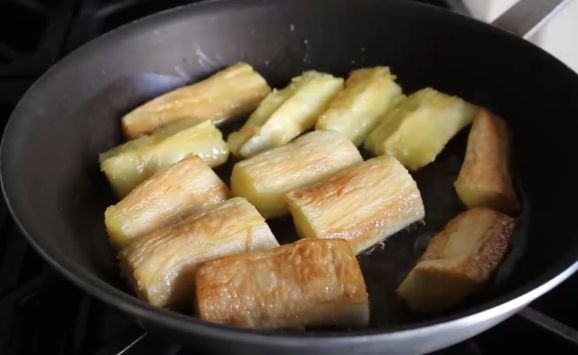
Pull them when the crust is crisp and golden rather than deep brown, for reasons explained below.
Season while hot
Drain on a rack or paper towels, then salt immediately and add garlic, paprika, or a squeeze of lime.
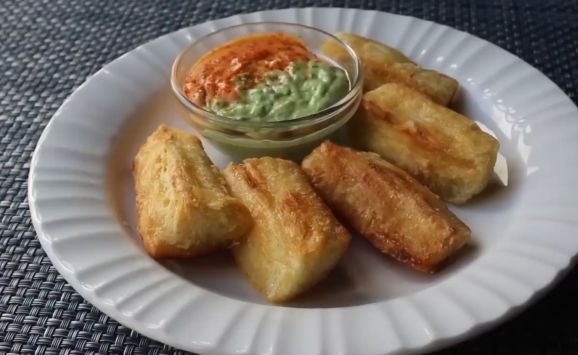
When I cook for family, I boil a double batch and freeze half after step three, which makes the next round quick.
Other Ways to Cook Them
- Air fryer: Toss boiled, dried sticks with a spoonful of oil, then follow our air-fryer method for timing and temperature.
- Oven: Roasting on a hot sheet pan gives a lighter result, and our oven-baked version explains how to get even browning.
- Twice-fried: Frying once, cooling, and frying again builds an extra-crunchy shell, a Cuban favorite detailed in the recipe linked above.
- Frozen packaged: Store-bought frozen sticks are already peeled and par-cooked, so they go straight into the oven, fryer, or air fryer.
Aim for Golden, Not Dark Brown
Starchy foods fried at high heat form acrylamide, a compound created when the amino acid asparagine reacts with sugars during browning, as a review in PubMed Central explains.
The European Food Safety Authority advises cooking cut potato products to a golden yellow color rather than brown, and the same logic applies to cassava.
How to Make Yuca Fries with Air Fryer: Step by Step
Making crispy yuca fries in your air fryer is easier than you think. With a few simple steps, you can get fries that are golden on the outside and soft inside.
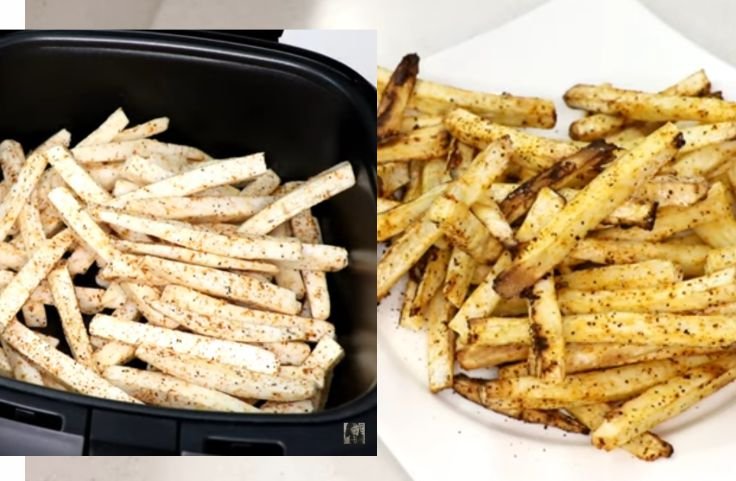
- Preheat the Air Fryer: Set your air fryer to 375 degrees Fahrenheit. While it heats up, make sure your boiled yuca is cut into even sticks and fully dry.
- Season the Cassava Fries: Place the boiled yuca sticks in a large bowl. Add about one tablespoon of olive oil and sprinkle with salt, pepper, and any extras like garlic powder or paprika.
- Arrange in a Single Layer: Lay the fries in your air fryer basket in one layer. Avoid stacking or crowding. You want the hot air to touch every side of the fries.
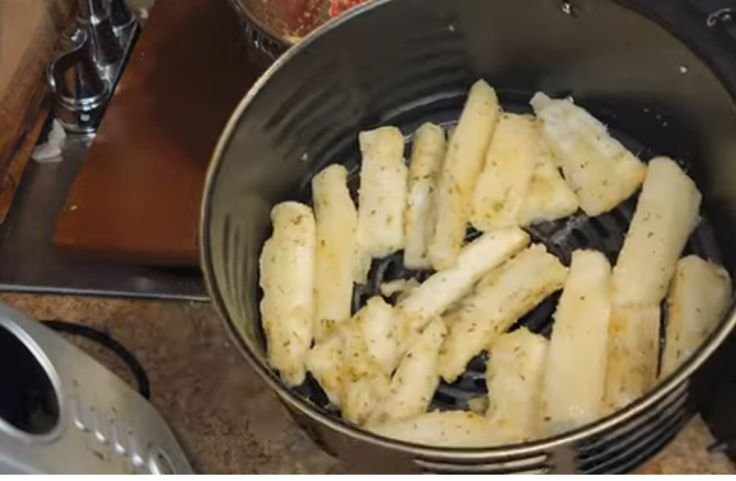
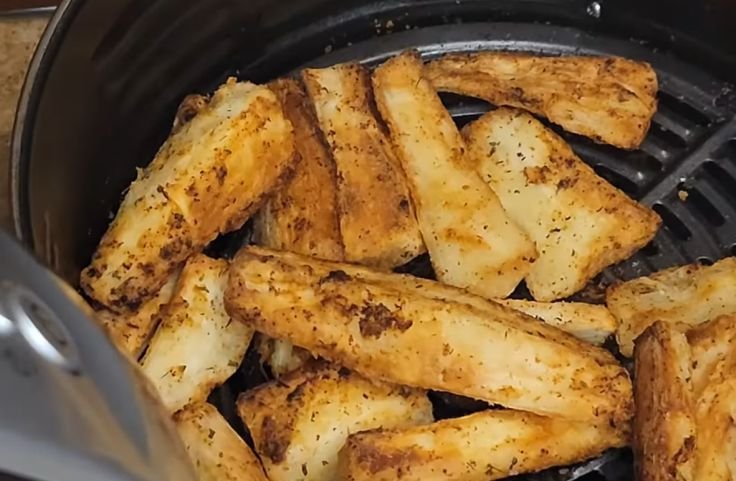
- Cook and Flip Halfway: Set the timer for 12 to 15 minutes. Around the 6 or 7-minute mark, open the basket and flip the fries gently with tongs. This gives both sides a chance to brown evenly. Keep the flips quick to avoid losing too much heat.
- Check for Doneness: Look for golden brown edges and a slightly firm center. Once they reach that color, take them out and let them rest for a minute.
Pro Tips for Extra-Crispy Yuca Fries
If you want air fryer yuca fries that stay crisp on the outside and soft inside, a few small steps can make a big difference.
Try these simple tips before you hit start.
- Give Your Fries Enough Space
- Boil Just Until Tender
- Pat Everything Dry
- Add Cornstarch or Oil Before Air Frying
Are Cassava Fries Air Fryer Healthy?
Air fryer cassava fries are a lighter alternative to deep-fried yuca fries, with fewer calories and less fat.
A serving typically contains about 140–180 calories, compared with over 300 calories when deep-fried.
Using less oil also reduces saturated fat while helping retain nutrients such as fiber, potassium, and vitamin C, making them a healthier choice.
Dips, Diets, and Nutrition Notes
Garlicky mojo, lemony aioli, and sharp chimichurri all cut through the richness of fried cassava better than plain ketchup.
At home I lean toward a pepper sauce with scotch bonnet and onion, the way we dress fried snacks in Abia.
Gluten-free: The root contains no gluten, but restaurant fryers shared with breaded foods can cause cross-contact, so ask before ordering.
Our explainer on gluten in cassava flour covers the same point for baking.
Paleo: Home-cooked cassava fits most paleo plans, and our grain-free cassava recipe roundup includes a roasted version.
Whole30: Cassava itself is allowed, but the official Whole30 rules exclude French fries and cassava chips during the elimination phase. Plain boiled or roasted cassava chunks are the safer choice partway through the program.
Vegan: Fry in plant oil and choose an egg-free dip, and the whole dish stays fully plant-based.
Deep-frying adds fat and calories to an already starchy root, so portion size matters as much as the cooking method.
Conclusion
Yuca fries are simply cassava boiled until tender and then fried until golden and crisp. Getting them right depends on choosing sweet roots, removing the woody core, and never cutting the boil short.
Fry at a steady temperature, stop at golden rather than brown, and season the moment they leave the oil.
Once you have made one batch, the air fryer and oven versions become easy variations on the same method.
Pick up two roots this week, try the method above, and post your favorite dip pairing in the comments.
Frequently Asked Questions
Do you have to boil cassava before frying it?
Yes, boiling cooks the dense center through and removes more cyanogenic compounds than frying alone. Frying raw cassava usually leaves a hard middle and a greasy, uneven crust.
Why are my cassava fries stringy?
Stringy pieces usually mean the woody core was left inside the root sections. Split each boiled piece lengthwise and pull out that fibrous strand before cutting and frying.
Are cassava fries Whole30 compliant?
No, the official Whole30 rules exclude French fries and cassava chips during the elimination phase. Plain roasted or boiled cassava remains allowed, so save the fries for afterward.
Can I use frozen cassava for fries?
Frozen peeled cassava works well and skips the hardest part of the prep. Boil it straight from frozen, adding a few minutes, then dry and fry as usual.

Chimeremeze Emeh is a tropical crop farmer and chemical engineer from Ntigha, Isiala Ngwa North LGA, Abia State, Eastern Nigeria, specializing in cassava and palm oil, with over 30 years of hands-on experience growing, harvesting, and processing cassava. He grows TMS series, TME 419, and local traditional varieties on his own farms and operates a small-scale cassava flour and starch production business through Cassava Pathway, which he founded as a CAMA-registered agribusiness in 2024. He is also the founder of Palm Oil Pathway, where he applies the same tropical farming expertise. His farms are located in Ntigha, Abia State.