Last updated on September 23rd, 2026 at 12:59 pm
Ask a Nigerian processor about cassava chips and you hear about sun-dried slices bound for flour mills. Ask an American and you get fried cassava chips from a bag. This guide covers the crunchy kind, and why the difference matters.
My flour and starch operation in Ntigha runs on the other kind of chip: fresh roots sliced, dried hard, and stored until milling.
So when readers ask me about cassava chips, I first ask which one they mean.
This post answers the snack question properly, with a tested home method, honest safety guidance, and real nutrition data.
It also explains, early on, how snack chips differ from dried export chips, because mixing them up leads to bad recipes and worse business decisions.
By the end, you will know how to pick good roots, fry cleanly, and store your batch well.
Disclaimer: This article is for informational purposes only and does not constitute medical advice. The author is not a medical doctor or registered dietitian. Always consult a qualified healthcare provider before making dietary or medical decisions related to cassava consumption.
Table of Contents
Two Very Different Products Called Cassava Chips
Cassava chips can mean a ready-to-eat fried snack or a dried raw material, and the two share almost nothing beyond the root.
Dried Cassava Chips: A Raw Material, Not a Snack
Dried chips are fresh roots cut into small pieces, then dried in the sun or in mechanical dryers until they snap cleanly.
An FAO paper on feed processing describes chipping as a core unit operation, done by hand or with a rotating disc fitted with blades. Read more about it here.
Fried Snack Chips: Ready to Eat
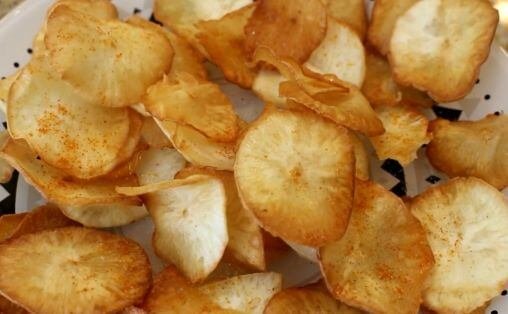
Snack chips start with the same fresh root, but slices are cut paper-thin and fried in hot oil until crisp.
They are eaten straight from the bag, so every safety step must happen before the slices ever touch the oil.
Food regulators in Australia and New Zealand treat them as a separate category, with their own cyanide limit covered below.
These chips are thinner and crisper than yuca fries, which stay soft inside, and differ again from tapioca sticks made from starch dough.
Choosing Roots for Crisp, Safe Chips
Start with sweet cassava, the low-cyanide type sold fresh as yuca in most grocery stores.
A 1986 paper in the Nigerian Food Journal reported that chips from fresh roots held safe cyanide levels when low-cyanide varieties were used.
Australia’s food code prohibits cassava roots holding more than 50 mg/kg of hydrocyanic acid, which it classes as bitter, according to the NSW Food Authority.
If you are unsure which type you have, our breakdown of bitter and sweet cassava lists the practical differences.
From decades of harvesting, I judge freshness by snapping a root end: clean white flesh is good, while blue-black streaks mean spoilage has started.
Cassava roots can start streaking within a few days of harvest, which is why many imported roots arrive coated in wax.
Our overview of buying yuca in the United States explains where to find good roots.
To produce cassava chips, you will need a few simple ingredients and some kitchen tools.
Here’s a step-by-step guide on how to make your cassava chips at home:
Ingredients
- 2 large cassava roots
- Salt
- Vegetable oil for frying
- Frying pan or air fryer
Instructions for Fried Cassava Chips
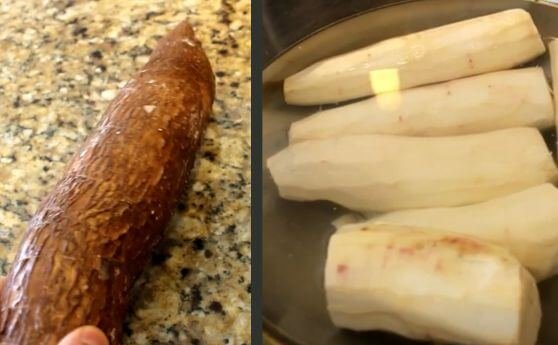
Peeling and Slicing: Peel the cassava roots and cut them into thin slices using a sharp knife or a mandoline slicer. A mandoline slicer gets even slices for uniform cooking.
Soaking: To remove the toxic cyanide and excess starch in the sliced yuca chips, soak the slices in a bowl of cold water for about 30 minutes.
This allows them to sip out into the water. Soaking also helps to make the chips crispier when fried.
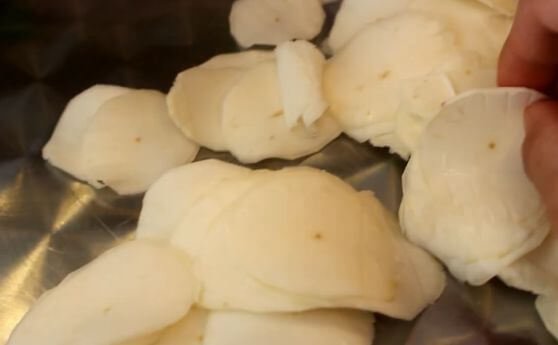
This step is important as it helps to remove excess starch and makes the chips crispy when fried.
Drain the cassava slices and allow them to dry or dab them with a paper towel.
Add Salt: Add salt (optional at this stage). I usually add salt at this stage, but some people prefer adding it at the end of the frying.
Heat Oil in a Fryer or Oil Pan: The next step is heating vegetable oil in a fryer, a deep-fryer, or in a large pot to about 350°F. It’s important to heat the oil before adding the cassava chips.
Add the Cassava Chips to the Boiling Oil: Gently add the cassava chips to the hot oil in batches, as the pot can only contain them. The chips are thin and should be fried for about 3 to 5 minutes until they are crispy and golden brown.
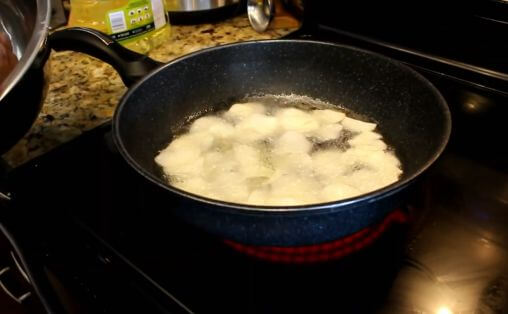
Retrieve from Frying Pan: To take the chips from the hot oil, use a slotted spoon or basket so that when you scoop the yuca chips, oil can drain out from the spoon.
You don’t need to retrieve the chips with oil.
Also, place paper towels into a new bowl to place the chips. This is to drain the chips of excess oil.
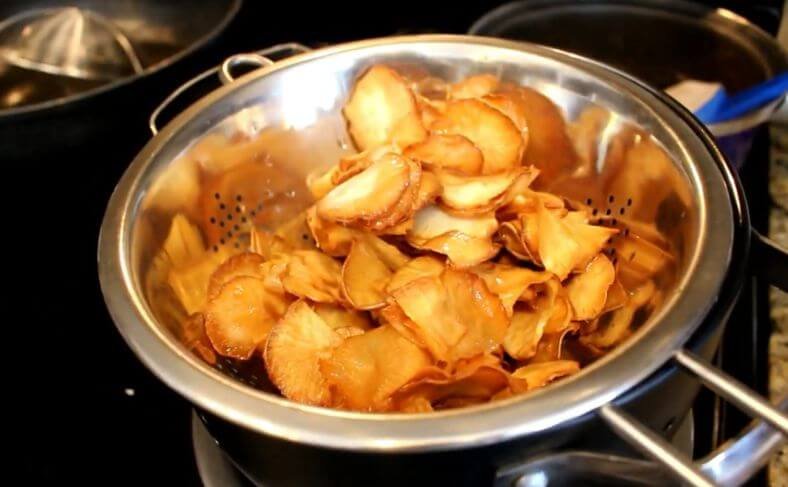
Add your salt to the fried yuca chips while still hot. However, I like to add salt before frying. This is to have the salt penetrate well into the chips before frying.
- Your cassava chips are ready.
- Let the chips cool completely before storing them in an airtight container.
How to Eat Fried Yuca Chips
You can munch away on your crispy fried cassava chips immediately.
There is no rule as to how to eat your chips, but it’s enjoyable with spices and salt sprinkled on them.
However, as I mentioned above, I add a little salt to my yuca chips before frying.
Are Fried Cassava Chips Safe? What Soaking Can and Cannot Do
Many online recipes claim that a 30-minute soak removes cyanide from sliced cassava, but the chemistry does not support that promise.
A Fiji study in the Journal of Microbiology, Biotechnology and Food Sciences found water-based processing removed more cyanide because the glycosides dissolve in water.
Fried products in that study held higher cyanide levels because the compounds do not dissolve in oil and stay inside the food.
Real protection comes first from choosing sweet roots, then from deep peeling, with the boiling-water blanch adding extra margin.
What Regulators Found in Packaged Chips
In 2008, a New South Wales survey later published in the Journal of Food Protection tested 374 packaged cassava chip samples.
Cyanogens turned up in 317 of them, at levels ranging from 13 to 165 mg of HCN equivalents per kilogram.
In 2009, Food Standards Australia New Zealand responded with a maximum of 10 mg/kg total hydrocyanic acid for ready-to-eat cassava chips.
That figure matches the Codex standard for edible cassava flour, and a WHO expert committee concluded that level is not associated with acute toxicity.
The problem surfaced when Japan rejected an Australian-made shipment measuring 59 mg/kg, produced from semi-finished chip pellets imported from Indonesia, according to an FSANZ risk statement.
That case shows how a poorly processed dried intermediate can carry risk straight into a finished snack.
Our step-by-step page on making cassava safe to eat and our explainer on cyanide poisoning symptoms cover this ground in more detail.
Nutrition: What Frying Does to the Root
Raw cassava supplies 160 calories, 38.1 g of carbohydrate, and 1.8 g of fiber per 100 g, according to USDA FoodData Central.
The same entry lists 20.6 mg of vitamin C and nearly 60 g of water in every 100 g of raw root.
Frying drives most of that water out and replaces part of it with oil, so chips pack far more calories per gram than boiled cassava.
Vitamin C is heat-sensitive, so expect much less of it in a finished chip than the raw figures suggest.
Exact numbers depend on slice thickness, oil temperature, and draining, so check the nutrition label on any packaged brand.
Chips made only from cassava, oil, and salt contain no gluten, a point our page on cassava and gluten also addresses.
For thicker cuts, our calorie breakdown for yuca fries shows how portion size changes the picture.
Seasoning Ideas and Storage
Fine salt is the classic finish, but lime zest, smoked paprika, garlic powder, or chili flakes all cling well to hot chips.
At home in Nigeria, I like a light dusting of yaji, the peanut and pepper suya spice sold beside grilled meat stands.
Cool the chips completely before storing, because trapped steam softens them within hours.
Kept in an airtight jar away from light and heat, a home batch stays crisp for about a week.
Conclusion
Fried cassava chips and dried cassava chips share a root and a name, but one is a finished snack and the other is a raw material.
For the snack, safety starts at the market with sweet, freshly harvested roots.
Deep peeling, thin even slicing, and a quick blanch then do the rest before hot oil adds the crunch.
Make one small batch this weekend using the method above, and adjust the salt to your taste.
Then leave a comment naming the seasoning that won the most fans at your table.
Frequently Asked Questions
What is the difference between snack cassava chips and dried cassava chips?
Snack chips are thin slices fried until crisp and eaten straight away. Dried chips are raw root pieces dried hard for milling, animal feed, pellets, or export markets.
Does soaking cassava slices remove cyanide?
A short cold soak mostly washes off surface starch and removes very little cyanide. Always choose sweet roots, peel deeply, and blanch in boiling water before frying them.
Can I make cassava chips in an air fryer?
Yes, toss blanched slices with a tablespoon of oil and air-fry them at 190°C. Expect slightly less crunch than deep frying gives, but the chips carry less oil.
How long do homemade cassava chips stay crisp?
Stored airtight away from heat and light, homemade chips stay crisp for roughly a week. Let them cool fully before sealing the jar, since trapped steam softens them.

Chimeremeze Emeh is a tropical crop farmer and chemical engineer from Ntigha, Isiala Ngwa North LGA, Abia State, Eastern Nigeria, specializing in cassava and palm oil, with over 30 years of hands-on experience growing, harvesting, and processing cassava. He grows TMS series, TME 419, and local traditional varieties on his own farms and operates a small-scale cassava flour and starch production business through Cassava Pathway, which he founded as a CAMA-registered agribusiness in 2024. He is also the founder of Palm Oil Pathway, where he applies the same tropical farming expertise. His farms are located in Ntigha, Abia State.