Last updated on July 9th, 2026 at 06:40 am
Chewy, translucent, and made from a starchy root most people never think about, tapioca pearls sit at the center of bubble tea, puddings, and desserts worldwide. Yet few guides explain what they actually are, how they affect your health, or which type belongs in which dish.
How could my grandmother have believed we use cassava starch to make chewy balls for tea?
Curiosity has always been my drive when it comes to cassava and its products, especially the ones I never grew up with. And that was how I discovered tapioca pearls.
And every other month, there is a need to have these chewy balls made.
This guide walks through nutrition figures sourced from USDA data, genuine health benefits, real downsides, and practical buying and storage guidance you can use right away.
Disclaimer: This article is for informational purposes only and does not constitute medical advice. The author is not a medical doctor or registered dietitian. Always consult a qualified healthcare provider before making dietary or medical decisions related to cassava or tapioca consumption, particularly for children or anyone managing diabetes or a digestive condition.
Table of Contents
What Are Tapioca Pearls?
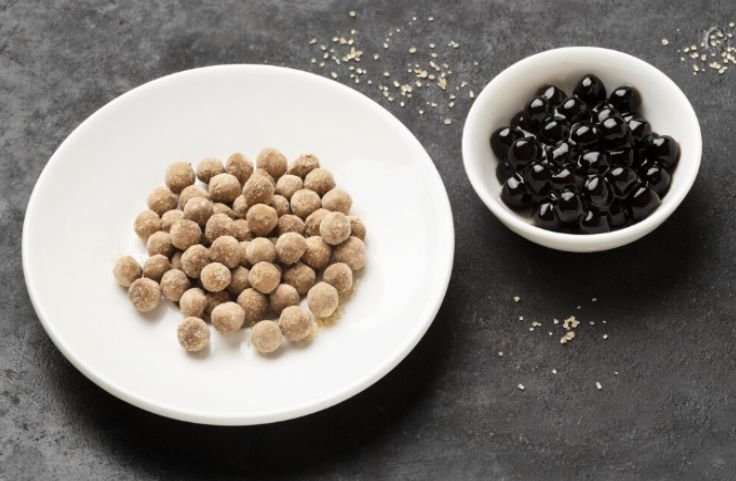
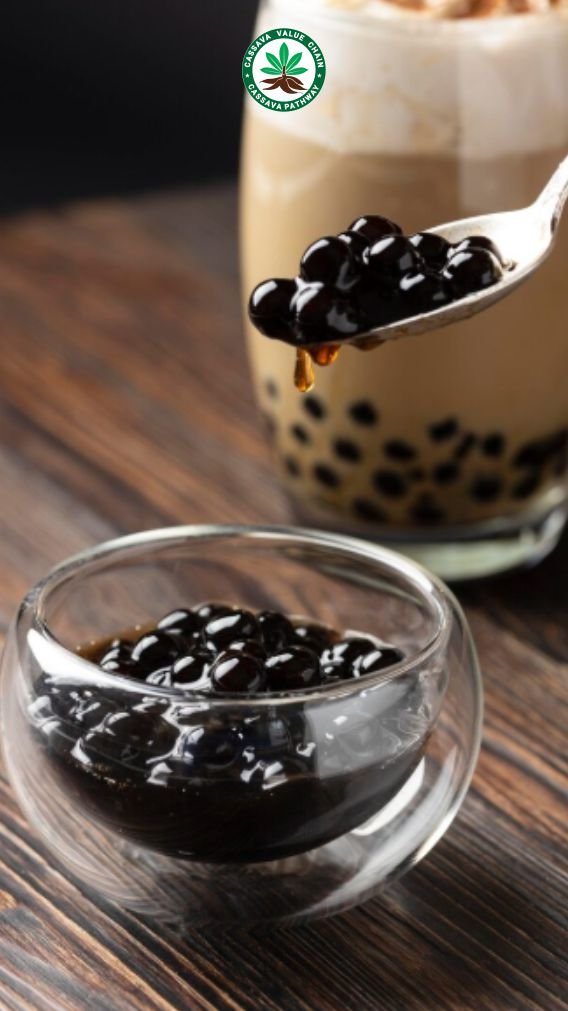
Tapioca pearls, also called boba or tapioca balls, are small, round spheres known for their chewy, springy texture once cooked. Dry, they look hard and opaque; boiled, they turn soft, translucent, and bouncy.
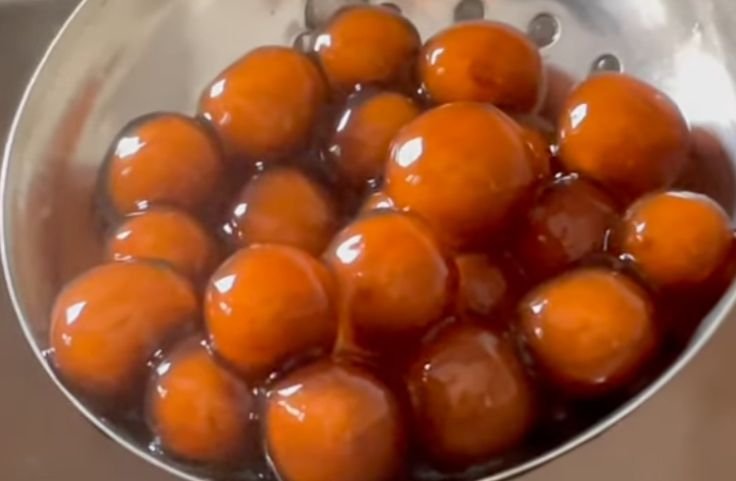
Nearly flavorless on their own, they absorb whatever liquid surrounds them, making them an adaptable addition to drinks, puddings, and delicious desserts around the world.
What Are Tapioca Balls Made From?
Pure tapioca pearls are made from only cassava starch/tapioca and water, though many commercial pearls add brown sugar, caramel coloring, or stabilizers like sodium carboxymethyl cellulose to improve shelf stability and texture consistency.
Characteristics of Boba Pearls
Flavor
Plain tapioca pearls carry almost no inherent taste, a faint, neutral starchiness at most.
Whatever flavor a dish carries comes almost entirely from the surrounding liquid, syrup, or seasoning.
Texture
The defining trait is chewiness, a springy resistance that gives way slowly rather than crumbling or dissolving, distinct from the softer bite of cooked rice or the snap of a fresh fruit gel.
Mouthfeel
Well-cooked pearls feel smooth and slightly slippery on the outside, with a dense, elastic center that holds together through a full chew rather than breaking apart.
Why They Are Chewy
The chew comes from starch gelatinization, the process by which starch granules absorb water and swell under heat.
A peer-reviewed review of cassava starch properties notes that cassava starch has a lower gelatinization temperature and higher water-binding capacity than corn or potato starch, which is part of why tapioca pearls soften and turn chewy so readily compared with pearls made from other starches.
Common Names of Tapioca Pearls
Tapioca pearls go by several names depending on where you encounter them and how they are prepared.
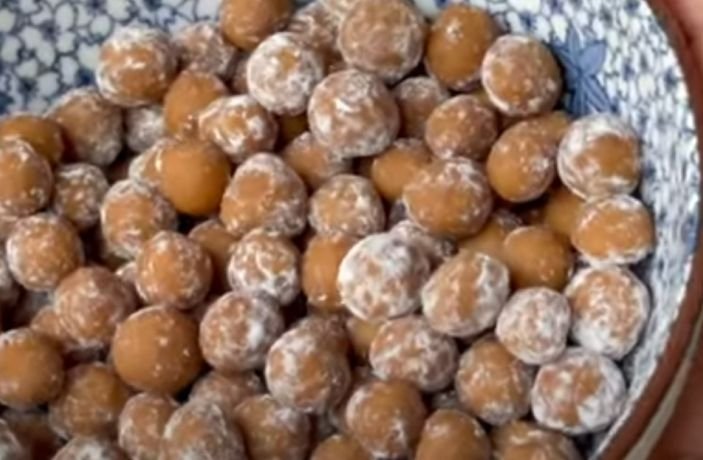
Boba
Boba, the term most associated with bubble tea, technically refers to the drink itself in some usage, though it has become interchangeable with the pearls.
Bubble Tea Pearls
Bubble tea pearls, a straightforward descriptive name used mainly in Western markets.
Tapioca Balls
Tapioca balls, an alternate term for the same product, are sometimes used to distinguish from smaller “pearl” sizing.
Black Pearls
Black pearls, referring to pearls colored with brown sugar or caramel, the most common style in bubble tea shops.
White Pearls
White pearls, the natural, uncolored version, more commonly used in puddings and desserts than in drinks.
The History of Tapioca Pearls
Tapioca balls became globally famous in 1980s Taiwan, when tea shop owners dropped them into cold, sweetened milk tea, creating bubble tea.
The drink spread rapidly across Asia through the following decade, then reached the United States, Europe, and Australia by the 2000s.
was projected to reach $3.39 billion by 2027, according to Fortune Business Insights market research.
Recent innovations include colored pearls, popping boba, and instant-tapioca varieties designed for speed.
How Tapioca Pearls Are Made
Making tapioca boba starts with cassava root, washed, grated, and pressed into starch, then mixed with hot water into a dough, shaped into spheres, briefly steamed, and dried for shelf stability.
Coloring gets added before that final drying step.
From the experience of making tapioca pearls, the dough’s water ratio is where most home attempts fail.
This full guide to making tapioca pearls at home covers the complete process.
Types of Tapioca Pearls
Tapioca pearls fall into several overlapping categories, and knowing which category applies to your use case saves time and prevents wasted ingredients.
Types By Color
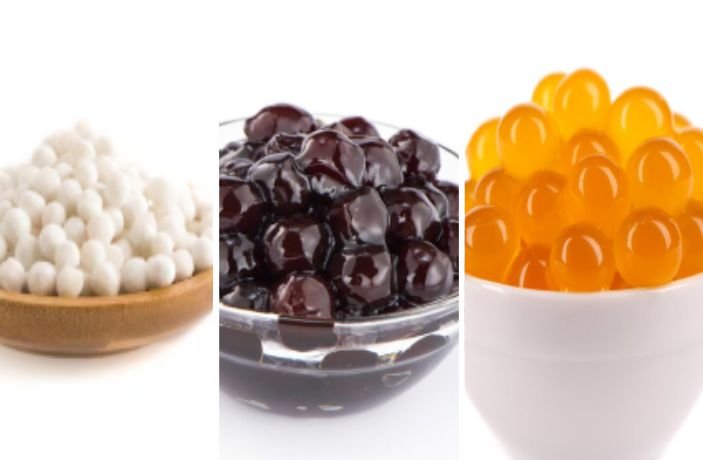
White pearls are the natural, uncolored form, made from plain starch and water without added sugar or coloring. They carry a neutral, faintly sweet taste and work best in puddings and desserts where you want the pearl to blend rather than stand out.
Black pearls get their color from brown sugar or caramel added during processing, giving them the deep color and mild molasses flavor standard in bubble tea shops.
Brown pearls sit between white and black, often made with a lighter brown sugar coating or a shorter caramelization step, giving a milder color and flavor than true black pearls.
Golden pearls use honey or a lighter caramel treatment, aiming for a warmer color without the deeper molasses taste of black pearls.
Colored pearls use fruit powders, natural extracts, or food coloring to create pink, green, purple, or other bright colors, generally for visual appeal in specialty drinks rather than any flavor difference tied to the color itself.
Types By Size
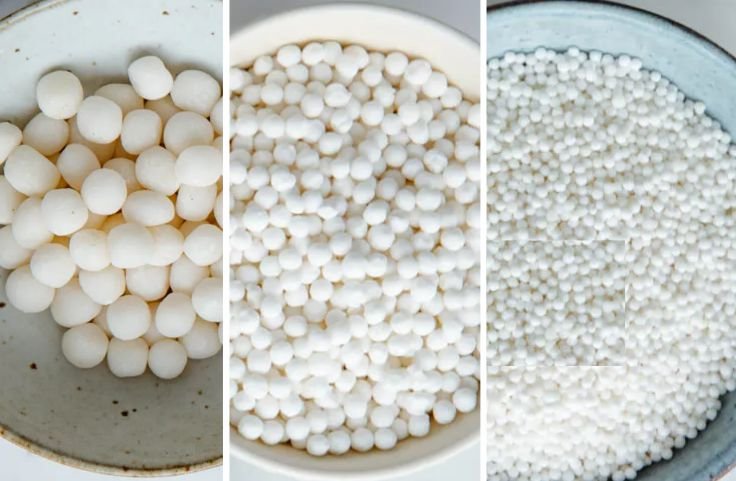
Pearl size affects both cook time and how the pearl behaves in a finished dish, and size ranges vary somewhat by manufacturer, though the following reflects standard industry sizing.
Mini Pearls
Mini pearls, roughly 1 to 2 millimeters, used mainly in delicate desserts and drinks where a subtle texture matters more than a bold chew, and their tiny size cooks fast without overwhelming a dish.
Small Pearls
Small pearls, roughly 2 to 4 millimeters, are common in puddings, custards, and soups, since their finer texture blends smoothly into a creamy base without pulling attention away from other richer flavors and textures.
Standard Pearls
Standard pearls, roughly 6 to 8 millimeters, are the most common size found in bubble tea shops, offering a balanced chew that suits most drinks without ever quite overwhelming the straw or the sip.
Large Pearls
Large pearls, roughly 8 to 10 millimeters according to commercial supplier specifications, deliver the bold, chewy bite associated with classic boba, and their thicker cross-section takes noticeably longer to cook through fully and evenly. Read more about large tapioca pearls.
Jumbo Pearls
Jumbo pearls, 10 millimeters and above, are used mainly in specialty or novelty drinks rather than everyday bubble tea, since their size can quite noticeably overwhelm a standard straw and slow down drinking considerably.
Types By Cooking Style
Traditional Pearls
Traditional pearls are raw, dried starch spheres requiring a full boil, typically 25 to 30 minutes for large pearls, followed by a covered rest period to finish cooking through the center.
Instant Pearls
Instant pearls are partially pre-cooked during manufacturing, cutting active cook time down to roughly 5 to 10 minutes, at some cost to how long the finished texture holds up before turning soft.
Quick-Cooking Pearls
Quick-cooking pearls is a marketing term that generally overlaps with instant pearls, though some products in this category are only partially pre-treated and still need 10 to 15 minutes of cooking.
Ready-to-Use Pearls
Ready-to-use pearls come pre-cooked and packed in syrup, requiring no cooking at all, just draining and serving, which suits high-volume cafes prioritizing speed above all else.
Types By Intended Use
For Bubble Tea
Bubble tea calls for large or standard pearls, cooked fresh and held in syrup for a limited window before serving.
For Puddings
Puddings favor small or mini pearls, since their finer texture blends smoothly into a custard base.
This comparison of tapioca pudding against rice pudding breaks down how the finished desserts differ nutritionally and texturally.
For Desserts
Desserts more broadly, including shaved ice and layered sweets, can use pearls of any size depending on the visual and textural effect wanted.
For Baking
Baking applications are rare for whole pearls, since baked goods more commonly use tapioca starch or flour rather than intact pearls, which do not soften evenly inside dough.
For Commercial Food Service
Commercial food service operations weigh cook time and shelf stability heavily, which is why instant and ready-to-use pearls dominate in cafes with high customer volume and limited kitchen space.
Tapioca Pearls Versus Similar Products
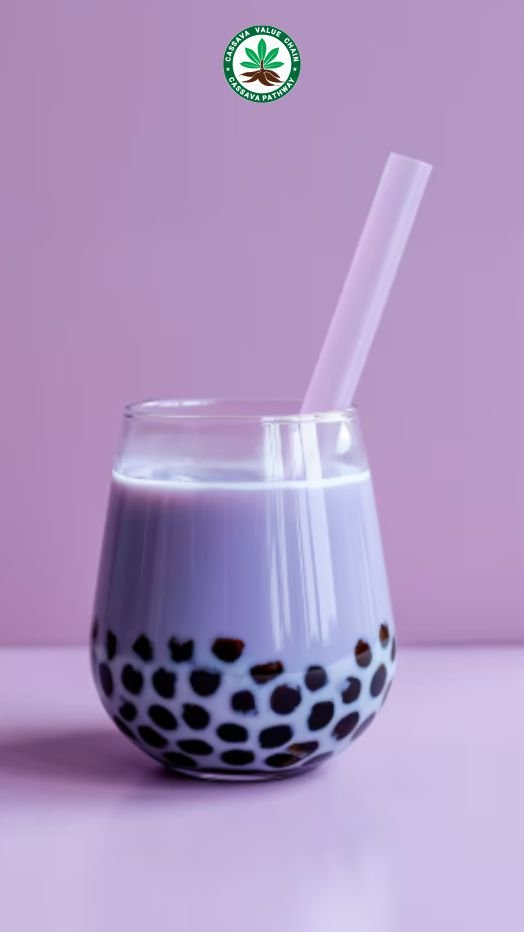
Several products get confused with tapioca pearls, sometimes because they look alike, and sometimes because the terms get used loosely in casual conversation.
Tapioca Pearls vs. Sago Pearls
Sago comes from the sago palm rather than cassava, and while visually similar, the two starches gelatinize at slightly different rates, meaning sago often needs a different cook time to reach the same texture. This detailed sago comparison covers the differences in full.
Tapioca Pearls vs. Boba
In casual usage, boba and tapioca pearls are treated as the same thing, though boba technically refers to the bubble tea drink itself in its original Taiwanese usage, with the pearls as one ingredient inside it.
Tapioca Pearls vs. Popping Boba
Popping boba looks similar in a drink but works entirely differently.
It is made through spherification, a process that encases fruit juice inside a thin gel shell using sodium alginate and calcium chloride, rather than being a solid starch sphere at all.
Biting into popping boba releases liquid, while biting into a tapioca pearl delivers a solid chew throughout. See our tapioca vs. popping boba guide.
Tapioca Pearls vs. Jelly Toppings
Grass jelly, coconut jelly, and similar toppings are made from gelatin or agar rather than starch, giving a firmer, less chewy texture that holds its cut shape rather than deforming under a bite the way tapioca does.
Tapioca Pearls vs. Glass or Crystal Pearls
Crystal boba is made from a different starch base, often konjac or a tapioca-agar blend, producing a clearer, glassier appearance and a firmer, less sticky chew than standard black tapioca pearls.
| Product | Base Ingredient | Texture | Best Known Use |
| Tapioca Pearls | Cassava starch | Chewy, springy | Bubble tea, puddings |
| Sago Pearls | Sago palm starch | Chewy, slightly firmer | Southeast Asian desserts, soups |
| Popping Boba | Fruit juice in a gel shell | Liquid burst, thin shell | Fruit teas, layered drinks |
| Jelly Toppings | Gelatin or agar | Firm, sliceable | Shaved ice, fruit desserts |
| Crystal/Glass Pearls | Konjac or tapioca-agar blend | Firm, glassy, less sticky | Specialty bubble tea |
Nutritional Value of Tapioca Pearls
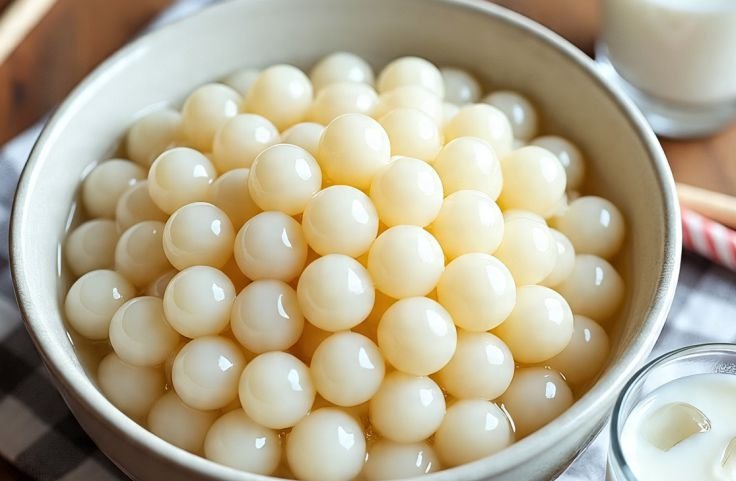
Nutrition claims about the pearls online vary considerably, so here is what verified data shows, based on 100 grams of dry, uncooked pearls unless noted otherwise.
| Nutrient | Amount per 100g (dry) |
| Calories | About 358 kcal |
| Carbohydrates | About 88 to 89g |
| Sugars | Minimal in plain pearls, higher in sweetened or coated varieties |
| Protein | About 0.2g |
| Fat | About 0.02g |
| Fiber | Negligible |
| Sodium | Near 0mg in plain pearls, higher in flavored or preserved varieties |
| Vitamins | Negligible across the board |
| Minerals | Trace calcium and iron, not a meaningful source of either |
Calories
USDA nutrient data places dry pearl tapioca at roughly 358 calories per 100 grams.
Cooked pearls carry considerably fewer calories per 100 grams, since they absorb several times their dry weight in water during cooking.
Carbohydrates
Tapioca balls are close to pure starch, meaning almost all of their calories come from carbohydrates, with very little else mixed in.
Sugars
Plain dry pearls carry minimal natural sugar. Sweetened, colored, or syrup-soaked pearls sold for bubble tea can add considerable sugar during preparation, separate from the starch itself.
Protein and Fat
Both sit close to zero, since the starch extraction process removes nearly all of the protein and fat originally present in the cassava root.
Fiber
Negligible, since the starch extraction process that produces tapioca pearls removes most of the root’s original fiber content along with the protein and fat.
Sodium
Plain pearls carry very little sodium, though many commercial pearls include preservatives such as potassium sorbate or sodium benzoate, which add small amounts of sodium and extend shelf life.
Glycemic Index and Load
Tapioca’s glycemic index runs on the high end, commonly estimated in the range of 70 to 85 based on food composition databases drawing on USDA data, meaning it raises blood sugar relatively quickly compared with lower-GI carbohydrate sources.
Combined with its high carbohydrate density, this gives tapioca pearls a correspondingly high glycemic load per serving.
Health Benefits of Tapioca Pearls
Quick Source of Energy
As a nearly pure carbohydrate food, tapioca pearls digest quickly and release glucose into the bloodstream fast, which WebMD notes can be useful in specific situations like pre-exercise fueling, though it is not a benefit for everyday steady energy needs.
Naturally Gluten-Free
Tapioca balls made from pure cassava starch contain none of the proteins found in wheat, rye, or barley.
If cross-contact certification matters for your diet, check that the product meets the FDA’s requirement of under 20 parts per million of gluten to carry a gluten-free label.
Easy to Digest
Gelatinized starch, the form tapioca pearls take once cooked, breaks down readily in the digestive system for most people, partly because tapioca is naturally low in FODMAPs, a group of carbohydrates that are often harder for the gut to process.
Suitable for Some Special Diets
Because the pearls contain no wheat, dairy, or common allergens in their plain form, they fit naturally into several restrictive diets without requiring reformulation.
An Adaptable Ingredient
Boba pearls carry almost no inherent flavor, which lets them absorb whatever liquid, spice, or sweetener surrounds them, from coconut milk to fruit tea to a savory broth.
Potential Downsides of Tapioca Pearls
High Carbohydrate Content
Nearly all of tapioca’s calories come from carbohydrate, which matters for anyone tracking carb intake for medical or dietary reasons.
High Calorie Density
At 358 calories per 100 grams dry, tapioca pearls pack meaningful calories into a small volume, and a single bubble tea serving can carry several hundred calories from pearls alone before any sugar or milk is added.
Low Protein
Boba pearls contribute almost no protein, meaning they add calories without contributing to daily protein needs the way many other carbohydrate foods do.
Low Fiber
The extraction process that produces tapioca starch removes nearly all fiber, which means pearls do not slow digestion or support satiety the way whole grains or legumes do.
Blood Sugar Concerns
Given tapioca’s high glycemic index, large servings can cause a rapid rise in blood glucose, a genuine consideration for anyone managing blood sugar closely.
Overconsumption
Because pearls carry little protein or fiber to promote fullness, it is easy to eat a large calorie load without feeling especially satisfied, particularly in a sweetened drink format.
Added Sugars in Bubble Tea
Much of the health concern around bubble tea traces to the syrup, milk, and added sugar surrounding the pearls rather than the pearls themselves.
A standard bubble tea can carry 50 to 90 grams of sugar once syrup and toppings are included, separate from whatever sugar is used to coat or sweeten the pearls.
NOTE: Cassava root can absorb heavy metals such as lead from surrounding soil as it grows. A September 2025 Consumer Reports investigation tested boba pearls from Gong Cha, Kung Fu Tea, Trader Joe’s, and WuFuYuan and found detectable lead in every sample, though none exceeded CR’s level of concern.
This is a sourcing and soil-quality issue rather than a reason to avoid tapioca outright, but it is worth knowing given how the crop grows.
Are Tapioca Pearls Healthy?
The honest answer depends entirely on who is eating them, how much, and how often.
Here is what science says:
For Children
Beyond nutrition, tapioca pearls carry a real choking risk for young children, a concern the American Academy of Pediatrics has published research on directly, given the pearls’ size, chewy texture, and tendency to be swallowed rather than chewed.
Large pearls in particular should be approached with caution for children under about five years old, and always under supervision.
For Adults
Occasional consumption poses little concern for most healthy adults, though the calorie and sugar load in a typical bubble tea serving adds up quickly if consumed regularly.
For Athletes
The fast-digesting carbohydrate profile can serve a real purpose around intense exercise, when quick glucose availability is genuinely useful, though tapioca alone provides no protein for recovery.
For Weight Loss
The combination of high calorie density and low fiber makes tapioca pearls a food worth portioning carefully if you are managing calorie intake, since they add up fast without contributing much to fullness.
For Weight Gain
In the opposite scenario, tapioca’s calorie density can be a practical tool for anyone needing to increase calorie intake without feeling overly full, a genuine use case in some clinical nutrition settings.
Everyday Consumption
Eating tapioca pearls occasionally, as part of an otherwise balanced diet, carries little concern for most people.
Daily bubble tea habits, on the other hand, deserve a closer look at total sugar and calorie intake across the week.
Who Can Eat Tapioca Pearls?
Vegans and Vegetarians
Plain tapioca pearls are entirely plant-derived, with no animal products in the base starch, making them suitable for both diets, though flavored or sweetened varieties should be checked for animal-derived additives like honey.
Gluten-Free Diets
As covered above, pure cassava starch pearls are naturally gluten-free, provided cross-contact is controlled during manufacturing.
Dairy-Free Diets
The pearls themselves contain no dairy, though the drinks and desserts they typically appear in often do, so the pearls are not the concern; the surrounding recipe is.
Nut-Free Diets
Plain tapioca pearls contain no nuts, though shared manufacturing facilities can introduce cross-contact risk, so checking labels matters for anyone with a severe nut allergy.
Halal and Kosher
The base ingredients in plain tapioca pearls are plant-derived and generally align with both halal and kosher dietary principles.
Though official certification depends on the specific manufacturing facility and any added colorants or flavorings, check for a recognized certification mark if that matters for your practice.
People With Allergies
Tapioca itself is rarely an allergen, though anyone with a known cassava or tapioca sensitivity, which is uncommon but documented, should avoid it regardless of these other diet categories.
Who Should Limit Tapioca Pearls?
Diabetics and Prediabetics
Given tapioca’s high glycemic index and carbohydrate density, anyone managing blood sugar should treat pearls as an occasional food rather than a regular one and should discuss portion sizes with a healthcare provider rather than guessing.
Low-Carb and Keto Diets
Tapioca’s near-total carbohydrate composition makes it fundamentally incompatible with strict low-carb or ketogenic eating patterns.
People With Obesity
The combination of high calorie density and low satiety value means tapioca-heavy foods can contribute to calorie surplus without the fullness signal that higher-fiber, higher-protein foods provide.
Digestive Disorders
Large amounts of undissolved starch, particularly if pearls are swallowed without proper chewing, have been linked to genuine digestive complications.
NOTE: A 2025 case report in Clinical Practice and Cases in Emergency Medicine by Ewaldt, Waymack, and Kim documented an 11-year-old presenting with abdominal pain whose CT scan revealed radiopaque tapioca pearls in the stomach, underscoring that these pearls, while generally safe when chewed properly, are not inert once swallowed whole in quantity.
Anyone with an existing swallowing difficulty or digestive condition should approach pearls, especially larger sizes, with real caution.
Popular Uses of Tapioca Pearls
Bubble Tea and Milk Tea: The signature application, with large or standard pearls soaked in syrup and layered under sweetened tea and milk.
Fruit Tea: A lighter alternative to milk tea, often paired with smaller pearls or popping boba rather than classic large tapioca pearls.
Smoothies and Frozen Drinks: Pearls add texture contrast to otherwise smooth, blended drinks, though they need to be added just before serving to avoid clumping in a cold, thick liquid.
Ice Cream and Parfaits: Cooked pearls folded into ice cream or layered into parfaits bring a chewy contrast against a cold, creamy base.
Puddings and Yogurt: Small pearls simmered into a milk and egg base create tapioca pudding, while cooked pearls stirred into yogurt add texture without changing the flavor much.
Shaved Ice and Fruit Desserts: Common across Taiwan, the Philippines, and Indonesia, where cooked pearls sit alongside fruit, jelly, and shaved ice in a single bowl.
Asian Desserts More Broadly: From Filipino bilo-bilo to Indonesian es campur, tapioca pearls show up across a wide range of regional dessert traditions, most involving coconut milk or a similarly rich, sweet liquid base.
Shelf Life of Tapioca Pearls
Unopened: Dry, sealed packages of tapioca pearls generally last many months at room temperature, provided they are kept away from moisture and direct sunlight.
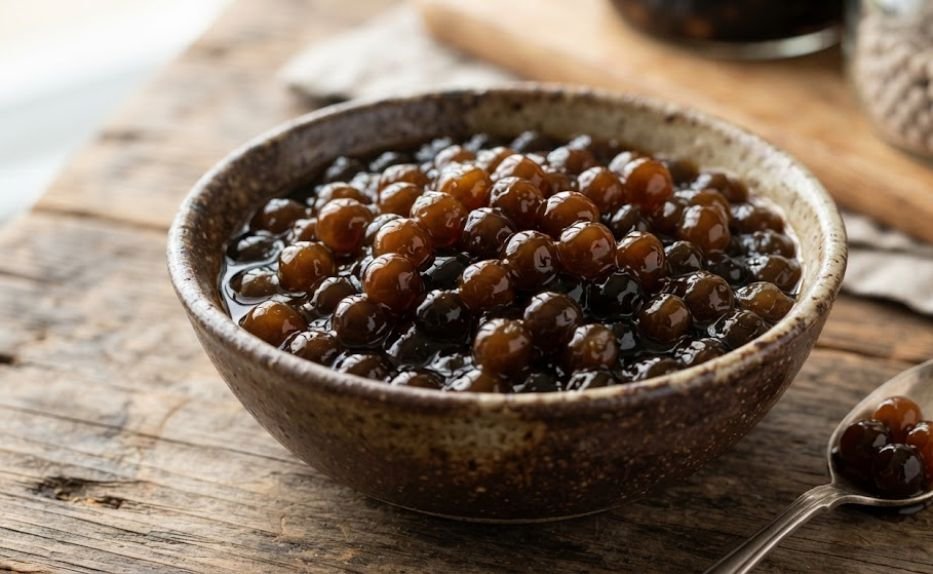
Opened: Once opened, transfer remaining pearls to an airtight container rather than leaving the original bag loosely closed, since moisture exposure is the main cause of clumping and early spoilage.
Cooked: Cooked pearls have a short window, ideally eaten within a few hours, since refrigeration hardens the starch and ruins the chewy texture that makes them worth eating in the first place.
Frozen: Freezing cooked pearls is generally not recommended, since the freeze-thaw cycle breaks down the starch structure and leaves pearls mushy or grainy once thawed.
Spoilage Signs: Watch for a sour or off smell, visible mold, or a hardened, clumped texture in dry pearls that will not separate even after shaking the container, all signs the product should be discarded rather than used.
Buying Guide
What to Look For:
- Ingredients: Check whether the pearls are made from pure cassava starch or a blend, since blended starches can cook and taste differently than advertised.
- Size: Match the pearl size to your intended use, small or mini for puddings, standard or large for bubble tea.
- Color: Confirm whether coloring comes from natural sources like brown sugar or from added food dyes, if that distinction matters to you.
- Cooking Time: Check the package for stated cook time, since instant and traditional pearls require very different preparation windows.
- Packaging: Look for well-sealed, moisture-resistant packaging, particularly for pearls shipped or stored over long periods.
- Country of Origin: Origin labeling can help you assess sourcing quality and, for larger buyers, supply chain reliability.
If you would rather make pearls without tapioca starch at all, whether for an allergy reason or simple curiosity, this guide to making boba pearls without tapioca starch walks through the alternative approach.
Conclusion
When I began making tapioca boba, I was obsessed with bubble tea until I discovered the hidden nuances.
Tapioca pearls carry more nuance than their simple appearance suggests, from the cassava starch chemistry that makes them chewy to the real questions around sugar, calories, and choking risk that deserve honest answers rather than marketing spin.
Choosing the right size and cooking style for your dish matters, and understanding who should approach pearls with caution matters just as much.
Whether you are stocking a home pantry, running a cafe, or sourcing cassava-derived starch at commercial scale, the fundamentals here should serve as a reliable reference.
Try applying the buying and cooking guidance above on your next batch, and judge the difference for yourself.
Frequently Asked Questions
Are tapioca pearls bad for you?
Occasional consumption poses little risk for most healthy adults. Regular, large servings raise concerns around blood sugar, calorie density, and low nutritional value, so moderation matters more than avoidance.
What are tapioca pearls made of?
Pure tapioca pearls contain only cassava root starch and water. Many commercial pearls also add brown sugar, caramel coloring, or stabilizers to improve texture and shelf life.
Can diabetics eat tapioca pearls?
Tapioca carries a high glycemic index and dense carbohydrate content, so diabetics should treat pearls as an occasional food and discuss appropriate portions with a healthcare provider.
Are tapioca pearls safe for young children?
Large pearls pose a documented choking risk for young children due to their size and chewy texture. Supervision and smaller pearl sizes reduce, but do not eliminate, that risk.


Chimeremeze Emeh is a tropical crop farmer and chemical engineer from Ntigha, Isiala Ngwa North LGA, Abia State, Eastern Nigeria, specializing in cassava and palm oil, with over 30 years of hands-on experience growing, harvesting, and processing cassava. He grows TMS series, TME 419, and local traditional varieties on his own farms and operates a small-scale cassava flour and starch production business through Cassava Pathway, which he founded as a CAMA-registered agribusiness in 2024. He is also the founder of Palm Oil Pathway, where he applies the same tropical farming expertise. His farms are located in Ntigha, Abia State.