Skip to content
Cassava Value Chain

Cassava Value Chain

Cassava – manihot esculenta and its value chain

  • VALUE CHAIN
  • CASSAVA BASICS
    • TOP PRODUCERS
    • CASSAVA AS STAPLE FOOD
    • CASSAVA HISTORY
  • CULTIVATION
    • CASSAVA ROOT
    • CASSAVA CHALLENGES
    • CASSAVA PESTS & DISEASES
    • CASSAVA STEM
    • TYPES OF CASSAVA
  • PROCESSING
    • CASSAVA FLOUR
    • TAPIOCA
    • TAPIOCA PEARLS
    • PROCESSING EQUIPMENT
    • CASSAVA PRODUCTS
  • FOODS
    • CASSAVA-BASED FOODS
    • CASSAVA BREAD
    • CASSAVA FLOUR RECIPES
  • BENEFITS
    • HEALTH BENEFITS
    • ENVIRONMENTAL BENEFITS
  • BUSINESS & MARKET
    • ECONOMIC BENEFITS
    • CASSAVA PACKAGING
    • BUSINESS PLAN
    • CASSAVA EXPORT
    • COMMERCIAL FARMING
    • BUSINESS OPPORTUNITIES
  • INDUSTRIAL APPLICATIONS
    • CASSAVA IN PAPER INDUSTRY
    • CASSAVA BIOFUEL
    • CASSAVA IN PHARMACEUTICALS
    • CASSAVA IN FOOD INDUSTRY
    • CASSAVA RESIDUE
  • MY CASSAVA PROJECTS

Industrial Applications

Discover the diverse industrial uses of cassava that are transforming multiple sectors worldwide.
This category explores how cassava starch, flour, ethanol, and derivatives are used in food processing, textiles, pharmaceuticals, paper manufacturing, biodegradable plastics, adhesives, and bioenergy production.
From high-value industrial uses to innovative sustainable solutions, learn about processing technologies, market opportunities, and economic benefits across the cassava value chain.
Whether you are a processor, entrepreneur, or investor, these resources provide practical insights to capitalize on cassava’s industrial potential and contribute to a greener, more diversified bio-economy.
Browse in-depth guides, case studies, and emerging trends in industrial cassava utilization.

Cassava Wastewater and Effluent Management: A Processor’s Guide to Safe Treatment
23 September 202616 June 2026 by Chimeremeze Emeh
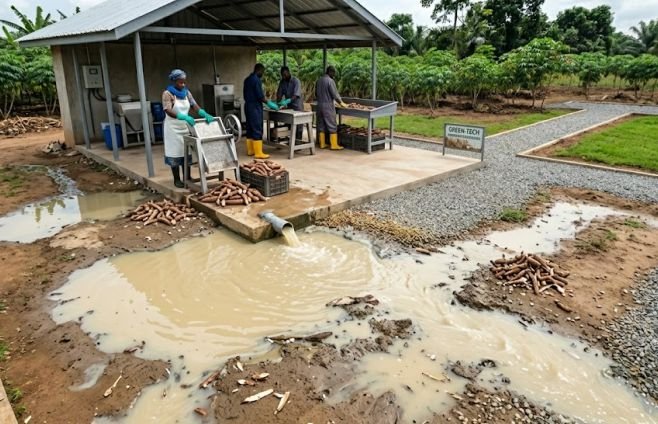
A local cassava processing plant with wastewater contaminating the environment

The sour water draining from a garri press looks harmless, but it carries acids and cyanide that can kill a stream’s fish. Cassava wastewater deserves the same care as any industrial discharge, even when it comes from the smallest yard.
Categories Industrial Applications

Cassava Processing Waste: Uses for Peels, Fiber, and Starch Water

28 October 202616 June 2026 by Chimeremeze Emeh

Cassava processing waste piles up behind every garri shed and starch pit in Nigeria, and most of us simply throw it away. Those peels, fibers, and sour water carry real costs, but they can also become feed, fuel, and income.

Categories Industrial Applications

Cassava Starch for the Paper Industry: Sizing, Strength, Coating

31 October 202616 June 2026 by Chimeremeze Emeh
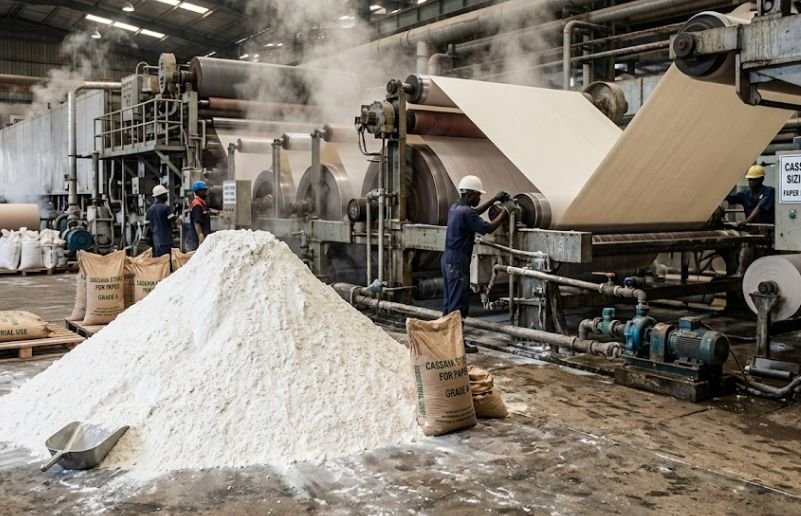
Cassava starch used in the making of paper in the paper industry

Every sheet of printing paper carries a hidden layer of starch that stops ink from bleeding into the fibers. Cassava starch for the paper industry competes for that job against maize, potato, and wheat, and research shows it holds its own.

Categories Industrial Applications

Cassava Peel for Animal Feed: Processing, Nutrients, and Limits

31 October 202616 May 2026 by Chimeremeze Emeh
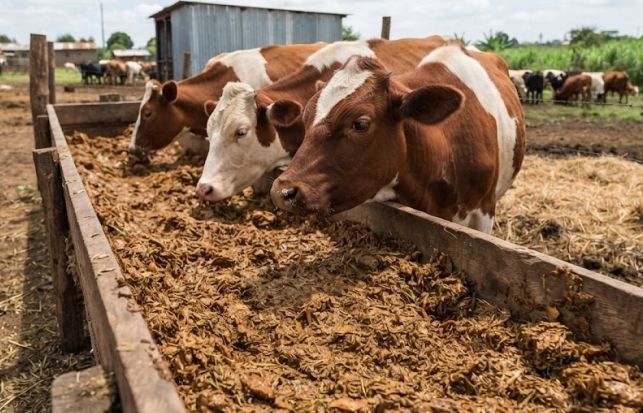
Livestock eating food made with cassava peels

Cassava peel for animal feed can cut poultry feed costs by a fifth, yet around Ntigha the peels rot in the bush. The gap comes down to processing, because fresh peel is never safe to tip into a trough.

Categories Industrial Applications

Cassava Bags for Packaging: Claims, Limits, and Who Makes Them

31 October 20264 July 2025 by Chimeremeze Emeh
Biodegradable Cassava Bags

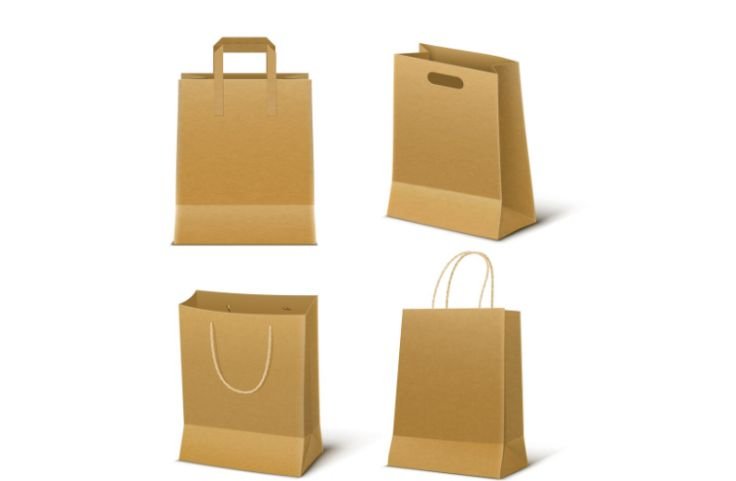
Cassava bags became famous when an Indonesian founder dissolved one in warm water and drank it on camera. That stunt sold a powerful idea, but every buyer still deserves published evidence before trusting any bag to vanish harmlessly.

Categories Industrial Applications

Cassava Ethanol Production: The Process, Plant Setup, and Costs

31 October 202624 June 2025 by Chimeremeze Emeh
A man in the cassava ethanol lab

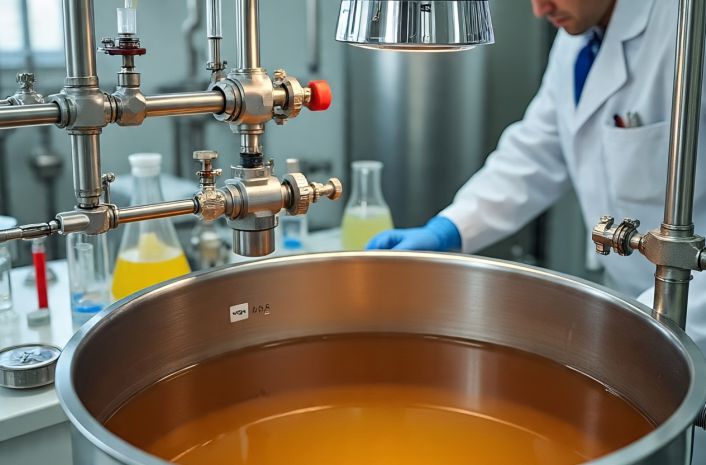
On paper, one metric ton of dry cassava starch can become about 568 kilograms of ethanol. In practice, a ton of fresh roots yields closer to 150 liters, and many cassava ethanol projects succeed or fail inside that stubborn gap.

Categories Industrial Applications

Industrial Uses of Cassava Starch: 12 Industries That Buy It

28 October 20269 May 2025 by Chimeremeze Emeh
Industrial uses of cassava starch

The industrial uses of cassava starch reach far beyond the kitchen, from paper mills and textile looms to tablet and glue factories. Each industry buys starch for a different property, and those properties decide which grade sells or sits unsold.

Categories Industrial Applications

Cassava Biofuel: Ethanol, Biogas, Biochar, and Biodiesel Compared

31 October 202613 February 2025 by Chimeremeze Emeh
Cassava biofuel dispenser

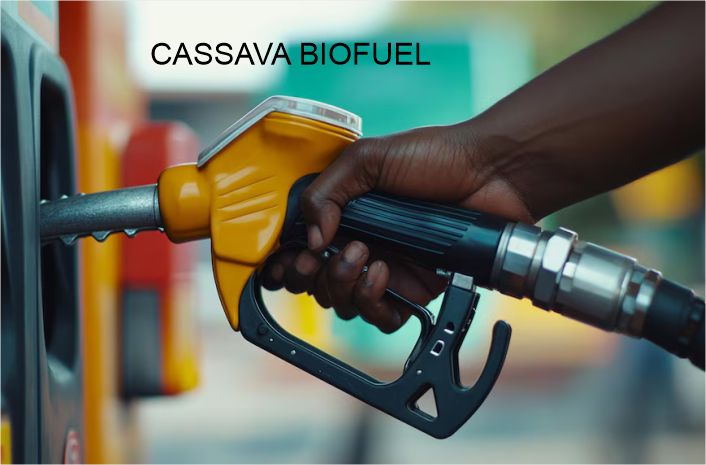
Cassava biofuel usually means ethanol, yet the root and its leftovers can also yield gas, charcoal-like biochar, oil from pyrolysis, and even algal biodiesel. Each route suits a very different budget, from a village yard to a national refinery.

Categories Industrial Applications

Cassava in Animal Feed: Roots, Leaves, Peels, and Safe Limits

28 October 20263 July 2024 by Chimeremeze Emeh
Poultry eating cassava in animal feeds

Cassava in animal feed offers a cheaper energy source than maize, and nearly every part of the plant can feed livestock. The catch is cyanide and low protein, so processing and careful formulation decide if animals thrive or fall sick.

Categories Industrial Applications
Newer posts
← Previous Page1 Page2

  • Intro to Cassava
  • Cultivation
  • Processing
  • Cassava Value Chain
  • Market Trends
  • Benefits & Uses
  • Foods & Recipes
  • About Us
  • Disclaimer
  • Privacy Policy
  • Sources & Methodology
  • Contact Us
  • Our Services
  • Training
  • Market Access
  • Processing Technology
  • Input Supply
  • Our Cassava Projects
Cassava Pathway business certification

Disclaimer

Content on this site is for informational purposes only and does not constitute medical, agricultural, or business advice. The author is a chemical engineer and farmer, not a medical doctor or dietitian. Health-related content is drawn from cited research or personal experience, clearly identified as such. Always consult a qualified professional before making dietary, farming, or business decisions based on this content.

  • Facebook
  • X
  • Pinterest
  • LinkedIn
© 2026 Cassava Value Chain