Last updated on October 30th, 2026 at 03:22 pm
Instant tapioca pearls promise bubble tea in minutes instead of an hour, and they usually deliver on that. Knowing how they are made, and why they harden in the fridge, helps you cook them chewy rather than gummy or rock-hard.
The boba pearls I have made from my own cassava starch in Ntigha, Abia State, held their round form and came out pleasantly chewy.
Homemade pearls take real time and effort, which explains why tea shops and busy cooks reach for instant versions instead.
This guide explains what instant pearls are, how factories precook them, and how to cook them properly at home without gumminess.
It compares instant, regular, and homemade pearls in one table, then covers storage, nutrition, and common problems.
Instant pearls differ from instant tapioca granules used for pies, so a short section clears up that confusion.
Table of Contents
What Are Instant Tapioca Pearls?
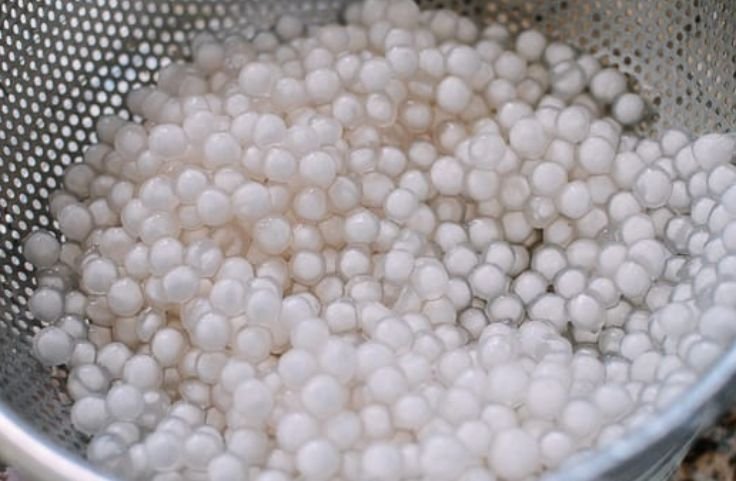
Instant pearls are tapioca balls that have been partly cooked and dried at the factory, so they finish cooking in minutes.
Regular dried pearls are raw starch dough, which is why they need a long boil to cook through to the center.
Both kinds are made from tapioca starch, as the hub explaining what tapioca is describes.
The wider family of pearls, from tiny pudding pearls to large boba, is covered in the tapioca pearls guide.
Instant Pearls Versus Instant Tapioca Granules
Shoppers frequently confuse instant pearls with instant tapioca, a fine granular thickener sold for pies and puddings.
The granules dissolve into fillings, while instant pearls keep their round, chewy form in drinks.
Pie and pudding uses are explained in the article on what instant tapioca is.
How those granules compare with plain starch is set out in instant tapioca versus tapioca flour.
How Instant Pearls Work
Raw starch granules swell and thicken only after heating past their gelatinization point.
For cassava starch, a 2025 review in Polymers reported gelatinization temperatures between about 69 and 85°C.
Factories heat the formed pearls past that point, then dry them, so most of the cooking is already done.
At home, the pearls only need to rehydrate and finish softening, which takes minutes rather than an hour.
How Instant Pearls Are Made
- Starch preparation: tapioca starch is mixed with hot water, sometimes with sugar, caramel, or brown sugar for color.
- Forming: the dough is rolled or extruded into small balls of even size.
- Precooking: the balls are steamed or boiled until the starch inside fully gelatinizes.
- Drying: the cooked pearls are dried with hot air or under vacuum to make them shelf-stable.
- Packing: finished pearls are sealed in moisture-proof bags, frequently with cooking times printed on the pack.
Some brands add modified starch to improve texture, explained in the article on modified tapioca starch.
How to Cook Instant Tapioca Pearls
- Bring a large pot of water to a rolling boil before adding any pearls.
- Add the pearls gradually and stir at once, so they do not stick to the pot or each other.
- Boil for the time printed on the pack, which is usually a few minutes for instant pearls.
- Cover the pot, turn off the heat, and let the pearls rest for the time the pack recommends.
- Drain, rinse briefly in cool water, and soak them in a little sugar syrup until serving.
Plenty of water matters, because crowded pearls release starch, stick together, and turn the water gluey.
Cook only what you will serve within a few hours, since pearls taste best fresh.
Instant, Regular, and Homemade Pearls Compared
| Feature | Instant pearls | Regular dried pearls | Homemade pearls |
|---|---|---|---|
| Preparation | Precooked and dried | Raw dough, dried | Fresh dough from starch |
| Cooking time | A few minutes | Much longer boil and rest | Short boil, but dough takes time |
| Texture | Soft, slightly less bouncy | Firm and chewy when cooked well | Chewy, adjustable by recipe |
| Control over ingredients | Low | Low | Full |
| Best for | Quick drinks at home | Shops and traditional recipes | Cooks who make their own starch |
Making pearls from scratch is covered step by step in the guide to homemade boba pearls.
Storing Instant Pearls
Keep unopened packs in a cool, dry cupboard, and reseal opened bags tightly against humidity.
Cooked pearls are best eaten the same day, because they harden as they cool.
That hardening comes from starch retrogradation, and research reported by Agência FAPESP found cassava increases retrogradation after cooling.
Refrigerating cooked pearls speeds that firming, so leftovers turn tough rather than chewy.
Rewarm leftover pearls briefly in hot water or syrup to soften them before serving.
Nutrition of Instant Pearls
USDA FoodData Central lists 358 calories and 88.7 grams of carbohydrate per 100 grams of dry pearl tapioca.
The same portion holds just 0.19 grams of protein and 0.9 grams of fiber, so pearls are almost pure starch.
Sweet drinks add sugar on top, which is why bubble tea suits an occasional treat rather than a daily habit.
Health effects of the starch itself are reviewed in the guide to tapioca nutrition.
Cassava contains no gluten, but flavored instant pearls can include other additives, so check labels if you avoid gluten.
Common Problems and Fixes
- Pearls stuck together: add them to boiling water slowly, use more water, and stir immediately.
- Hard centers: extend the resting time with the lid on, rather than boiling longer.
- Mushy outside: cut the boiling time and rinse the pearls as soon as they finish resting.
- Hard leftovers: soak them in warm syrup for a few minutes before serving.
More fixes for every type of pearl appear in the guide to troubleshooting tapioca balls.
Drink ideas that use cooked pearls are gathered in the guide to tapioca bubble tea.
Conclusion
Instant tapioca pearls are precooked and dried, so they need only a short boil and rest before serving.
Use plenty of boiling water, stir as you add them, and follow the times on the pack.
They are softer than regular pearls but quicker, while homemade pearls give the most control.
Cook only what you need, because cooled pearls harden through starch retrogradation.
They are almost pure carbohydrate, so treat sweet bubble tea as an occasional drink.
For quality tapioca starch from Ntigha, contact Cassava Pathway through this website or WhatsApp.
Frequently Asked Questions
What is the difference between instant and regular tapioca pearls?
Instant pearls are precooked and dried at the factory, so they soften in minutes.
Regular dried pearls are raw dough needing a longer boil and rest to finish.
How long do cooked instant pearls last?
Cooked pearls are best eaten within a few hours, because they harden as they cool.
Refrigeration speeds that hardening, so make only what you plan to serve soon.
Why do my instant pearls turn hard?
Cooled starch retrogrades, which firms the pearls, and refrigeration makes this happen faster.
Rewarm them briefly in hot water or warm sugar syrup to soften them before serving.
Are instant boba pearls gluten-free?
Plain pearls made only from tapioca starch and water contain no gluten.
Flavored or colored brands may add other ingredients, so check the labels if you avoid gluten.

Chimeremeze Emeh is a tropical crop farmer and chemical engineer from Ntigha, Isiala Ngwa North LGA, Abia State, Eastern Nigeria, specializing in cassava and palm oil, with over 30 years of hands-on experience growing, harvesting, and processing cassava. He grows TMS series, TME 419, and local traditional varieties on his own farms and operates a small-scale cassava flour and starch production business through Cassava Pathway, which he founded as a CAMA-registered agribusiness in 2024. He is also the founder of Palm Oil Pathway, where he applies the same tropical farming expertise. His farms are located in Ntigha, Abia State.