Last updated on October 31st, 2026 at 05:50 am
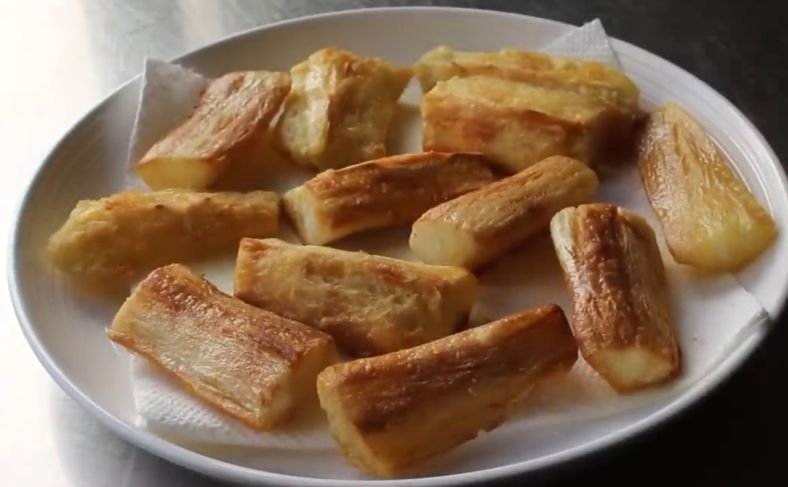
Yuca fries are thick sticks of cassava root, boiled until tender and then fried, baked, or air-fried until crisp outside. They taste noticeably nuttier and denser than potato fries, and this guide covers making them safely in all three ways.
Most of the cassava harvested from my farm in Ntigha becomes garri or flour, and frying the root as a snack is not a Ngwa habit.
Across Latin America and the Caribbean, yuca frita is everyday food, served beside grilled meat and garlic sauce.
This guide explains what the fries are, how to choose a safe root, and why boiling comes first.
It then gives three complete methods with exact temperatures and times, followed by a comparison table, dipping sauces, and fixes for stringy or soggy batches.
Storage and reheating advice at the end keeps leftovers crisp for another meal.
Table of Contents
What Are Yuca Fries?
These are batons cut from peeled cassava root, called yuca in Spanish, then boiled and cooked until golden.
The boil softens the dense flesh, so the inside turns creamy while the outside forms a thick, crunchy shell.
Thinner sticks cut from raw root and fried without boiling are a different snack, covered under tapioca sticks.
Yuca, cassava, and manioc all name the same root, as the explainer on cassava, yuca, and yucca clears up.
Where Fried Cassava Comes From
Fried cassava appears across Cuba, Colombia, Venezuela, Puerto Rico, and much of Central America as yuca frita.
Regional dishes built on the root are gathered in this tour of manioc foods from Latin America.
Caribbean cooks also serve it with garlic sauces, as the overview of cassava in Caribbean cuisine shows.
Choose a Safe Root Before You Cook
Use sweet cassava for fries, because bitter roots need soaking or fermenting that frying cannot replace.
Codex defines bitter cassava as varieties holding more than 50 milligrams of hydrogen cyanide per kilogram.
Supermarket yuca sold for cooking is normally sweet, but ask the seller when buying from markets.
How to tell the two types apart is explained in the guide to bitter versus sweet cassava.
Frozen peeled yuca from Latin American shops works well, and it saves the peeling step entirely.
Shared Preparation for All Three Methods
Every method below starts with the same peeling, boiling, and drying steps, which serve four people.
Ingredients
| Ingredient | Amount |
|---|---|
| Fresh or frozen sweet cassava | 1 kg (about 2 lb) |
| Salt for the boiling water | 1 tablespoon |
| Flaky salt to finish | To taste |
| Optional seasonings | Garlic powder, smoked paprika, lime wedges, chopped parsley |
Peel and Cut
Cut the roots into sections 8 to 10 centimeters long, then score the brown skin lengthwise with a knife.
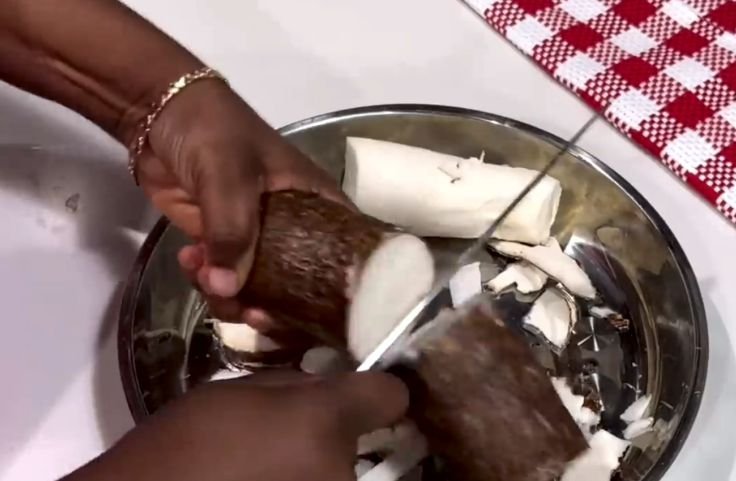

Lift off the bark together with the pinkish layer beneath it, where cyanide concentrates most.
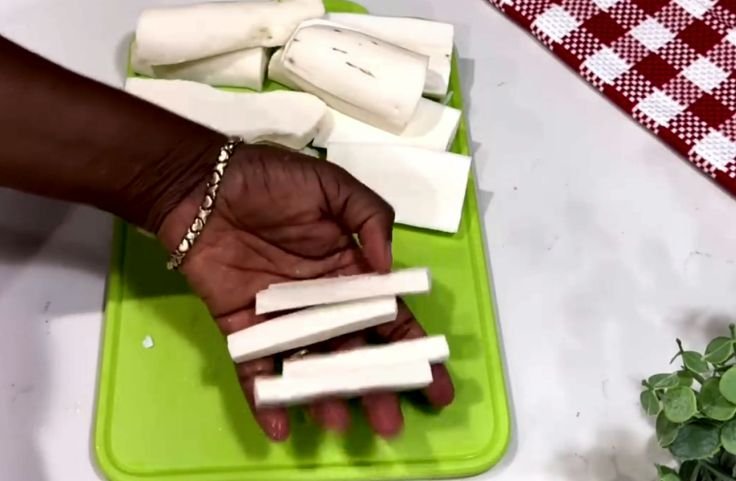
Quarter each section lengthwise and cut away the woody core running through the center.
Boil until the edges split
Cover the pieces with cold salted water, bring to a boil, and simmer for 15 to 20 minutes until a knife slides in easily.
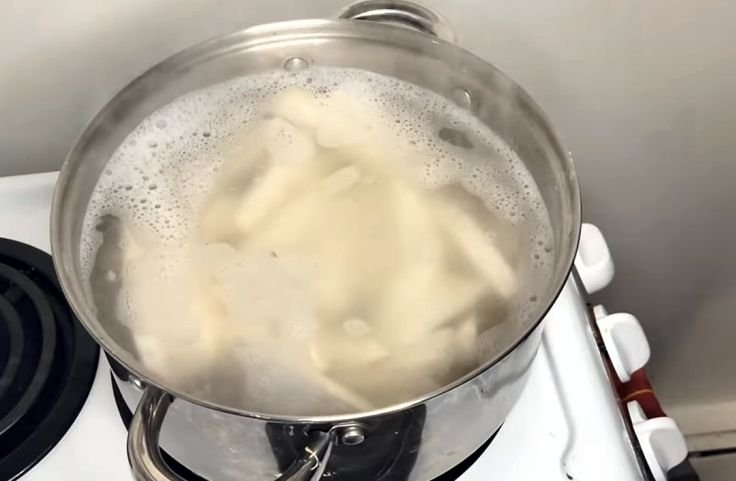
Small cracks along the edges are a good sign, because those rough surfaces turn into the crispiest bits later.
Discard the cooking water rather than reusing it, since cyanogenic compounds leach into it.
Cool and dry
Drain the pieces, spread them on a rack, and let them steam-dry for at least 15 minutes.
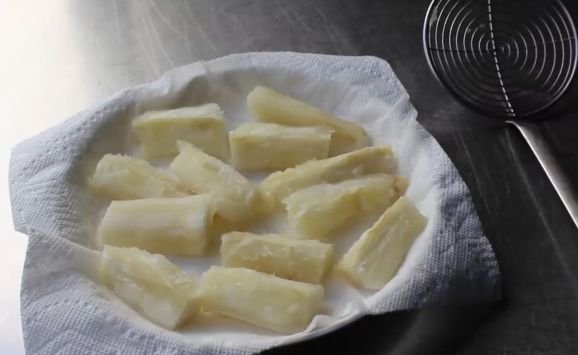
Cut them into thick fries once cool, since hot cassava crumbles under the knife.
Method 1: Classic Deep-Fried Cassava Fries
Add Spices and Oil
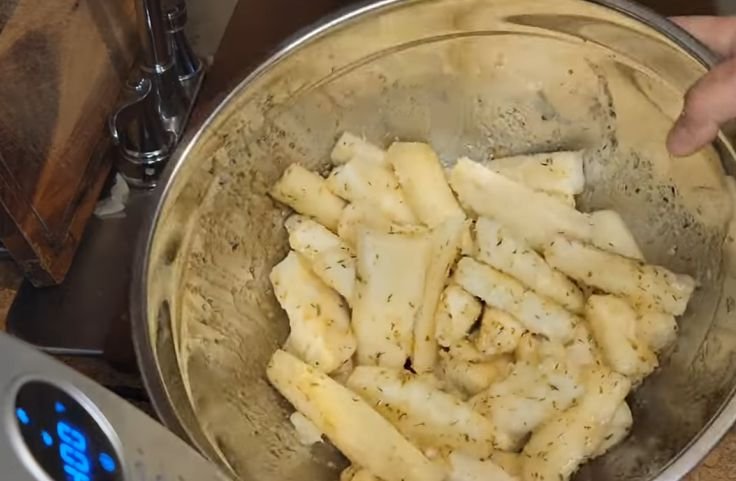
After boiling and cutting the yuca into fry-sized sticks, toss them in a bowl with a drizzle of olive or avocado oil to help them crisp up in the air fryer.
For seasoning, start with salt and black pepper as your base.
Fry to golden
Heat the oil to 175°C (350°F) and fry in small batches for four to six minutes, turning once.
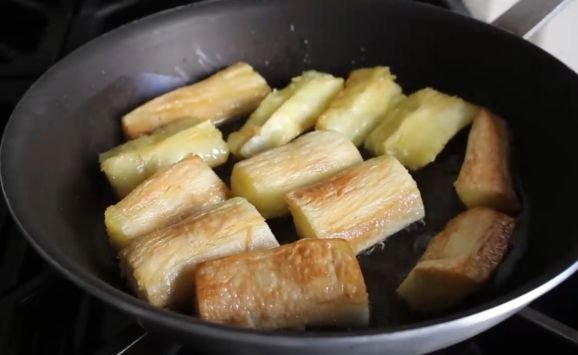
Pull them when the crust is crisp and golden rather than deep brown, for reasons explained below.
Season while hot
Drain on a rack or paper towels, then salt immediately and add garlic, paprika, or a squeeze of lime.
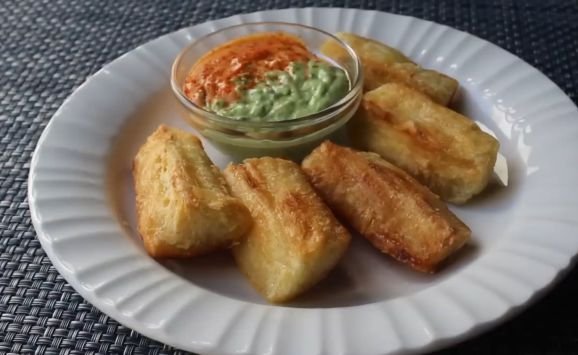
When I cook for family, I boil a double batch and freeze half after step three, which makes the next round quick.
Method 2: Oven-Baked Cassava Fries
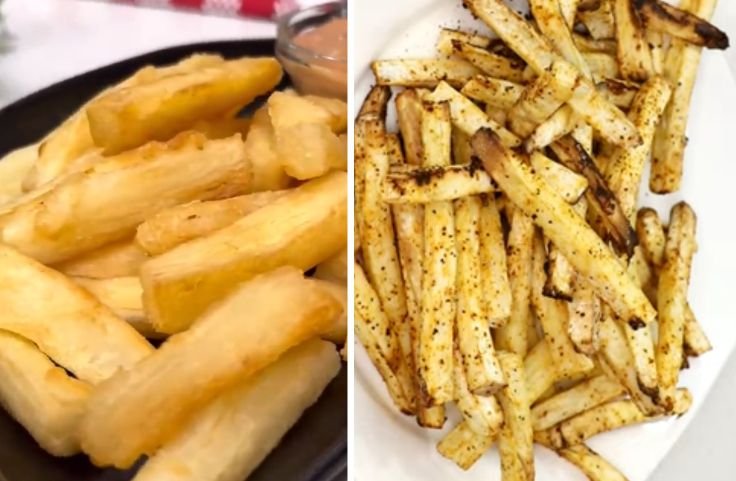
- Place a sheet pan in the oven and heat the oven to 220°C (425°F).
- Toss the dried sticks with 2 tablespoons of oil, salt, and any dry seasonings.
- Spread them on the hot pan in one layer, leaving space between the pieces.
- Bake for 25 to 30 minutes, turning the fries halfway through, until golden on all sides.
- Finish with flaky salt and a squeeze of lime, then serve straight away.
Preheating the pan sears the bottom of each stick on contact, which helps the baked fries crisp like fried ones.
Method 3: Air Fryer Yuca Fries
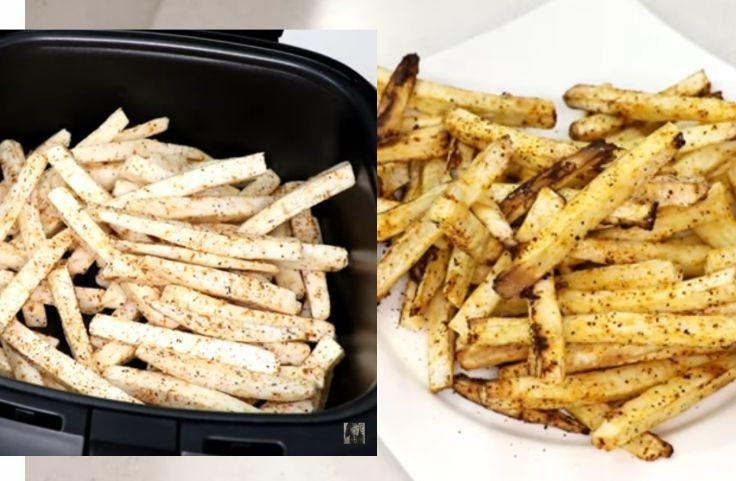
- Preheat the air fryer to 190°C (375°F) for about 3 minutes before adding anything.
- Toss the dried sticks with 1 tablespoon of oil, salt, pepper, and garlic powder or paprika.
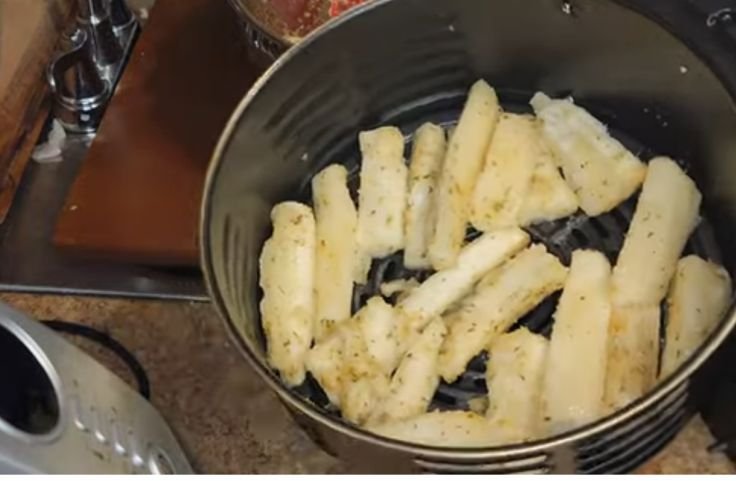
- Arrange them in a single layer in the basket, cooking in two batches if needed.
- Air-fry for 12 to 15 minutes, shaking the basket or flipping the fries halfway.
- Rest them for a minute, because the crust firms up as the steam escapes.
Thicker sticks may need up to 18 minutes, so check one at the 12-minute mark.
Comparing the Three Methods
| Method | Oil used | Temperature | Cooking time after boiling | Texture |
|---|---|---|---|---|
| Deep-fried | About 5 cm deep in the pot | 175°C (350°F) | 4 to 6 minutes per batch | Crispest shell, richest flavor |
| Oven-baked | 2 tablespoons | 220°C (425°F) | 25 to 30 minutes | Crisp edges, softer sides |
| Air fryer | 1 tablespoon | 190°C (375°F) | 12 to 15 minutes | Very crisp, close to fried |
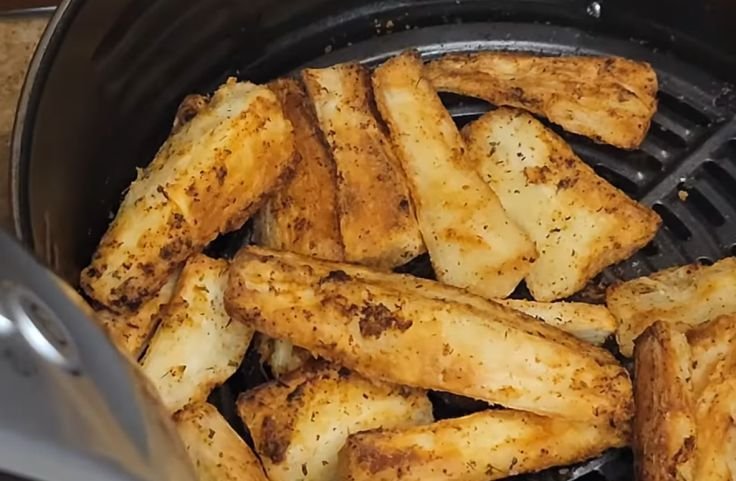
Aim for Golden, Not Dark Brown
Starchy foods form acrylamide when fried, baked, or roasted between about 120 and 150°C, EFSA explains.
The agency advises cooking fries to a golden yellow color rather than brown, and following recommended times and temperatures.
Pull the batch once it turns golden, even if a few edges look pale.
Fixing Stringy, Soggy, or Hard Fries
| Problem | Likely cause | Fix |
|---|---|---|
| Stringy fries | Woody core left in | Cut the core out before or after boiling |
| Soggy fries | Wet surface or crowded pan | Dry the sticks fully and cook in smaller batches |
| Hard center | Boiled too briefly | Simmer until a knife slides in without resistance |
| Falling apart | Boiled too long | Pull the pieces as soon as the edges begin to split |
| Pale, soft crust | Oil or oven not hot enough | Check the temperature and preheat pans fully |
Dips and Sauces
- Garlic mojo: warm olive oil with crushed garlic, then add lime or sour orange juice and salt.
- Lime aioli: stir lime zest, lime juice, and crushed garlic into mayonnaise.
- Fresh pepper sauce: blend fresh peppers, onion, and a little oil, then season with salt.
- Ketchup or hot sauce: simple choices that suit children and quick snacks.
Storing, Freezing, and Reheating
Boiled, dried sticks freeze well before frying, so a double batch saves work on a busy evening.
Freeze them in a single layer, then bag them, and cook them straight from frozen with a few extra minutes.
USDA’s freezing guidance says food kept at 0°F stays safe, though quality declines with very long storage.
Reheat leftover fries in an air fryer or hot oven for 4 to 6 minutes, since microwaving turns them limp.
Nutrition Notes
Raw cassava supplies 160 calories and 38.1 grams of carbohydrate per 100 grams, according to USDA FoodData Central.
Most of the difference between methods comes from oil, so air-fried and baked fries carry far less fat than deep-fried ones.
Cassava is naturally gluten-free, as the post on gluten in cassava products confirms, so these fries suit gluten-free menus.
Thin, crisp snack slices are a different recipe, covered in the guide to crunchy fried cassava chips.
Conclusion
Great yuca fries start with a fresh, sweet cassava root, peeled through the pinkish layer and cut free of its woody core.
Boil the pieces from cold water, pour away the water, and dry them thoroughly before cooking.
Deep-fry at 175°C for the richest crunch, bake at 220°C on a preheated pan, or air-fry at 190°C with one spoon of oil.
Stop at golden rather than brown, and serve with garlic mojo, lime aioli, or fresh pepper sauce.
For questions about cassava, contact Cassava Pathway through this website or WhatsApp.
Frequently Asked Questions
Do you have to boil cassava before frying it?
Yes, boiling softens the dense root and removes more cyanide than frying alone.
Start the pieces in cold water, simmer until tender, and always discard the cooking water.
Why are my cassava fries stringy?
Stringy fries usually mean the woody central core stayed in the sticks.
Cut it out after quartering the root, or pull it away once the pieces are boiled.
Can I make cassava fries in an air fryer?
Yes, toss boiled and dried sticks with one tablespoon of oil and air-fry at 190°C.
Cook them for 12 to 15 minutes, shaking the basket once halfway through.
Can I use frozen cassava for fries?
Yes, frozen peeled yuca works well and saves the peeling step entirely.
Boil it from cold water as usual, dry it thoroughly, then fry, bake, or air-fry it.

Chimeremeze Emeh is a tropical crop farmer and chemical engineer from Ntigha, Isiala Ngwa North LGA, Abia State, Eastern Nigeria, specializing in cassava and palm oil, with over 30 years of hands-on experience growing, harvesting, and processing cassava. He grows TMS series, TME 419, and local traditional varieties on his own farms and operates a small-scale cassava flour and starch production business through Cassava Pathway, which he founded as a CAMA-registered agribusiness in 2024. He is also the founder of Palm Oil Pathway, where he applies the same tropical farming expertise. His farms are located in Ntigha, Abia State.