Last updated on July 18th, 2026 at 02:47 pm
Yuca and yucca are not just similarly spelled; they share the same word origin. A Spanish term for cassava got misapplied to an unrelated desert plant centuries ago, and the mix-up stuck, confusing gardeners and cooks alike.
I have grown cassava for more than thirty years, and I still meet people who assume yuca and yucca are the same plant with two spellings.
They are not, and the confusion is older than any of us, tracing back to a Spanish word for cassava that
European botanists later pinned onto an entirely different desert plant.
This guide clears up cassava, yuca, and yucca in plain terms: which ones are actually the same plant, which one is not, and exactly why the mix-up happened in the first place.
Table of Contents
Cassava and Yuca: The Same Plant, Two Names
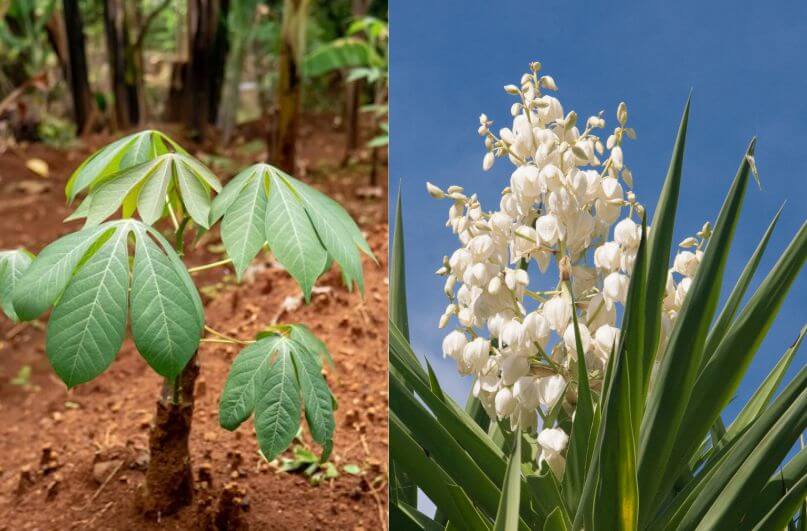
Cassava and yuca refer to the exact same plant, Manihot esculenta, a starchy root crop from the Euphorbiaceae family native to South America.
English speakers generally say cassava, while Spanish-speaking regions across Latin America and the Caribbean say yuca, according to NC State Extension’s plant database.
Neither name is more correct than the other; they are simply regional preferences for identical roots sold in the same markets.
Cassava also carries other names depending on the region, including manioc and mandioca, which our full guide to cassava names around the world covers in detail.
Yucca: A Completely Different, Unrelated Plant
Yucca is a genus of spiky, drought-tolerant plants native to arid parts of North and Central America, and it has no botanical relationship to cassava.
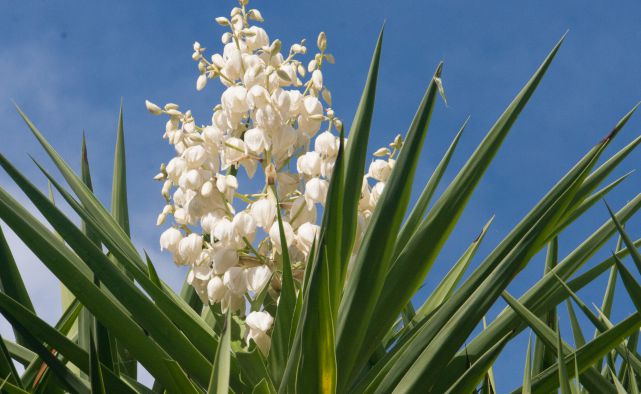
Modern taxonomy places yucca in the Asparagaceae family, though older references list it under Agavaceae.
Both names describe the same group of plants, according to the University of Arizona’s arboretum database.
Yucca plants grow sword-shaped leaves and tall flower spikes rather than an edible starchy root, and most species are grown for ornamental landscaping rather than for food.
A few yucca species do have edible flowers or fruit, but none produce anything resembling a cassava root.
Why Do These Two Words Get Confused
The confusion between yuca and yucca is not accidental; it goes back to a genuine naming mix-up centuries old.
Both words trace back to the same Taíno term for cassava, which entered Spanish as yuca in the late 1400s, according to the Online Etymology Dictionary.
European botanists later applied that same word to the unrelated desert plant now called Yucca.
Etymology references, including historical dictionary entries, trace this mix-up to confusion between the two plants during the 1700s.
That mixup never got corrected, which is why two completely different plants still share almost the same name today.
Knowing this history makes the difference easier to remember than any botanical chart.
Cassava/Yuca vs Yucca at a Glance
| Feature | Cassava / Yuca | Yucca |
|---|---|---|
| Botanical family | Euphorbiaceae | Asparagaceae (formerly Agavaceae) |
| Native region | South America | Arid North and Central America |
| Edible part | Starchy root, must be cooked | Flowers and fruit in some species, not a staple |
| Growth form | Woody shrub with tuberous roots | Rosette shrub with sword-shaped leaves |
| Common use | Food: flour, starch, tapioca | Landscaping, fiber, traditional medicine |
How to Tell Them Apart at a Glance
A few visual and practical cues make the difference obvious once you know what to look for.
- Cassava and yuca roots are brown, elongated tubers sold whole or peeled in grocery stores and markets.
- Yucca plants are ornamental shrubs with spiky, rigid leaves, usually sold as landscaping plants, not food.
- Cassava must be peeled and cooked before eating, since raw roots contain natural toxins that boiling and processing remove.
- Toxin levels vary between bitter and sweet cassava varieties, though both need cooking before eating.
- Yucca is rarely eaten at all, and the edible parts are the flowers and fruit, not the root.
If what you are holding is a root vegetable meant for the kitchen, it is cassava or yuca.
If, instead, it is a spiky landscaping plant, it is yucca and nothing more.
Cassava’s Other Names and Related Comparisons
Beyond yuca, cassava goes by manioc, mandioca, garri, and several other regional names depending on where it is grown and sold.
Our full history of the mandioca plant in Brazil covers the Indigenous origins of the crop in more depth.
Our broader cassava basics guide covers the plant’s full profile beyond naming alone.
If you are comparing cassava against other root vegetables rather than plant names, our guide on cassava versus potato covers that distinction.
Our separate comparison of cassava versus maca root covers another common mix-up.
Frequently Asked Questions
Are cassava and yuca actually the same plant?
Yes, cassava and yuca are the same plant, Manihot esculenta, with English speakers generally saying cassava and Spanish-speaking regions generally saying yuca instead.
Why do people confuse yuca with yucca?
Both words trace back to the same Taíno term for cassava, which European botanists later misapplied to an unrelated desert plant centuries ago.
Can you eat yucca the same way you eat cassava?
No, yucca is not a staple food crop at all, though a few species do produce edible flowers or fruit unrelated to cassava’s starchy root.
What plant family does yucca actually belong to?
Modern botanical taxonomy places yucca in the Asparagaceae family, though many older references still classify the same genus under the earlier name Agavaceae.
Final Word From Cassava Pathway
Cassava and yuca are the same plant, and yucca is not, despite sharing nearly the same name by historical accident rather than botanical relation.
Once you know that both words trace back to the same Taíno term for cassava, the confusion stops being confusing and starts being a decent piece of trivia instead.
On my own farm, I grow cassava, not yucca, and the two plants look nothing alike once you have seen them side by side.
Next time someone mixes up yuca and yucca, you will know exactly why the mistake happens and exactly how to correct it kindly.

Chimeremeze Emeh is a tropical crop farmer and chemical engineer from Ntigha, Isiala Ngwa North LGA, Abia State, Eastern Nigeria, specializing in cassava and palm oil, with over 30 years of hands-on experience growing, harvesting, and processing cassava. He grows TMS series, TME 419, and local traditional varieties on his own farms and operates a small-scale cassava flour and starch production business through Cassava Pathway, which he founded as a CAMA-registered agribusiness in 2024. He is also the founder of Palm Oil Pathway, where he applies the same tropical farming expertise. His farms are located in Ntigha, Abia State.