Last updated on May 15th, 2026 at 09:05 am
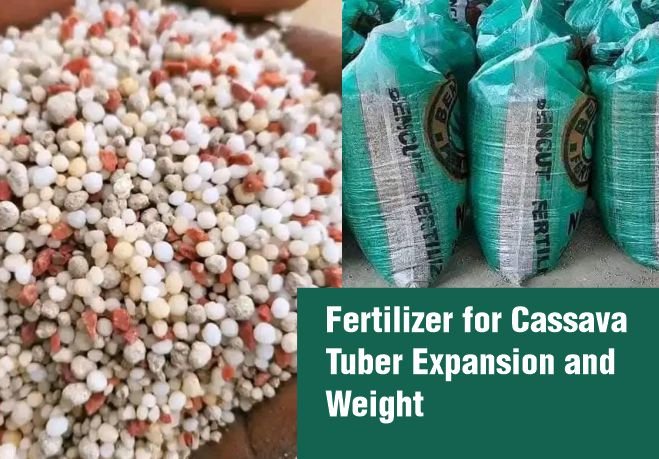
The best fertilizer for cassava tuber expansion and weight can transform small, weak roots into heavy, market-ready harvests. Proper nutrient balance, soil preparation, and feeding timing boost root size, improve yield quality, and increase farm profit across cassava growing seasons.
Cassava productivity depends on soil nutrients and how well fertilizer is managed throughout the growing cycle.
The best fertilizer for cassava tuber expansion and weight supports strong root development, better soil fertility, and higher yield quality.
Nitrogen encourages healthy leaf growth, phosphorus strengthens root formation, and potassium increases tuber size and density.
When applied correctly and at the right growth stages, fertilizer improves both crop performance and farm returns.
With proper soil testing, timing, and application methods, farmers can achieve larger, heavier cassava tubers and more reliable harvests season after season.
Table of Contents
Role of Fertilizer in Tuber Expansion
Fertilizer plays a major role in cassava tuber expansion by supplying nutrients that support root bulking and starch formation.
When nutrients are balanced, the plant directs energy toward developing larger, heavier tubers instead of only growing leaves.
During the early vegetative stage, cassava focuses on leaf and stem growth, which builds a strong structure for later development.
In the tuber development stage, the plant shifts energy below the soil, and nutrients like potassium and phosphorus become more important for increasing root size and starch content.
The timing of fertilizer application is critical because applying nutrients too early or too late can reduce yield potential.
Early nitrogen supports healthy foliage, while later potassium boosts tuber weight and quality.
Proper feeding schedules help ensure nutrients are available when the plant needs them most, leading to better root bulking, improved starch accumulation, and higher overall cassava yield at harvest.
Best Fertilizer Types for Impressive Cassava Yield
Choosing the right fertilizer shapes how your cassava develops from leafy growth to heavy tubers.
The right mix improves soil nutrients, supports root bulking, and increases cassava yield per hectare.
NPK fertilizers (balanced formulations like 12-12-17 or 15-15-15)
NPK fertilizers supply nitrogen, phosphorus, and potassium in balanced amounts.
Early in cassava growth, nitrogen supports strong leaves, phosphorus strengthens roots, and potassium improves overall plant health.
Using formulations like 12-12-17 or 15-15-15 helps you give cassava a steady nutrient base.
This balance supports both early growth and later tuber development, leading to healthier plants and better root formation.
Potassium-rich fertilizers for tuber filling and starch development
Potassium plays a major role in cassava tuber expansion and starch build-up.
When potassium levels are strong, roots become heavier and more compact. It also improves drought tolerance and crop quality.
Applying potassium-rich fertilizers during the tuber filling stage helps your cassava shift energy from leaves to roots, increasing final harvest weight and market value.
Organic fertilizers (manure, compost) for soil structure and long-term fertility
Organic fertilizers improve soil structure, water retention, and microbial activity.
Well-decomposed manure and compost release nutrients slowly, supporting steady cassava growth.
They also reduce soil compaction and improve root penetration.
Adding organic matter helps your soil stay productive for longer, especially in continuous cassava farming systems where soil exhaustion can reduce yield.
A combination of organic and inorganic fertilizers for the best results
Combining organic and inorganic fertilizers gives your cassava both immediate and long-term nutrition.
Inorganic fertilizers supply quick nutrients for growth and tuber development, while organic matter improves soil health over time.
This balanced approach supports strong leaf growth, better root bulking, and consistent yields.
With proper timing and application, your cassava field maintains fertility and produces heavier, high-quality tubers season after season.
Related Posts
How to Combat Cassava Post-Harvest Losses
How to Manage Weed in Cassava Farms
The Ideal Climate Condition for Cassava Farming
Importance of Potassium in Cassava Yield
Potassium plays a key role in cassava yield because it directly supports tuber enlargement and increases dry matter content, which improves root size, starch quality, and overall harvest weight.
When potassium levels are adequate, cassava plants transport sugars more efficiently from leaves to roots, leading to better bulking and stronger tubers.
A lack of potassium shows clear signs such as yellowing or burning of leaf edges, weak stems, and reduced root development, all of which lower yield potential.
Farmers can supply potassium through fertilizers like Muriate of Potash (MOP) and Sulphate of Potash (SOP), depending on soil conditions and crop needs.
Regular soil testing helps determine the right application rate, ensuring balanced nutrition and maximizing cassava productivity in the field.
Application Timing for Maximum Tuber Weight
Getting fertilizer timing right in cassava farming directly influences tuber size, root weight, and overall yield.
Proper scheduling helps your plants shift from leafy growth to strong tuber development for better harvest results.
Early-stage fertilization for strong plant establishment
Early fertilization supports cassava establishment by encouraging strong roots, stems, and healthy leaf growth.
Nitrogen-rich fertilizer applied at this stage builds a solid canopy, improves photosynthesis, and prepares your crop for later tuber development and better field performance overall.
Mid-stage application for root initiation and expansion
Mid-stage fertilizer application supports cassava root initiation and tuber expansion.
Phosphorus and potassium help your plant move energy underground, improving root bulking, starch formation, and tuber size for higher cassava yield and stronger harvest output.
Avoiding excessive nitrogen during the tuber bulking phase
Too much nitrogen during tuber bulking pushes leaf growth instead of root development.
Reducing nitrogen at this stage allows your cassava to focus energy on tuber filling, improving root weight, starch content, and overall market value at harvest time.
Fertilizer Application Methods
Fertilizer application methods affect how well cassava absorbs nutrients and grows.
Band placement delivers nutrients close to plant roots, improving uptake, while the broadcast method spreads fertilizer across the field for general soil enrichment.
Soil incorporation techniques help mix fertilizer into the soil, reducing loss and improving efficiency.
Split application divides fertilizer use into stages, ensuring nutrients are available when cassava needs them most.
These methods improve root development, boost tuber weight, and increase overall cassava yield on large-scale farms. More on how to apply fertilizer to cassava.
Soil Testing and Fertilizer Planning
Soil testing and fertilizer planning play a key role in improving cassava yield and ensuring proper nutrient use.
Before planting, soil analysis helps you understand nutrient levels, pH, and fertility status, which guides the right fertilizer choice for your farm.
Without testing, you risk applying the wrong nutrients or missing key elements needed for tuber development.
Based on soil results, fertilizer can be adjusted to match crop needs, improving efficiency and reducing waste.
This approach also helps avoid over-fertilization, which can damage soil structure and create a nutrient imbalance that reduces cassava growth.
Balanced fertilizer planning ensures nutrients like nitrogen, phosphorus, and potassium are applied in the right proportion.
With proper soil testing and targeted application, you improve root development, increase tuber weight, and support long-term soil health for sustainable cassava production.
Role of Organic Matter in Tuber Development
Organic matter plays a strong role in cassava tuber development by improving soil health and supporting steady root growth.
Materials like compost, poultry manure, and green manure supply slow-release nutrients that help cassava grow steadily from early stages to harvest.
These organic inputs improve soil structure, allowing better root penetration and reducing soil compaction.
They also increase moisture retention, which helps cassava withstand dry periods and maintain tuber growth.
In addition, organic matter boosts microbial activity in the soil, improving nutrient breakdown and availability for plant uptake.
In the long run, consistent use of organic fertilizers improves soil fertility, reduces dependency on chemical inputs, and supports stable cassava yields.
This leads to stronger tuber formation, better weight, and improved long-term productivity on both small and large-scale cassava farms.
Common Fertilizer Mistakes to Avoid
Fertilizer use in cassava farming affects root size, tuber weight, and overall yield.
Small mistakes in nutrient management can reduce productivity and weaken soil performance over time.
Overuse of nitrogen leads to excessive leaves and poor tubers
Too much nitrogen pushes leafy growth while reducing tuber formation in cassava.
You notice strong green plants but small roots, lowering yield, starch content, and overall farm returns.
Poor timing of fertilizer application
Incorrect fertilizer timing reduces cassava nutrient uptake. Early or late application affects root development stages, leading to weak tuber bulking, poor weight, and reduced harvest quality across fields.
Ignoring soil pH and nutrient deficiencies
Ignoring soil pH disrupts nutrient absorption in cassava. Acidic or poor soils limit fertilizer effectiveness, causing weak roots, low yields, and uneven crop growth without proper soil testing.
Conclusion
In cassava farming, fertilizer management determines how well roots expand, fill, and gain weight.
The best fertilizer for cassava tuber expansion and weight works through balanced nutrients, correct timing, and proper soil care.
Nitrogen supports early growth, phosphorus strengthens roots, and potassium drives tuber bulking and starch formation.
When combined with soil testing, organic matter, and accurate application methods, your field gains better fertility and stable productivity.
Avoiding common mistakes like excess nitrogen or poor timing keeps plants focused on root development.
With consistent practices, you improve cassava yield, boost tuber size, and achieve reliable harvests across every growing season.
References

Chimeremeze Emeh is a tropical crop farmer and chemical engineer from Ntigha, Isiala Ngwa North LGA, Abia State, Eastern Nigeria, specializing in cassava and palm oil, with over 30 years of hands-on experience growing, harvesting, and processing cassava. He grows TMS series, TME 419, and local traditional varieties on his own farms and operates a small-scale cassava flour and starch production business through Cassava Pathway, which he founded as a CAMA-registered agribusiness in 2024. He is also the founder of Palm Oil Pathway, where he applies the same tropical farming expertise. His farms are located in Ntigha, Abia State.