Tapioca vs Taro: A Quick Comparison
People constantly mix up tapioca and taro since both start life as roots and end up in bubble tea, desserts, or stews. As someone who processes cassava for a living, I can tell you these are not close relatives.
Cassava – manihot esculenta and its value chain
Tapioca Starch is a structured collection of posts focusing on the properties, uses, and applications of starch derived from cassava roots.
This category brings together individual articles that explore tapioca starch from different practical and industrial perspectives.
It includes posts on how tapioca starch is produced, its physical characteristics, and how it behaves in food preparation and processing.
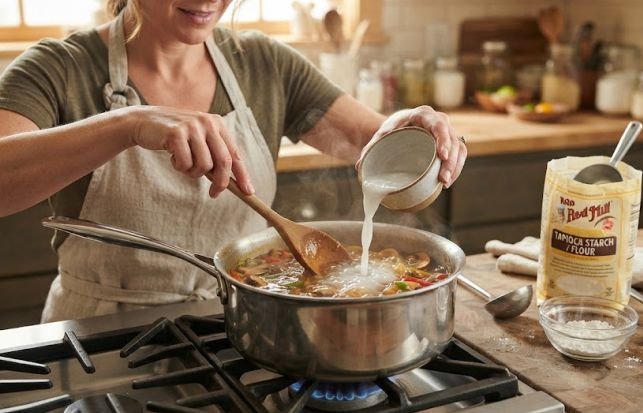
You will also find content covering its role as a thickening agent in soups, sauces, baking, and gluten-free cooking, where it is widely used as a functional ingredient.
Beyond culinary use, this hub also features articles on industrial and commercial applications of tapioca starch, including its use in paper production, textiles, adhesives, and biodegradable products.
Each post focuses on a specific use case or property, allowing readers to understand its versatility without merging everything into a single explanation.
This category is designed as a reference collection rather than a guide, helping readers explore tapioca starch topics through individual posts.
It does not overlap with general cassava farming or processing categories, but instead highlights one important derivative product in detail through multiple focused articles.
Tapioca Starch serves as an organized knowledge hub within the broader cassava ecosystem, connecting food science, industrial usage, and everyday applications into a single structured archive of content.
People constantly mix up tapioca and taro since both start life as roots and end up in bubble tea, desserts, or stews. As someone who processes cassava for a living, I can tell you these are not close relatives.
It takes days to turn cassava into starch, but instant tapioca skips nearly all of that waiting, arriving pre-cooked and dehydrated so it rehydrates into that same familiar chewy texture in a matter of a few minutes instead.
I process cassava into starch for a living, so when bubble tea shops near me started swapping my own familiar chewy tapioca pearls for translucent konjac jelly balls instead, I had to find out exactly what crystal boba actually is.
Reaching for the wrong tapioca product ruins more sauces and puddings than almost any other kitchen mistake out there, since instant tapioca and tapioca flour behave in nearly opposite ways once real heat finally gets involved in any home kitchen.
Swap tapioca starch for potato starch in the wrong recipe and you will notice immediately, since one holds up through freezing while the other turns a sauce watery and thin as soon as it eventually cools right back down again.
Bite into a tapioca pearl and you get a slow, chewy resistance that lasts through the whole sip, but bite into popping boba and the entire experience ends almost instantly in one small burst of juice right against your tongue.
Drop both into the same pudding, and most people cannot tell tapioca and sago apart by sight alone, yet one comes from a tropical root crop, while the other comes literally from the trunk of an entirely different palm tree.
Add tapioca starch to a lemon curd and it holds up fine, but swap in arrowroot and the acid barely touches its thickening power, a small difference that decides if your dessert turns out somewhat glossy or falls apart completely.
Freeze a cornstarch-thickened sauce and it turns watery and grainy the moment it thaws, but do the same with a tapioca-thickened sauce and it comes out of the freezer looking exactly like it did the very day you made it.
Cassava and tapioca get mixed up constantly, yet one is a fibrous root vegetable you can boil and eat whole, while the other is a nearly pure starch left behind once nearly everything else has already been entirely washed away.