Last updated on June 27th, 2026 at 05:40 pm
One crop. One plant. One root that is a lifeline for people across four continents. Yet depending on where you are standing when you ask its name, the answer changes completely.
Cassava is one of the most widely grown and consumed root crops on earth, yet most people who eat it daily have never heard half the names it goes by in other parts of the world.
In South Eastern Nigeria, where I farm it, we called it akpu long before anyone in my household called it cassava.
In Brazil, they call it mandioca. In Indonesia, it is singkong.
In the Caribbean, it becomes yuca or casabe depending on the island and the dish.
This guide documents every significant regional name for cassava, what each name reflects about how the crop is used locally, and what the diversity of those names tells us about one of the world’s most important food crops.
A Farmer Who Grew Up With One Name for This Crop
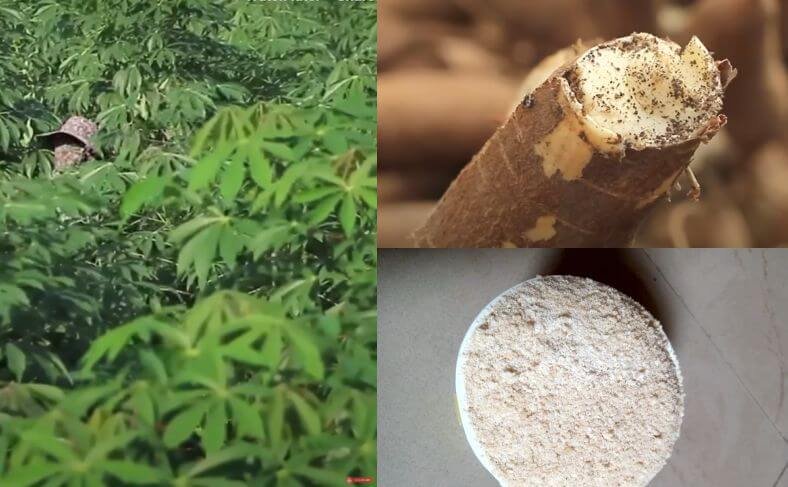
In my community in Ntigha, Isiala Ngwa North LGA, cassava was akpu, and another specific, special name, igboro. But for this post, I will stick with akpu.
That was the name in the pot, the name in the market, and the name in the field.
Nobody said cassava. Nobody said manioc. The crop had one name and one identity, a root that fed the household, generated income, and connected generations of farmers to the same land.
Writing about cassava names from that position, as someone who grew up with one of those names before encountering all the others, gives this guide a different starting point from a list assembled from encyclopaedias.
If you want to know more about cassava as a beginner, this post is for you.
Table of Contents
What Are the Other Names for Cassava Around the World?
Cassava is known by many names globally, including akpu, yuca, manioc, tapioca, mandioca, garri, casabe, aipim, macaxeira, maniok, singkong, ubi kayu, kamoteng kahoy, balinghoy, bobolo, chikwangue, mogo, and man sampalang, depending on the region, the language, and in some cases the specific product being described.
African Names for Cassava
Africa is where cassava has its deepest roots as a daily food and economic crop.
The names across the continent reflect both the diversity of its preparation and the depth of its cultural integration.
Akpu
In Igbo-speaking communities across South Eastern Nigeria, cassava is called akpu.
The name refers both to the raw root and to the fermented, pounded form used to make a swallow food eaten with soups and stews.
Akpu is one of the most culturally embedded names for cassava anywhere in the world, not just a label for a crop but a reference to an entire food tradition that connects households, markets, and farming communities across Abia, Imo, Anambra, and Enugu States.
Garri
In Nigeria and across West Africa, garri is one of the most recognised cassava-derived names.
The cassava plant itself is not called garri; the name refers specifically to the product of processing cassava by grating, fermenting, pressing, and frying cassava roots into granules or flakes.
Garri is eaten soaked in cold water, made into eba by adding hot water, or consumed dry as a snack.
It is the most widely consumed cassava product in Nigeria and one of the most important staple foods in West Africa.
See the full garri guide for production methods and recipes.
Manioc
Across Francophone Africa, particularly in Cameroon, Côte d’Ivoire, and the Democratic Republic of Congo, cassava is widely known as manioc.
The name comes from the Tupi word manioca, carried across the Atlantic during the Portuguese trade era and absorbed into French-speaking African food culture.
In Cameroon, manioc is processed into bobolo, a fermented cassava stick wrapped in leaves, one of the most distinctive cassava preparations in Central Africa.
Bobolo and Chikwangue
In Cameroon and parts of Central Africa, fermented cassava prepared in stick or paste form carries its own names.
Bobolo is the fermented cassava stick found in Cameroon.
Chikwangue is a similar fermented cassava paste preparation found in the Democratic Republic of Congo and surrounding countries.
Both represent a processing tradition that predates industrial cassava production and reflects how Central African communities preserved and transported cassava before modern storage methods existed.
Mogo
In East Africa, particularly in Kenya and Tanzania, cassava is known as mogo among the South Asian diaspora communities who settled in the region during the colonial era.
Mogo is commonly deep-fried and served as street food, a preparation that became a distinctive part of East African coastal cuisine far removed from its West African farming origins.
Latin American Names for Cassava
Latin America is where cassava was first cultivated thousands of years ago by indigenous communities. The names across the region reflect that deep pre-colonial history.
Yuca
In Spanish-speaking Latin America and the Caribbean, cassava is most commonly called yuca.
The name is used in Cuba, Puerto Rico, the Dominican Republic, Colombia, Venezuela, and across Central America.
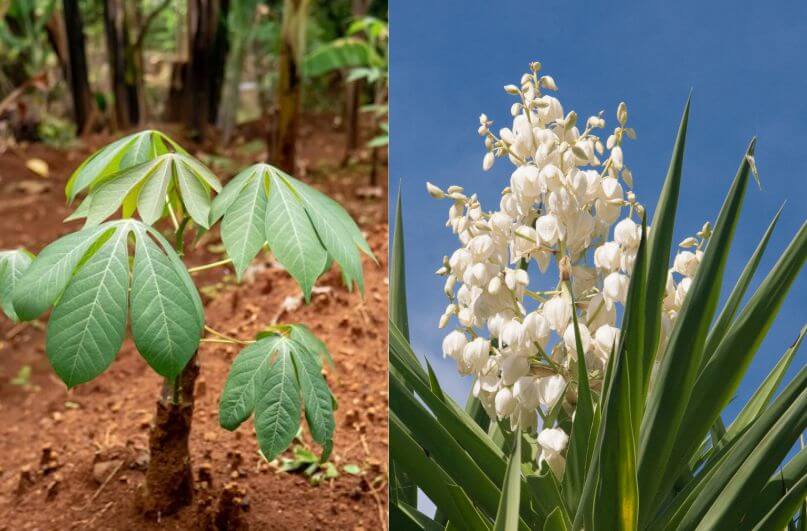
Yuca should not be confused with yucca, an entirely different plant with no botanical relationship to cassava.
The distinction matters practically because recipes calling for yuca require cassava, not the ornamental yucca plant found in gardens across Europe and North America.
Yuca Dulce and Yuca Brava
Within the yuca name, Latin American communities distinguish between two varieties.
Yuca dulce refers to the sweet, low-cyanide variety suitable for direct consumption without extensive processing.
Yuca brava refers to the bitter, high-cyanide variety that requires careful processing before it is safe to eat.
This distinction, sweet versus bitter, is one of the most practically important pieces of cassava knowledge for anyone cooking or farming the crop.
Mandioca, Aipim, and Macaxeira
Brazil alone uses three different regional names for cassava. Mandioca is the most widely used national name.
Aipim is the name used in the southern and southeastern states, including Rio de Janeiro and São Paulo.
Macaxeira is the name used in the northern and northeastern regions of Brazil.
All three refer to the same plant; the naming reflects Brazil’s regional cultural diversity more than any botanical difference.
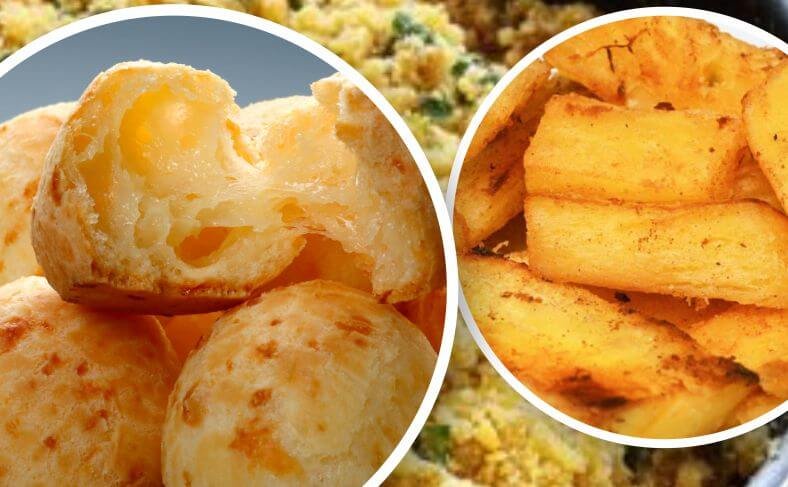
Mandioca is used extensively in Brazilian cuisine in forms ranging from cassava flour bread to tapioca pancakes and traditional farofa.
Casabe
In the Caribbean, particularly in Cuba, the Dominican Republic, and Puerto Rico, cassava has been used since pre-Columbian times to make casabe, a flatbread made from bitter cassava that was a staple food of the indigenous Taíno people.
Casabe is one of the oldest cassava preparations in the Americas and represents a direct line of food culture from pre-colonial Caribbean communities to the present day.
Asian Names for Cassava
Cassava arrived in Asia through Portuguese trade routes in the sixteenth century and quickly became a significant food and industrial crop across Southeast Asia.
Singkong
In Indonesia, cassava is called singkong. Indonesia is one of the world’s largest cassava producers and consumers, using the crop for food, industrial starch, and animal feed.
Singkong goreng, fried cassava, is one of the most popular street food preparations in the country.
Ubi Kayu
In Malaysia, cassava is known as ubi kayu, which translates roughly as wood tuber.
Malaysia uses cassava primarily for starch production and animal feed, though traditional food preparations using ubi kayu remain common in rural communities.
Kamoteng Kahoy and Balinghoy
In the Philippines, cassava is known as kamoteng kahoy or balinghoy depending on the region.
Kamoteng kahoy, meaning wooden sweet potato in Tagalog, is the name used in Luzon and the central Philippines.
Balinghoy is the name used in the Visayas and parts of Mindanao.
Both names reflect how the crop was understood when it arrived, as a root vegetable similar in character to the sweet potato already familiar to Filipino farmers.
Man Sampalang
In Thailand, cassava is known as man sampalang. Thailand is one of the world’s largest exporters of cassava starch and chips, making it one of the most commercially significant cassava-producing countries in Asia despite the crop not being native to the region.
European and Trade Names for Cassava
Maniok
In German-speaking countries, cassava is known as maniok, a direct adaptation of the French manioc.
The name is used in Germany, Austria, and Switzerland primarily in the context of imported cassava products and food science literature.
Tapioca
Tapioca is the name most widely used in English-speaking countries and in global food manufacturing to refer to cassava starch and its products.
Tapioca pearls, tapioca flour, and tapioca pudding are all cassava-derived.
The name comes from tipi’óka, a Tupi word describing the starch extraction process.
In Nigeria and parts of West Africa, tapioca refers specifically to dried cassava chips used in making abacha, which is a different use from the global starch product meaning.
See the full tapioca guide for the distinction.
Brazilian Arrowroot
An older trade name used in British colonial-era documentation, Brazilian arrowroot was used to describe cassava starch exported from Brazil before tapioca became the dominant trade term.
The name is largely historical but still appears in older food science and botany texts.
Conclusion
Cassava travels under many names because it has travelled far, from its origins in the Amazon basin to West African farms, South Asian kitchens, Southeast Asian starch factories, and Caribbean flatbreads.
Each name carries a history of how the crop arrived, how communities adapted it, and what it became in each place.
In my community, it was always akpu.
Somewhere else, it is singkong, mandioca, or mogo. The names are different. The root is the same, one of the most important food crops the world has ever grown.
Frequently Asked Questions
What is the most common name for cassava in Africa?
Cassava names vary widely across Africa. Manioc dominates Francophone Africa, garri refers to the processed product in Nigeria, and akpu is the Igbo name in South Eastern Nigeria.
What is the difference between yuca and yucca?
Yuca is cassava, a tropical root crop eaten across Latin America and the Caribbean. Yucca is an ornamental plant in the agave family with no botanical or culinary relationship to cassava.
Why does cassava have so many names?
Cassava spread across the world through trade routes over five centuries. Each region that adopted it named it in its own language, reflecting local food culture and the way the crop was first introduced and used.
What is cassava called in Brazil?
Brazil uses three regional names for cassava: mandioca nationally, aipim in the south and southeast, and macaxeira in the north and northeast of the country.
What is cassava called in Nigeria?
In Nigeria, cassava is known by several names depending on context. The plant and root are often simply called cassava, while akpu is the Igbo name, and garri refers to the most popular processed product made from it.


Chimeremeze Emeh is a tropical crop farmer and chemical engineer from Ntigha, Isiala Ngwa North LGA, Abia State, Eastern Nigeria, specializing in cassava and palm oil, with over 30 years of hands-on experience growing, harvesting, and processing cassava. He grows TMS 419, TME 419, and local traditional varieties on his own farms and operates a small-scale cassava flour and starch production business through Cassava Pathway, which he founded as a CAMA-registered agribusiness in 2024. He is also the founder of Palm Oil Pathway, where he applies the same tropical farming expertise. His farms are located in Ntigha, Abia State.